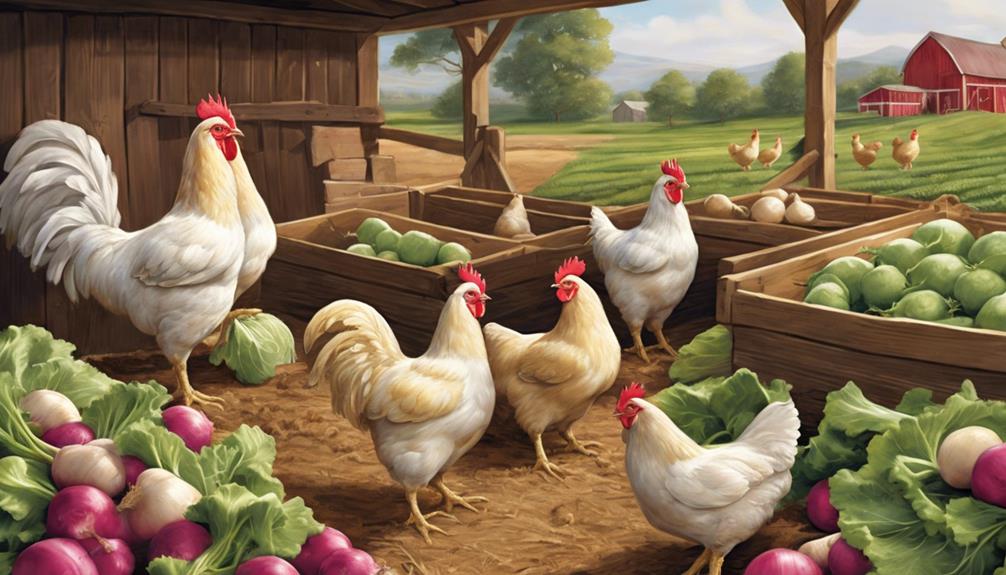

When feeding turnips to chickens, remember to wash and peel them, chop them into small pieces, and avoid any spoiled ones. Cooking or grating the turnips can make them easier to eat. Limit to 1-2 small turnips per day and mix with other veggies to ensure safe turnip consumption for your chickens, providing a varied and nutritious diet.

Get pet supplies delivered free with Prime
- Fast, free delivery on millions of items
- Prime Video, Amazon Music and more included
- Member-only deals all year
Further tips await to enhance your chickens' dining experience.
Key Takeaways
- Wash and peel turnips to remove dirt and pesticides and reduce ingestion of unwanted substances.
- Chop turnips into small pieces to prevent choking hazards and promote easier consumption.
- Cook turnips by steaming or boiling to soften them for chickens to eat more easily.
- Feed turnips as a supplementary treat, limiting to 1-2 small turnips per day, around once or twice weekly.
- Monitor chickens' response to turnips to assess tolerance and prevent digestive issues.
Nutritional Benefits of Turnips for Chickens
Incorporating turnips into a chicken's diet offers a myriad of nutritional benefits that are essential for their overall health and well-being. Chickens eat turnips, including the greens, which are packed with beneficial nutrients.
Turnips are a healthy source of vitamins, particularly vitamin K, essential for blood clotting and bone health in chickens. These nutritious root vegetables serve as healthy chicken treats, enriching their diet with essential nutrients like manganese, potassium, iron, copper, and magnesium.
The vitamin A and vitamin C content in turnips supports immune function, feather quality, and egg production, promoting the overall well-being of backyard chickens.
Including turnips in a chicken's diet provides them with a low-fat and low-calorie option that still delivers a range of vital nutrients. These vegetables are good for chickens due to their antioxidant properties and dietary fiber content, aiding in digestion and supporting overall health.
Turnips are considered a superfood for chickens, contributing to their vitality and ensuring they receive a well-rounded diet.
Safety Precautions for Feeding Turnips to Chickens

When introducing turnips into a chicken's diet, it's important to prioritize safety precautions to ensure the well-being of the flock. Raw turnips should be washed thoroughly to eliminate any dirt or pesticides that could be harmful to chickens.
Additionally, peeling the turnips before feeding them to the chickens can reduce the risk of ingesting any unwanted substances from the skin. It's advisable to chop the turnips into small, manageable pieces to prevent choking hazards for the chickens.
Avoid offering spoiled or rotten turnips to the flock as these can lead to digestive issues and health problems. Monitoring the chickens' response to the turnips is crucial in assessing their tolerance to this new food.
Preparation Methods for Serving Turnips to Chickens
To enhance the palatability and ease of consumption for chickens, various preparation methods can be employed when serving turnips.
- Cooking Methods: Cooking turnips by steaming or boiling can soften them, making it easier for chickens to eat. This process helps enhance the flavor while also breaking down the toughness of the turnip, providing a more enjoyable eating experience for the chickens.
- Grating or Mashing: Grating or mashing turnips can help break down their density for better consumption by chickens. By breaking the turnips into smaller, more manageable pieces, chickens can peck at them easily, promoting efficient eating and digestion.
- Chopped for Digestibility: Chopped turnips are more manageable for chickens to digest compared to whole turnips. When serving turnips to chickens, chopping them into smaller pieces ensures that the chickens can comfortably consume the tasty treat without struggling with large chunks.
Frequency and Quantity of Turnip Feeding for Chickens

For optimal health and balanced nutrition, we recommend incorporating turnips into a chicken's diet as a supplementary treat, constituting approximately 10% of their overall food intake. To maintain a well-rounded diet, it's advisable to feed turnips to chickens once or twice weekly. This approach ensures that chickens receive the benefits of turnips in moderation along with their regular feed.
Turnips are a good source of nutrients such as vitamins and minerals, including high water content, which can help hydrate the chickens. Feeding turnips in this controlled manner can encourage natural foraging behaviors and promote bone health due to the presence of essential nutrients. Limiting the quantity to 1-2 small turnips per day for a backyard flock is a practical way to prevent overconsumption.
Additionally, rotating turnips with a variety of other vegetables can provide a diverse range of nutrients, contributing to the overall well-being of the chickens.
Turnip Alternatives for Chickens
Having discussed the frequency and quantity of turnip feeding for chickens, exploring suitable alternatives like rutabagas and parsnips broadens the options for providing nutritious variety in their diet. These safe alternatives offer a range of benefits, including essential B vitamins, vitamins and minerals, and dietary fiber crucial for chicken health.
Here are three points to consider when incorporating rutabagas and parsnips into your chickens' diet:
- Nutritional Benefits: Rutabagas and parsnips are rich in essential nutrients, providing chickens with a diverse array of vitamins and minerals necessary for optimal health.
- Treat Option: These alternatives serve as a healthy treat option for chickens, offering a tasty change from their regular feed while still being beneficial for their well-being.
- Safe Alternatives: Rutabagas and parsnips can be fed to chickens either raw or cooked, allowing flexibility in how you introduce these vegetables into their diet.
Frequently Asked Questions
Can I Feed My Chickens Turnips?
Yes, we can feed chickens turnips. Turnips are a nutritious addition to their diet, offering essential vitamins like A and C, along with calcium and antioxidants.
Low in fat and calories, turnips support bone health, immune system function, feather quality, and egg production. They're considered a superfood for chickens due to their nutritional richness.
It's beneficial to incorporate turnips into their feed for overall health and well-being.
What Vegetables Cannot Be Fed to Chickens?
We're well-versed in veggies that vex our feathered friends! Nightshade family nosh like tomatoes and potatoes are no-goes for chickens. Keep those harmful foods like rhubarb leaves and spoiled veggies far from your coop.
Opt for rutabagas and parsnips instead of turnips, as they're safe and nutritious choices. Remember, steer clear of toxic treats like eggplants and ground cherry plants to ensure your cluckers stay healthy and happy.
What Did Chickens Eat Before Commercial Feed?
Before commercial feed, chickens foraged for food, consuming insects, worms, seeds, grains, grass, and kitchen scraps. This diverse diet included plant matter, small animals, and human meal leftovers, providing essential nutrients, vitamins, and minerals.
Chickens relied on their instincts to find a balanced and nutritious diet from natural sources. This foraging behavior allowed them to maintain their health and well-being by obtaining a variety of nutrients necessary for their growth and development.
How Do You Serve Raw Turnips?
When serving raw turnips, we first wash and peel them before chopping them into manageable pieces. This preparation makes it easier for chickens to consume the dense vegetable. Offering raw turnips, alongside other veggies like carrots and cabbage, provides dietary variety.
Hanging raw turnips can be a fun way to feed chickens and prevent boredom. Moderation is key when introducing raw turnips to a chicken's diet for optimal health benefits.
Can Turnips Affect a Chicken’s Urinary System?
Yes, understanding avian excretion is essential for keeping chickens healthy. Turnips can affect a chicken’s urinary system if fed in excess. The high levels of oxalic acid in turnips can increase the risk of kidney stones in chickens. Proper understanding of avian excretion is crucial when deciding on a chicken’s diet.
Conclusion
In conclusion, feeding turnips to your chickens can provide them with valuable nutrients and variety in their diet. Despite some concerns about safety and preparation, following our guide can help ensure that your chickens can safely enjoy this nutritious vegetable.
By incorporating turnips into their diet in moderation and with proper preparation, you can offer your flock a healthy and tasty treat without any worries. So go ahead and let your chickens enjoy some turnips today!
Fall Picks
fall essentials
As an affiliate, we earn on qualifying purchases.