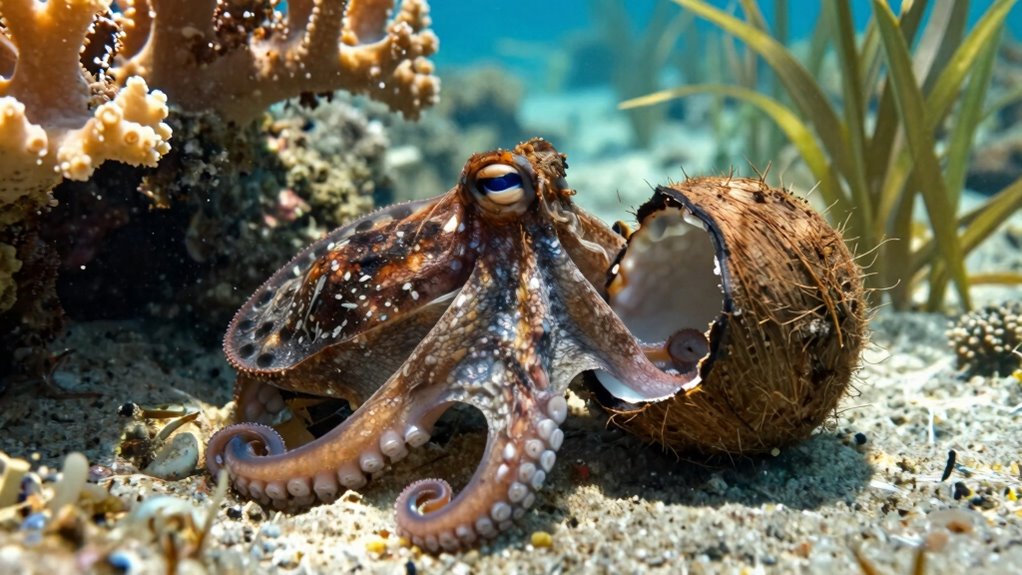

The coconut octopus carries shells and debris to create portable shelters that protect it from predators and help it blend into the environment. By actively collecting and choosing shells that fit snugly, it demonstrates problem-solving and resourcefulness. These shells serve as quick refuges and visual disguises, helping it evade threats and stay safe. If you keep exploring, you’ll discover even more clever ways it adapts to survive in its underwater world.

Get pet supplies delivered free — and shop member deals
- Fast, free delivery on millions of items
- Access to Prime Big Deal Days deals on October 6–7
- Prime Video, Amazon Music and more included
Key Takeaways
- It uses discarded shells as portable protection and camouflage to evade predators.
- Carrying shells provides quick refuge for immediate predator evasion.
- The shells serve as visual disguises, blending the octopus into its environment.
- Selecting and transporting shells demonstrates problem-solving and resourcefulness.
- The behavior enhances survival by combining concealment, defense, and strategic mobility.
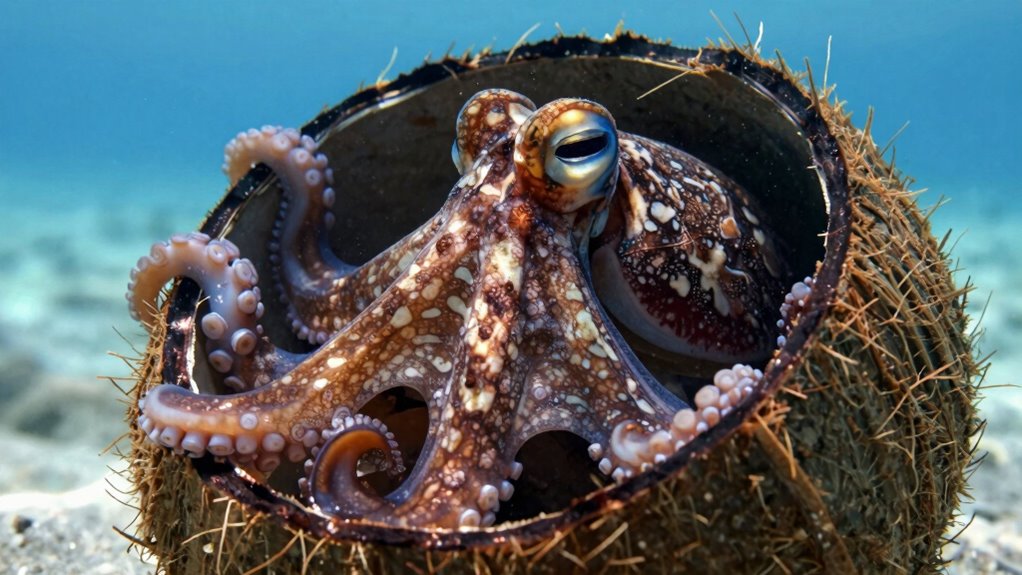
The coconut octopus has a remarkable ability to create its own shelter by using discarded coconut shells and other debris found on the ocean floor. This clever adaptation is essential for both protection and survival in the unpredictable environment of the seabed. When you observe this octopus, you’ll notice how it actively collects and carries these shells, turning what might seem like trash into a portable fortress. This behavior isn’t just about convenience; it’s a strategic move that plays a key role in its survival tactics, especially in the domain of marine camouflage and predator evasion.
By carrying its own shelter, the coconut octopus enhances its ability to blend seamlessly into its surroundings. It uses the shell as a visual disguise, resembling a piece of floating debris or a natural part of the seabed, making it harder for predators to spot. This form of marine camouflage is highly effective, as it breaks up the octopus’s outline and allows it to remain hidden from predators lurking nearby. When you see one hiding inside a coconut shell, you’re witnessing a master of concealment, using its environment as a shield against danger.
The coconut octopus uses shells as camouflage, blending seamlessly and hiding from predators with remarkable mastery.
Additionally, carrying a shell offers protection against predators by giving the octopus a quick, ready-made refuge. Instead of relying solely on its ability to change color and texture, which can take precious seconds, it can retreat instantly into its portable hideout when threatened. This rapid response is indispensable for predator evasion, especially in a habitat where threats can appear suddenly. The shell acts as both a physical barrier and a visual cue that signals “stay away,” reducing the chance of an attack. This quick adaptation is crucial for survival in the volatile marine environment. Moreover, the ability to select and carry appropriate shells demonstrates the octopus’s intelligence and problem-solving skills, which are key traits for survival in diverse settings.
This behavior also allows the coconut octopus to be more mobile and adaptable. It can transport its shelter to different locations, seeking food sources or safer spots without exposing itself. You’ll notice that it often chooses shells that fit snugly around its body, ensuring a secure fit that minimizes movement and noise, further aiding in predator evasion. The ability to carry and deploy its shelter at will demonstrates a level of intelligence and resourcefulness that sets this octopus apart from many others.
In addition, this behavior showcases the octopus’s remarkable adaptability in utilizing available resources to increase its chances of survival. In short, the coconut octopus’s habit of carrying its own shelter is a brilliant survival strategy. It maximizes its chances of avoiding predators through effective marine camouflage and quick predator evasion. By transforming discarded debris into a portable refuge, it not only protects itself but also showcases the remarkable ingenuity of marine creatures in adapting to their environment.
As an affiliate, we earn on qualifying purchases.
Frequently Asked Questions
How Does the Coconut Octopus Find Suitable Coconuts?
You observe how the coconut octopus finds suitable coconuts by using its exceptional camouflage skills to blend into the environment. It actively searches the ocean floor for coconuts that resemble its surroundings and uses shelter selection strategies to choose the best ones. The octopus inspects each coconut carefully, ensuring it’s sturdy and accessible, then carries it to create a protective shelter, enhancing its safety from predators.
Can the Coconut Octopus Carry Multiple Shelters at Once?
Yes, the coconut octopus can carry multiple shelters at once. Just like a master of marine camouflage, it adapts to its environment by juggling various coconuts, each offering shelter. Imagine a traveler with a bag full of different tools—this octopus uses its agility and intelligence to keep several coconut shelters nearby, ready to hide from predators or hunt. Its remarkable shelter adaptation makes it a true escape artist of the ocean.
Do Coconut Octopuses Ever Abandon Their Coconuts?
Yes, Coconut octopuses do sometimes abandon their coconuts, especially if they outgrow them or find better shelter. Their incredible octopus intelligence allows them to use Coconut shell camouflage effectively, but they’re also adaptable and may seek new hiding spots when needed. Abandoning their coconut shelters helps them stay safe, find food, and avoid predators, showcasing their resourcefulness and ability to think ahead in their environment.
How Long Can a Coconut Octopus Survive Inside Its Shelter?
You might wonder how long a coconut octopus can survive inside its shelter. It can stay safe there for days or even weeks, thanks to its remarkable marine adaptation and shelter behavior. This clever creature relies on its coconut shell for protection from predators, conserving energy and providing a secure home. By carrying its shelter, the octopus guarantees its survival, comfort, and safety in the unpredictable ocean environment.
Are Coconut Octopuses Aggressive When Protecting Their Shelter?
You’ll find that coconut octopuses aren’t typically aggressive when protecting their shelter. They prefer to defend their space through clever shelter defense rather than aggressive behavior. If you approach too closely or threaten their shelter, they might display some defensive tactics, but overall, they’re more likely to rely on camouflage and quick escapes. Their behavior shows intelligence and adaptability, not outright aggression, making them fascinating, rather than dangerous, creatures.
Conclusion
Just like a traveler carrying their home, the coconut octopus shows you the true meaning of adaptability. By carrying its shelter, it transforms the ocean into a personal fortress, turning vulnerability into strength. This little creature proves that sometimes, you don’t need a grand palace—just a trusty shell to weather life’s waves. Embrace your inner coconut octopus, and remember, your shelter can be your greatest armor in the vast ocean of challenges.
Fall Picks
fall essentials
As an affiliate, we earn on qualifying purchases.