
If you find a baby deer alone in the grass, stay calm and keep your distance. Most fawns are naturally solitary and rely on camouflage while their mothers forage nearby. Avoid touching, feeding, or handling the deer, as this can cause stress or harm. Instead, watch quietly and move away slowly. If the fawn appears injured or you’re worried about its safety, contact a local wildlife professional. Want to know more about how to protect it?

Get pet supplies delivered free with Prime
- Fast, free delivery on millions of items
- Prime Video, Amazon Music and more included
- Member-only deals all year
Key Takeaways
- Keep a respectful distance; do not approach or handle the fawn.
- Avoid loud noises or sudden movements that could scare the animal.
- Observe if the fawn appears healthy and unharmed; if injured, contact wildlife professionals.
- Do not feed, attempt to rescue, or take the fawn home; leave it undisturbed.
- Contact a local wildlife rehab center or animal control for guidance and assistance.
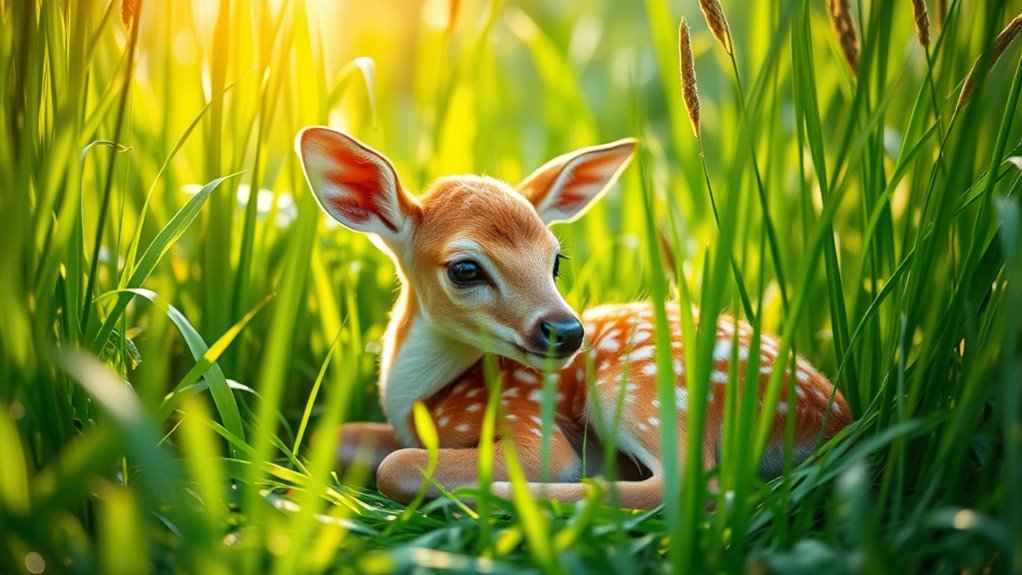
Have you ever paused to notice a tiny fawn hidden in the grass? It’s a delicate sight that often sparks curiosity. When you come across a baby deer alone in the wild, it’s important to remember that most fawns are naturally solitary during their first weeks of life. They often stay hidden in the deer habitat, relying on their camouflage to avoid predators. Your instinct might be to help or pick up the animal, but in most cases, it’s best to observe from a distance. Interfering can unintentionally harm the wildlife safety of the fawn and disrupt its natural development.
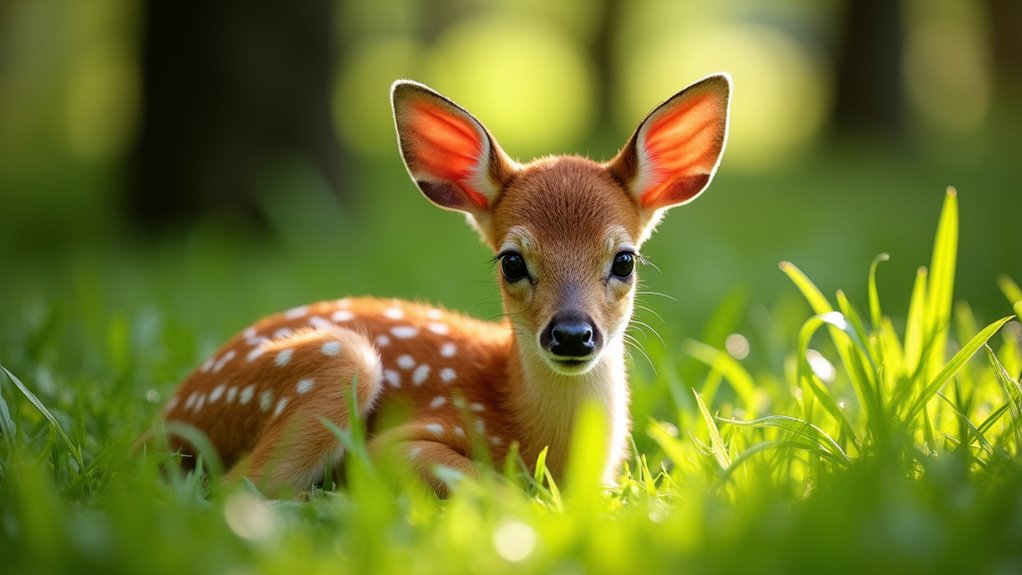
Deer habitat provides the ideal environment for a fawn to stay safe and grow. These young deer are born with spots that help them blend seamlessly into the tall grasses and underbrush where they rest. They aren’t abandoned, as some might think; rather, their mothers leave them alone temporarily to forage nearby without attracting attention. If you see a fawn lying quietly, it’s likely just resting and waiting for its mother to return. Approaching or attempting to move it can cause unnecessary stress to the animal and might even lead to its abandonment, which jeopardizes its chances of survival.
Fawns rest quietly, waiting for their mothers, not abandoned, in their natural, safe habitat.
If you find a fawn alone, your first priority should be to keep a respectful distance. Avoid making loud noises or sudden movements that could scare it away or alert predators. Never try to feed or handle the deer—doing so can cause more harm than good. The best thing you can do is ensure that you and others stay clear of the area, especially if there are pets nearby, which could pose a threat. Remember, the wild environment is designed to support these animals, and human interference often creates more problems than solutions. Recognizing that wildlife instinct plays a crucial role in their survival helps us approach these situations with respect and caution.
In some cases, the fawn might appear injured or in immediate danger, like near a busy road or caught in a trap. If you’re certain the animal needs help, contact a local wildlife rehabilitation center or animal control. They have the expertise to assess whether intervention is necessary. They are trained to handle wildlife rescue properly, ensuring the animal’s safety and well-being. Never attempt to take the fawn home or care for it yourself, as improper handling can cause stress or spread disease. Your role is to promote wildlife safety by respecting the animal’s natural behavior and habitat, allowing it to remain undisturbed until its mother returns or professional help arrives.
Understanding the importance of natural behaviors in wildlife conservation helps us appreciate the delicate balance in these ecosystems. Recognizing the significance of proper intervention when dealing with wildlife emergencies ensures that we act responsibly and ethically. Ultimately, understanding that most fawns are best left undisturbed helps protect their natural instincts and promotes healthy wildlife populations. Your awareness and cautious approach ensure that you’re contributing positively to the preservation of their delicate environment and safety.
As an affiliate, we earn on qualifying purchases.
Frequently Asked Questions
How Long Can a Fawn Survive Alone Without Food?
If you find a baby deer alone, you might wonder how long it can survive without food. Generally, a fawn can go about a 24-hour period without nursing, but it’s best not to intervene unnecessarily. For wildlife conservation and animal rehabilitation, it’s vital to leave the fawn undisturbed unless it’s in immediate danger. Contact a wildlife professional for guidance, as they can guarantee the fawn gets proper care and support.
Can I Move a Distressed or Injured Fawn?
Think of a distressed or injured fawn as a delicate leaf on a windy day. You shouldn’t move it yourself because deer behavior indicates they’re often safer alone, and moving the fawn can cause more harm. Instead, focus on wildlife rescue: contact professionals who understand how to handle wild animals properly. Your best move is to keep the area safe and let experts care for the fawn, ensuring it gets the help it needs.
What Signs Indicate a Fawn Needs Urgent Help?
You should seek urgent help if the fawn shows signs like unresponsive behavior, visible injuries, or if it’s cold and listless. Watch for changes in the fawn’s behavior—if it’s excessively crying or seems distressed. Remember, a healthy fawn usually stays still and has its mother’s scent on it. If you notice anything unusual, contact a wildlife professional immediately to guarantee the fawn gets the proper care it needs.
Is It Safe to Approach a Lone Fawn?
Approaching a lone fawn is like stepping into a delicate dance with nature. You shouldn’t approach it because understanding deer behavior is key to wildlife safety. Most fawns aren’t abandoned; they’re hiding to protect themselves. Interfering can cause stress or harm. Instead, observe from a distance, and if you’re concerned, contact wildlife professionals. Your cautious distance helps keep the fawn safe and preserves the natural balance.
How Do I Identify if a Fawn Is Abandoned or Lost?
You wonder if a fawn is abandoned or lost. By observing deer behavior, you see that a healthy fawn typically stays hidden and quiet, with camouflage markings like spots that help it blend in. If the fawn is moving around, crying loudly, or its mother isn’t nearby after 24 hours, it might be abandoned. Remember, most fawns are well-cared for by their mothers unless you notice signs of injury or distress.
Conclusion
If you find a lone fawn in the grass, remember, you’re witnessing a tiny miracle of nature that deserves respect. Don’t rush to intervene unless it’s clearly in danger—most babies are fine on their own. Stay calm, keep your distance, and give Mother Nature space to do her thing. You might just be witnessing a moment more delicate and precious than a jewel in the wild. Trust your instincts, and let nature take its course.
Halloween Picks
halloween
As an affiliate, we earn on qualifying purchases.