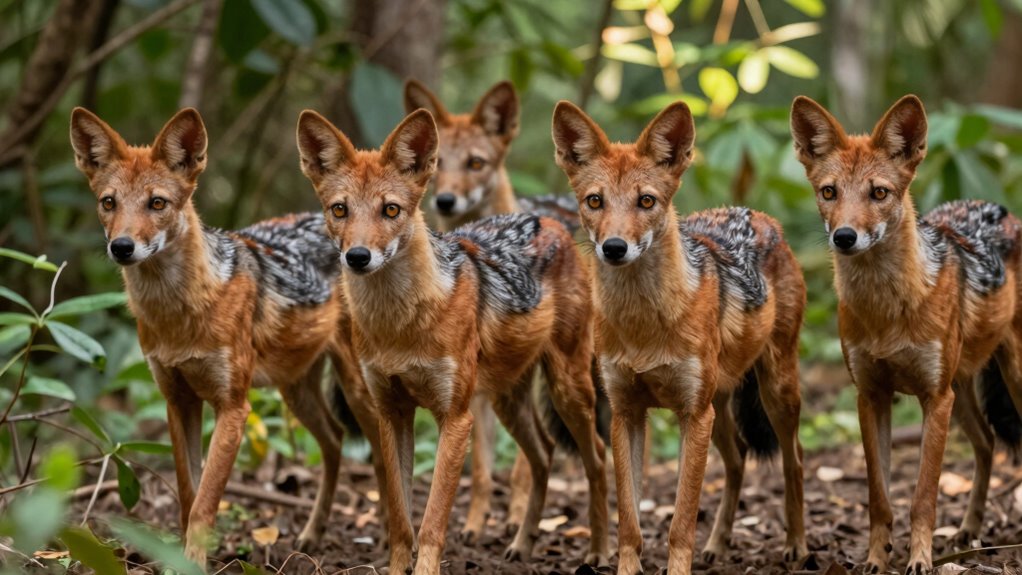

When dholes hunt as a team, they rely on strategy, communication, and coordination. You’ll notice they use vocal signals like yips and growls to direct each other, help locate prey, and warn of threats. Each pack member has a specific role, working together to surround and exhaust their target. Their territorial instincts strengthen group cohesion, making their teamwork highly effective. Keep exploring to discover more about how these clever hunters succeed through cooperation.

Get pet supplies delivered free with Prime
- Fast, free delivery on millions of items
- Prime Video, Amazon Music and more included
- Member-only deals all year
Key Takeaways
- Dholes coordinate through vocal signals like yips and growls to strategize and communicate during the hunt.
- Pack members assume specific roles, such as flankers or chasers, based on real-time vocal cues.
- Vocalizations alert the pack to prey location, threats, and when to advance or retreat.
- Territorial behavior reinforces pack cohesion and enhances coordinated hunting efforts within their domain.
- Strategic teamwork involves surrounding prey, relentless pursuit, and synchronized movements guided by vocal communication.

Dhole hunting is rarely a solo effort; it’s a coordinated team activity that relies on strategy, communication, and teamwork. When a pack begins its hunt, you’ll notice that every member plays a specific role, and their success depends on clear, effective communication. Vocal communication is essential — you might hear a series of high-pitched yips, barks, or growls that serve as signals to coordinate movements, alert others of prey locations, or warn about threats. These vocalizations keep the pack synchronized as they move through dense forests or grassy plains, ensuring every member knows when to advance, flank, or retreat.
You’ll also observe that territorial behavior influences their hunting strategies. Dholes are highly territorial animals, and their territories often overlap with other packs. This territoriality encourages them to hunt aggressively within their domain, defending it from intruders and rival packs. Because of this, they tend to hunt in areas where they feel most confident, maintaining a sharp awareness of their boundaries. If they sense a rival pack encroaching, they may increase vocalizations to assert dominance or warn intruders, which can also serve as a rallying call for their pack to defend their territory. This territorial behavior fosters a sense of unity among pack members, strengthening their collective effort during hunts.
As the hunt unfolds, you’ll see how the pack’s teamwork shines through. They work in tandem, using their vocal signals to coordinate pounces or chase movements, often chasing prey in a coordinated manner that maximizes their chances of success. Each member knows when to push, when to contain, and when to retreat — all based on the cues they get from their pack mates. Their strategic approach involves surrounding prey and exhausting it through relentless pressure, with vocal communication acting as the glue that holds their efforts together. Additionally, their highly social nature and cooperative hunting tactics are crucial for their effectiveness in capturing prey. This cooperation is often reinforced by their territorial instincts, which motivate the pack to defend both their boundaries and their prey. Recognizing these cooperative behaviors helps explain how they efficiently hunt as a united force.
Their territorial instincts also mean that they are more likely to work together when defending their hunting grounds or securing prey. This collective effort increases their efficiency and increases their chances of feeding their entire pack. You’ll notice that their ability to communicate vocally and their territorial behavior are intertwined, both playing essential roles in their hunting success. In the wild, the dhole’s hunting prowess depends on the seamless integration of these behaviors, making them one of nature’s most effective cooperative predators. Moreover, territoriality often leads to complex social dynamics that further enhance their hunting strategies and pack cohesion. Their social structure and communication methods demonstrate the importance of cooperative hunting in their survival.
dog training whistle for hunting
As an affiliate, we earn on qualifying purchases.
As an affiliate, we earn on qualifying purchases.
Frequently Asked Questions
How Do Dholes Communicate During a Hunt?
During a hunt, you’ll notice dholes communicate through territorial vocalizations and scent marking. These vocal signals help coordinate their movements and alert others to potential prey or threats. Scent marking establishes territory and keeps the pack organized, ensuring everyone stays on the same page. This combination of sounds and scents makes their teamwork efficient, enabling them to chase down prey effectively and protect their pack during the hunt.
What Role Does Each Dhole Play in the Pack?
Imagine a well-orchestrated symphony where each instrument plays a crucial role. In a Dhole pack, you’re the conductor guiding the social hierarchy and pack leadership dynamics. Some dholes lead the charge, setting the pace and strategy, while others flank or support, ensuring the hunt’s success. Every member’s role relies on their position in the hierarchy, working together seamlessly to outwit prey and bring home the victory.
How Do Dholes Coordinate Their Movements?
You observe that dholes coordinate their movements by relying on their social hierarchy and communication signals. As pack members, they follow established boundaries within their territory, ensuring organized hunting. Dholes use vocalizations, body language, and scent marking to stay synchronized, especially during complex hunts. This coordination helps them surround prey efficiently, with each member knowing their role, reinforcing their pack cohesion and ensuring successful hunts within their territory boundaries.
What Is the Success Rate of Dhole Hunts?
You’ll find that dholes, in their dynamic dhole habitat, achieve a surprisingly high success rate, often around 70-80%. Their teamwork transforms wild wilderness into a winning wonder. Their cooperative coordination, clever communication, and clever strategies contribute to their success. Protecting their habitat is essential for ongoing dhole conservation, ensuring these skillful, social hunters continue their thriving, thriving lives in the wild.
How Do Dholes Adapt Their Hunting Strategies?
You’ll notice that dholes adapt their hunting strategies through their social structure and prey selection strategies. Their social structure, which involves coordinated teamwork, allows them to pursue different prey types and sizes effectively. They switch prey based on availability and size, using pre-planned tactics to corner or exhaust their target. This adaptability helps them stay successful in various environments, making their hunts more efficient and increasing their chances of a successful kill.
Conclusion
Watching the dhole hunt, you see precision in their teamwork, a harmony forged through instinct and practice. Their coordinated effort contrasts sharply with the chaos of their prey’s panic, yet both are parts of the same dance of survival. The wild rhythm of unity versus the frantic scramble of prey leaves you in awe—nature’s choreography at its most raw and beautiful. In their teamwork, you find not just a strategy, but a testament to the power of working together.
Halloween Picks
halloween
As an affiliate, we earn on qualifying purchases.