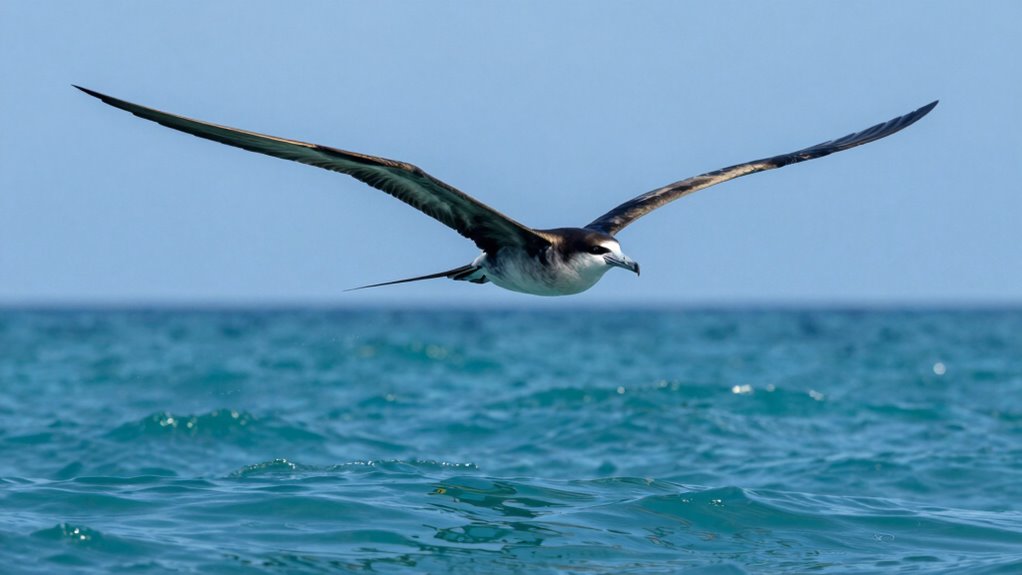

You see, the frigatebird stays in the air for days by using its long, narrow, deeply forked wings to minimize drag and glide effortlessly. It relies on dynamic soaring and thermal updrafts to harness wind currents, conserving energy and avoiding the need to flap constantly. Its lightweight and buoyant body help it stay aloft, while keen eyesight and swift dives enable it to hunt efficiently. Curious about more secrets behind its endurance? Keep exploring to discover even more.

Get pet supplies delivered free — and shop member deals
- Fast, free delivery on millions of items
- Access to Prime Big Deal Days deals on October 6–7
- Prime Video, Amazon Music and more included
Key Takeaways
- Uses long, narrow, deeply forked wings to reduce drag and facilitate effortless gliding.
- Exploits wind currents, thermals, and dynamic soaring to conserve energy during flight.
- Possesses lightweight, buoyant skeleton and efficient respiratory system for prolonged aerial endurance.
- Minimizes flapping by relying on aerodynamic wings and wind exploitation, reducing energy expenditure.
- Avoids water landings, staying aloft for days while hunting and migrating over the ocean.
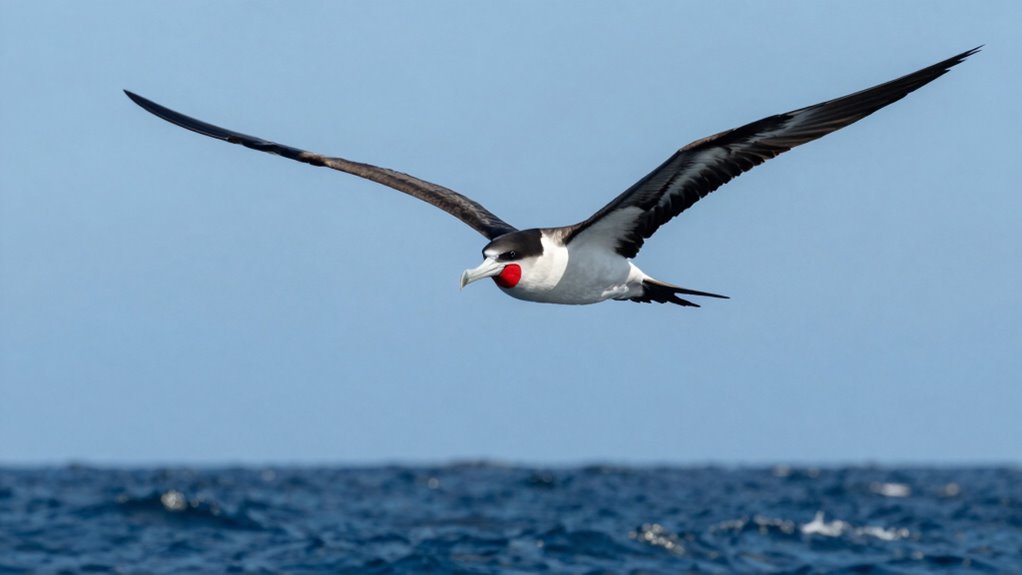
The frigatebird’s incredible ability to stay aloft for days stems from its specialized wings and unique soaring techniques. As you observe this bird, it’s clear that its marine adaptations are finely tuned for life over open water. Unlike many other seabirds, the frigatebird has long, narrow wings with deeply forked tips, which reduce drag and allow for effortless gliding. These wings aren’t just for soaring—they’re essential tools for staying airborne over vast ocean expanses without tiring. You’ll notice that the bird relies heavily on dynamic soaring and energy-efficient flight, exploiting wind currents and thermals to minimize flapping. This ability is vital because it conserves energy during extended periods in the air, especially when hunting or migrating. Additionally, these aerodynamic wing features are instrumental in enabling the frigatebird to perform prolonged long-distance flights with minimal effort.
Your understanding of the frigatebird’s predatory behavior reveals why these marine adaptations are so effective. The bird’s diet mainly consists of fish and squid, which it often snatches from the water’s surface. To do this, it employs a strategy called kleptoparasitism—stealing prey from other seabirds or catching fish just below the water’s surface. Its aerodynamic wings give it the lift and maneuverability needed to execute swift, precise dives. Since it spends so much time over the ocean, it has developed a keen eye for spotting prey from high above. Its sharp, hooked beak is perfect for grabbing slippery fish, and its keen eyesight helps it locate prey from a distance, making its predatory behavior highly effective. Furthermore, its marine adaptations are complemented by its ability to remain aloft for days, reducing the need for frequent water landings that could compromise its energy efficiency. This specialized flight technique is a key factor in its endurance and success as a marine predator.
Because the frigatebird rarely lands on water, it has adapted to stay in the air for long stretches, often days at a time. Its marine adaptations go beyond wings—they include a lightweight skeleton that reduces overall weight, enabling longer flight durations. Its buoyant body and efficient respiratory system further support extended soaring. As you watch it glide effortlessly, it’s clear that every feature is optimized for a life spent in the air, hunting and migrating across the ocean. Additionally, marine specialization plays a crucial role in its ability to thrive in such a challenging environment. This combination of physical adaptations and flight techniques allows the frigatebird to exploit marine food sources efficiently, maintain its predatory edge, and travel great distances without rest. Ultimately, these specialized features make the frigatebird a master of aerial endurance and a remarkable example of marine adaptation in the avian world.
long-range binoculars for bird watching
As an affiliate, we earn on qualifying purchases.
As an affiliate, we earn on qualifying purchases.
Frequently Asked Questions
Do Frigatebirds Ever Land on Water?
You might wonder if frigatebirds ever land on water. They rarely do because they’re marine predators that rely on their unique flight adaptations to stay airborne for days. Instead of landing, they often skim the water’s surface to catch fish or pick up salt. Their long, hooked beak and lightweight body help them conserve energy during long flights, making water landings unnecessary for resting or feeding.
How Do Frigatebirds Find Food While Airborne?
You’ll find that frigatebirds locate food while airborne by relying on their excellent eyesight and keen sense of smell, much like marine predators. They spot schools of fish or scavenged prey from high altitudes, gliding effortlessly for long periods thanks to their remarkable flight endurance. They often steal from other seabirds or skim the water’s surface, making their extended time in the air highly efficient for hunting without needing to land frequently.
What Threats Do Frigatebirds Face During Long Flights?
Did you know frigatebirds can stay airborne for over a month? During long flights, threats like predators, especially large birds or ships, challenge their survival. You see, they use clever navigational strategies, relying on wind patterns and ocean currents, to avoid predators and conserve energy. Their keen eyesight helps them spot danger early, allowing quick escape, so they can continue their incredible journey without falling prey to threats.
How Do Young Frigatebirds Learn to Stay Aloft?
You observe that young frigatebirds learn to stay aloft through a combination of innate instincts and practice. Their juvenile flight skills develop as they practice soaring and gliding, honing their navigation skills over time. During these early flights, they rely on environmental cues like wind patterns and the sun for navigation, gradually mastering the art of staying airborne for days, much like their adult counterparts.
Can Frigatebirds Sleep While Flying?
Imagine you’re on a long road trip, drifting between towns with no rest stops—frigatebirds do something similar. They can sleep while flying, using a technique called unihemispheric sleep, where one brain hemisphere rests while the other stays alert. This allows them to maintain their incredible migration patterns and breeding behaviors without ever fully stopping. It’s like a continuous nap, keeping them soaring through the skies for days on end.
Conclusion
So, next time you see a frigatebird soaring effortlessly above the waves, remember its incredible adaptation—its ability to stay airborne for days. It’s like a modern-day Pegasus, gliding on air currents with ease, thanks to its unique wings and buoyant buoyancy. This bird truly masters the skies, reminding us that nature’s innovations are often as astonishing as they are ancient. Truly, the frigatebird’s flight is a marvel that keeps us in awe of the natural world.
Evergreen bestsellers Picks
bestsellers
As an affiliate, we earn on qualifying purchases.