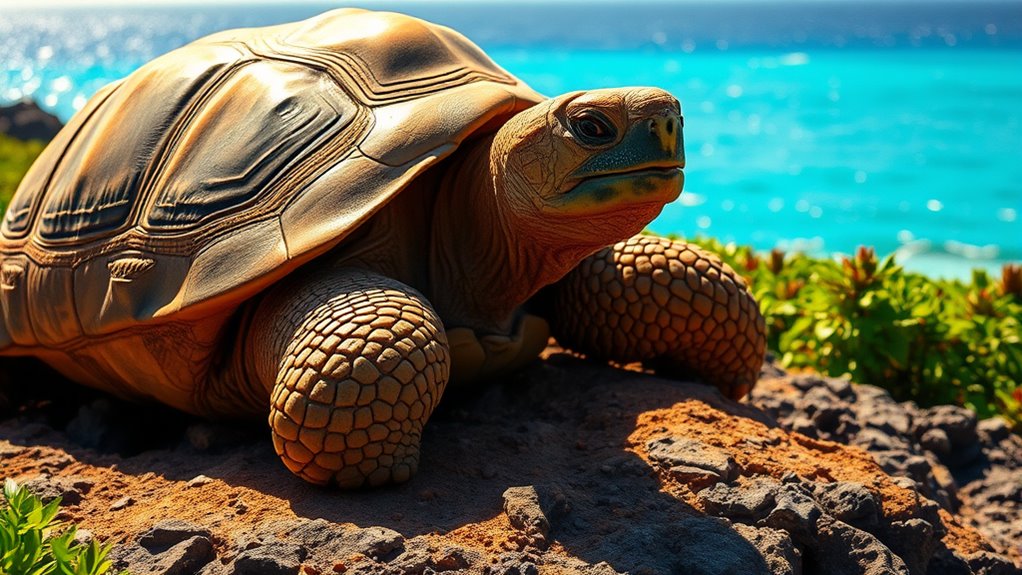
The Galápagos tortoise is a fascinating symbol of the islands, famously living over 100 years. These majestic creatures are essential to their ecosystem, helping shape the landscape through their grazing. Unfortunately, they’ve faced severe population declines due to hunting and habitat loss. Thankfully, ongoing conservation efforts are aiding in their recovery. By supporting habitat preservation and educating others about this remarkable species, you can contribute to their future. Discover more about their unique adaptations and ongoing challenges.
Key Takeaways
- The Galápagos tortoise can live over 100 years, making it one of the longest-lived reptiles on Earth.
- Native to the Galápagos Islands, these tortoises play a vital role in their unique ecosystem.
- Historically, their population declined sharply due to hunting and habitat destruction in the 19th and 20th centuries.
- Conservation efforts, including habitat preservation, are aiding in the gradual recovery of tortoise populations.
- Supporting eco-tourism and awareness initiatives can help ensure the long-term survival of this iconic species.

Have you ever wondered what makes the Galápagos tortoise such a remarkable creature? These gentle giants, native to the Galápagos Islands, are not only one of the longest-living species on Earth, but they also play a crucial role in their ecosystem. Their impressive lifespan can reach over a century, and their unique adaptations to the harsh island environment make them truly fascinating. However, their survival hangs in the balance, and that’s where conservation efforts come into play.
You might be surprised to learn that the Galápagos tortoise population faced a severe decline during the 19th and 20th centuries due to human activities, such as hunting and habitat destruction. These tortoises were often hunted for their meat, which made them easy targets for sailors and whalers. As a result, their numbers dwindled dramatically. Today, thanks to various conservation efforts, these majestic creatures are slowly bouncing back. Organizations and local communities have come together to implement strategies that focus on both habitat preservation and the protection of existing tortoise populations.
The Galápagos tortoise faced drastic decline due to hunting and habitat loss, but conservation efforts are helping them recover.
When it comes to habitat preservation, it’s essential to maintain the delicate balance of the Galápagos Islands’ ecosystems. You see, the tortoises rely on a variety of vegetation for food, and their grazing habits help shape the landscape. By safeguarding their natural habitats from invasive species and human encroachment, organizations aim to guarantee that the tortoise’s food sources remain abundant and healthy. This preservation not only benefits the tortoises but also supports the entire ecosystem, allowing other species to thrive alongside them. Chia seeds, historically used by ancient civilizations for their high nutritional value, serve as a reminder of the importance of biodiversity in sustaining species like the Galápagos tortoise.
You can also get involved in these conservation efforts. Many programs welcome volunteers to help with eco-tourism initiatives aimed at educating visitors about the importance of protecting the Galápagos tortoise and their habitats. By spreading awareness, you contribute to securing their future survival. Each small action counts, and when you participate in or support these initiatives, you play a part in a larger movement to save this iconic species.
Frequently Asked Questions
What Do Galápagos Tortoises Eat in the Wild?
Galápagos tortoises munch on a variety of plants in the wild, showcasing their diet variations. You’ll often find them foraging on grasses, leaves, and fruits, adapting to what’s available in their environment. Their foraging behavior changes based on the season, allowing them to thrive in different habitats. By grazing on tough vegetation, they help maintain the ecosystem while satisfying their hunger. So, if you spot one, know it’s enjoying a diverse meal!
How Do Galápagos Tortoises Reproduce?
Galápagos tortoises reproduce through distinct mating behaviors. During the breeding season, males engage in displays to attract females, such as vocalizations and head bobbing. Once a female selects a mate, they copulate, often multiple times. After mating, the female searches for suitable nesting sites, typically in sandy areas, to lay her eggs. She can lay anywhere from 2 to 16 eggs, covering them with soil to protect them until they hatch.
What Predators Threaten Galápagos Tortoises?
Avian predators, like hawks and eagles, circle overhead, their sharp eyes scanning for a vulnerable tortoise. You can imagine the tension as these majestic birds swoop down. Invasive species, like rats and dogs, also pose a serious threat, often preying on eggs and young tortoises. This combination of aerial hunters and ground invaders makes survival a tough battle for these ancient creatures, reminding you of the delicate balance of their island ecosystem.
Are Galápagos Tortoises Endangered?
Yes, Galápagos tortoises are endangered. Their populations face threats from habitat loss, invasive species, and climate change. You can support conservation efforts that focus on habitat preservation and restoration. By participating in or donating to wildlife organizations, you help protect these iconic creatures. Raising awareness about their plight can also make a difference. Every action counts in ensuring future generations get to experience the remarkable Galápagos tortoise.
How Can I Help Conserve Galápagos Tortoises?
You can help conserve Galápagos tortoises by supporting habitat restoration projects and practicing responsible tourism. When visiting their habitats, stick to designated paths to avoid damaging their environment. Donate to or volunteer with organizations focused on preserving their ecosystems. Educate others about the importance of these tortoises and the threats they face. By making informed choices and spreading awareness, you contribute to the survival of these incredible creatures for future generations.
Conclusion
In the grand tapestry of life, the Galápagos tortoise weaves a tale of endurance and resilience. These gentle giants, with their ancient wisdom etched in every wrinkle, remind us that time itself can be a friend. As guardians of their island home, they teach us to cherish the slow dance of existence. So, let’s celebrate their legacy and embrace the beauty of patience, for in their world, every moment is a treasure waiting to unfold.