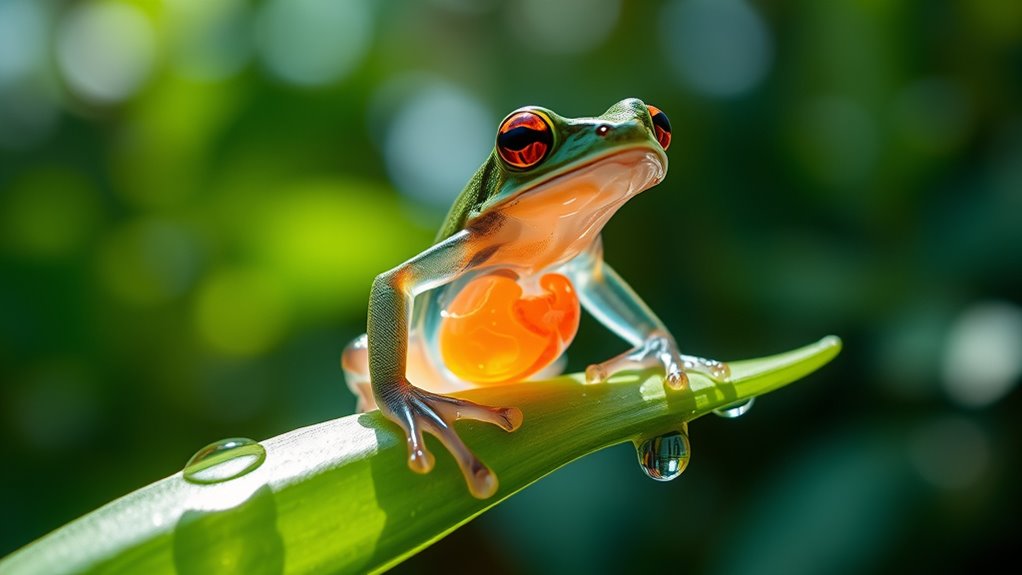
Glass frogs are truly fascinating with their transparent tummies that reveal their internal organs. This unique feature helps them camouflage seamlessly in their lush rainforest habitat, reflecting the green around them. Their clear bellies blend effortlessly with dappled light, making it hard for predators to spot them. Additionally, this transparency plays a role in their mating rituals, showcasing their health to potential partners. Keep exploring, and you’ll discover even more about these incredible amphibians and their behaviors.
Key Takeaways
- Glass frogs possess transparent abdomens that reveal their internal organs, contributing to their unique ghostly appearance.
- Their clear bellies help them blend into dappled light, enhancing camouflage against predators in their rainforest habitat.
- This transparency serves as a survival adaptation, allowing them to evade detection from predators while resting on leaves.
- The transparent bodies also play a role in their reproductive behaviors, as they attract mates through their vibrant appearance.
- Overall, the transparent tummies of glass frogs highlight the intricate adaptations that aid their survival in diverse ecosystems.
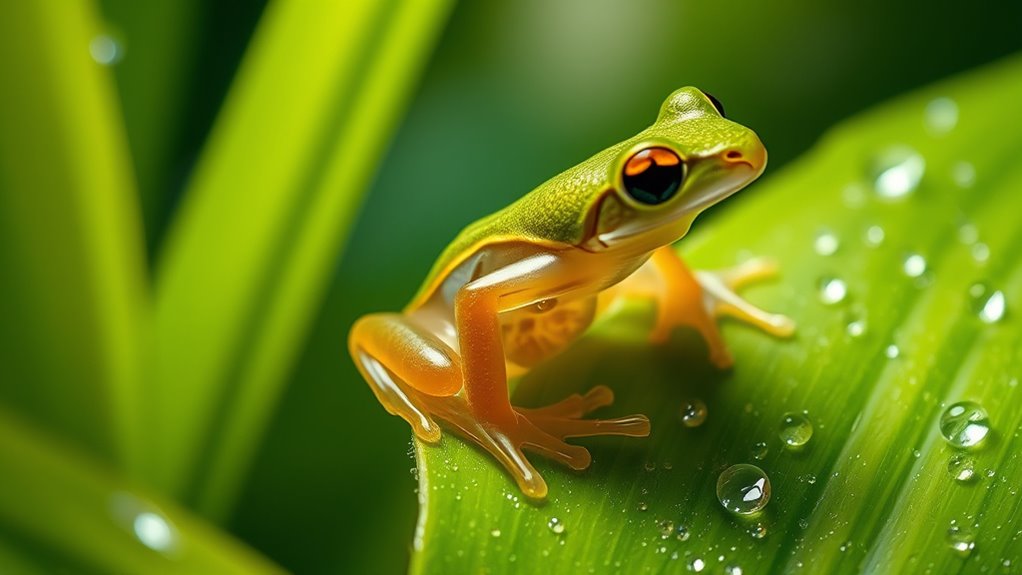
Have you ever marveled at the wonders of nature? If you take a closer look at the glass frog, you might find even more reasons to be fascinated. These remarkable creatures, native to Central and South America, stand out not just for their ethereal beauty but also for their incredible adaptations. Their transparent abdomens reveal their internal organs, offering a glimpse into the mysteries of amphibian biology. But there’s more to these frogs than meets the eye.
One of the most intriguing aspects of glass frogs is their use of camouflage techniques. You might think that being transparent would make them easy prey, but their coloring actually helps them blend into their surroundings. In the lush rainforests where they reside, their vibrant green skin mimics the foliage, while their clear bellies give them a ghostly appearance against the habitat’s dappled light. This clever disguise helps them avoid predators, allowing them to thrive in an environment teeming with potential threats.
The glass frog’s vibrant green skin and transparent belly create a perfect camouflage, allowing it to thrive amidst rainforest threats.
As you observe these frogs, you’ll also notice their unique reproductive behaviors. Male glass frogs engage in a fascinating courtship ritual to attract females. Often, they’ll call out in a series of melodic trills, showcasing their vocal prowess. If a female finds a male’s song appealing, she’ll approach him, and mating will occur. Afterward, the female lays her eggs on leaves hanging above water, a strategic move that protects the eggs from aquatic predators. This behavior not only ensures the survival of the offspring but also highlights the intricate bond between the male and female during mating season.
It’s amazing how these frogs have evolved such specialized traits for survival. Their transparent bodies aren’t just a quirky feature; they serve a crucial role in their existence, showcasing nature’s ingenuity. Interestingly, studying the glass frog can reveal insights into the psychological benefits of understanding unique adaptations in nature. You can’t help but appreciate the delicate balance of life in the rainforest, where every creature, including the glass frog, plays its part in the ecosystem.
Top picks for "glas frog transparent"
Open Amazon search results for this keyword.
As an affiliate, we earn on qualifying purchases.
Frequently Asked Questions
What Do Glass Frogs Eat in the Wild?
In the wild, glass frogs primarily feast on small insects, showcasing their diet habits. You’ll often find them preying on tiny flies, moths, and other invertebrates that flutter nearby. Their prey preferences lean towards soft-bodied insects, which they’re quick to catch with their sticky tongues. This diet not only sustains them but also plays a vital role in their ecosystem, helping to control insect populations in their natural habitats.
How Do Glass Frogs Breathe Underwater?
You might think glass frogs are just ordinary critters, but they’ve got some wild tricks up their sleeves! When it comes to breathing underwater, they rely heavily on frog skin respiration. Their skin absorbs oxygen directly from the water, making it seem like magic! These underwater breathing mechanisms let them stay submerged for longer periods, showcasing their incredible adaptability. So, next time you see one, remember they’re more than just cute; they’re survival experts!
Are Glass Frogs Endangered Species?
Yes, glass frogs are considered endangered due to habitat loss and environmental changes. Their rainforests are being destroyed for agriculture and urban development, which threatens their survival. You can help by supporting conservation efforts aimed at preserving their natural habitats. By advocating for sustainable practices and raising awareness, you contribute to protecting these unique creatures and their ecosystems. Every action counts, so get involved and make a difference for glass frogs!
How Do Glass Frogs Reproduce?
Glass frogs reproduce in a spectacular dance of nature! You’ll be amazed as they engage in intricate mating behaviors, with males calling out to attract females. Once they mate, the female lays her eggs on leaves above water. As the eggs develop, they’re suspended like tiny jewels, waiting to hatch. This unique process keeps the developing tadpoles safe from predators, showcasing the wonder of life in the rainforest! It’s a true marvel!
Can Glass Frogs Change Their Transparency?
No, glass frogs can’t change their transparency like some other species. Their transparency is due to unique molecular mechanisms that evolved over time, providing them with evolutionary advantages. This adaptation helps them blend into their environment, making it harder for predators to spot them. While they remain consistently translucent, these frogs rely on their camouflage for survival, showcasing the fascinating interplay between biology and environment in their habitat.
Conclusion
In summary, glass frogs truly are fascinating creatures with their transparent tummies revealing a glimpse into their unique biology. You might think they’re too delicate to thrive in the wild, but their adaptations allow them to survive and even flourish in their habitats. By embracing their unusual traits, we can appreciate the diversity of life on our planet. So, next time you hear about these remarkable amphibians, remember their beauty lies not just in their appearance, but in their resilience.