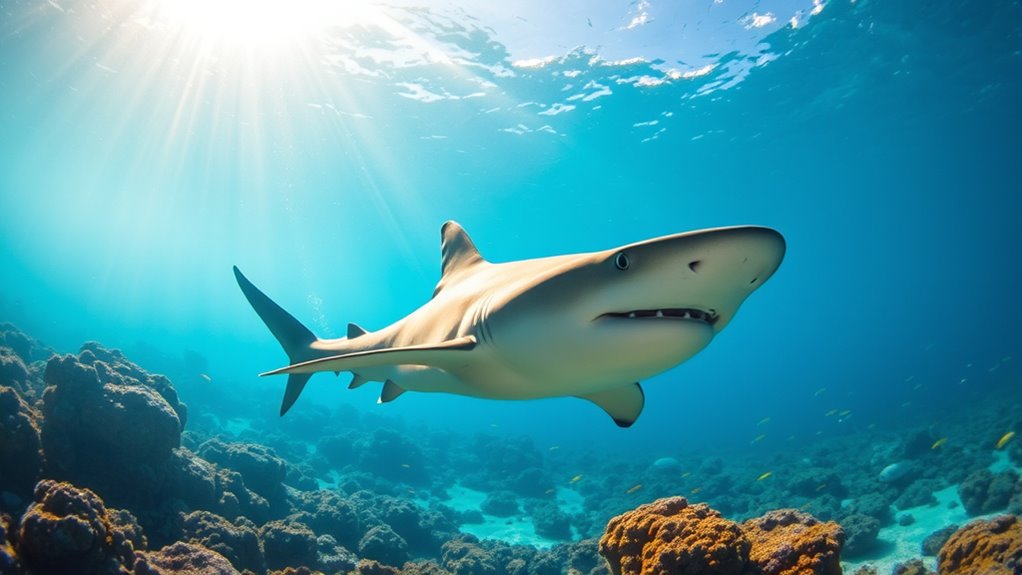

Hammerhead sharks have a unique hammer-shaped head that grants them outstanding vision. With their wide-set eyes, they can see nearly 360 degrees, making it easier to spot prey. This special head shape isn’t just for show; it enhances their hunting capabilities and helps them navigate the ocean like pros. Their evolutionary adaptations allow them to thrive in their environment. If you’re curious about their role in the ecosystem and conservation efforts, stick around for more insights!
Key Takeaways
- Hammerhead sharks have wide-set eyes that provide nearly 360-degree vision, enhancing their ability to detect prey.
- Their unique hammer-shaped head improves visual processing, allowing for better depth perception and spatial awareness.
- This specialized anatomy aids in hunting efficiency, making them effective predators in marine environments.
- Enhanced vision contributes to their role in regulating populations of smaller fish and maintaining ecological balance.
- Conservation efforts are essential to protect their unique adaptations and ensure their survival in marine ecosystems.
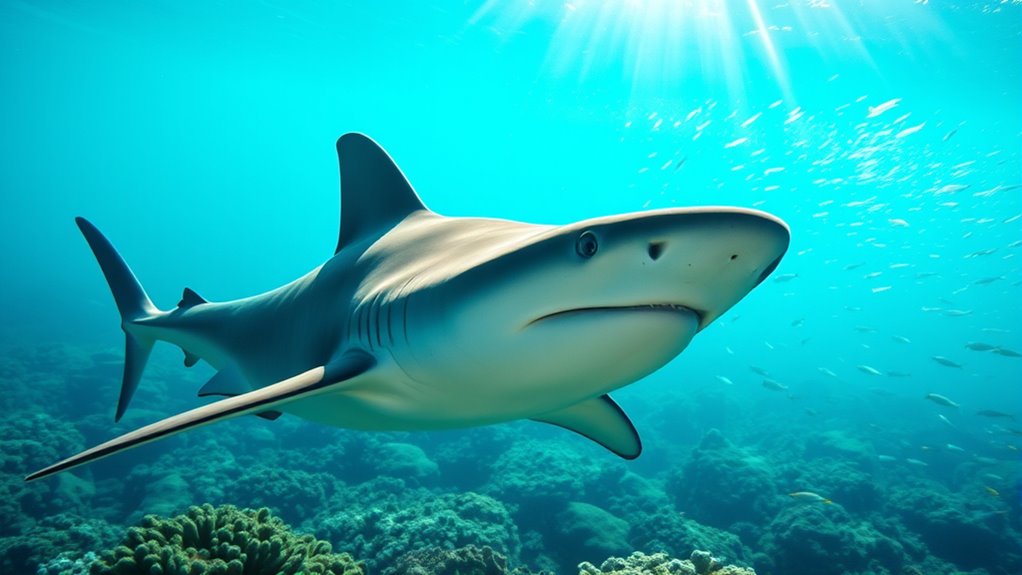
Have you ever wondered what makes the hammerhead shark so distinctive? These fascinating creatures stand out not just for their unique head shape but also for their essential role in aquatic ecosystems. The hammerhead’s wide-set eyes provide it with a nearly 360-degree field of vision, enhancing its hunting capabilities. This remarkable adaptation allows you to appreciate how evolution has fine-tuned these sharks for survival. You can imagine them gliding gracefully through the water, spotting prey from afar, which makes them effective predators.
But the uniqueness of hammerhead sharks extends beyond their physical characteristics. They play a critical role in maintaining the balance of marine habitats. By preying on smaller fish and other marine creatures, they help regulate populations within their ecosystem, ensuring that no single species dominates. This balance is indispensable for the health of aquatic ecosystems, as it promotes biodiversity. When you consider how interconnected life in the ocean is, you might realize that losing a species like the hammerhead could have ripple effects throughout the environment.
Unfortunately, hammerhead sharks face significant threats due to overfishing and habitat loss. Their fins are highly sought after in the shark fin trade, leading to drastic declines in their populations. As someone who cares about the health of our oceans, you might find it alarming that these majestic sharks are now listed as endangered. Setting clear intentions in conservation efforts is more important than ever, as they aim to protect not just hammerheads but the entire biodiversity of marine life. You’ll be glad to know that various organizations are working tirelessly to implement regulations and promote sustainable fishing practices.
Frequently Asked Questions
How Fast Can a Hammerhead Shark Swim?
A hammerhead shark can swim at speeds of up to 20 miles per hour. This impressive speed helps them catch prey and evade threats in their ocean habitat. As you learn more about these fascinating creatures, consider how shark conservation efforts play a vital role in maintaining healthy marine ecosystems. Supporting marine research can further enhance our understanding of hammerhead sharks and promote their protection for future generations.
Are Hammerhead Sharks Dangerous to Humans?
Hammerhead sharks aren’t typically dangerous to humans. While their shark behavior may seem intimidating, these creatures usually prefer to avoid us. Most incidents occur when they’re provoked or feel threatened. For your safety, it’s best to stay calm and avoid swimming in murky waters where sharks might be hunting. Always respect their habitat, and you’ll minimize any risks. Remember, understanding these sharks can help promote safer interactions in their environment.
What Do Hammerhead Sharks Eat?
You might be surprised to learn that hammerhead sharks have a diverse diet. These fascinating predators primarily feast on fish, including rays and smaller sharks. But wait, there’s more! Their feeding habits also extend to crustaceans and cephalopods, showcasing their adaptability in hunting. As you dive deeper into the hammerhead diet, you’ll discover how their unique head shape aids in locating prey, making them truly remarkable hunters in the ocean’s depths.
How Long Do Hammerhead Sharks Live?
Hammerhead sharks typically live around 20 to 30 years in the wild. Their lifespan’s essential for maintaining marine ecosystems, where they play a critical role as apex predators. By understanding their longevity, you can appreciate the significance of shark conservation efforts. Protecting these magnificent creatures guarantees the health of oceanic environments. So, every time you advocate for shark conservation, you contribute to preserving their habitat and the balance of marine life.
Where Can I Find Hammerhead Sharks in the Wild?
You can find hammerhead sharks in tropical and subtropical waters around the world, often near continental shelves and coral reefs. They tend to congregate in groups, especially during mating season. While observing them, remember the importance of marine conservation; protecting their habitats is vital for their survival. Understanding their behavior can enhance your experience—watch how they hunt and interact. Spotting these fascinating creatures is an incredible way to appreciate our ocean’s biodiversity!
Conclusion
Finally, the hammerhead shark’s unique vision enhances its hunting prowess, allowing it to navigate the ocean with unparalleled precision. Imagine a scenario where a hammerhead detects a school of fish hiding in the shadows of a reef; its wide-set eyes enable it to spot movement from different angles, ensuring a successful catch. This remarkable adaptation not only showcases the hammerhead’s evolutionary advantage but also emphasizes the intricate relationship between anatomy and survival in the marine ecosystem.