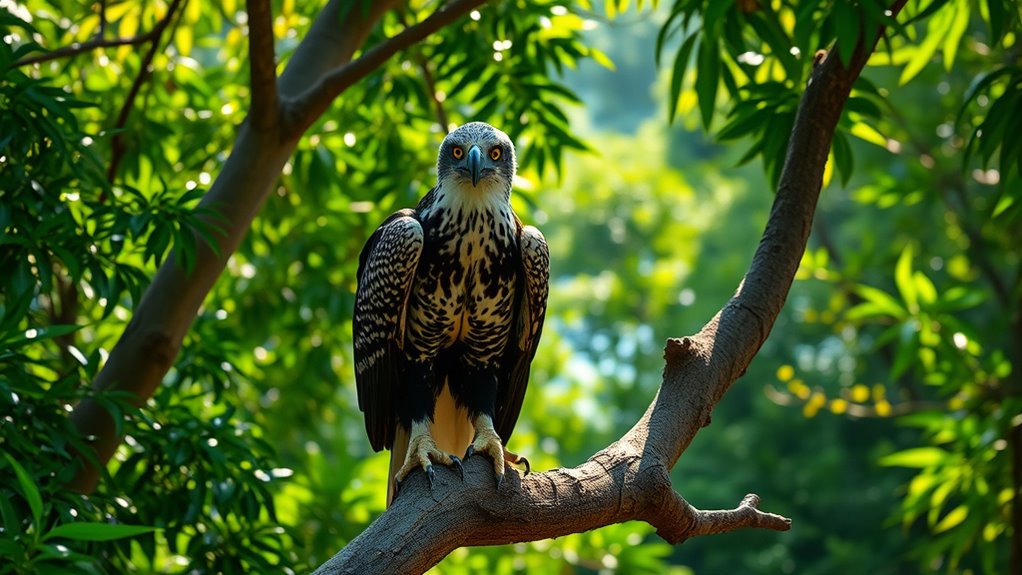

The Harpy Eagle is a stunning powerhouse of the canopy, celebrated for its majestic presence and powerful build. Soaring high in the forests of Central and South America, this apex predator uses its sharp talons to hunt stealthily, controlling prey populations and maintaining ecosystem balance. Nesting high in large trees, both parents fiercely protect their chicks. With threats like deforestation looming, conservation efforts are crucial to guarantee this incredible bird thrives. Discover more about its fascinating life and role in the ecosystem.
Key Takeaways
- The Harpy Eagle is an apex predator, crucial for maintaining balance in Central and South American forest ecosystems.
- With a powerful build and impressive wingspan, it commands attention as a majestic ruler of the treetops.
- This eagle exhibits unique nesting behavior, returning to the same high nests for multiple breeding seasons while fiercely protecting its chicks.
- Its hunting techniques involve stealth and precision, using sharp talons to capture prey such as monkeys and sloths.
- Conservation efforts are vital to protect Harpy Eagle habitats, ensuring biodiversity and the health of tropical forest ecosystems.
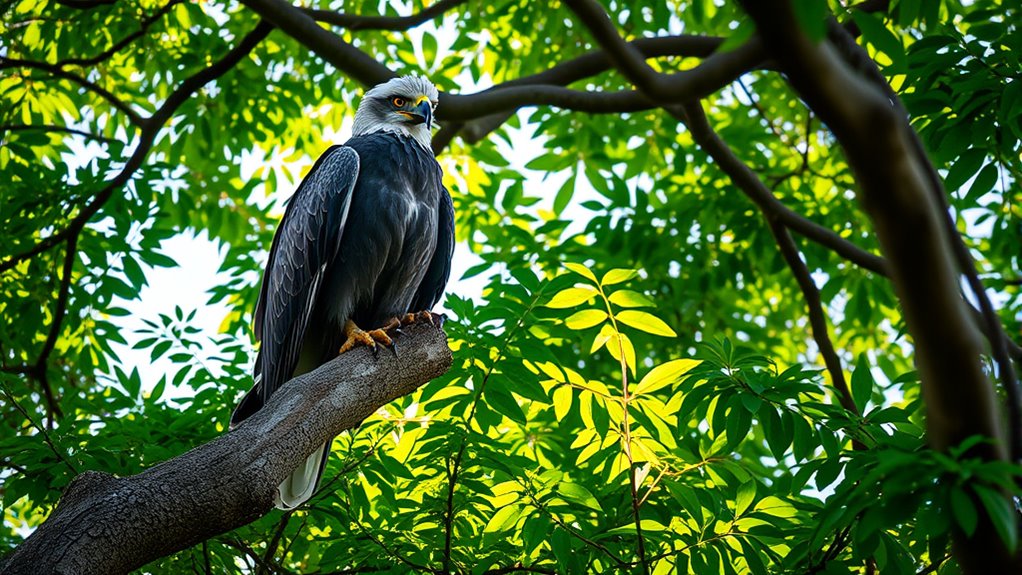
Have you ever seen a bird so majestic it takes your breath away? The Harpy Eagle is one of those rare creatures that demands your attention. With its striking appearance, powerful build, and impressive wingspan, this raptor isn’t just a sight to behold; it’s a powerhouse of the canopy. You can’t help but admire its bold demeanor as it rules the treetops of Central and South America.
The Harpy Eagle captivates with its majestic presence, ruling the treetops with power and grace.
When you look closer, you’ll discover that the Harpy Eagle’s nesting behavior is as fascinating as its looks. These eagles typically choose large trees for their nests, often 100 feet above the ground. That height not only provides safety from potential threats, but it also gives them a prime lookout point. Harpy Eagles are known to return to the same nest for years, adding to it each breeding season. If you ever get the chance to observe a pair raising their young, you’ll witness a remarkable bond. Both parents fiercely protect their chicks, sharing the responsibilities of feeding and guarding them. It’s a beautiful display of teamwork that showcases their commitment to family.
Now, let’s talk about their hunting techniques. The Harpy Eagle is an apex predator, and it knows how to hunt like one. With its sharp talons, which can measure up to 5 inches, it easily snatches up its prey. You might find it hunting in dense forests, where it uses stealth to its advantage. It can perch silently, scanning the ground for unsuspecting monkeys or sloths—their preferred meals. Once it spots its target, it dives down with astonishing speed and precision. You can almost feel the adrenaline as it swoops in for the catch. This combination of strength and strategy is what makes the Harpy Eagle such an effective hunter. The eagle’s hunting prowess is comparable to the importance of high refresh rates in enhancing visual experiences during gaming.
The Harpy Eagle’s role in its ecosystem is essential. By controlling prey populations, it helps maintain a balance in the forest. However, their habitat is under threat due to deforestation and human encroachment. If you appreciate the beauty and significance of these incredible birds, consider supporting conservation efforts aimed at protecting their habitats. By doing so, you’ll help ensure that future generations can marvel at their grace and power. So, the next time you think about the wonders of nature, remember the Harpy Eagle—a true powerhouse of the canopy.

Safari Ltd. Harpy Eagle Figurine – Detailed 3" Plastic Model Figure – Fun Educational Play Toy for Boys, Girls & Kids Ages 3+
Lifelike Representation: This Harpy Eagle figurine showcases the bird's distinct features with precision. From its prominent crest to…
As an affiliate, we earn on qualifying purchases.
As an affiliate, we earn on qualifying purchases.
Frequently Asked Questions
What Is the Lifespan of a Harpy Eagle in the Wild?
In the wild, a harpy eagle can live up to 25 years. These magnificent birds thrive in tropical rainforests, where their habitat provides ample food. Their diet mainly consists of monkeys and sloths, showcasing their incredible hunting skills. You’ll find them perched high in the canopy, skillfully spotting prey. Understanding their lifespan helps you appreciate their role in the ecosystem, as they maintain balance by controlling the populations of their prey species.
How Do Harpy Eagles Communicate With Each Other?
Harpy eagles communicate through distinct vocalizations and impressive aerial displays. You’ll notice their calls are loud and varied, often echoing through the canopy to convey territory and attract mates. During mating season, you might see them perform soaring flights, showcasing their strength and agility. These visual displays, combined with their vocal signals, help establish bonds and maintain communication within their territory, ensuring they stay connected with one another in their lush environment.
What Are the Primary Threats to Harpy Eagle Populations?
The primary threats to harpy eagle populations are habitat loss and illegal hunting. As you explore their habitat, you’ll notice deforestation and land development drastically shrinking their living space. This loss of trees not only reduces nesting sites but also affects their prey. Additionally, illegal hunting poses a direct danger to them, as poachers target these magnificent birds for their feathers or to sell them. Protecting their environment is essential for their survival.
How Do Harpy Eagles Care for Their Young?
When you think of a harpy eagle, picture a fierce guardian, cradling its young in a fortress of branches. These magnificent birds meticulously engage in nest building, weaving together sturdy sticks high in the treetops. Once the eggs hatch, you’ll see them displaying remarkable feeding habits, hunting for prey and tearing it apart to provide nourishment. Their dedication guarantees that each chick grows strong, ready to soar through the canopy like a true apex predator.
Are Harpy Eagles Solitary or Social Birds?
Harpy eagles are primarily solitary birds. You’ll often spot them alone, especially when hunting or nesting. However, during mating season, their behaviors shift; they engage in elaborate displays to attract a mate. Once paired, they fiercely defend their territory, leading to territorial disputes with other eagles. These disputes can be intense, ensuring that their nesting area remains safe and abundant with prey, all essential for raising their young successfully.

Occer 12×25 Compact Binoculars for Adults and Kids, Large Eyepiece Waterproof Binocular with Low Light Vision,High Powered Easy Focus Binoculars for Bird Watching,Outdoor Hunting,Travel,Sightseeing
【HIGH-POWERED LARGE EYEPIECE BINOCULARS】 This binoculars for adults has 12x magnification, 25mm objective lens and wide field of…
As an affiliate, we earn on qualifying purchases.
As an affiliate, we earn on qualifying purchases.
Conclusion
In the heart of the rainforest, you might spot a harpy eagle soaring high, its wings casting shadows on the forest floor. Coincidentally, as you admire its majesty, you realize it embodies the strength of nature itself. Just like this magnificent bird, you too possess the power to rise above challenges and embrace your potential. Remember, every time you hear its call, it’s a reminder that you’re part of something greater, soaring through life’s canopy.

BirdoorKam Smart Bird House with Camera Solar Powered,Isolated Camera Bay & Bird-Safe Varnish, 2K HD Pinewood Birdhouse with Camera Inside,Smart Bird Nest Box,Auto Detection for Backyard Birdwatching
𝐁𝐢𝐫𝐝-𝐒𝐚𝐟𝐞 𝐕𝐚𝐫𝐧𝐢𝐬𝐡 & 𝐓𝐡𝐫𝐞𝐞 𝐄𝐧𝐭𝐫𝐲 𝐏𝐚𝐧𝐞𝐥𝐬:Designed for life outdoors, this birdhouse is crafted from quality pinewood and finished…
As an affiliate, we earn on qualifying purchases.
As an affiliate, we earn on qualifying purchases.

Wildlife Conservation Decoded: How Anyone Can Unlock the Secrets of Wildlife Management and Biodiversity, Even Without a Science Background
As an affiliate, we earn on qualifying purchases.
As an affiliate, we earn on qualifying purchases.