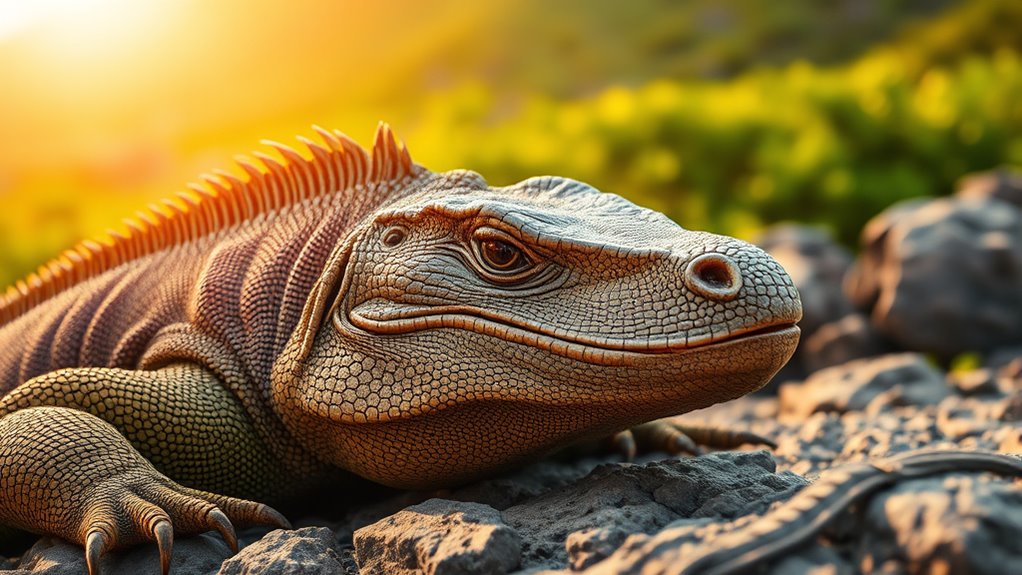

The Komodo dragon is the largest lizard on Earth and an apex predator of the Indonesian islands. With its impressive size and fierce tactics, it’s perfectly adapted to hunting in harsh conditions. Its venom, which induces shock and prevents blood clotting, makes prey more vulnerable. However, the Komodo dragon faces threats from habitat destruction and climate change. Understanding these issues is vital for efforts to preserve this magnificent reptile and its ecosystem. There’s even more to discover about its intriguing biology.
Key Takeaways
- The Komodo dragon is the largest lizard, reaching lengths of up to 10 feet and weighing over 150 pounds.
- It is an apex predator, playing a crucial role in maintaining the balance of its ecosystem.
- Native to specific Indonesian islands, it thrives in harsh environments and exhibits unique hunting adaptations.
- Its venomous saliva can induce shock in prey, making them more susceptible to capture.
- Conservation efforts are vital to protect the Komodo dragon from habitat destruction and climate change impacts.
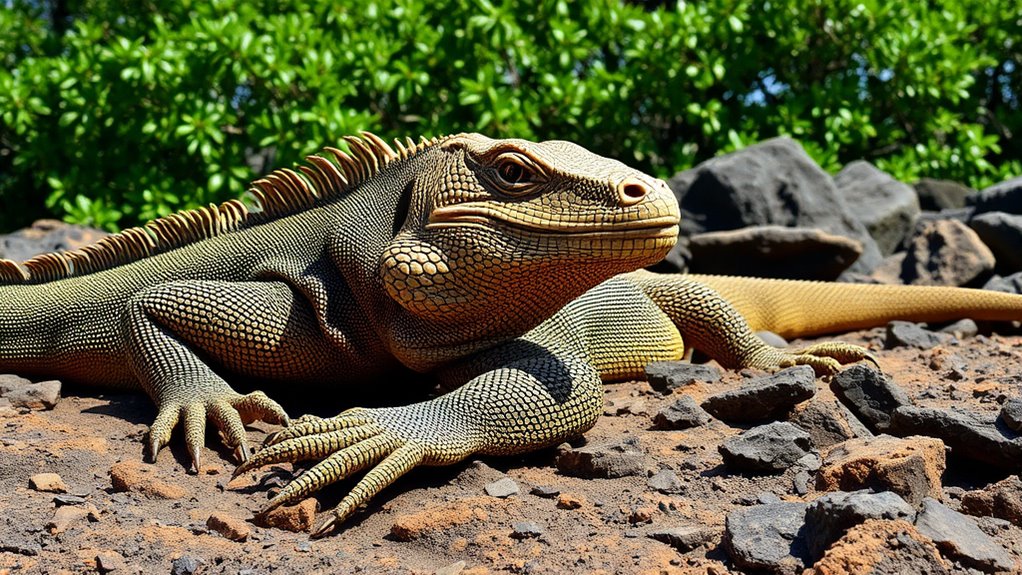
The Komodo dragon, the world’s largest lizard, captivates with its impressive size and fierce reputation. Native to a few Indonesian islands, this apex predator commands respect in its environment. You can’t help but be amazed by its ability to thrive in harsh conditions. Understanding the Komodo dragon’s habitat is vital for its survival and the preservation of its ecosystem. With habitat conservation efforts underway, your role in supporting these initiatives becomes even more significant.
The awe-inspiring Komodo dragon thrives as an apex predator, highlighting the urgent need for habitat conservation and ecosystem preservation.
When you think about the Komodo dragon, it’s not just its size that draws attention, but also its intriguing biology. Recent venom analysis reveals that these lizards possess a complex array of toxins in their saliva. While you might imagine a snake-like bite, the Komodo dragon’s venom acts differently. It can induce shock and prevent blood clotting, making its prey more vulnerable. When you see a Komodo dragon hunt, you appreciate how its biology contributes to its effectiveness as a predator. Each successful hunt plays a part in maintaining the balance of its ecosystem.
As you explore the islands where these magnificent creatures reside, you’ll notice the challenges they face. Habitat destruction, primarily due to human encroachment, threatens their survival. The importance of habitat conservation cannot be overstated. By supporting programs focused on protecting these lizards and their environment, you contribute to preserving an incredible piece of biodiversity. Every effort counts, whether it’s through awareness campaigns or volunteering for conservation projects.
Moreover, understanding the impact of climate change on these habitats is vital. Rising temperatures and unpredictable weather patterns can alter the delicate balance of the ecosystems where Komodo dragons live. You can help advocate for policies that aim to mitigate climate change, guaranteeing that these lizards have a fighting chance in their natural habitat. Additionally, recognizing the role of habitat conservation can enhance efforts to protect these remarkable reptiles.
In your journey to learn more about the Komodo dragon, remember that knowledge is power. Sharing what you learn with others can spark interest and encourage more people to engage in conservation efforts. By raising awareness about habitat conservation and the importance of venom analysis, you can inspire a collective effort to guarantee the survival of this remarkable species.

REPTI ZOO 120 Gallon Reptile Terrarium, 4x2x2 ft Light Weight Reptile Enclosure, Colored Reptiles Tank with Tempered Glass Door, Large Aluminum Habitat for Bearded Dragon, Snake, Lizard, Gecko-Purple
Premium Material & Robust Construction: Crafted with a robust aluminum alloy frame and tempered glass door, this terrarium...
As an affiliate, we earn on qualifying purchases.
Frequently Asked Questions
How Long Do Komodo Dragons Typically Live in the Wild?
In the wild, komodo dragons typically live around 30 years. Their habitat preferences include dry, hot environments with plenty of prey. When it comes to reproductive behaviors, they mate during the rainy season, and females lay eggs in burrows. You’d find these reptiles fiercely protecting their nests, ensuring the survival of their young. Their longevity is influenced by factors like food availability and environmental conditions, making their habitats vital for their life cycle.
Are Komodo Dragons Social Animals or Solitary?
Komodo dragons are solitary creatures, much like shadows lurking in the sun. You’ll find they prefer to roam alone, marking their territory with confidence. While they do come together for mating or feeding, their social behavior is minimal. When territories overlap, they can engage in territorial disputes, asserting dominance through displays of aggression. So, if you’re observing them in the wild, expect to see these impressive reptiles enjoying their solitude.
What Do Baby Komodo Dragons Eat?
Baby komodo dragons primarily eat insects, small reptiles, and the occasional small mammal. In their early stages, their diet consists of whatever they can catch, focusing on high-protein sources to support their growth. Hatchling feeding is vital, as it helps them develop strength and agility. As you observe them, you’ll notice their juvenile diet shifts as they grow, allowing them to hunt larger prey more effectively as they mature into adults.
How Fast Can a Komodo Dragon Run?
When it comes to reptile speed, the Komodo dragon can really take the cake, reaching up to 13 miles per hour in short bursts. This impressive predator agility allows it to chase down prey swiftly, despite its large size. You wouldn’t want to underestimate its quickness, as those powerful legs help it cover ground with surprising ease. So, if you ever see one sprinting, you’ll know it means business!
Are Komodo Dragons Endangered?
Yes, komodo dragons are considered endangered. Their populations are threatened by habitat loss due to human encroachment and development. You’ll find that habitat conservation is vital for their survival, as it helps protect their natural environments. Additionally, predator threats from invasive species and poaching further endanger their numbers. Supporting conservation efforts and raising awareness can make a difference in safeguarding these magnificent reptiles and their habitats for future generations.

waazoorep 4x2x2 PVC Reptile Enclosure,120Gallon Reptile Tank Large Terrarium for Bearded Dragon,Snake,Ball Python,Gecko,Turtle with Front Glass Sliding Door and Top Screen Ventilation
【Superior Heat Preservation and Moisture Retention Performance】:The high-density and non-toxic 0.6inch PVC board can maintain constant temperature and...
As an affiliate, we earn on qualifying purchases.
Conclusion
In the heart of the islands, the Komodo dragon reigns supreme, a symbol of nature’s raw power and resilience. With its fierce presence and remarkable adaptations, this apex predator captivates our imagination and demands respect. As you leave its domain, remember: the Komodo dragon isn’t just a creature of the wild; it’s a emblem of survival, a reminder that life thrives in the most unexpected places. So, will you let its story inspire your own journey?

Reptile Habitats 4x2x2 (120 Gallon) Bearded Dragon Enclosure V3 PVC Panels, Glass Doors, Lightweight, Easy to Assemble, Heavy Duty Screen, Aluminum Frame
Easy to assemble in less than 30 minutes.
As an affiliate, we earn on qualifying purchases.

120 Gallon Bearded Dragon Tank, 48 x 24 x 24 Reptile Enclosure with Lockable Sliding Glass Doors and Top Screen Ventilation for Easy Maintenance
【Strong & Secure Aluminum Frame】 - Built with a sturdy silver aluminum frame, this 4x2x2 reptile enclosure offers...
As an affiliate, we earn on qualifying purchases.