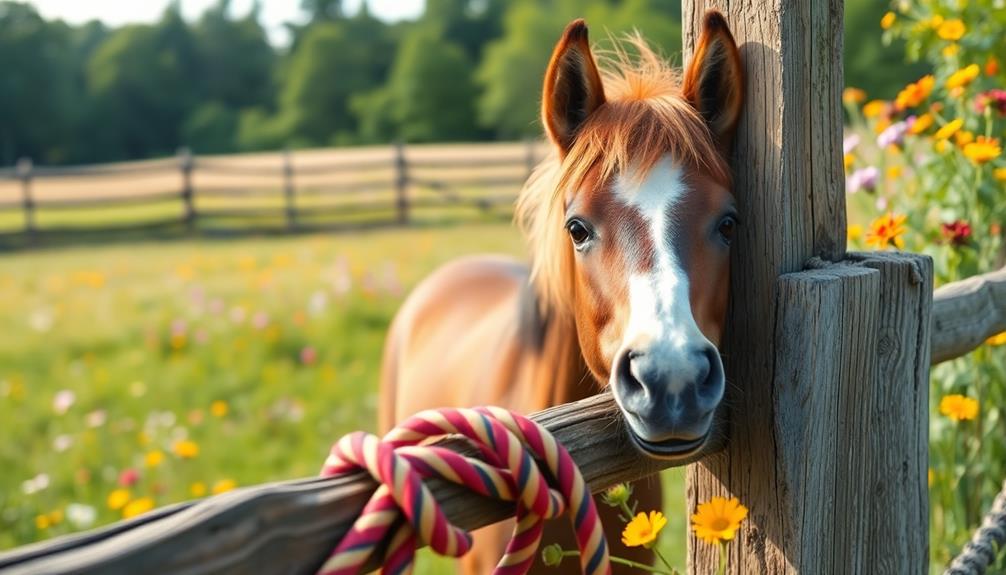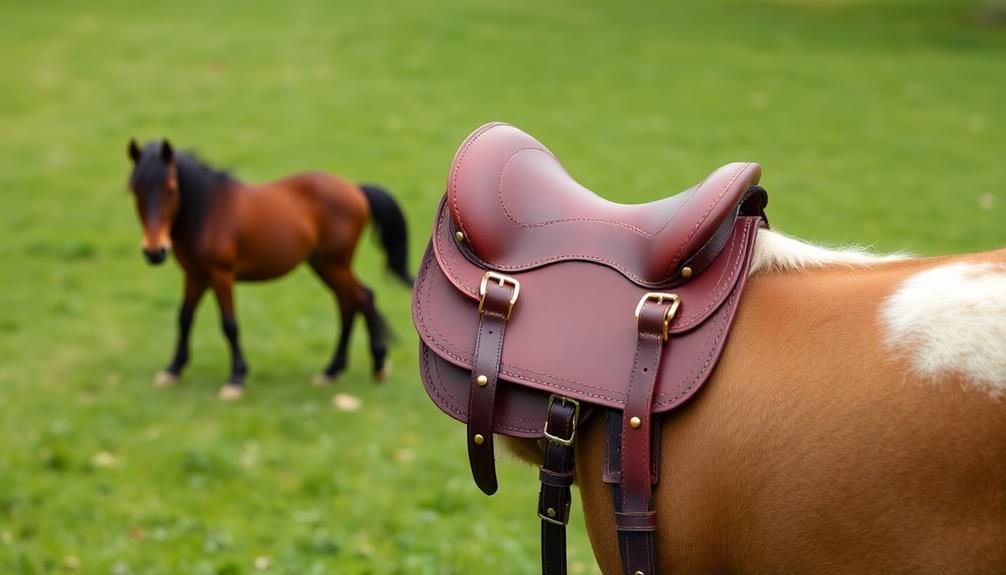
To stop your mini horse from kicking, start by understanding its behavior. Look for signs of fear or discomfort, like pinned ears. Use immediate corrections with a firm "no" and reward good behavior with treats or praise. Consistent handling and establishing clear leadership are essential. Create a safe environment and regularly assess for stressors that may trigger kicking. Gradually desensitize your horse to stressful situations to build trust. Remember, socialization with other horses enhances calmness and reduces aggression. With time and proper techniques, you can foster a well-behaved mini horse. There's even more to learn about effective training methods!

Get pet supplies delivered free — and shop member deals
- Fast, free delivery on millions of items
- Access to Prime Big Deal Days deals on October 6–7
- Prime Video, Amazon Music and more included
Key Takeaways
- Use immediate corrections with a firm "no" and gentle taps to deter kicking behavior effectively.
- Implement positive reinforcement with treats or praise to encourage good behavior and reduce anxiety.
- Maintain consistent handling practices among all caregivers to reinforce learning and build trust.
- Gradually desensitize your mini horse to stressful situations to prevent aggressive responses and kicking.
- Ensure a secure environment with ample space to minimize defensive kicking and promote calmness.
As an affiliate, we earn on qualifying purchases.
Understanding Mini Horse Behavior

When you understand a mini horse's behavior, you can better prevent kicking incidents. Mini horses, like all equines, often kick as a response to fear, discomfort, or perceived threats. By paying attention to their body language, such as pinned ears or raised tails, you can catch early warning signs that may lead to aggressive behavior.
Understanding herd dynamics is also vital. Mini horses may feel cornered or threatened if their social status is challenged within a group, leading to kicking. Consistent socialization with other horses helps reduce their anxiety and promotes calmer behavior. They thrive in environments that mimic natural herd conditions, which can greatly decrease the likelihood of kicking.
Training plays an essential role in modifying this behavior. Incorporating positive reinforcement and immediate corrections can help foster a respectful horse-handler relationship.
Effective Training Techniques

To effectively manage a mini horse's kicking behavior, implementing targeted training techniques is vital. Start with immediate correction; when your horse kicks, use a firm "no" accompanied by a gentle tap or whip to deter the action. This approach helps establish boundaries.
Incorporate positive reinforcement by rewarding non-kicking behavior. When your mini horse behaves appropriately, give treats or praise to encourage desired actions. Consistency among all handlers is imperative; guarantee everyone applies the same corrections and rewards to reinforce learning effectively.
Utilize gradual desensitization by exposing your mini horse to crowded or stressful situations in a controlled manner. This allows you to address potential kicking behavior before it escalates. Regularly monitor the horse's body language—pay attention to ear position and posture—as these cues can help you anticipate and correct kicking behavior early.
| Training Technique | Purpose |
|---|---|
| Immediate Correction | Deter kicking behavior at the moment |
| Positive Reinforcement | Encourage desired actions with rewards |
| Consistency in Training | Reinforce learning effectively among handlers |
Safety and Environment Management

Creating a secure environment for your mini horse is vital in managing its kicking behavior. Start by making sure you have adequate space during training sessions, as cornering can trigger defensive kicking.
Regularly assess the environment and the horse's companions to identify any stressors that may lead to aggressive behavior. This lets you make timely adjustments to enhance safety.
Implement slow feeding techniques to alleviate food-related anxiety, which often contributes to kicking during feeding times. When your horse feels secure while eating, it's less likely to react defensively.
Consistent handling and socialization with humans are essential in building trust. A confident horse is markedly less prone to kicking, so spend time getting to know your mini horse.
Keep a close eye on interactions, especially with inexperienced handlers. Make sure they understand safe handling practices to prevent any aggressive responses.
Leadership and Consistency in Training

Establishing yourself as a clear leader is essential in training your mini horse, as it helps them understand boundaries and acceptable behaviors. Your leadership sets the tone for how they respond to training. Consistency in your training responses is key—immediate correction for kicking can help the horse recognize the signs of unacceptable behavior.
To create a balanced training environment, utilize positive reinforcement alongside firm corrections. This approach fosters respect and encourages desired behaviors. Regular handling and structured routines promote trust and a sense of security, enhancing the mini horse's overall responsiveness.
Here's a simple table to illustrate the importance of leadership and consistency:
| Leadership Actions | Expected Responses | Benefits |
|---|---|---|
| Establish clear boundaries | Recognize limits | Reduces kicking behavior |
| Consistent training sessions | Improved focus | Reinforces learning |
| Positive reinforcement | Encourages desired actions | Builds trust and respect |
Engaging in frequent, short training sessions guarantees your young horse stays attentive. This consistency reinforces your role as a leader and facilitates effective learning, reducing the likelihood of a kicking horse.
Importance of Socialization and Interaction
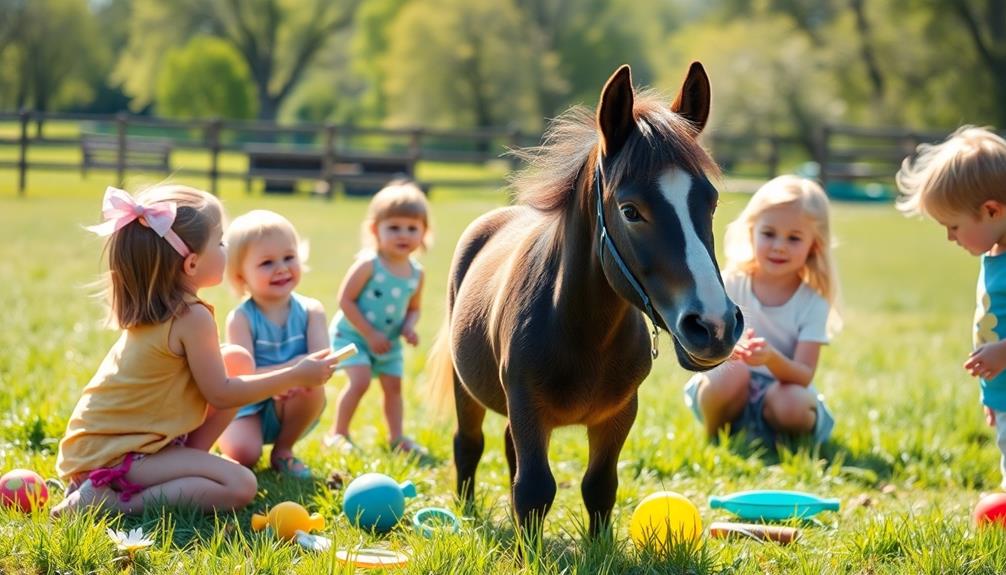
Socialization plays an essential role in a mini horse's development and behavior management. Mini horses thrive in environments that encourage social interaction with other horses. When isolated, they can develop aggressive behaviors and kicking behaviors, which can pose challenges for handling.
By providing opportunities for your mini horse to engage with peers, you enhance their mental well-being and help them learn appropriate social behaviors and boundaries. Regular turnout with other horses reduces anxiety and stress, making your mini horse less likely to resort to defensive actions like kicking when feeling threatened.
Observing herd dynamics allows them to learn from more experienced horses, which can teach them manners and diminish dominance tendencies that may lead to unwanted kicking.
Additionally, gradually exposing your mini horse to human presence during feeding and regular handling helps build trust. This trust diminishes the likelihood of aggressive behaviors, ensuring safer interactions for both you and your mini horse.
Prioritizing socialization and interaction is key to cultivating a well-adjusted mini horse that understands its place within both the herd and your human environment.
Frequently Asked Questions
How to Train a Horse to Not Kick?
To train a horse not to kick, you need to consistently correct the behavior, use positive reinforcement for calmness, and understand their body language. Gradual desensitization to handling will also help build their comfort and trust.
How to Stop a Baby Horse From Kicking?
Did you know that 70% of horse behavior issues stem from miscommunication? To stop a baby horse from kicking, recognize warning signs, use firm corrections, and reinforce positive behavior to create a safe, trusting environment.
How to Avoid Getting Kicked by a Horse?
To avoid getting kicked by a horse, stay alert to its body language, maintain a safe distance, and use gradual desensitization techniques. Always wear safety gear and establish clear boundaries for better control and respect.
How to Stop a Horse From Kicking in the Stall?
Imagine a cornered cat; it lashes out in fear. To stop your horse from kicking in the stall, correct immediately, guarantee safe space, monitor body language, and create a calm environment to build trust.
Conclusion
Training a mini horse not to kick takes patience and dedication, but it's worth it for the bond you'll create. You might worry that it's too challenging or time-consuming, but remember, every small step forward is a victory. When your mini horse learns to trust you, the joy of riding and interacting safely becomes a reality. You're not just preventing kicking; you're building a partnership that brings happiness to both of you. So get started today!
Halloween Picks
halloween
As an affiliate, we earn on qualifying purchases.