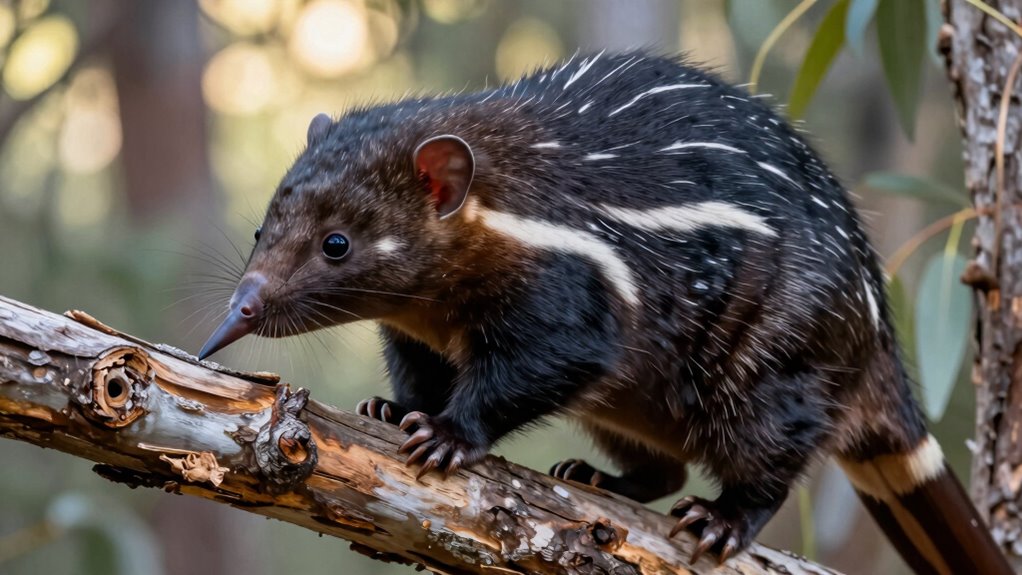

The numbat is a small, striped marsupial native to Australia that you’ll find in open woodlands and grasslands. It hunts termites using its long, sticky tongue, spending much of its day foraging on the ground. Its survival relies heavily on healthy, undisturbed habitats, which are under threat from land clearing and decay. Protecting these environments is key, and there’s more to discover about this fascinating insect hunter if you keep exploring.

Get pet supplies delivered free with Prime
- Fast, free delivery on millions of items
- Prime Video, Amazon Music and more included
- Member-only deals all year
Key Takeaways
- Numbats are small Australian marsupials with distinctive striped fur, mainly feeding on termites.
- They prefer open woodlands and grasslands that support termite colonies.
- Their diet relies heavily on long, sticky tongues to extract termites from nests.
- Habitat destruction and fragmentation threaten their food sources and survival.
- Conservation efforts focus on habitat restoration and protecting native ecosystems.
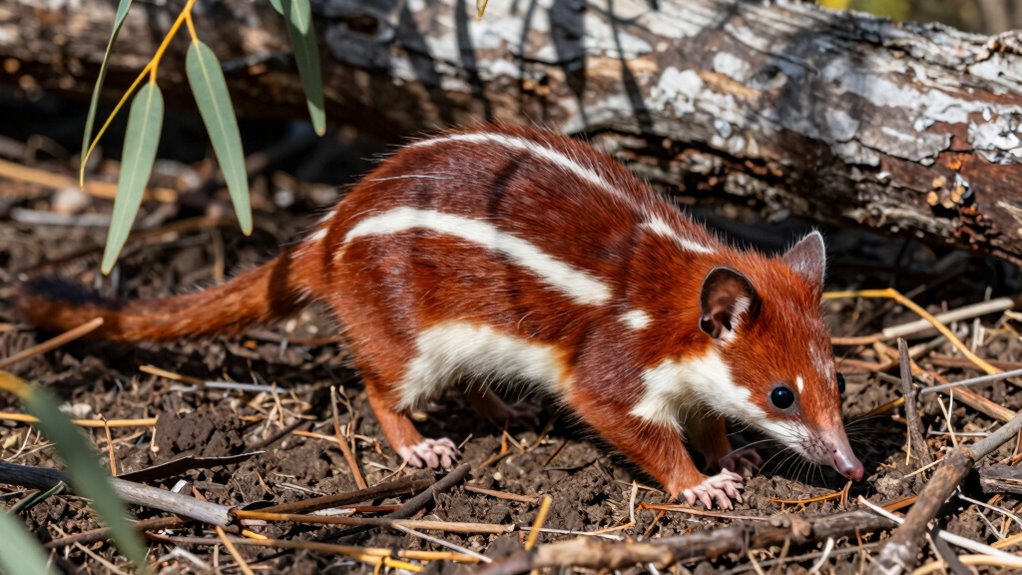
Have you ever heard of the numbats, small marsupials native to Australia? These unique creatures are easily recognizable by their striking striped fur and their specialized diet. As a keen observer, you’ll notice that their survival hinges on specific environmental conditions, making habitat preservation essential. Numbats prefer open woodlands and grasslands where they can forage for their primary food source—termites. Protecting these habitats isn’t just about saving a single species; it’s about maintaining a delicate balance that supports many other native animals and plants. When their habitat is degraded or fragmented, numbats struggle to find enough food and shelter, leading to declining populations. Your efforts in habitat preservation can make a real difference, ensuring that these charismatic animals continue to thrive in the wild.
Their dietary habits are fascinating and highly specialized. Unlike many marsupials, numbats are almost exclusively termite eaters. They spend much of their day foraging on the ground, using their long, sticky tongues—up to 10 centimeters long—to efficiently extract termites from logs and soil. This dietary focus means that numbats depend heavily on the availability of termite colonies within their habitat. When their environment is disturbed, termite populations can decline, which directly impacts the numbats’ ability to find enough food. Because of this, conservation strategies often emphasize protecting termite-rich areas and maintaining the natural features of their habitat. You might not think about insects when considering wildlife conservation, but for numbats, termites are their lifeline.
The relationship between habitat preservation and dietary habits is crucial for their survival. If their habitat is destroyed or altered—say, through land clearing or fire—the termite populations that numbats rely on can diminish or disappear altogether. This creates a chain reaction that threatens the entire species. Conservation efforts that focus on restoring native vegetation and controlling invasive species help sustain the environments where termites flourish, which in turn supports numbats. You can play a role by supporting organizations dedicated to habitat restoration or by advocating for policies that protect Australia’s unique ecosystems. Every action counts when it comes to safeguarding the future of the numbats and their specialized diet.
As an affiliate, we earn on qualifying purchases.
Frequently Asked Questions
What Is the Lifespan of a Numbats in the Wild?
In the wild, a numbat typically lives around five to seven years. Your efforts in Numbat conservation and habitat preservation are essential for extending their lifespan. By protecting their natural woodland and termite mound habitats, you help reduce threats like predation and habitat loss. Supporting conservation programs guarantees these unique creatures continue to thrive in the wild, maintaining their key role in Australia’s ecosystem.
How Do Numbats Communicate With Each Other?
You might think numbats are silent, but they actually use Numbat vocalizations to communicate. During social behaviors, they make soft growls, chattering sounds, or high-pitched calls to alert others or establish territory. These sounds help them coordinate with their group, especially during foraging or when warning of danger. So, even with their shy nature, numbats have a subtle way of staying connected in the wild.
What Are Numbats’ Primary Predators?
You should know that numbats’ primary predators include foxes, cats, and birds of prey. Their Numbat camouflage helps them blend into the forest floor, making it harder for predators to spot them. Numbat territoriality also plays a role in their defense; they establish and defend territories to reduce encounters with threats. By staying alert, using camouflage, and maintaining territory, numbats increase their chances of survival against these predators.
How Do Numbats Find Their Food Underground?
Imagine the soft rustle of leaves as you search for your next meal. You use burrow detection and scent tracking to locate hidden insects beneath the soil’s surface. Your keen nose picks up faint trails, guiding you to underground tunnels where termites hide. With focused precision, you sniff along the ground, uncovering your tasty prize and satisfying your instinct to hunt beneath the earth’s surface.
Are Numbats Affected by Climate Change?
You should know that climate impact and habitat loss seriously threaten numbats. Rising temperatures and changing rainfall patterns disrupt their environment, making it harder for them to find food and shelter. Deforestation and land clearing reduce their natural habitat, forcing them into smaller, fragmented areas. These issues decrease their chances of survival, emphasizing the urgent need for conservation efforts to protect numbats from the ongoing effects of climate change and habitat destruction.
Conclusion
Imagine holding a tiny striped treasure, each day watching it hunt with laser focus. That’s what observing a numbat feels like—you’re witnessing nature’s striped insect hunter in action. With only around 1,000 individuals left in the wild, this small creature’s story is a reminder that even the tiniest efforts can make a big difference. Protecting these unique marsupials means safeguarding a piece of Australia’s wild heartbeat, one striped hunter at a time.
Halloween Picks
halloween
As an affiliate, we earn on qualifying purchases.