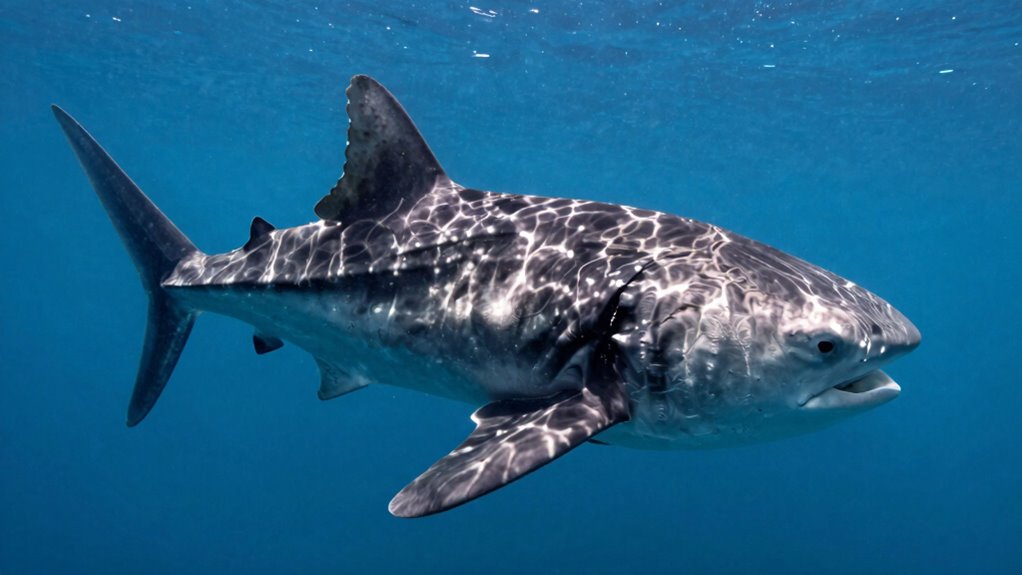

The mola mola, or ocean sunfish, is a huge, bizarrely shaped fish that looks like a floating pancake, with large, flattened fins that act like makeshift wings for gliding. It spends much of its time near the surface, basking in sunlight to warm up after cold intensive explorations. Its unique body helps it survive in nutrient-poor waters while feeding mainly on jellyfish. If you want to explore more of this incredible ocean giant’s fascinating adaptations, keep going.

Get pet supplies delivered free with Prime
- Fast, free delivery on millions of items
- Prime Video, Amazon Music and more included
- Member-only deals all year
Key Takeaways
- The Mola Mola has a flat, rounded body resembling a giant floating pancake, giving it a bizarre appearance.
- Its large dorsal and anal fins act as wings, aiding in gliding near the ocean surface.
- It is one of the heaviest bony fish, weighing over 2,200 pounds, with a unique, sunfish-like shape.
- Adapted to deep-sea life, it basks in sunlight to regulate temperature and support activity.
- Its diet mainly includes jellyfish and soft-bodied creatures, crucial for survival in nutrient-scarce waters.
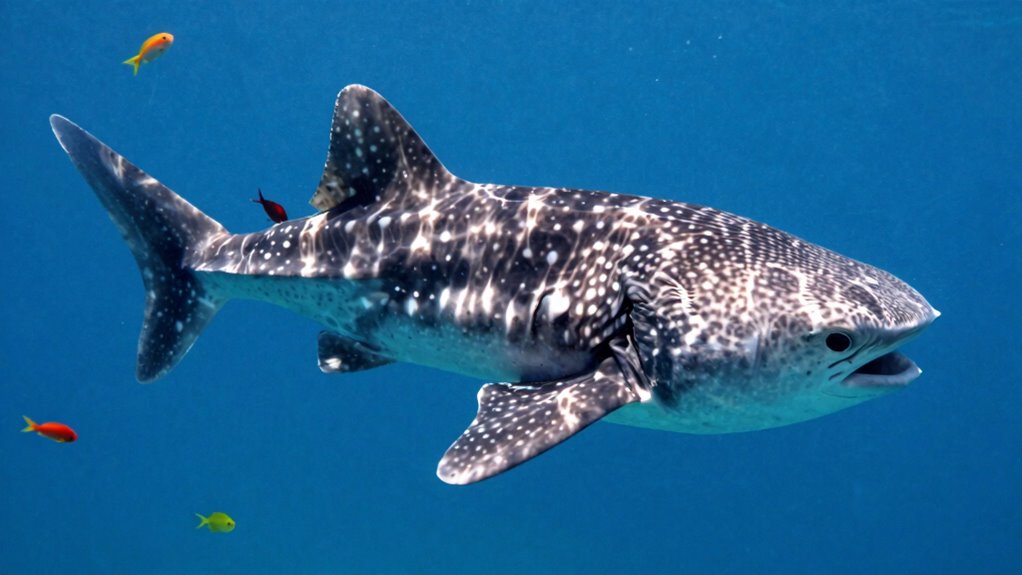
Have you ever wondered what it’s like to encounter the ocean’s heaviest bony fish? The Mola mola, or ocean sunfish, stands out as one of the most peculiar creatures lurking beneath the waves. Its strange, almost flat and rounded shape makes it look more like a giant, floating pancake than a fish. Yet, despite its odd appearance, it’s a marvel of deep-sea adaptation, perfectly suited to survive in its unique environment. This fish’s body is heavy and robust, with a large, flattened dorsal and anal fin that act like makeshift wings, helping it glide effortlessly through the water. Its body structure is optimized for a life spent mostly floating near the surface, soaking up sunlight and catching prey. Interestingly, the Mola mola’s dense, spongy bone structure provides essential support, allowing it to sustain its impressive weight without sacrificing buoyancy or mobility.
The Mola mola’s pancake-like shape and buoyant body make it a true ocean giant and deep-sea survivor.
The Mola mola’s diet is surprisingly simple but highly effective. It primarily feeds on jellyfish and other soft-bodied creatures, which are abundant in its habitat. Its diet showcases a fascinating aspect of deep sea adaptation—its mouth is small, but it’s highly specialized for grabbing and consuming these squishy prey items. The mola’s feeding habits also reflect its opportunistic nature; it takes advantage of the plentiful jellyfish blooms that drift across the ocean currents. Sometimes, it even eats small fish or plankton, but jellyfish remain its main fare. Its ability to consume such a diet, combined with its large size, helps it maintain energy in the nutrient-scarce environment of the open ocean. Furthermore, the Mola mola’s reproductive strategy involves producing a vast number of eggs, ensuring its survival despite predation pressures. Its reproductive success is crucial for maintaining healthy populations in the vast and unpredictable ocean environment.
You might be surprised to learn that the mola mola is one of the heaviest bony fish in the world, tipping the scales at over 2,200 pounds. Its immense weight is supported by a dense, spongy bone structure that provides strength without excessive weight. This adaptation is essential, as it allows the fish to stay buoyant and stable in the water column, especially near the surface where sunlight penetrates and supports its favorite prey. The mola’s large, sunfish-like body also helps regulate its temperature, warming its blood as it basks in the sun, which is indispensable for maintaining activity levels and digestion. Additionally, its ability to bask near the surface helps it warm up after cold deep dives, showcasing further thermal regulation adaptations. This behavior not only aids in digestion but also helps protect the mola from parasites and skin infections. Its unique body shape and behavior make it a key species for understanding marine adaptation and survival strategies in the open ocean.
In essence, the Mola mola’s strange shape and unique adaptations make it a true ocean giant. Its deep sea adaptations enable it to thrive in a challenging environment, feeding on jellyfish and floating effortlessly through the open waters. Despite its awkward appearance, this fish exemplifies how evolution can craft a remarkably efficient marine survivor, one that captures the imagination with its bizarre yet fascinating existence.
aquarium fish tank for deep-sea fish
As an affiliate, we earn on qualifying purchases.
As an affiliate, we earn on qualifying purchases.
Frequently Asked Questions
How Long Does a Mola Mola Typically Live in the Wild?
You’ll find that a Mola mola typically lives around 10 to 15 years in the wild. During its lifetime, it’s known for its unique Mola mola diet, mainly feeding on jellyfish and small fish, and its extensive Mola mola migration to find food and warmth. Their lifespan depends on factors like predation and food availability, but their remarkable migrations help guarantee they reach suitable environments for survival.
What Are the Main Predators of the Mola Mola?
Predators pursue the mola mola primarily in the perilous depths of the ocean. Sharks and killer whales are its main menaces, often hunting through marine symbiosis and deep sea navigation to locate these sluggish giants. You’ll find that their strange shape offers some defense, but these predators’ prowess in the dark depths makes survival a constant struggle. Stay alert, and you’ll better understand how these ocean giants dodge danger daily.
How Does the Mola Mola Reproduce and Care for Its Young?
You might find it fascinating that Mola mola reproduction involves females releasing up to 300 million eggs into the water, which are then fertilized externally by males. Mola mola parenting is minimal; they don’t care for their young after spawning. Instead, the tiny larvae drift with ocean currents, relying on their small size and vast numbers for survival. This reproductive strategy helps guarantee the species’ continuity in the open sea.
Are Mola Mola Found in Freshwater or Only Saltwater?
You’ll find mola molas primarily in saltwater environments, not freshwater habitats. These ocean giants swim seamlessly through salty seas, thriving in open oceans and coastal waters. Unlike freshwater dwellers, they don’t venture into rivers or lakes. So, if you’re searching for a mola mola, look out at the salty, expansive seas rather than freshwater habitats. Their specialized saltwater lifestyle helps them navigate and nourish in their natural, oceanic surroundings.
What Unique Adaptations Help Mola Mola Survive Deep Dives?
You might be surprised, but mola mola don’t typically dive deep into the dark ocean. However, when they do, they rely on unique adaptations like their ability to blend with their surroundings through mola mola camouflage, helping them avoid predators. Submarine exploration is less relevant to them since they stay near the surface. Their sturdy body and large fins also aid in quick, efficient movements during brief deep dives.
Conclusion
You marvel at the mola mola’s strange shape, its massive size, and its gentle nature. You admire how it navigates the vast ocean, defying expectations with its unique form. You are captivated by its resilience, its solitary existence, and its quiet beauty. You realize that this ocean giant, with its odd appearance and gentle spirit, reminds you that true wonder lies in the diversity of nature’s creations, inspiring curiosity and respect in your heart.
Fall Picks
fall essentials
As an affiliate, we earn on qualifying purchases.