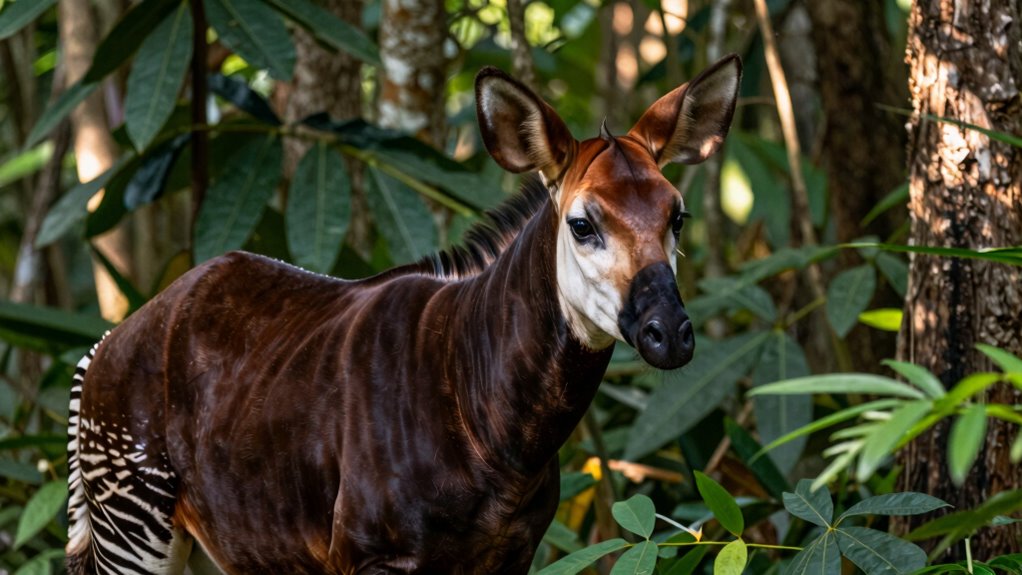

Meet the okapi, a fascinating rainforest mammal that looks like a mix between a giraffe and a zebra, but is more closely related to the giraffe. You’ll find it in the dense, lush forests of the Democratic Republic of Congo, where it hides from predators and humans. With its striking markings and unique adaptations, the okapi is a symbol of Congo’s rich biodiversity. If you want to discover more about this elusive creature, keep exploring its incredible story.

Get pet supplies delivered free with Prime
- Fast, free delivery on millions of items
- Prime Video, Amazon Music and more included
- Member-only deals all year
Key Takeaways
- The okapi resembles a mix between a giraffe and a zebra, with close relation to the giraffe.
- It inhabits the dense rainforests of the Democratic Republic of Congo.
- The okapi feeds on leaves, shoots, and fruits high in trees, adapted to a lush rainforest environment.
- Its shy and solitary nature makes it difficult to study and monitor in the wild.
- Conservation efforts focus on habitat protection, anti-poaching laws, and community programs.
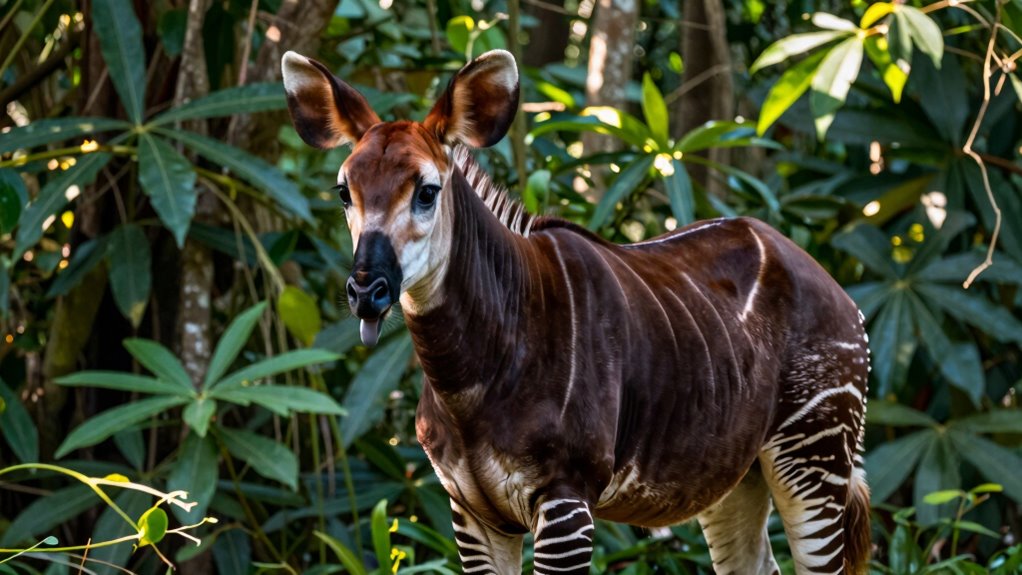
Have you ever heard of the okapi? It’s a fascinating creature that looks like a mix between a giraffe and a zebra, but it’s actually more closely related to the giraffe. Native to the dense rainforests of the Democratic Republic of Congo, the okapi’s habitat is a lush, tropical environment filled with thick vegetation and towering trees. This habitat provides the perfect cover for these elusive animals, helping them stay hidden from predators and humans alike. You might be surprised to learn that the okapi’s secretive nature has made it difficult for scientists to study them in the wild, but conservation efforts have become essential in safeguarding their survival.
The okapi, a secretive rainforest dweller, remains one of Africa’s most elusive and fascinating creatures.
The okapi’s habitat is one of the most critical aspects of its existence. It thrives in the remote, humid forests, where it can browse on leaves, shoots, and fruits high in the trees. Because the rainforest is so dense, the okapi relies heavily on its keen senses of hearing and smell to navigate and find food. Unfortunately, this unique habitat is increasingly threatened by logging, human settlement, and political instability, all of which put the okapi at risk. Protecting their forest home isn’t just about saving one species; it’s about preserving an entire ecosystem that supports countless other plants and animals. Rainforest conservation is vital for maintaining the biodiversity of these delicate environments.
When you think about okapi conservation, it’s important to recognize both the challenges and the strategies in place to protect these animals. Since the okapi was only scientifically described in the early 20th century, efforts to conserve it have been relatively recent. Organizations work tirelessly to establish protected areas within the rainforests, enforce anti-poaching laws, and promote local awareness about the okapi’s significance. These efforts are essential because the okapi’s shy and solitary nature makes it difficult to monitor. Conservationists often rely on camera traps and community-led programs to track their populations and gather important data. Understanding the okapi’s unique adaptations helps in developing more effective conservation strategies.
Your support can make a difference in okapi conservation. By raising awareness about their fragile habitat and the threats they face, you contribute to global efforts to protect these gentle forest cousins. The okapi is a symbol of the Congo’s rich biodiversity and a reminder of the importance of safeguarding our planet’s remaining rainforests. Although they’re rarely seen, understanding their habitat and the importance of conservation helps guarantee that future generations can also marvel at the mystery and beauty of the okapi. Preserving their habitat is crucial for maintaining the delicate balance of this unique ecosystem.
As an affiliate, we earn on qualifying purchases.
Frequently Asked Questions
How Long Does an Okapi Live in the Wild?
In the wild, an okapi typically lives around 20 to 30 years. You can find them in dense okapi habitat within the Congo rainforest, where their conservation is crucial. Conservation efforts focus on protecting their habitat from deforestation and hunting, ensuring they survive longer. By supporting these efforts, you help preserve this unique species, giving okapis a better chance to thrive in their natural environment.
What Do Okapis Primarily Eat?
Think of the okapi as a leaf-eating ninja, blending seamlessly into the forest with its camouflage. You’ll find it primarily munching on leaves, shoots, and fruits from low-hanging trees. During mating habits, they’re quite shy, often hiding in dense foliage. Their diet is vital for survival, and their ability to stay hidden helps them avoid predators while they satisfy their hunger on a diet that’s mostly plant-based.
Are Okapis Endangered or Threatened?
You’ll be glad to know that okapis are considered endangered due to habitat loss and poaching. Their survival depends on ongoing Okapi habitat preservation and active Okapi conservation efforts. By supporting these initiatives, you help protect their natural forest environment and guarantee their populations remain stable. Continued awareness and conservation can prevent their status from worsening, securing a future where the okapi continues to thrive in its native Congo rainforest.
How Fast Can an Okapi Run?
You’ll find that an okapi can run up to 20 miles per hour, which helps it escape predators in dense forests. Its camouflage, with bold stripes on its hindquarters, makes it hard to spot, especially when moving quickly. Okapis are generally solitary, but they display specific social behaviors like scent-marking to communicate. Their speed and camouflage are vital adaptations for survival in their lush, forest habitat.
Do Okapis Have Any Predators?
Yes, okapis do have predators, despite their elusive nature. You might think their thick forest habitat offers perfect protection, but habitat destruction and poaching threats weaken their defenses. Leopards are their main predators, stalking them through dense forests. When their environment is disturbed or threatened by human activities, okapis become more vulnerable. Protecting their habitat and stopping poaching are essential to guarantee these unique animals survive.
Conclusion
So there you have it—your new favorite mystery of the jungle. The okapi, with its zebra stripes and giraffe neck, proves nature’s sense of humor is alive and well. Who knew such a bizarre blend could exist? Next time you feel bored, just remember: somewhere in the rainforest, this oddball is quietly outshining every exotic pet on Instagram. Truly, nature’s version of “What if?” keeps us guessing—and occasionally, marveling.
Fall Picks
fall essentials
As an affiliate, we earn on qualifying purchases.