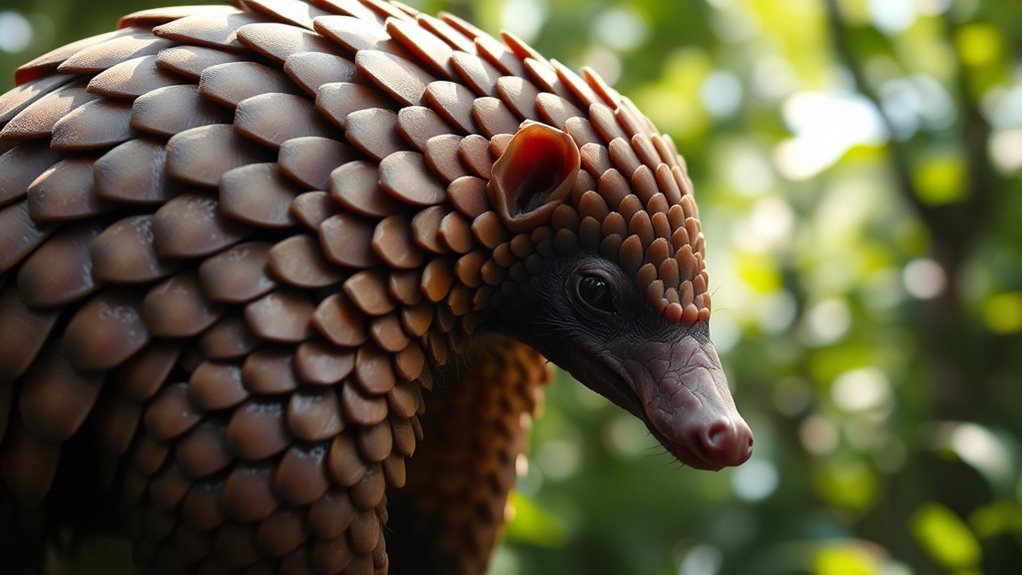

The pangolin is a unique scaled mammal resembling a living armored tank. Its tough, overlapping scales protect it from predators, while its long, sticky tongue helps it reach deep into ant and termite mounds for food. Sadly, pangolins face severe threats from poaching and habitat loss, making them one of the most trafficked animals on the planet. Understanding more about their role in ecosystems can shed light on why conservation efforts are vital for their survival.
Key Takeaways
- Pangolins are unique mammals known for their tough, overlapping scales that resemble living armored tanks.
- They primarily feed on ants and termites using long, sticky tongues and strong claws for digging.
- Pangolins play a crucial ecological role by helping to control insect populations, maintaining ecosystem balance.
- They are among the most trafficked animals, facing severe threats from poaching for their scales and meat.
- Conservation efforts focus on raising awareness, promoting habitat preservation, and combating illegal wildlife trade to ensure their survival.

Have you ever encountered a creature that looks like a living armored tank? If you have, you’ve probably seen a pangolin. These unique mammals are covered in tough, overlapping scales that give them their distinctive appearance. But don’t let their armor fool you; pangolins are gentle creatures, primarily known for their diet of ants and termites. Their long, sticky tongues, which can extend up to 16 inches, allow them to reach deep into nests and extract their favorite snacks. Watching a pangolin feast is a sight to behold, as they use their strong claws to dig and tear apart mounds, showcasing their remarkable adaptations.
Encounter the pangolin, a gentle creature armored in scales, using its remarkable adaptations to feast on ants and termites.
You might wonder about pangolin conservation efforts, especially since these fascinating creatures are among the most trafficked animals in the world. Illegal poaching for their scales and meat has led to a rapid decline in their populations. It’s heartbreaking to think that a creature so uniquely evolved and harmless is facing such threats. Conservationists are working tirelessly to raise awareness and implement measures to protect pangolins. They advocate for stronger legislation against wildlife trafficking and focus on habitat preservation. By supporting these efforts, you can play a part in ensuring that future generations will get to know the pangolin as more than just a fleeting image in a documentary.
The pangolin diet is essential not only for their survival but also for maintaining the balance of their ecosystems. By consuming large quantities of ants and termites, pangolins help control insect populations, which can otherwise become problematic. This natural pest control is indispensable for healthy ecosystems, so the loss of pangolins could have far-reaching effects. When you think about it, every creature plays a role in its environment, and pangolins are no exception. Road trips can be a fantastic way to explore the habitats where these creatures thrive, providing an opportunity to witness the promise of adventure in their natural setting.
If you’re intrigued by these scaled mammals, you might consider ways to contribute to their conservation. Whether it’s donating to wildlife organizations, spreading awareness on social media, or even adopting a pangolin through a conservation program, every little bit counts. You can help create a future where pangolins thrive in their habitats, free from the threat of poaching and habitat destruction. So, the next time you see a picture of a pangolin, remember the incredible role they play in our world and the importance of protecting them for generations to come.
Frequently Asked Questions
Are Pangolins Endangered Species Worldwide?
Yes, pangolins are endangered species worldwide. You should know that illegal poaching for their scales and meat has drastically reduced their populations. Conservation efforts are vital to protect these unique animals. By supporting wildlife organizations and raising awareness, you can contribute to their survival. Every action counts, whether it’s sharing information or donating to protect their habitats. Together, we can help guarantee a future for pangolins and preserve biodiversity.
What Do Pangolins Eat in the Wild?
In the wild, pangolins primarily eat ants and termites, showcasing their unique diet habits. You’d see them using their keen sense of smell to locate these insects, demonstrating impressive foraging behavior. With their long, sticky tongues, they efficiently extract their meals from hidden nests. Their diet is specialized, allowing them to thrive in their habitats while playing a vital role in controlling insect populations. It’s fascinating to watch their feeding techniques in action!
How Do Pangolins Defend Themselves From Predators?
Pangolins defend themselves from predators by curling into a tight ball, showcasing their tough pangolin armor. This hard exterior deters many would-be attackers. You’ll notice they also use predator evasion strategies, like digging quickly into the ground to escape. Their keen sense of smell helps them detect danger, allowing them to hide effectively. By combining these techniques, they stay safe and avoid encounters with their natural enemies.
Can Pangolins Be Kept as Pets?
You can’t keep pangolins as pets. While their unique charm may entice you, ethical pet ownership demands you consider pangolin conservation. These incredible creatures face severe threats in the wild, and keeping them captive only exacerbates their plight. Instead of bringing one home, support conservation efforts that protect their habitats and safeguard their future. By choosing to advocate for them, you contribute to their survival rather than endangering it further.
What Is the Lifespan of a Pangolin?
A pangolin typically lives around 10 to 20 years in the wild. When you consider pangolin reproduction, it’s essential to note that females usually give birth to one offspring at a time, which can impact their population growth. As you learn about pangolin conservation efforts, you’ll see how vital it is to protect their habitats and reduce poaching. Understanding their lifespan helps highlight the importance of these efforts in ensuring their survival.
Conclusion
So, next time you hear about pangolins, consider this: could these unique, scaled mammals hold the key to understanding wildlife conservation? With their fascinating ability to curl into a protective ball, they’ve become symbols of resilience. Yet, their struggle against poaching challenges us to rethink our role in preserving nature. By supporting efforts to protect pangolins, you’re not just saving a species; you’re helping unravel a mystery that connects us all to the planet’s fragile ecosystem.