
The platypus is truly nature’s oddball monotreme, blending features of mammals, birds, and reptiles. Native to Australia, it’s one of the few egg-laying mammals left. With a duck-like bill and otter-like body, it even has electroreceptors to hunt in murky waters. This unique creature plays an important role in aquatic ecosystems but faces several threats like habitat destruction and pollution. Keep exploring to uncover more about its incredible adaptations and the conservation efforts essential for its survival.
Key Takeaways
- The platypus is a unique Australian monotreme that lays eggs instead of giving birth to live young.
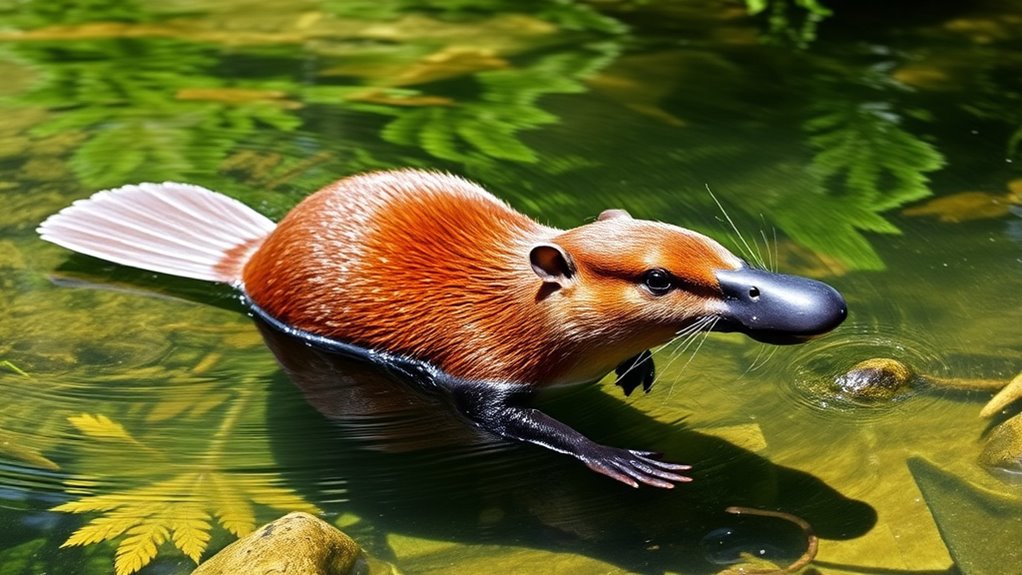
- It has a distinctive bill resembling a duck and body similar to an otter, showcasing its oddball appearance.
- Equipped with electroreceptors in its bill, the platypus can hunt effectively in murky waters.
- This species plays a vital role in aquatic ecosystems, helping maintain balance among various species.
- Conservation efforts are crucial, as the platypus faces threats from habitat destruction, climate change, and pollution.
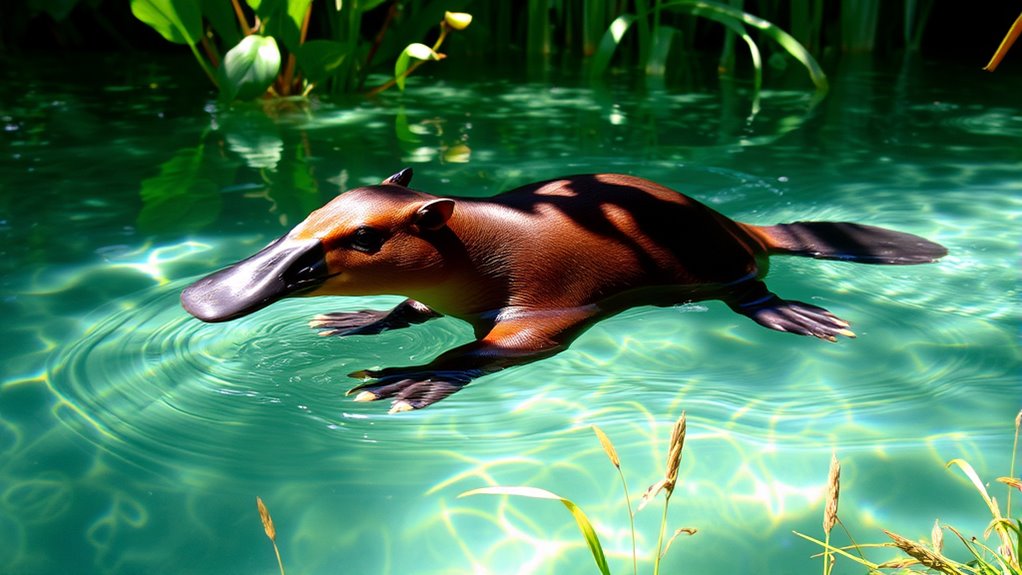
Have you ever wondered what makes the platypus one of nature’s most unique creatures? This fascinating animal, native to Australia, captivates many with its unusual blend of characteristics. As a monotreme, the platypus stands out because it lays eggs rather than giving birth to live young, which is uncommon among mammals. Its evolution is a remarkable tale that combines traits from various animal lineages, showcasing how nature can produce such an extraordinary being.
The platypus, a remarkable monotreme from Australia, uniquely blends traits from diverse animal lineages, captivating nature enthusiasts worldwide.
The platypus evolution is a story of adaptation and survival. Believed to have emerged around 250 million years ago, it’s one of the few remaining representatives of a group of egg-laying mammals. Its bill resembles a duck’s, while its body is reminiscent of an otter. These features are not just for show; they serve specific purposes. The bill is packed with electroreceptors, allowing the platypus to hunt in murky waters by detecting the electric fields generated by its prey. This adaptation is essential, especially considering the platypus often forages underwater, relying on its unique sensory capabilities to find food.
However, the platypus isn’t just an oddity of nature; it’s a critical part of its ecosystem. As a predator, it helps maintain the balance of aquatic life. Sadly, this incredible creature faces threats from habitat destruction, climate change, and water pollution. You might feel concerned about the future of the platypus, and rightly so. Platypus conservation efforts are indispensable to guaranteeing its survival. Various organizations are working tirelessly to protect its habitats and educate the public about the importance of preserving these unique mammals. By supporting conservation initiatives, you contribute to preserving not just the platypus but also the overall health of the ecosystems it inhabits.
As someone who appreciates nature, you can play a role in protecting these remarkable creatures. Whether it’s through supporting local conservation efforts or simply spreading the word about the platypus, every action counts. You might even consider visiting Australia to witness the platypus in its natural habitat. By understanding its evolution and the challenges it faces, you deepen your appreciation for this extraordinary animal. Remember, the future of the platypus lies in our hands. Let’s work together to guarantee that these remarkable animals continue to thrive in the wild for generations to come. Additionally, AI’s transformative role in environmental conservation highlights how technology can aid in efforts to protect species like the platypus.
platypus plush toy
As an affiliate, we earn on qualifying purchases.
As an affiliate, we earn on qualifying purchases.
Frequently Asked Questions
Are Platypuses Dangerous to Humans?
Platypuses aren’t typically dangerous to humans, but their venom can pose a risk during close encounters. Male platypuses possess spurs on their hind legs that can deliver a painful sting. While the venom isn’t lethal to humans, it can cause swelling and intense pain. If you come across a platypus in the wild, it’s best to admire from a distance to avoid any potential for a painful encounter. Stay safe and respect their space!
How Long Do Platypuses Typically Live in the Wild?
In the wild, a platypus typically lives about 10 to 17 years, showcasing a fascinating contrast between its fragile existence and remarkable adaptability. While some may thrive in the safety of captivity for over 20 years, their wild lifespan reveals the challenges they face. Understanding platypus longevity helps you appreciate these unique creatures and the delicate ecosystems they inhabit. So, next time you think of them, remember their resilience in the wild.
What Do Platypuses Eat in Their Natural Habitat?
Platypuses primarily eat insects, crustaceans, and small aquatic animals in their natural habitat. Their diet consists of various invertebrates, which they hunt by foraging along riverbeds. You’ll notice they use their sensitive bills to detect prey, even when their eyes are closed underwater. This unique feeding method helps them find their natural prey efficiently. So, if you’re observing a platypus, keep an eye on its foraging behavior—it’s fascinating!
Can Platypuses Swim Well?
Yes, platypuses swim incredibly well! Their unique body structure gives them impressive aquatic agility. When you observe a platypus swimming, you’ll notice how effortlessly they glide through the water using their webbed feet. These creatures can hold their breath for up to two minutes while diving, allowing them to hunt for prey. Their streamlined shape and powerful tail make them exceptional swimmers, perfectly adapted to their aquatic lifestyle.
Are Platypuses Solitary or Social Animals?
Platypuses are generally solitary animals, especially outside of mating season. You’ll often find them foraging alone in their territories, which they fiercely defend. During the breeding season, however, they do exhibit social behavior, as males and females come together for mating. Their territorial behavior is strong, with males marking their areas to ward off rivals, ensuring they have exclusive access to resources and potential mates when the time comes.
aquatic animal educational kit
As an affiliate, we earn on qualifying purchases.
As an affiliate, we earn on qualifying purchases.
Conclusion
In a world full of similarities, the platypus stands out like a jigsaw puzzle piece that doesn’t quite fit anywhere. Just as you might stumble upon an unexpected treasure in an old attic, discovering this peculiar creature reminds us that nature loves to surprise us. With its blend of mammal, bird, and reptile traits, the platypus is a demonstration of evolution’s creativity, inviting us to embrace the oddities that make life fascinating and wonderfully diverse.
wildlife conservation poster
As an affiliate, we earn on qualifying purchases.
As an affiliate, we earn on qualifying purchases.
Australian wildlife field guide
As an affiliate, we earn on qualifying purchases.
As an affiliate, we earn on qualifying purchases.