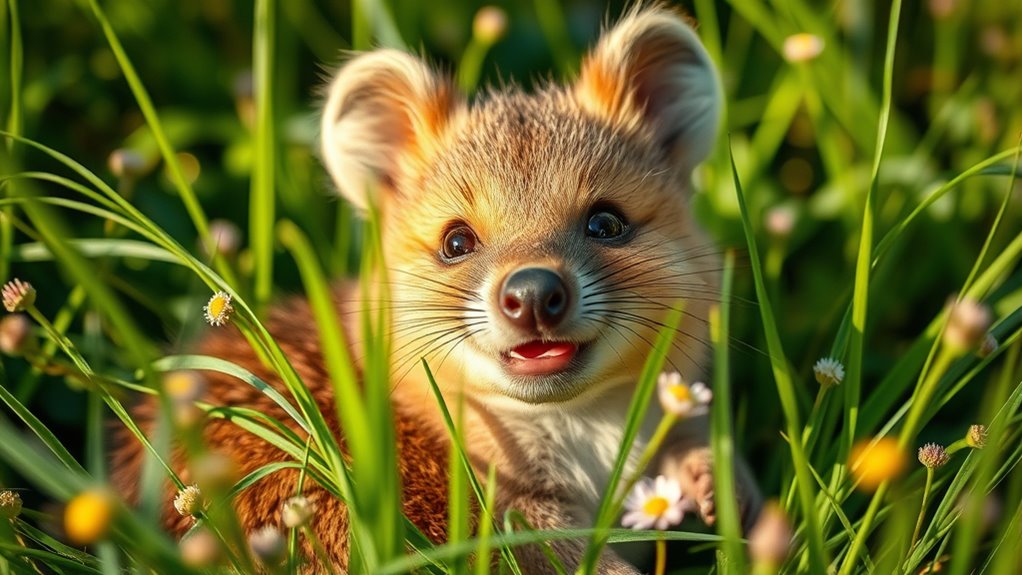
Quokkas are often called the world’s happiest marsupials, thanks to their round faces and permanent smiles. These friendly creatures are native to Australia, mainly found on Rottnest Island. As nocturnal animals, they thrive on a diet of grasses and leaves in dense vegetation. However, their habitats face threats from urban development and climate change. You can help protect them by respecting their environment and supporting conservation efforts. Learn more about these charming marsupials and how to aid their survival.
Key Takeaways
- Quokkas are known as the “world’s happiest animal” due to their round faces and perpetual smiles.
- They are native to Australia, particularly found on Rottnest Island.
- Quokkas are primarily nocturnal and mainly feed on grasses and leaves.
- Their habitats are threatened by urban development and invasive species, necessitating conservation efforts.
- Responsible tourism practices help protect quokkas and their environment while promoting awareness.
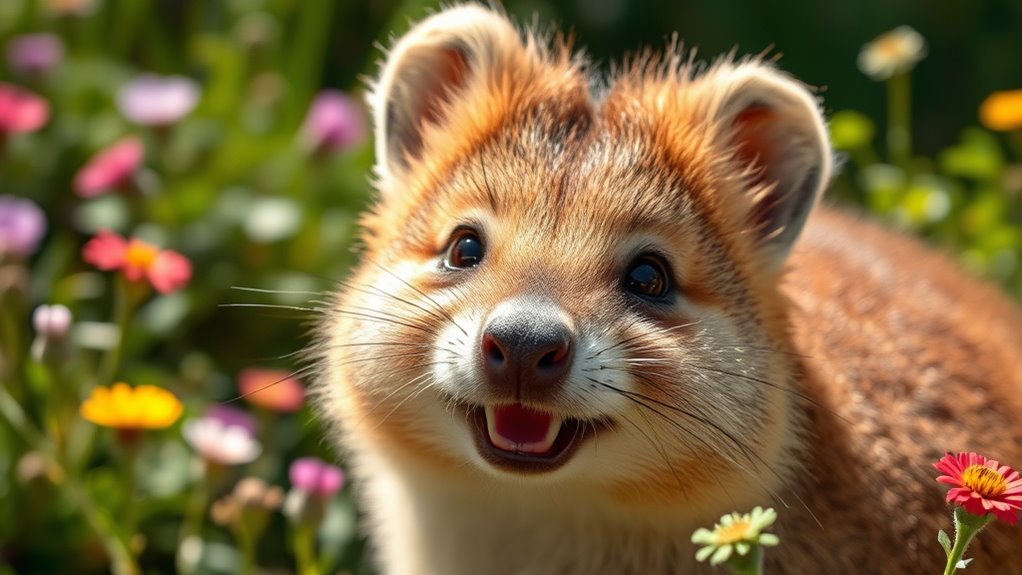
Have you ever encountered an animal that seems to radiate happiness? If you have, chances are it was a quokka, the adorable marsupial often hailed as the “world’s happiest animal.” With its round face, bright eyes, and perpetual smile, the quokka has captured the hearts of many. Native to Australia, particularly Rottnest Island, these charming creatures are not just delightful to look at; they also play a crucial role in their ecosystem.
Quokkas are primarily nocturnal and love to munch on grasses and leaves, but their habitat is increasingly threatened. Urban development, invasive species, and climate change pose significant risks to their survival. That’s where conservation efforts come into play. Organizations focused on wildlife preservation are working tirelessly to protect these lovable animals and their habitats. You might be surprised to learn how significant your role can be in these efforts. By spreading awareness and supporting wildlife organizations, you’re contributing to the preservation of quokka populations and their environment.
Habitat preservation is essential for quokkas. They thrive in dense vegetation and rely on specific ecosystems to flourish. Initiatives aimed at restoring natural habitats are vital not just for quokkas but for a myriad of plant and animal species that coexist in these environments. By advocating for policies that protect natural spaces and participating in clean-up efforts, you’re taking steps to make certain that future generations can enjoy the sight of quokkas frolicking in their native habitats.
Visiting Rottnest Island offers a chance to see these joyful creatures up close. When you meet a quokka, you’re not just looking at a cute animal; you’re witnessing the results of dedicated conservation efforts. As part of a broader initiative, this project emphasizes the importance of well-sourced coverage to ensure accurate information about wildlife and their conservation. Make sure to respect their space and follow guidelines, as it’s essential to keep their environment safe and undisturbed. Taking selfies with a quokka might be a popular trend, but remember that your actions can impact their well-being.
Frequently Asked Questions
What Do Quokkas Eat in the Wild?
Quokkas primarily eat grasses, leaves, and fruits in the wild, showcasing their herbivorous diet. They often graze on low-lying vegetation, which suits their feeding habits perfectly. You’ll notice they prefer tender shoots and foliage, especially during the warmer months when food is abundant. Their wild feeding habits allow them to thrive in their natural habitat, as they adapt to seasonal changes and available resources, ensuring a balanced quokka diet throughout the year.
Where Can I See Quokkas in Their Natural Habitat?
If you want to see quokkas in their natural habitat, head to Rottnest Island off the coast of Western Australia. Picture yourself wandering through vibrant landscapes, where quokka conservation efforts thrive alongside tourism opportunities. As you explore, you’ll catch glimpses of these friendly creatures, often posing for photos. It’s like stepping into a postcard, where joy and nature blend together, creating unforgettable memories while supporting their preservation in the wild.
How Long Do Quokkas Live in the Wild?
Quokkas typically live around 10 years in the wild. Their lifespan, however, can be influenced by factors like habitat quality and threats from predators. You’ll find that quokka behavior includes being social and curious, which helps them thrive in their environment. Quokka conservation efforts are vital to ensuring their survival, as protecting their habitats and understanding their behaviors can substantially impact their longevity and overall well-being in the wild.
Are Quokkas Endangered or Protected Species?
Yes, quokkas are considered vulnerable, which puts them under protection due to their decreasing numbers. You might wonder what’s causing this decline. Habitat loss and predation by introduced species threaten their survival. But there’s hope! Conservation efforts focus on habitat protection and awareness, helping to stabilize their populations. If you care about wildlife, supporting these initiatives can make a real difference in ensuring quokkas continue to thrive in their natural environment.
Can Quokkas Be Kept as Pets?
You can’t keep quokkas as pets. They’re wild animals, and keeping them would disrupt their natural social behavior and habitats. Additionally, quokka conservation efforts aim to protect their populations in the wild, which is essential for their survival. Instead of considering them as pets, support conservation initiatives that help maintain their natural environments. This way, you contribute to their preservation and appreciate these charming creatures in their natural setting.
Conclusion
In a world where smiles often hide struggles, the quokka stands out as a beacon of joy. Its cheerful demeanor invites you to pause and appreciate the simple pleasures in life, yet it also reminds you of the challenges faced by so many creatures. As you think about this adorable marsupial, you realize that beneath its sunny exterior lies a complex reality. Embrace the quokka’s infectious happiness, but also reflect on the resilience required to thrive in a changing world.

Laura is a versatile writer and editor whose passion for animals shines through in her work. With a keen understanding of language and a love for storytelling, Laura crafts compelling narratives that captivate our audience and inspire action regarding animal welfare. Whether she’s delving into the latest research or sharing heartwarming stories of animal companionship, Laura’s work will leave a lasting impression on all who read it.