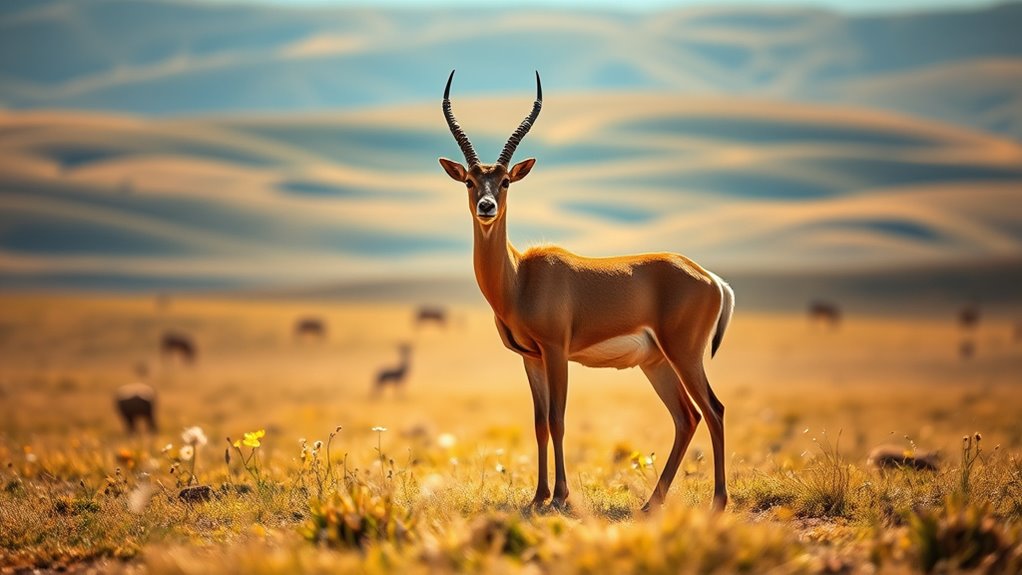

The saiga antelope, a remarkable survivor of the steppe, boasts distinctive features like its bulbous nose and large eyes. Once flourishing in vast herds across Central Asia, it now faces serious threats including habitat loss and poaching. Human activities have shrunk its natural home, causing population declines and increased disease risks. Despite these challenges, various conservation efforts are underway. You’ll discover more about what’s being done to help this unique species thrive in its native habitat.
Key Takeaways
- The saiga antelope is characterized by its unique bulbous nose and large expressive eyes, making it a distinctive species of the Central Asian steppes.
- Historically, saiga roamed vast steppes in massive herds, adapting to open grasslands and plains for survival.
- Current threats include habitat loss from agriculture and urbanization, poaching for horns, and disease outbreaks leading to population decline.
- Conservation efforts face challenges such as limited funding, community involvement, and the need for education on sustainable practices.
- Supporting conservation initiatives and raising awareness are essential for ensuring the saiga’s survival and protecting its habitat.
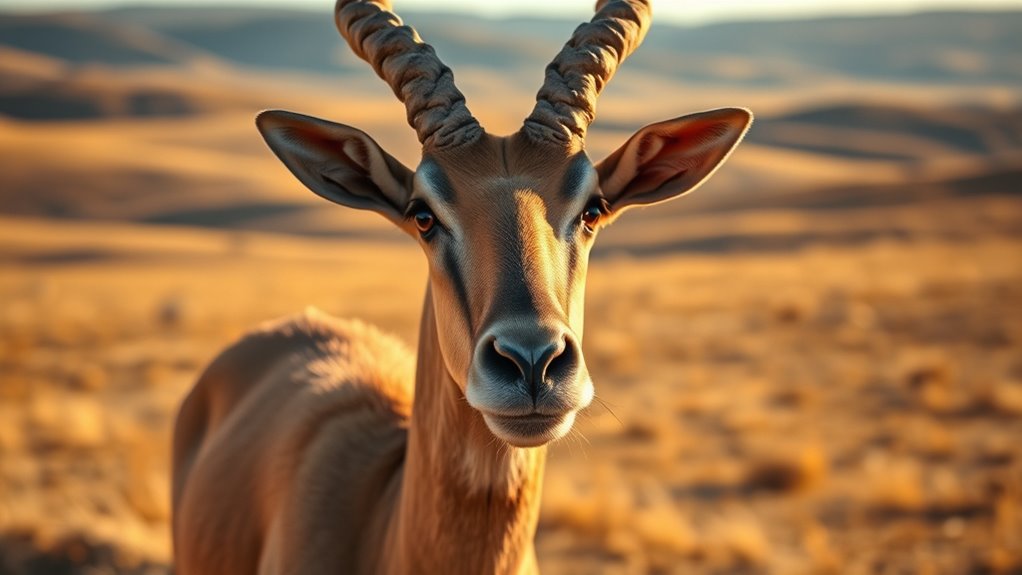
Have you ever seen a creature quite like the saiga antelope? With its distinctive bulbous nose and huge, expressive eyes, this unique animal captures your attention immediately. Native to the vast steppes of Central Asia, the saiga’s striking appearance isn’t its only remarkable trait. Once roaming in massive herds, these antelopes are now facing severe conservation challenges that threaten their very existence.
The saiga’s habitat has been shrinking at an alarming rate due to human encroachment. As you explore deeper into the plight of the saiga, you can’t help but notice the significant impact of habitat loss. Agriculture, urban development, and infrastructure projects have devastated their natural surroundings, leaving them with dwindling space to roam and graze. This habitat fragmentation not only reduces their numbers but also disrupts their migration patterns, which are vital for their survival.
In addition to habitat loss, poaching has become another major threat to the saiga population. The demand for their horns in traditional medicine markets has resulted in illegal hunting, further exacerbating the decline of these fascinating creatures. Every year, you hear reports of mass die-offs due to disease outbreaks, often linked to stress from overpopulation in restricted areas and poor living conditions. It’s a heartbreaking cycle that leaves you wondering what can be done to save them.
Conservation efforts are underway, but they face numerous obstacles. You might be surprised to learn that while various organizations are working tirelessly to protect the saiga, funding and resources remain limited. Community involvement is essential, yet it’s often challenging to engage local populations who depend on land and resources that overlap with saiga habitats. Educating these communities about the importance of the saiga not only helps raise awareness but also encourages sustainable practices that benefit both wildlife and people.
You can play a part in this story of survival. By supporting conservation initiatives or spreading awareness about the saiga antelope, you’re contributing to the fight against the threats they face. The future of this remarkable species hangs in the balance, and every effort counts. So, the next time you hear about the saiga, remember the challenges they endure and the role you can play in helping secure a future for these extraordinary creatures.
Impact Posters Gallery Wild Animal Wall Decor Antelope Antler Picture Pronghorn Art Print Poster (16×20)
Adorn your space with the beauty of nature with our Antelope Antler art print poster, perfect for wildlife…
As an affiliate, we earn on qualifying purchases.
As an affiliate, we earn on qualifying purchases.
Frequently Asked Questions
What Is the Saiga Antelope’s Natural Habitat?
The saiga antelope thrives in the vast, open steppes, where desert flora and mountain terrain create a unique habitat. You’ll find them roaming the arid plains, grazing on the grasses and shrubs that flourish in these areas. They adapt well to the changing landscapes, moving between lower elevations and foothills. By understanding their natural environment, you can appreciate how their survival depends on the delicate balance of these ecosystems.
How Does the Saiga Antelope Adapt to Harsh Climates?
The saiga antelope adapts to harsh climates through remarkable physiological adaptations that enhance its climate resilience. You’ll notice how its unique nasal structure warms cold air before it reaches the lungs, helping it cope with extreme temperatures. Additionally, its thick coat provides insulation against frigid winds. By grazing on drought-resistant vegetation, you can see how it thrives even when resources are scarce, showcasing its incredible ability to survive in challenging environments.
What Do Saiga Antelopes Eat?
Saiga antelopes primarily eat grasses and herbs, adapting their diet based on seasonal feeding. During spring and summer, they enjoy fresh shoots and flowering plants, while in winter, they switch to dry grasses and shrubs. You’ll notice their diet variations help them survive in harsh environments, ensuring they get the nutrients they need throughout the year. By understanding their eating habits, you can appreciate how these animals thrive despite challenging conditions.
How Do Saiga Antelopes Reproduce?
Saiga antelopes reproduce through unique breeding behaviors that guarantee their survival. During the mating season, you’ll notice males fighting for dominance to attract females, showcasing their strength. After a successful courtship, the female carries her young for about five months before giving birth to one or two calves. This reproductive strategy enhances their reproductive success, allowing the population to thrive even in harsh environments. Isn’t nature’s way of ensuring life fascinating?
What Are the Main Threats to Saiga Antelope Populations?
The main threats to saiga antelope populations are poaching threats and disease outbreaks. You’ll find that poaching for their horns and meat has drastically reduced their numbers. Additionally, disease outbreaks can wipe out large portions of the population, especially during stressful environmental conditions. Habitat loss also compounds these issues, making it vital for conservation efforts to address both poaching and health management to guarantee the survival of these unique animals.

Wildlife Habitat Preservation Area BLACK Aluminum Composite Sign 15''x18''
Our Aluminum Composite Signs are crafted from premium grade industrial materials, guaranteeing quality and reliability for years to…
As an affiliate, we earn on qualifying purchases.
As an affiliate, we earn on qualifying purchases.
Conclusion
As you wander through the vast steppe, the saiga antelope stands as a living testament to resilience, its curved horns like ancient secrets whispered by the wind. You can almost feel the pulse of the earth beneath your feet, echoing the heartbeat of this remarkable creature. With each graceful leap, it dances between survival and extinction, reminding you that life, like the sprawling landscape, is a fragile beauty worth protecting. Together, let’s guarantee its story continues to unfold.

GPS Tracker for Dogs with Activity and Wellness Monitoring, Real-time Tracking Pet GPS Location Tracker, Waterproof,Location History, Geofence, Long-Life Battery, Subscription Needed
REAL-TIME GPS TRACKING: Locate your dog instantly with live GPS tracking technology that updates your pet's location in…
As an affiliate, we earn on qualifying purchases.
As an affiliate, we earn on qualifying purchases.
wildlife education books about saiga antelope
As an affiliate, we earn on qualifying purchases.
As an affiliate, we earn on qualifying purchases.