The sun bear is the smallest bear species, renowned for its charming appearance and golden-orange chest patch. These agile climbers can scale trees up to 50 feet, using their strong limbs and sharp claws to reach hidden beehives. Honey foraging is their favorite activity and provides essential nutrients for energy. With their resourcefulness and adaptability, sun bears play a crucial role in tropical ecosystems. There’s so much more to learn about their fascinating habits and behaviors.
Key Takeaways
- Sun bears are the smallest bear species, known for their distinctive golden-orange chest patch and charming appearance.
- They possess strong limbs and sharp claws, enabling them to climb trees up to 50 feet high.
- Honey foraging is their favorite activity, guided by a keen sense of smell to locate hidden beehives.
- Their diet includes insects, fruits, and small vertebrates, with honey providing essential nutrients and energy.
- Climbing trees not only helps them access food but also offers a safe retreat from predators in their tropical forest habitat.
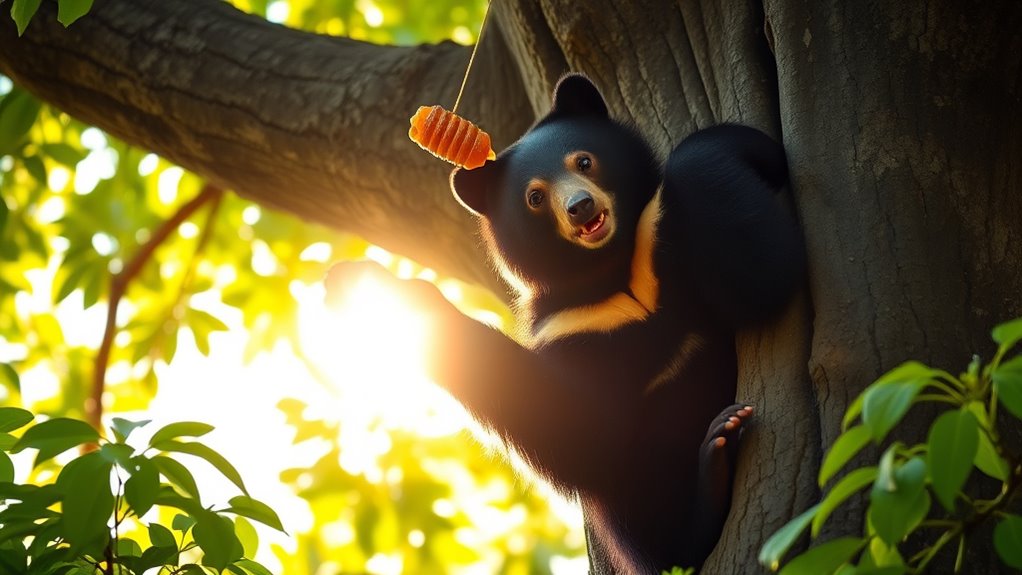
The sun bear, known for its distinctive golden-orange chest patch, is the smallest bear species in the world. You might find it fascinating that these bears are not just cute but also highly skilled foragers. One of their favorite pastimes is honey foraging. Imagine walking through the tropical forests of Southeast Asia and spotting a sun bear expertly sniffing out a beehive. Their keen sense of smell directs them to hidden treasures, where sweet honey awaits.
The sun bear, the world’s smallest bear, captivates with its honey foraging skills and charming golden-orange chest patch.
When you think about how sun bears manage to reach those high hives, it’s hard not to admire their tree climbing abilities. With strong limbs and sharp claws, they effortlessly ascend trees, steering their way through branches with agility. You might not realize it, but these bears can climb as high as 50 feet! Once they reach a hive, their powerful claws allow them to tear through bark and access the honey. You can picture them munching on honeycomb, savoring the gooey sweetness, and indulging in a feast that fuels their energy for the day.
But honey foraging isn’t just about enjoying a treat. For sun bears, it’s an essential part of their diet, providing essential nutrients and calories. When you see them enjoying this delicacy, you’re witnessing a critical behavior that helps sustain their health. They also consume insects, fruits, and small vertebrates, making them opportunistic feeders in their lush habitats. It’s a balance of taste and survival that defines their everyday lives.
Tree climbing not only helps them reach those tasty hives, but it also offers sun bears a safe retreat from potential threats. If danger approaches, the bears can quickly scamper up high, finding refuge among the branches. This skill also allows them to scout their surroundings for food or companions, making it an indispensable aspect of their behavior in the wild.
While you may marvel at their size and charm, understanding their honey foraging habits and tree climbing skills adds depth to your appreciation of these unique creatures. Interestingly, inflation-protected annuities can be considered a financial strategy that parallels the sun bear’s resourcefulness, as both seek stability and sustenance in their environments. Next time you think of bears, remember the sun bear, the tiny powerhouse of the forest, whose love for honey and knack for climbing makes it a remarkable part of the ecosystem. They embody the spirit of adventure, thriving among the trees while indulging in their sweet rewards.
Frequently Asked Questions
What Is the Average Lifespan of a Sun Bear in the Wild?
In the wild, a sun bear typically lives around 15 to 25 years. However, habitat destruction and poaching can substantially impact their lifespan. You might find it interesting that conservation efforts aim to protect these bears and their habitats, helping to guarantee they thrive for longer. Supporting these initiatives can make a difference in their survival, allowing you to contribute positively to their future and the ecosystem they inhabit.
Are Sun Bears Solitary or Social Animals?
You might wonder if sun bears are solitary or social animals. Generally, they’re known for their solitary behavior, preferring to roam alone through their forest habitats. However, sun bear social behavior can vary; they may occasionally gather in small groups, especially when food is abundant. While they enjoy their independence, they’re not completely antisocial. So, you can appreciate their unique blend of solitude and occasional social interactions in the wild.
How Do Sun Bears Communicate With Each Other?
Sun bears communicate through various vocalizations, including growls and barks, which convey different emotions and intentions. You might notice them using these sounds to establish territory or attract a mate. Additionally, they engage in tree communication by scratching bark or marking their territory, leaving behind scents that other sun bears can detect. This combination of vocal and physical signals helps them interact effectively in their natural habitat.
What Threats Do Sun Bears Face in Their Natural Habitat?
Sun bears face significant threats in their natural habitat, primarily from habitat loss and poaching. As you explore their forests, you’ll notice the rapid deforestation driven by agriculture and urbanization, which diminishes their living space. Additionally, poaching poses a severe risk, as hunters target them for their body parts and illegal trade. Together, these factors push sun bears closer to extinction, making it vital to protect their environment and raise awareness about their plight.
Can Sun Bears Be Kept as Pets Legally?
You can’t legally keep sun bears as pets in most places. Legal considerations vary by region, but many areas prohibit owning exotic animals like sun bears due to their complex needs. Pet care requirements for sun bears are extensive, including a large habitat, specialized diet, and social interaction. It’s important to prioritize their well-being and recognize that they belong in the wild, not as household companions. Always check local laws before considering any exotic pet.
Conclusion
In the grand tapestry of the animal kingdom, the sun bear shines like a thousand suns, with a heart that beats for honey and a spirit that soars through the treetops. You can’t help but marvel at this adventurous little climber, whose insatiable curiosity and sweet tooth could rival that of a thousand children on a candy spree. So next time you think of bears, remember the sun bear—a furry dynamo of joy, swinging through life with unmatched enthusiasm!