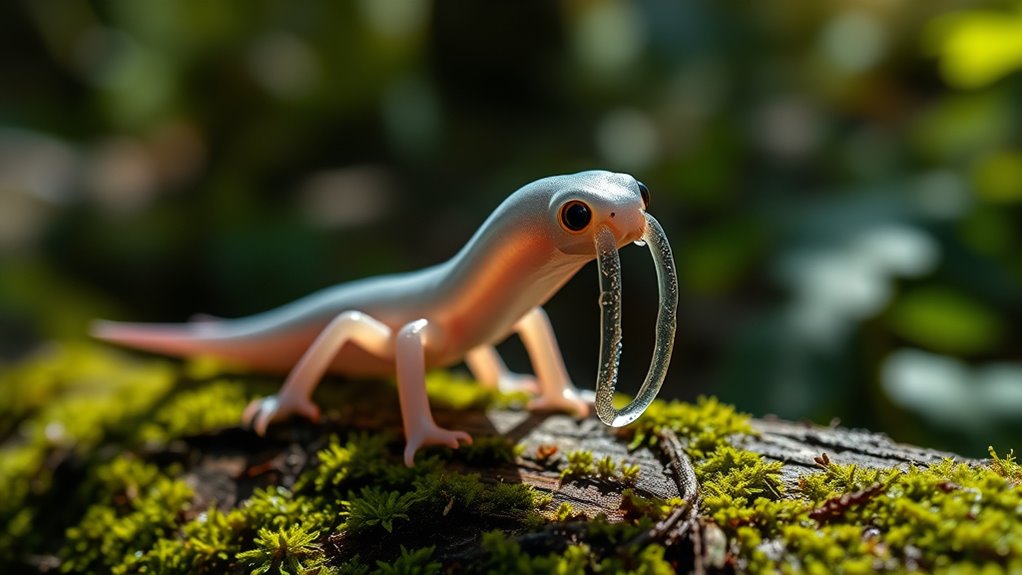

The velvet worm, a soft-bodied creature with a velvety texture, is an incredible slime-shooting predator. You’ll find it lurking in humid, tropical regions, blending into leaf litter and moss. With its many legs and ambush techniques, it waits patiently for unsuspecting prey, like insects and spiders. When the moment is right, it releases a sticky slime that immobilizes its target. This unique hunting method showcases its ancient evolutionary traits, revealing secrets about survival that you won’t want to miss.
Key Takeaways
- Velvet worms are ambush predators that use stealth and patience to hunt insects and spiders in humid, tropical environments.
- They can shoot sticky slime from specialized glands, effectively immobilizing predators and capturing prey.
- The slime serves as both a physical barrier and a chemical defense, deterring and confusing attackers.
- This unique hunting technique showcases their evolutionary adaptations, contributing to their survival for hundreds of millions of years.
- Velvet worms highlight the importance of ancient ecosystems and provide insights into biodiversity and evolutionary strategies.
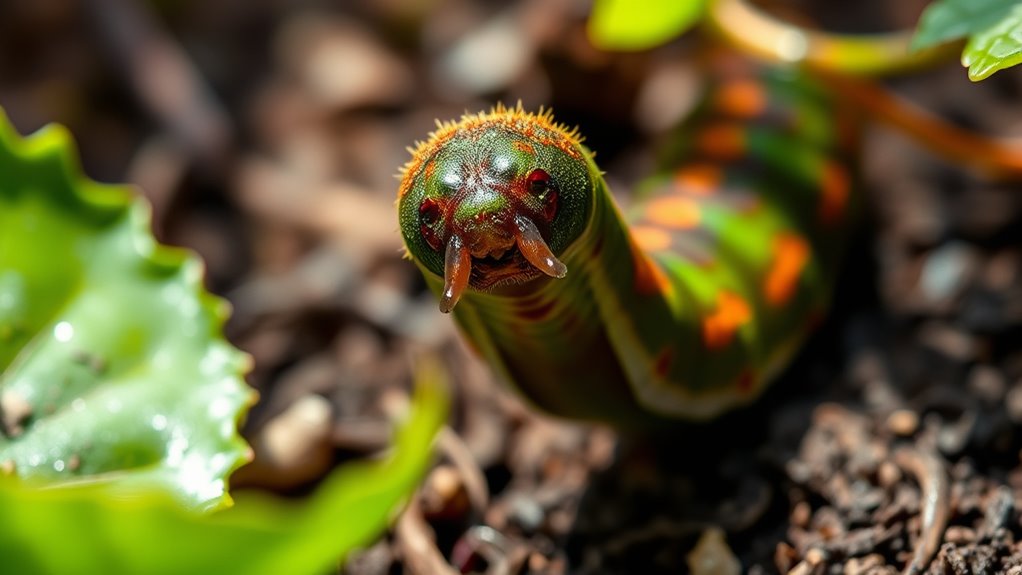
Have you ever wondered what a velvet worm looks like? These fascinating critters, often compared to miniature caterpillars, have a unique charm that sets them apart in the animal kingdom. With their soft, velvety bodies and numerous legs, they present a striking appearance. Found in humid, tropical regions, they thrive in leaf litter and moss, making them elusive yet intriguing creatures. Their evolutionary history stretches back hundreds of millions of years, making them one of the oldest surviving lineages of terrestrial animals.
Discover the charm of velvet worms, ancient creatures with velvety bodies and unique adaptations thriving in tropical habitats.
What truly captivates people about velvet worms are their remarkable defense mechanisms. When threatened, these creatures have an impressive way of warding off predators. They can shoot a sticky slime from their specialized glands, effectively immobilizing any attacker. Imagine being able to ensnare your foe in a web of goo that makes escape nearly impossible! This slime not only serves as a physical barrier but also contains substances that can deter or confuse predators. This strategy has evolved over time, helping velvet worms survive in a world where countless other species have perished.
As you explore deeper into their lives, you’ll discover that velvet worms are not just about looks and slime. Their hunting techniques are equally captivating. They’re ambush predators, relying on stealth and patience. They can sense vibrations in their environment, allowing them to detect potential prey like insects and spiders. Once they spot their target, they release a remarkable burst of slime to capture it, showcasing an incredible combination of elegance and ferocity. This hunting method is a proof of their evolutionary adaptations, honed over millions of years to guarantee their survival in a competitive ecosystem.
Understanding velvet worms also means appreciating their role in the broader tapestry of life. Their evolutionary history provides insight into how life has adapted to various environmental challenges. By studying these creatures, scientists can gain valuable information about ancient ecosystems and the relationships between different species. It’s not just about the individual velvet worm; it’s about how they fit into the larger picture of biodiversity and evolution. Furthermore, their unique slime-shooting ability is a fascinating example of evolutionary adaptations that enable them to thrive despite their small size.
Frequently Asked Questions
What Is the Lifespan of a Velvet Worm?
Velvet worms typically live between 3 to 7 years, depending on their habitat and environmental conditions. In their natural velvet worm habitats, these fascinating creatures thrive in humid, forested areas. To guarantee their survival, you should support velvet worm conservation efforts, as habitat destruction poses a significant threat to their populations. By protecting their ecosystems, you help maintain the delicate balance of biodiversity, allowing these unique organisms to flourish for generations to come.
How Do Velvet Worms Reproduce?
Velvet worms reproduce through fascinating reproductive methods. Some species lay eggs, displaying unique egg-laying behaviors, while others give birth to live young. If you observe them closely, you’ll notice females often create a safe environment for their eggs, sometimes even keeping them in their bodies until they’re ready to hatch. This strategy helps guarantee the survival of the offspring in their natural habitat, allowing them to thrive in various environments.
Where Can I Find Velvet Worms in the Wild?
You’ll find velvet worms lurking in the damp, dark corners of humid forests, probably plotting their next slime attack. They prefer habitats like leaf litter, under logs, or in soil—basically anywhere cozy and moist. Just don’t expect them to hand out business cards; they’re rather shy. Sadly, their conservation status is at risk due to habitat loss, so you might want to pay them a visit before they become even harder to find!
Are Velvet Worms Harmful to Humans?
No, velvet worms aren’t harmful to humans. While they do have a venomous bite, it’s not dangerous to you. Their primary defense mechanism is the slime they shoot at predators, which can be quite impressive but won’t affect you. If you encounter one, just admire it from a safe distance. They’re fascinating creatures, and their unique adaptations make them a enthralling part of the ecosystem, not a threat to you.
What Do Velvet Worms Eat in Their Habitat?
You’d be fascinated to learn that velvet worms feast primarily on small insects and other invertebrates. In their humid, leaf-littered habitats, they employ a unique hunting strategy. Imagine this: they creep silently, then suddenly release a sticky slime to ensnare their prey. This velvet worm diet varies slightly depending on their specific habitat, but their feeding habits are consistent. So, next time you venture into the woods, remember these intriguing predators lurking beneath the surface!
Conclusion
In the grand tapestry of life, the velvet worm weaves a thread of intrigue and adaptability. As you explore this slime-shooting predator, remember that it’s not just a creature but a testament to survival in a world filled with challenges. Its unique hunting strategy reminds you that innovation often comes from the most unexpected places. So, embrace your own quirks and let them propel you forward, just as the velvet worm does in its ancient dance of existence.