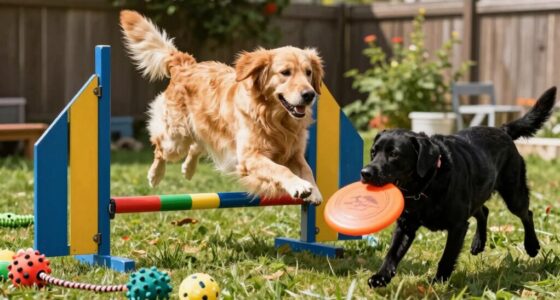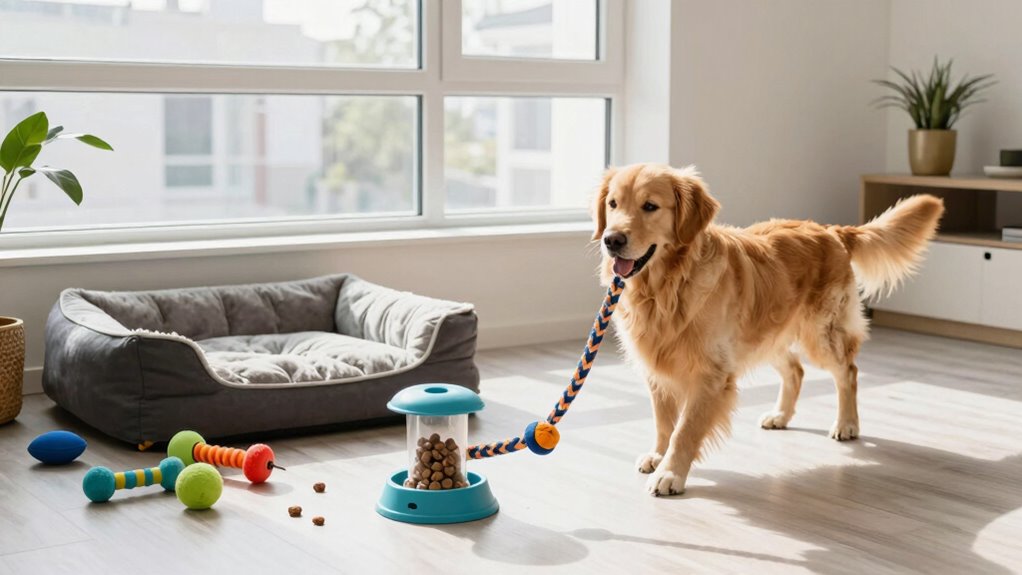

To choose better enrichment for your apartment dog, focus on activities that stimulate their mind and natural instincts. Use puzzle toys that match their skill level and gradually increase the difficulty to prevent boredom. Incorporate sensory activities with new scents, textures, and natural elements for added enrichment. Set up obstacle courses or hide treats to keep them physically and mentally engaged. Keep exploring options to create a stimulating environment tailored to your dog’s needs.

Get pet supplies delivered free with Prime
- Fast, free delivery on millions of items
- Prime Video, Amazon Music and more included
- Member-only deals all year
Key Takeaways
- Select enrichment activities that match your dog’s skill level and gradually increase difficulty to prevent boredom.
- Incorporate sensory stimuli like natural scents, textures, and tactile toys for mental engagement.
- Use puzzle toys to challenge problem-solving skills and slow down fast eaters.
- Create indoor obstacle courses with household items to promote physical activity and mental focus.
- Develop routines that cater to your dog’s natural behaviors and preferences for sustained interest.
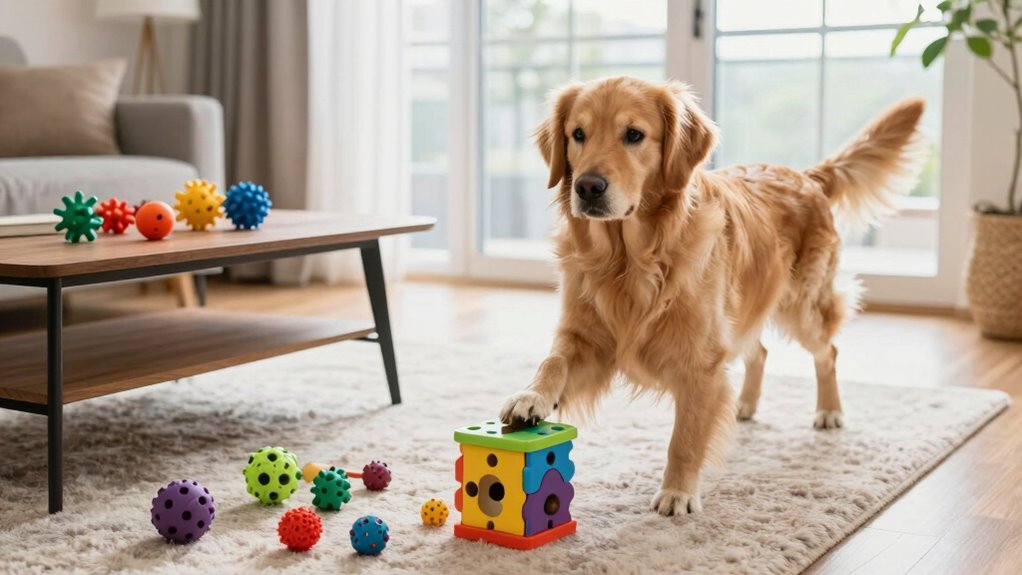
Living in an apartment can limit a dog’s opportunities for outdoor exploration, but that doesn’t mean your furry friend has to miss out on mental and physical stimulation. You can turn your indoor space into an enriching environment by choosing the right activities and toys. One effective way to do this is by incorporating indoor puzzle toys. These toys challenge your dog’s problem-solving skills and keep their mind engaged. When selecting puzzle toys, look for options that match your dog’s skill level—ones that are neither too easy nor too frustrating. As your dog masters each level, you can gradually introduce more complex puzzles to prevent boredom. Puzzle toys also help slow down fast eaters and provide a rewarding experience when your dog figures out how to access treats or kibble hidden inside. Incorporating biodiversity into your enrichment strategies, such as using natural scents or textures, can further enhance your dog’s sensory experience. Additionally, integrating a variety of natural elements can stimulate your dog’s innate sensory response and curiosity. Engaging multiple senses through diverse activities is also crucial to prevent monotony and promote overall well-being. This approach not only stimulates your dog’s senses but also aligns with the natural behaviors and instincts they possess.
Indoor puzzle toys challenge your dog’s mind and adapt to their skill level for ongoing mental stimulation.
Along with puzzle toys, sensory activities are a fantastic way to stimulate your dog’s senses. These activities can include things like hiding treats in different textured materials, introducing new scents, or setting up a simple obstacle course using household items. Sensory play enhances your dog’s cognitive abilities and satisfies their natural curiosity. For example, you might scatter a handful of treats on a textured mat or hide toys in crumpled paper for them to find. This type of play not only keeps your dog physically active but also encourages mental focus. It’s especially beneficial for dogs that tend to get anxious or bored easily, as it provides a calming, engaging outlet for their energy. Moreover, incorporating natural elements into these activities can make the sensory experience even more enriching. Recognizing the importance of natural stimuli can help you develop more effective enrichment routines tailored to your dog’s preferences. Using multisensory stimuli can create a more engaging and stimulating environment that caters to your dog’s individual needs and natural instincts.
As an affiliate, we earn on qualifying purchases.
Frequently Asked Questions
How Often Should I Rotate My Dog’s Enrichment Activities?
You should rotate your dog’s enrichment activities, like interactive puzzles and scent games, every one to two weeks. This keeps their mind engaged and prevents boredom. Switch up the activities to introduce new challenges and stimuli, ensuring your dog stays interested. Observing how your dog responds helps you gauge if they need more frequent changes or longer-lasting activities. Regular rotation keeps their environment stimulating and supports their mental well-being.
What if My Dog Doesn’t Seem Interested in New Toys?
If your dog isn’t interested in new toys, try introducing interactive puzzles or scent games instead. These activities engage your dog’s mind and sense of smell, making them more stimulating. You can start with simple puzzles and gradually increase difficulty. Sometimes, dogs need time to warm up to new items. Keep sessions short, be patient, and reward your dog with treats to boost their interest and curiosity.
Are There Enrichment Options Suitable for Small Apartment Dogs?
Your small apartment dog can thrive with the right enrichment options. Think of interactive puzzles and scent games as tiny adventures packed into limited space, transforming everyday moments into mental workouts. These activities are perfect for small dogs, keeping them engaged and stimulated without needing large toys or outdoor space. With a little creativity, you’ll turn your cozy apartment into a stimulating playground where your dog’s mind stays sharp and happy.
How Can I Tell if an Enrichment Activity Is Safe for My Dog?
To tell if an enrichment activity is safe for your dog, follow safety guidelines by checking for small parts that could be swallowed or cause choking. Conduct an enrichment evaluation by observing how your dog interacts with the item, ensuring it doesn’t cause stress or aggression. Always supervise initial play and choose age-appropriate, non-toxic materials. If unsure, consult your veterinarian to confirm the activity’s safety and suitability for your dog.
Can Enrichment Help With Separation Anxiety in Apartment Dogs?
Think of enrichment as your dog’s personal symphony, calming their nerves much like a lullaby. Yes, it can help with separation anxiety by engaging their mind and reducing stress. For puppy development and breed-specific needs, tailored activities like puzzle toys or scent work can be particularly effective. Consistent enrichment eases anxiety, helping your dog feel more secure, confident, and less distressed when you’re apart.
Conclusion
Choosing the right enrichment for your apartment dog isn’t just about keeping them busy; it’s about building a bond and understanding their needs. When you pick activities that excite and challenge them, you’ll notice a happier, healthier pup—almost like a coincidence, but really, it’s your effort paying off. So trust your instincts, stay attentive, and let the small moments of joy and discovery unfold naturally. After all, a fulfilled dog makes a peaceful home for both of you.
Columbus Day / Indigenous Peoples' Day Picks
long weekend sales
As an affiliate, we earn on qualifying purchases.