
To build a better aquarium maintenance routine, set a consistent schedule for tasks like testing water parameters, performing partial water changes, and cleaning filters. Use reliable test kits to monitor pH, ammonia, nitrite, and nitrate levels regularly, taking immediate action if levels are off. Balance cleaning with preserving beneficial bacteria to keep water chemistry stable. Maintaining a routine helps prevent problems and keeps your tank healthy. Keep exploring these tips to create a thriving, stress-free environment for your fish.

Get pet supplies delivered free with Prime
- Fast, free delivery on millions of items
- Prime Video, Amazon Music and more included
- Member-only deals all year
Key Takeaways
- Establish a consistent schedule for testing, water changes, and equipment maintenance to promote stability.
- Use reliable test kits regularly to monitor water parameters and address issues promptly.
- Perform partial water changes weekly or bi-weekly, adjusting frequency based on tank needs.
- Clean filters carefully to preserve beneficial bacteria while removing debris and buildup.
- Observe fish behavior and equipment performance consistently to catch problems early and adjust routines accordingly.
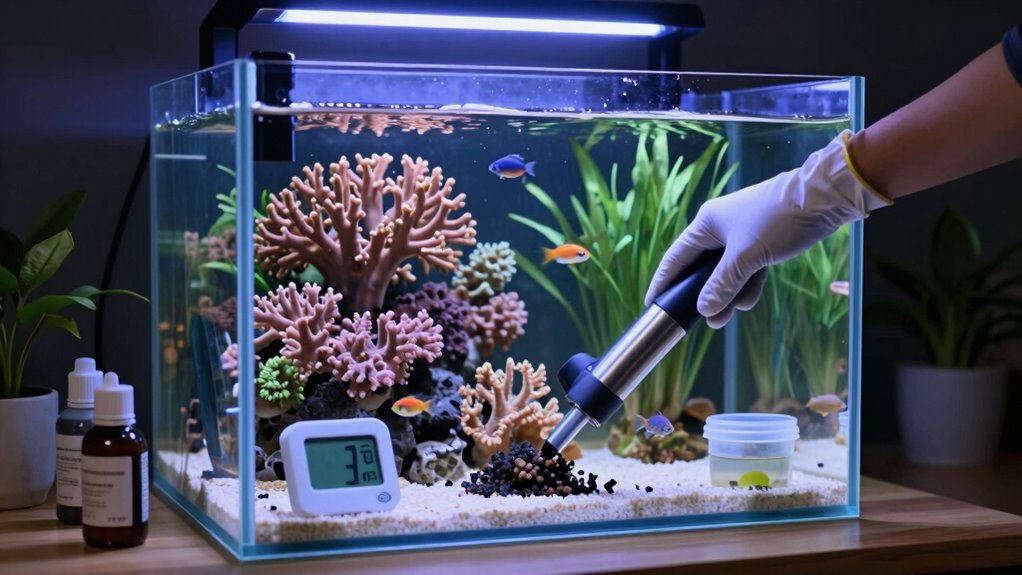
Creating a consistent and effective aquarium maintenance routine is fundamental for keeping your fish healthy and your tank looking its best. When you stick to a regular schedule, you guarantee that water chemistry remains stable, which is key to preventing stress and illness in your fish. A routine helps you catch problems early before they escalate, making your tank a thriving environment. To build this routine, start by setting specific days each week for routine tasks, such as water testing, partial water changes, and filter maintenance. Consistency is more important than frequency—regularity helps you stay on top of water chemistry fluctuations and keeps your fish comfortable.
Consistent routine is key to healthy fish and a thriving aquarium environment.
Testing your water regularly should be a top priority. Use reliable test kits to check parameters like pH, ammonia, nitrite, and nitrate levels. Healthy water chemistry is essential for fish health, so if any readings are off, take immediate action. This might mean adjusting your filtration, performing partial water changes, or adding conditioners. Keeping water quality stable creates a safe environment and prevents common issues like algae overgrowth or disease. Remember, even small changes in water chemistry can stress your fish or compromise their immune systems, so monitoring it regularly is non-negotiable. Incorporating proper testing protocols ensures you catch imbalances early and maintain optimal conditions for your aquatic life.
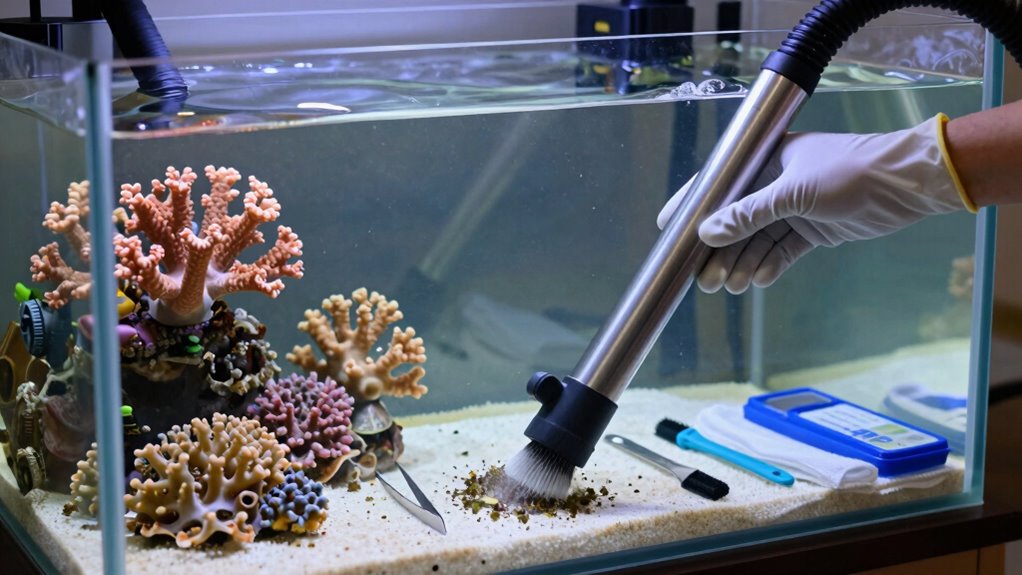
Perform partial water changes weekly or bi-weekly, depending on your tank size and bioload. Removing about 10-20% of the water helps dilute toxins and replenish important minerals. Always use dechlorinated water at the same temperature as your tank to avoid shocking your fish. During water changes, it’s a good opportunity to clean glass algae, vacuum the substrate, and assess equipment operation. Clean filters as needed, but avoid over-cleaning, which can disrupt beneficial bacteria populations that maintain water chemistry. Striking the right balance between cleaning and preserving biological filtration is essential. Additionally, biological filtration plays a crucial role in maintaining stable water parameters, so understanding its function can help you make better maintenance decisions. Regularly monitoring biological filtration can help identify issues early and prevent fluctuations that could harm your fish. Establishing a routine that includes biological filtration maintenance can significantly improve the overall health of your aquatic environment.
As an affiliate, we earn on qualifying purchases.
Frequently Asked Questions
How Often Should I Test My Aquarium Water Parameters?
You should test your aquarium water parameters weekly to maintain a healthy environment. Regular water testing helps you monitor the chemical balance, ensuring levels like pH, ammonia, nitrites, and nitrates stay within safe ranges. Consistent testing allows you to catch issues early, preventing stress or harm to your fish. Adjust your routine as needed based on test results, and don’t forget to record your findings for future reference.
What Are the Signs of Overfeeding My Fish?
Ever notice your fish looking like they’re auditioning for a food commercial? That’s a sign of overfeeding. If they constantly beg for food or your water shows increased waste, it’s a red flag. Stick to proper feeding frequency, and watch their fish appetite—if they refuse food or leave leftovers, you’re overdoing it. Overfeeding causes poor water quality and stress, so keep portions in check for happy, healthy fish.
Can I Use Tap Water for My Aquarium?
Yes, you can use tap water for your aquarium, but you should treat it first to guarantee aquarium water safety. Use a dechlorinator to remove harmful chemicals like chlorine and chloramine. Regular fish health monitoring helps catch any issues early. Always test the water parameters after treatment to maintain a healthy environment. Properly prepared tap water supports your fish’s well-being and keeps your tank thriving.
How Do I Handle a Fish Emergency During Maintenance?
During maintenance, if a fish shows signs of distress, stay calm and act swiftly. Use emergency preparedness by keeping a net, clean water, and a temporary container nearby. Quickly transfer the fish to a safe, oxygenated environment. Apply quick response techniques like minimizing stress and avoiding sudden movements. Always monitor the fish closely afterward, and seek expert advice if symptoms persist. Staying prepared helps you respond effectively to emergencies.
What Equipment Is Essential for a Maintenance Routine?
You need essential aquarium tools and cleaning supplies for a solid maintenance routine. Grab a siphon or gravel vacuum to clean substrate, algae scrapers or magnetic cleaners for glass, and a net for fish. Keep an aquascaping tool handy for plant care, and stock up on water conditioners, dechlorinators, and test kits. These supplies guarantee you can efficiently maintain water quality, keep the tank clean, and create a healthy environment for your fish.
Conclusion
By establishing a consistent routine, you turn chaos into calm, much like transforming a turbulent river into a gentle stream. Regular maintenance keeps your aquarium clear and vibrant, ensuring your fish thrive in their peaceful aquatic world. Neglect, however, is like letting weeds overtake a garden—overwhelming and difficult to control. With dedication, your routine becomes the steady hand guiding your underwater ecosystem, creating a serene sanctuary that’s as lively as it is well-maintained.
Halloween Picks
halloween
As an affiliate, we earn on qualifying purchases.