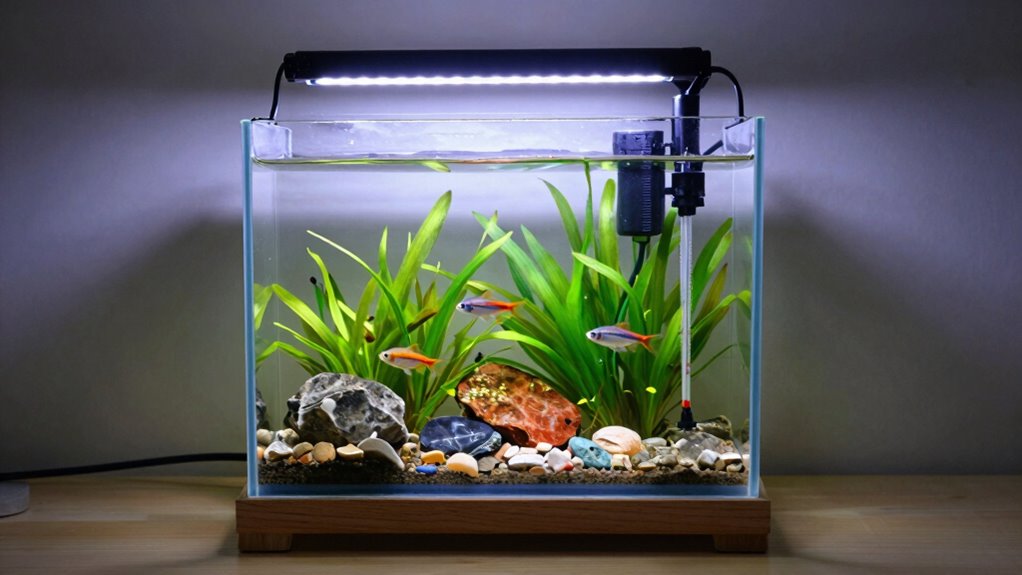

Many beginner aquarium kits fail because new hobbyists skip or rush the nitrogen cycle, causing deadly ammonia and nitrite spikes. Adding fish too early, overfeeding, or neglecting water tests can quickly kill your fish. Proper cycling involves establishing beneficial bacteria to process waste safely, ensuring stable water conditions. If you want healthy, thriving fish, it’s essential to learn how to cycle your tank correctly—keep going and you’ll discover exactly how to do it right.
Key Takeaways
- Rushing the cycle by adding fish before water parameters stabilize causes toxic ammonia buildup.
- Skipping or neglecting proper cycling leads to deadly ammonia and nitrite spikes in the tank.
- Overfeeding and overcrowding can disrupt biological filtration, accelerating fish stress and mortality.
- Failing to test water regularly may cause unnoticed toxin levels that quickly kill fish.
- Not establishing a fully cycled tank with beneficial bacteria causes unstable conditions that threaten fish health.

Reptile Temperature Controller, 3 Outlet Timer Thermostat for Grow Tent, Incubation, Snakes, Fish Tank, Heater, humidifiers, Ball Pythons, Bearded Dragon Tank
Timer thermostat for reptiles, 3 plugs outlet can work independently. Integrated design with day/night temperature and timing control,...
As an affiliate, we earn on qualifying purchases.
Why the Nitrogen Cycle Is Critical for a Healthy Aquarium
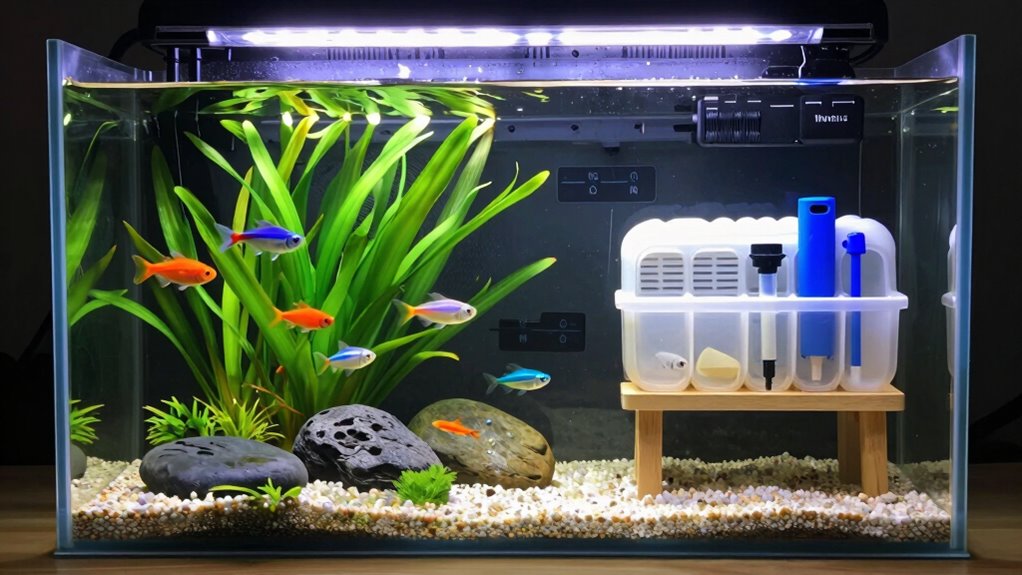
Understanding the nitrogen cycle is essential for maintaining a healthy aquarium because it keeps harmful waste in check. When fish produce waste, aquarium bacteria step in to convert toxic ammonia into less harmful nitrites and then into nitrates. This process, known as nitrogen detox, prevents dangerous buildup that can stress or kill your fish. Without a proper nitrogen cycle, waste accumulates rapidly, creating unsafe conditions. Aquarium bacteria play a vital role in breaking down waste efficiently, ensuring water quality stays stable. Regularly cycling your tank allows these bacteria to establish and thrive, making the nitrogen detox process effective. Proper biological filtration is critical for supporting this beneficial bacteria and maintaining water quality, as it provides an ideal environment for their growth. Failing to understand and support this cycle leads to toxic environments, risking your fish’s health and life. Additionally, maintaining stable conditions encourages the growth of beneficial bacteria, which is crucial for a balanced aquarium ecosystem. Implementing effective filtration systems can significantly enhance your tank’s biological balance, leading to healthier aquatic life. Recognizing the importance of maintaining an optimal environment can prevent common cycling mistakes that often lead to fish loss.

RunDuck 45 Gallon 360° Panoramic Foldable Reptile Terrarium Kit: Crested Gecko Tank and Reptile Cage for Superior Ventilation, Easy Feeding, Sturdiness, and Simple Assembly (Black, 32"x18"x18")
【Seamless Observation】Crafted from metal mesh material, this enclosure offers an unobstructed 360° panoramic view of your pet's every...
As an affiliate, we earn on qualifying purchases.
How to Tell if Your Aquarium Is Fully Cycled
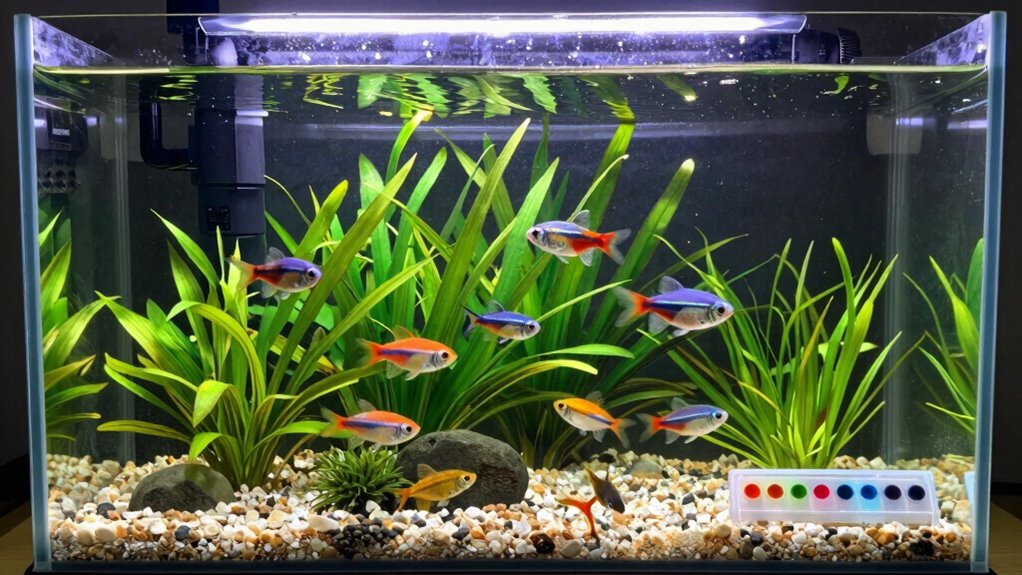
You can usually tell if your aquarium is fully cycled by testing the water for specific chemicals, mainly ammonia, nitrite, and nitrate levels. When these levels stabilize—ammonia and nitrite at zero, nitrate present but manageable—it indicates your tank has completed the cycle. Keep an eye on algae growth; excessive algae can suggest nutrient imbalance or incomplete cycling. Water temperature also plays a role—if it’s stable within the ideal range for your fish, it supports a healthy cycle. Regular testing helps you monitor progress and prevent sudden spikes in harmful chemicals. Additionally, monitoring free floating algae and debris can provide clues about water quality and cycling status. Ensuring proper biological filtration is crucial for establishing a stable environment, as it helps maintain beneficial bacteria populations. Proper aquarium cycling reduces stress on fish and promotes a healthy, balanced ecosystem. Achieving a fully cycled tank involves patience, as beneficial bacteria need time to establish and multiply. Incorporating proper filtration methods can speed up the cycling process and improve water quality. Once your readings are consistent and algae growth is controlled, your aquarium is likely fully cycled and safe for fish. Proper cycling ensures a stable environment and reduces the risk of fish stress or death.

REPTI ZOO Amphibian Habitat Tank 10 Gallon, Full Vision Glass Reptile Terrarium 12" x 12" x 18", Vertical Reptile Tank with Deep Base & Top Screen Ventilation
【Full View Glass Tank 10 Gallon】Patented Design Reptile Terrarium Featured with full view glass, this small 10 gallon...
As an affiliate, we earn on qualifying purchases.
Signs Your Tank Isn’t Cycled and What to Do
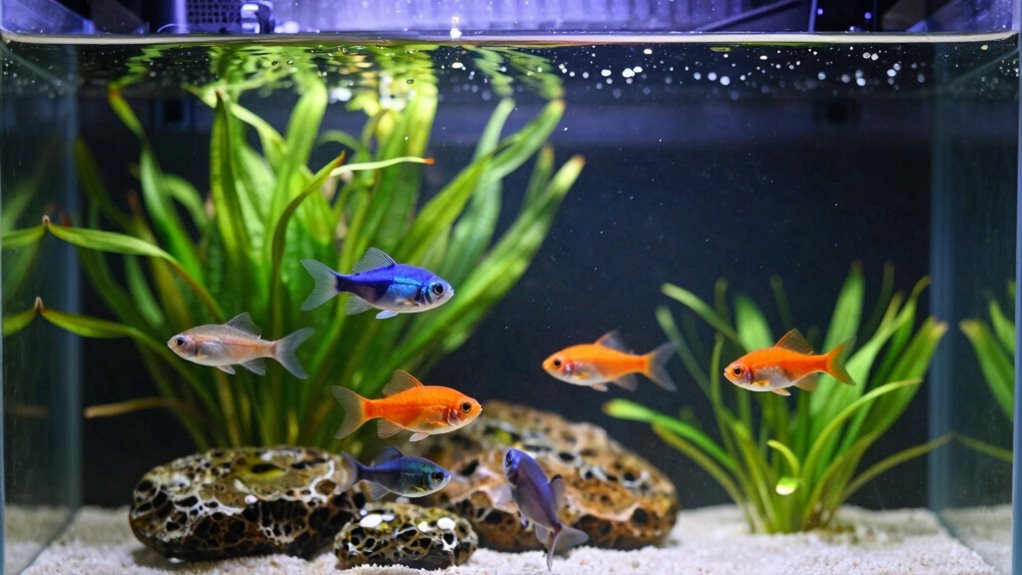
If your fish are acting strangely or your water looks cloudy, your tank might not be fully cycled yet. Keep an eye out for signs like unusual fish behavior, cloudy water, or sudden ammonia spikes. Address these issues promptly to ensure a healthy environment for your aquatic life. Understanding the cycling process can help you prevent these problems and maintain a safe habitat. Recognizing the nitrogen cycle is essential for establishing a stable and healthy tank environment. Additionally, monitoring water parameters regularly can help catch issues early before they become serious. Being familiar with beneficial bacteria can also aid in maintaining a balanced ecosystem within your tank. Knowing how biological filtration works can further enhance your ability to support a healthy tank.
Unusual Fish Behavior
Unusual fish behavior is often a clear sign that your tank isn’t properly cycled. You might notice your fish hiding more than usual or exhibiting unusual swimming patterns, such as darting or sluggish movements. These signs indicate stress and poor water quality, often caused by incomplete cycling. To better understand, look for:
- Fish hiding excessively or refusing to come out
- Erratic swimming or zig-zag movements
- Lethargy or sluggishness
- Gasping at the surface
- Loss of appetite
If you observe these behaviors, it’s likely your tank’s beneficial bacteria haven’t established enough. You should test water parameters immediately, perform partial water changes, and avoid adding new fish until the tank fully cycles. Proper cycling establishes biological filtration and restores stability, keeping your fish healthy. Additionally, cycling is a crucial step in establishing a healthy environment that supports all your aquatic life. Recognizing ammonia buildup early can help prevent further stress and potential fish loss.
Cloudy Water Signs
Cloudy water is a common sign that your tank isn’t fully cycled, often resulting from excess ammonia or bacteria blooms. When water clarity diminishes, it’s a clear indicator that your biological filter isn’t mature enough. This can also be caused by insufficient beneficial bacteria**, which are essential for establishing a healthy nitrogen cycle. Algae blooms can also contribute to cloudiness, especially if light levels are high or nutrients build up. This cloudy appearance signals that beneficial bacteria haven’t fully established, risking harmful ammonia and nitrite buildup. To fix this, test your water regularly and perform partial water changes to remove excess nutrients. Avoid overfeeding, which can worsen cloudiness. Give your tank time to develop a stable cycle, and consider adding beneficial bacteria supplements to speed up the process. Proper maintenance restores water clarity and keeps your fish healthy. Additionally, ensuring proper filtering and aeration** can help maintain water quality during the cycling process.
Ammonia Spike Indicators
Noticing a sudden, sharp smell of ammonia or seeing your tank water turn cloudy with a strong odor are clear signs that your cycle isn’t complete. Elevated ammonia levels can quickly stress your fish, making them more vulnerable to illness or death. Watch for these indicators:
- Fish acting lethargic or hiding more often
- Gasping at the water surface
- Visible ammonia odor in the tank
- Cloudy water with a foul smell
- Test kits showing ammonia levels above 0 ppm
If you notice these signs, it’s vital to take action. Perform partial water changes to lower ammonia, reduce feeding, and add beneficial bacteria to help establish your cycle. Addressing ammonia spikes promptly protects your fish from stress and potential fatalities.

waazoorep Reptile Glass Terrarium Tank 10 * 10 * 14in, Full View with Front Opening Door,Amphibians Enclosure Habitat Cage for Crested Gecko,Spider,Tarantula,Lizard,Hermit Crab,Frog,Mantises,Insects
【360° Panoramic Vision】: The size of this reptile tank is 10"x10"x14", and it is made of all-ultra-white glass,...
As an affiliate, we earn on qualifying purchases.
How to Properly Cycle Your Aquarium Before Adding Fish
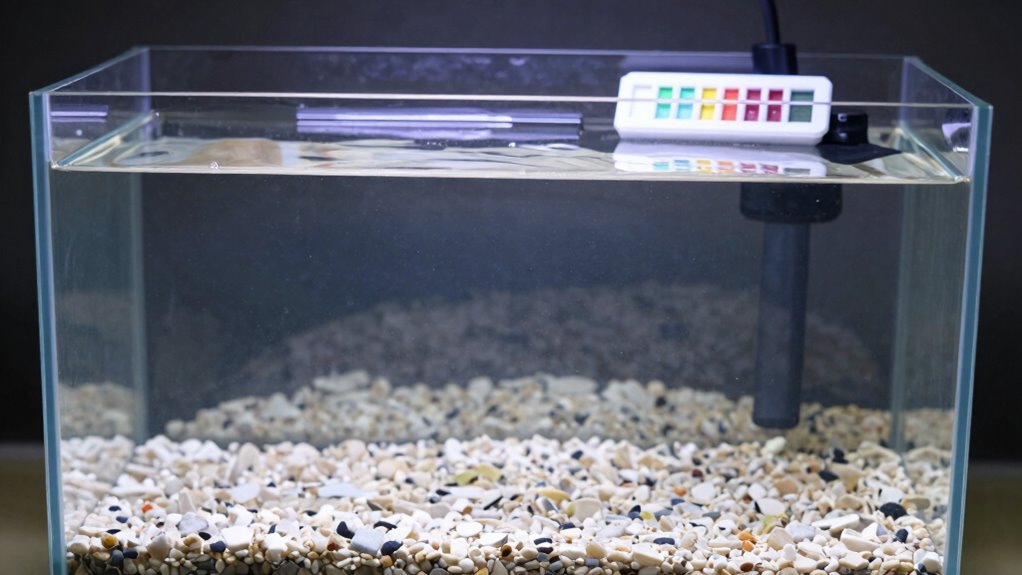
Before adding fish to your new aquarium, it is vital to properly cycle the tank to establish a healthy environment. Cycling involves developing beneficial bacteria that convert harmful ammonia into less toxic substances. To do this, you can add aquarium plants, which help absorb excess nutrients and support bacteria growth. Make certain your fish are compatible with each other; overcrowding or incompatible species can cause stress and hinder the cycle. Use a reliable water testing kit to monitor ammonia, nitrite, and nitrate levels regularly. Understanding biological filtration is essential for establishing a stable environment. Additionally, avoiding common cycling mistakes ensures the process proceeds smoothly and prevents setbacks. Recognize that proper water parameters are critical for a successful cycle, and maintaining optimal conditions will foster a thriving aquatic ecosystem. Regularly monitoring water quality helps catch issues early before they impact your fish. It’s also helpful to understand how extreme weather conditions can affect your aquarium, as fluctuations in temperature can hinder bacteria development. Wait until ammonia and nitrite levels drop to zero before introducing fish. This process may take several weeks but is necessary to prevent dangerous spikes that can kill your fish. Patience and proper preparation lead to a thriving, balanced aquarium.
Common Mistakes That Can Kill Fish During Cycling
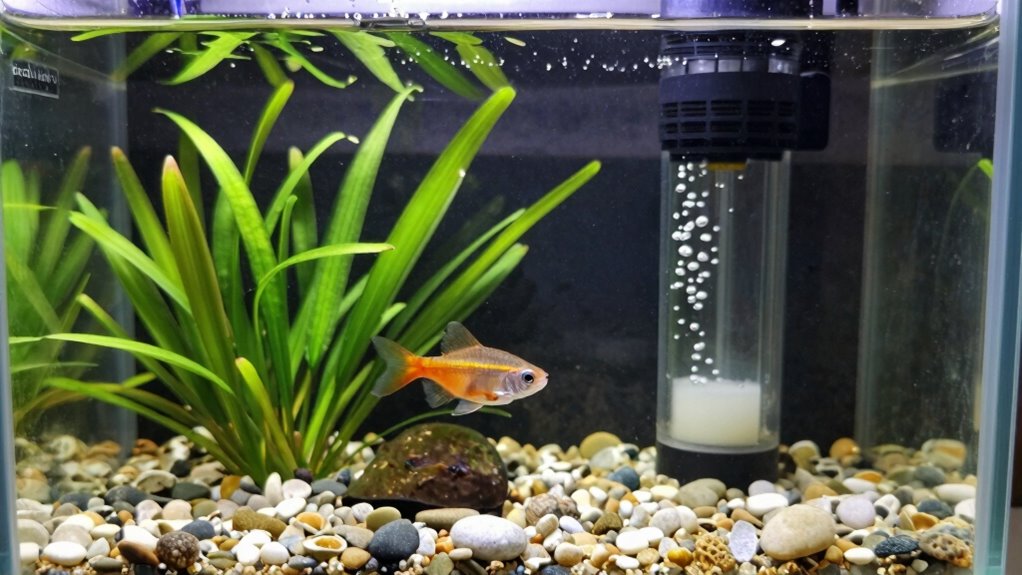
Many beginners make mistakes during the cycling process that can unintentionally harm or kill their fish. One common error is adding fish too early, which causes fish stress and weakens their immune systems. Overfeeding during cycling can increase ammonia levels, fueling algae blooms and harming your aquatic life. Ignoring water parameters or rushing the process can leave harmful toxins in the tank. Failing to provide proper filtration or aeration can lead to oxygen depletion, stressing fish further. Finally, introducing incompatible species or too many fish at once can overwhelm the cycle, increasing fish stress and risking fatalities.
Avoid adding fish too early and overfeeding to prevent stress and harmful toxins in your tank.
- Adding fish too soon
- Overfeeding or underfeeding
- Neglecting water quality tests
- Poor filtration or aeration
- Overstocking the tank
How to Test Water Parameters and When to Add Fish

Testing your water parameters regularly is essential for a healthy aquarium, especially before adding fish. Use a water test kit to check key parameters like ammonia, nitrite, nitrate, and pH. These tests give you a clear picture of your tank’s conditions and whether it’s safe for fish. Wait until ammonia and nitrite levels are at zero and nitrates are low before considering fish addition. This ensures the tank’s biological filter has established itself. Be consistent with testing, ideally once a week, during the cycling process. Avoid rushing the fish addition step; adding fish too early can cause stress or death. Proper water testing helps you make informed decisions, creating a safe environment that minimizes risks for your new aquatic friends.
Can You Speed Up Aquarium Cycling Safely?
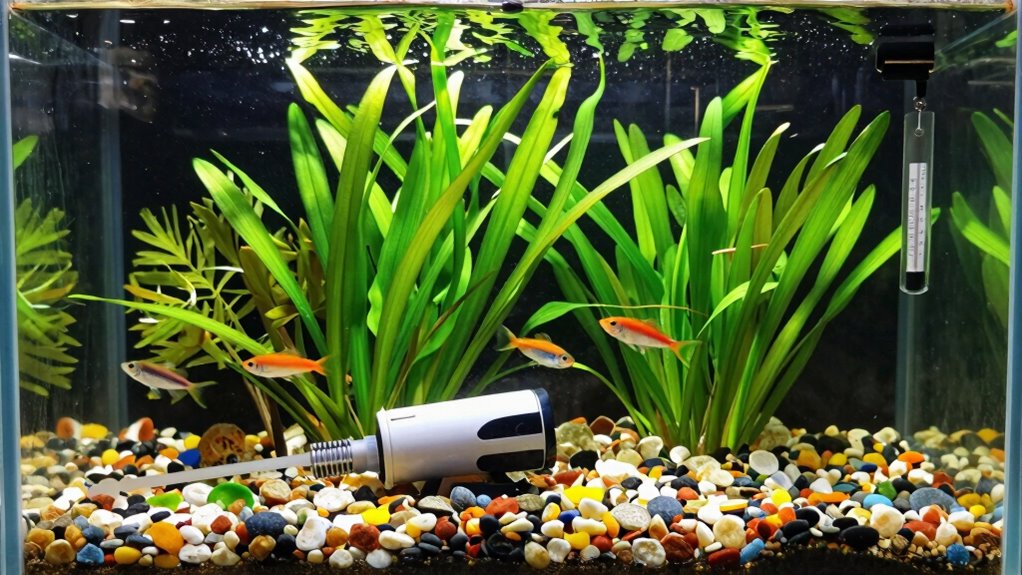
Is it possible to speed up aquarium cycling without risking your fish’s health? Yes, but with caution. You might consider methods like adding beneficial bacteria or using bacterial supplements, but always guarantee your setup supports healthy fish compatibility. Rushing the process can lead to dangerous ammonia spikes, harming your fish.
Speed up aquarium cycling carefully to avoid ammonia spikes and protect your fish’s health.
To do this safely, keep in mind:
- Introduce hardy aquarium plants to absorb toxins
- Use bacteria supplements designed for safe cycling
- Monitor water parameters frequently
- Avoid adding fish until ammonia and nitrite levels stabilize
- Guarantee your tank has proper filtration and aeration
While these tips can help, patience remains key. Proper cycling is essential for a safe environment, even if you’re keen to populate your tank quickly.
Why Rushing the Cycle Is a Deadly Mistake
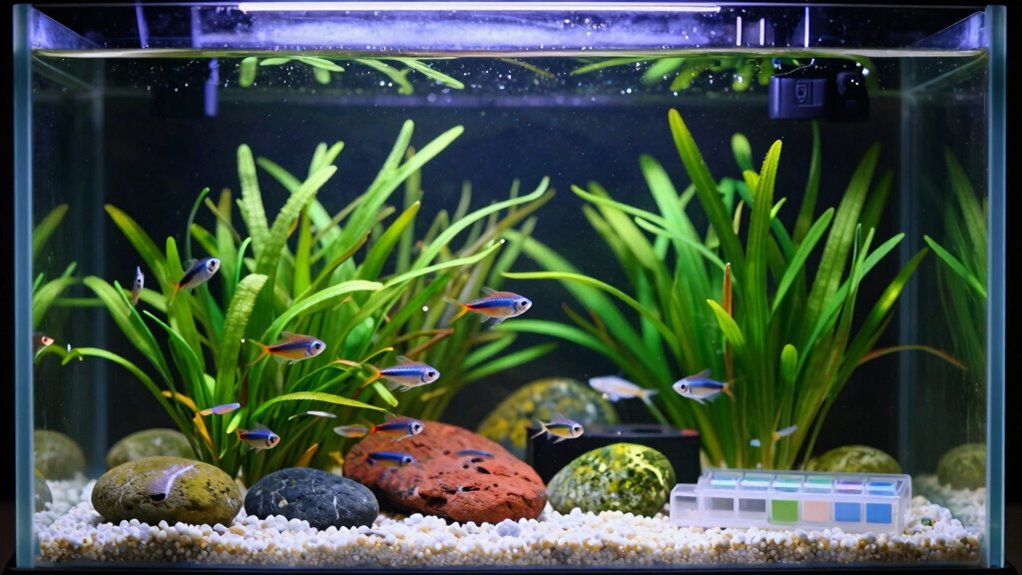
Rushing the aquarium cycle might seem like a way to get your tank ready faster, but it can have deadly consequences. When you skip proper cycling, water quality remains unstable, leading to dangerous spikes in toxins like ammonia and nitrite. These sudden changes cause intense fish stress, weakening their immune systems and making them more vulnerable to disease. Rushing the process often results in incomplete bacteria development, meaning your tank can’t effectively filter waste. Poor water quality, combined with high fish stress, rapidly leads to illness and death. Patience is essential—forcing the cycle disrupts the delicate balance your fish need to stay healthy. Taking your time ensures a stable environment and prevents the tragic losses caused by rushing the process.
Tips for Maintaining a Stable, Healthy Aquarium Long-Term

Maintaining a stable and healthy aquarium over the long term requires consistent effort and attentive care. To ensure your fish thrive, focus on key aspects like fish compatibility and proper aquarium lighting. Compatibility prevents aggression and stress, so research species before adding new fish. Proper lighting supports plant growth and mimics natural conditions, benefiting overall health. Regular monitoring and maintenance are essential. Consider these tips:
Consistent care, compatible fish, proper lighting, and regular maintenance ensure a healthy, thriving aquarium.
- Choose compatible fish species to reduce conflict
- Maintain consistent aquarium lighting schedules
- Test water parameters weekly for stability
- Perform regular water changes to prevent toxins
- Avoid sudden changes in temperature or lighting
Best Tools and Resources for Aquarium Cycling
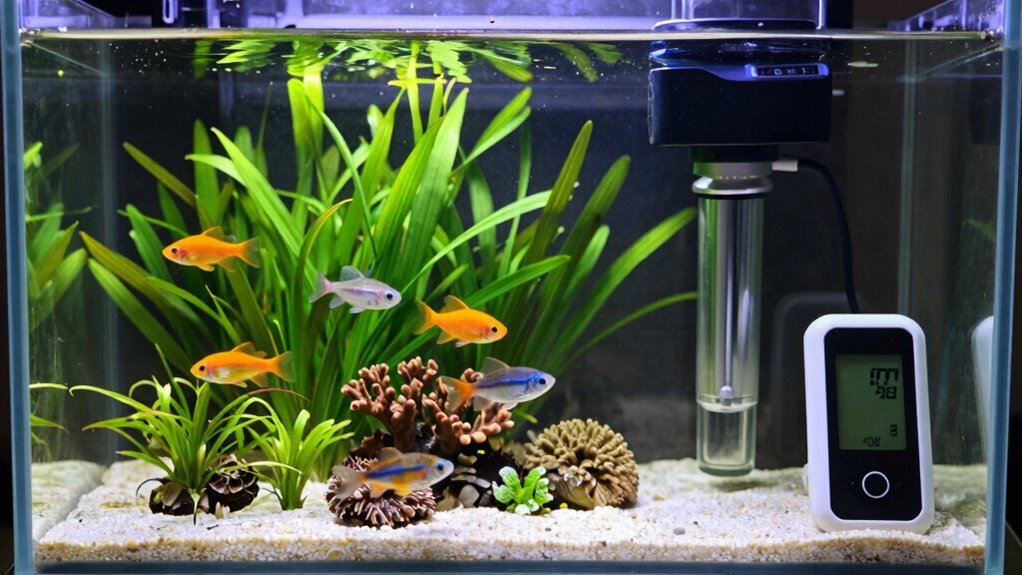
To guarantee your aquarium cycles properly, you’ll need reliable testing kits to monitor water parameters. Using clear cycling resource guides can help you understand each step and troubleshoot issues quickly. With the right tools and resources, you’ll set a strong foundation for a healthy, balanced tank.
Testing Kits Essentials
When setting up your aquarium, having reliable testing kits is essential to monitor water quality and guarantee a healthy environment for your fish. Accurate tests help you track parameters like ammonia, nitrite, nitrate, pH, and temperature, ensuring your tank supports vibrant aquarium plants and compatible fish species. With the right kits, you can detect issues early and prevent cycle mistakes that harm your fish. Look for kits that are easy to use, quick to read, and provide consistent results. Investing in good testing tools allows you to maintain stable water conditions, promoting healthy growth and minimizing stress. Remember, understanding your water parameters is key to creating a balanced ecosystem where your fish thrive and your plants flourish.
- Easy-to-read color charts
- Test strips for quick checks
- Liquid test kits for accuracy
- Digital meters for precise readings
- Extensive testing sets for multiple parameters
Cycling Resources Guides
Having the right cycling resources can make all the difference in establishing a healthy aquarium environment. Use guides that focus on balancing aquarium plants and fish compatibility to prevent overstocking or incompatible species. Reliable online resources and forums offer step-by-step cycling tutorials, helping you understand beneficial bacteria development. Consider tools like thorough aquarium setup checklists and apps that track water parameters, ensuring your tank stays stable. Incorporate plant guides to select hardy aquarium plants that thrive during cycling, providing natural filtration and hiding spots. These resources help you avoid common cycling mistakes that can harm fish, especially when considering species compatibility. With the right tools, you’ll create a balanced ecosystem where fish can thrive and aquarium plants flourish, setting the stage for a successful beginner setup.
Frequently Asked Questions
How Long Does a Typical Aquarium Cycle Usually Take?
A typical aquarium cycle usually takes about 4 to 6 weeks. During this time, you’ll notice Nitrogen buildup decrease as Bacterial colonization develops. You need to monitor ammonia and nitrite levels closely, as these are indicators of progress. Don’t rush the process; patience allows beneficial bacteria to establish properly, creating a safe environment for your fish and preventing dangerous spikes that can harm them.
Can Using Medications Interfere With the Cycling Process?
Yes, using medications can interfere with the cycling process. Medication interference often disrupts beneficial bacteria growth, which is vital for establishing a healthy cycle in your aquarium. When you add meds, they can kill or inhibit these bacteria, causing cycling disruption. To avoid this, you should complete the cycling process first, then use medications if necessary, ensuring your tank’s biological balance remains intact for healthy fish.
What Are the Best Fish for Beginner Tanks?
If you’re starting with a beginner tank, goldfish are a great choice. Imagine a small tank struggling to keep a goldfish happy—that’s common. Focus on fish with good compatibility, like bettas or guppies, and consider tank size—at least 10 gallons for goldfish or 5 gallons for bettas. These options are hardy, adaptable, and easy to care for, making them perfect for new aquarium enthusiasts.
How Often Should I Test Water Parameters During Cycling?
You should test your water parameters daily during cycling to guarantee water stability. Focus on ammonia testing first, as high ammonia levels indicate your cycle isn’t complete. Regular testing helps you catch fluctuations early, preventing dangerous conditions for your fish. Once ammonia and nitrite levels drop to zero and nitrate rises, you can reduce testing frequency, but always monitor water quality regularly to keep your tank safe.
Is It Safe to Add Plants During the Cycling Process?
You might think adding plants during cycling is risky, but surprisingly, it’s often safe if you choose cycling plants that won’t disrupt your water’s chemistry. In fact, healthy aquatic plants can help absorb excess nutrients and stabilize water parameters. Just make certain you pick hardy, low-maintenance plants, test water regularly, and avoid overfeeding. Properly selected plants can thrive during cycling, making your tank healthier and more balanced right from the start.
Conclusion
Did you know that nearly 80% of beginner fish deaths happen due to improper cycling? Taking the time to understand and properly establish your aquarium’s nitrogen cycle is essential. Rushing it can wipe out your entire tank in days. Stay patient, use the right tools, and monitor your tank carefully. With proper cycling, you’ll enjoy a vibrant, healthy aquarium for years to come—saving you money and heartbreak in the long run.