If your parrot’s cage bars are spaced too widely, it can cause injuries like broken toes or feather damage if they slip through or get stuck. To prevent this, check the spacing regularly with a ruler or caliper, ensuring the gaps are narrow enough—usually no more than 1/2 inch for small birds and up to 3/4 inch for larger parrots. Adjust or replace bars as needed, and choose a cage designed with safe, proper spacing. Keep learning to keep your bird safe and happy.
Key Takeaways
- Bar spacing wider than 1/2 inch can allow toes to slip through, causing injuries.
- Proper cage bars should prevent toes from getting caught or stuck during movement.
- Regularly measure and inspect cage bars to ensure appropriate spacing for your parrot’s size.
- Adjust or replace bars immediately if gaps are too wide to prevent toe injuries.
- Choosing cages with correct bar spacing promotes safe, natural movement and feather health for parrots.
How Can You Tell If Your Cage Bar Spacing Is Too Wide?
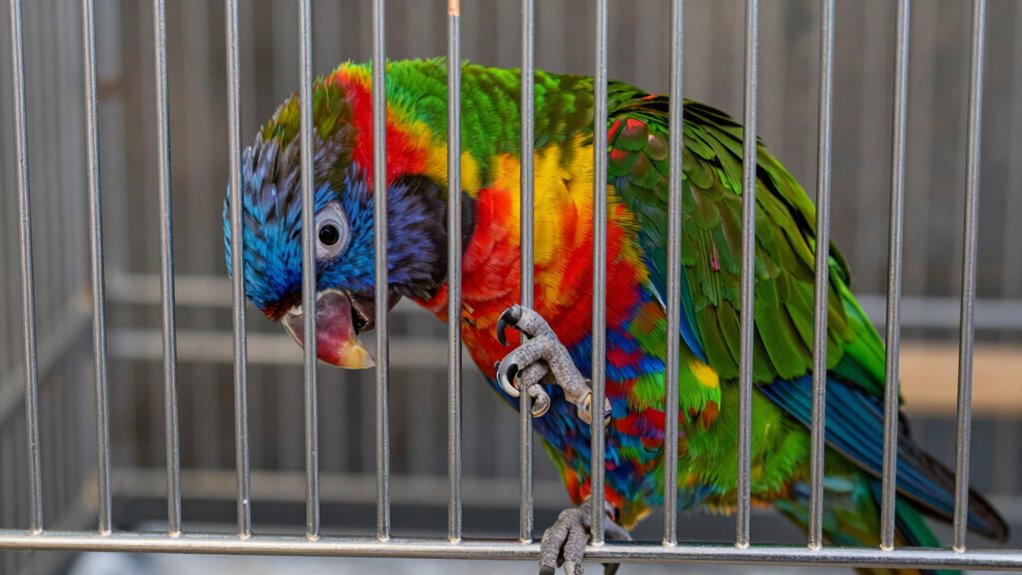
If you’re unsure whether your parrot’s cage bars are too wide, there are a few simple ways to check. First, observe your bird’s behavior around the cage. If your parrot repeatedly tries to squeeze through or shows signs of frustration, the bars might be too far apart. During cage maintenance, examine the spacing closely—ideally, bars should prevent your bird from slipping through or getting stuck. Also, look for any signs of toes or beak injuries, which can indicate the bars are too wide. Keep in mind that wider spacing can lead to accidents or injuries, so regular inspection is essential. Understanding free floating cage design concepts can help you choose the safest setup for your bird. Proper cage setup and cage safety measures are crucial for preventing injuries. Ensuring proper cage bar spacing helps keep your bird safe and supports natural bird behavior without risking injury.
Why Proper Cage Bar Spacing Is Critical for Your Parrot’s Safety
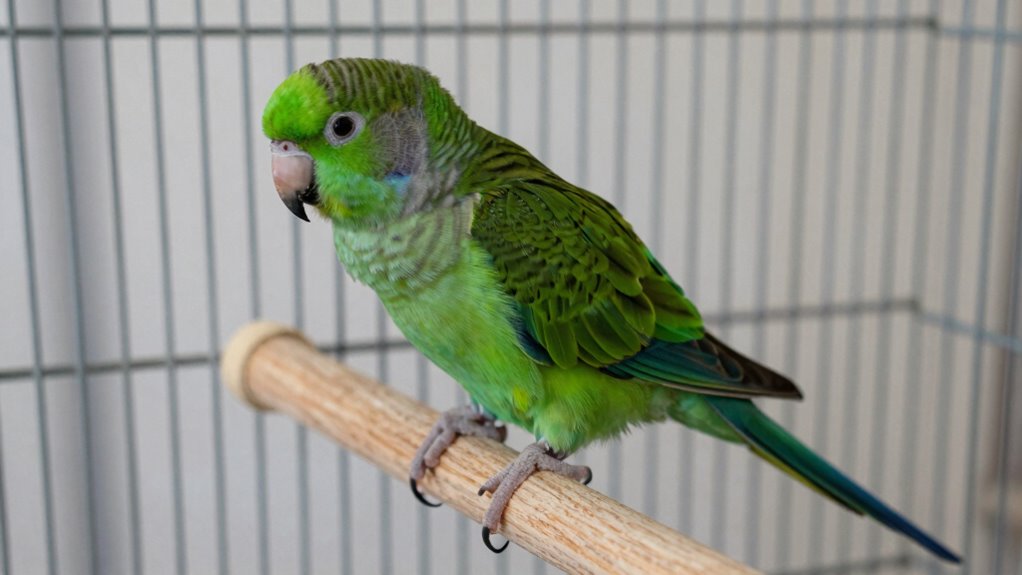
Proper cage bar spacing is essential because it directly impacts your parrot’s safety and well-being. If the bars are too wide, your bird risks injuring its toes or getting stuck, which can lead to feather damage or feather health issues. Narrower spacing prevents these accidents and ensures your parrot can move comfortably without injury. Additionally, correct spacing makes cage cleaning easier, as debris won’t get trapped between the bars, reducing bacteria buildup and promoting a healthier environment. Maintaining proper bar spacing also encourages natural behaviors and reduces stress, which benefits feather health overall. When your cage is safe and easy to clean, your parrot stays healthier, happier, and less prone to injuries caused by inappropriate bar spacing.
Measuring Cage Bar Spacing: A Step-by-Step Guide for Bird Owners
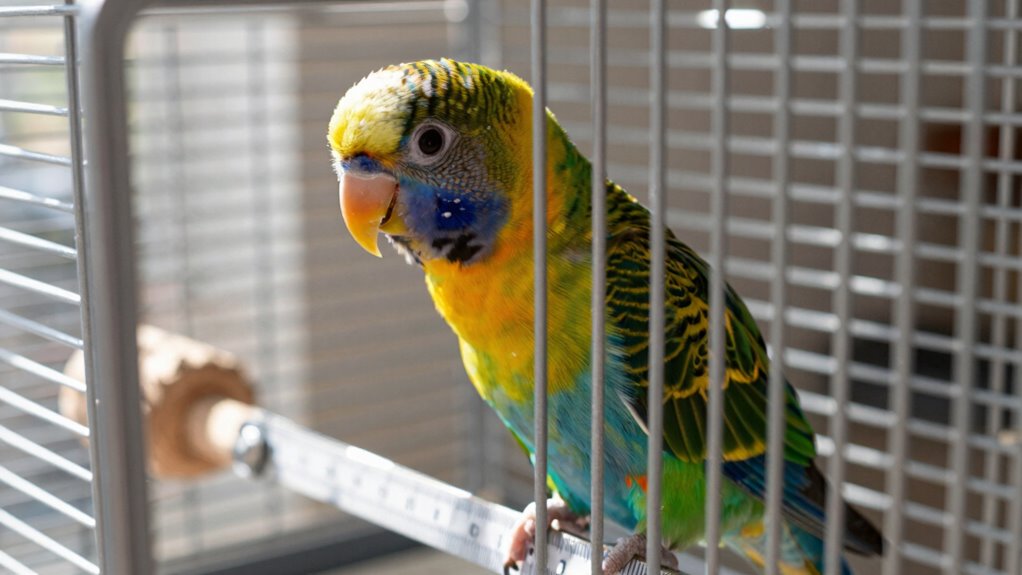
Measuring cage bar spacing accurately is essential to guarantee your parrot’s safety and comfort. To do this, start by choosing a measuring tool like a ruler or caliper. Place the tool between two bars at the widest point, ensuring it’s perpendicular to the bars. Record the distance, and repeat the measurement in several spots around the cage to check for consistency. This helps identify any uneven spacing that could harm your bird’s toes, especially if it has a lively or curious temperament. Remember, cage cleaning can loosen or shift bars over time, so regular measurements are crucial. Knowing your bird’s temperament also helps you select the right spacing, preventing injuries and ensuring a safe, stress-free environment. Additionally, selecting energy-efficient cage materials can contribute to more sustainable pet care practices. Regular inspection of cage bars and spacing is also important because wear and tear can alter the original safety features over time. Incorporating proper maintenance routines can help catch issues early and maintain a safe habitat for your bird.
How to Adjust or Replace Cage Bars to Protect Your Parrot’s Toes
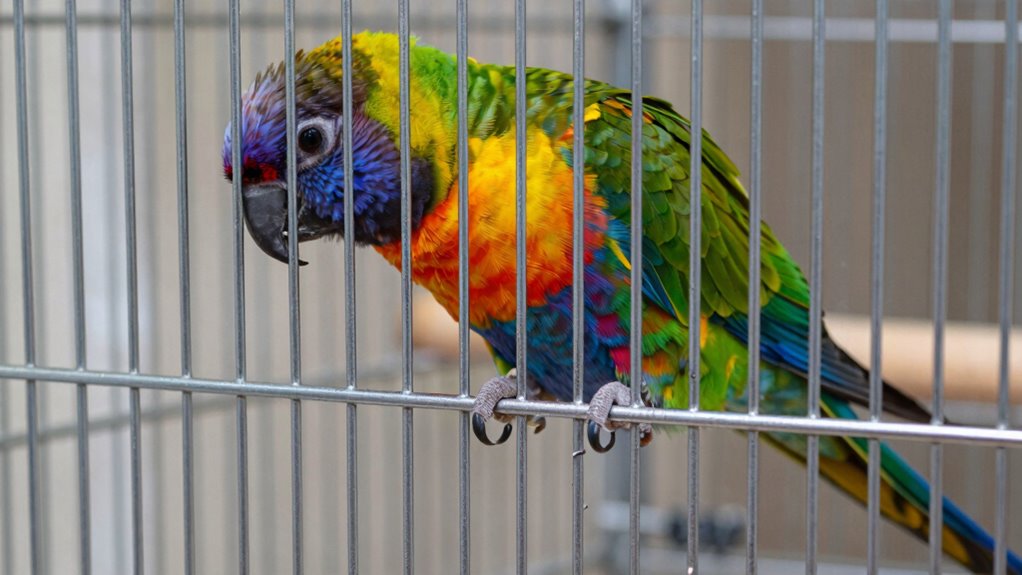
When you notice that cage bars are unevenly spaced or have shifted over time, it’s important to take immediate action to protect your parrot’s toes. First, remove any bird perches and clean the cage thoroughly to inspect the bars. If the bars are bent or misaligned, use pliers or a cage bar straightener to carefully adjust them back into proper alignment. For severely damaged or warped bars, replacing them is the safest option—consult your cage manufacturer or a pet store for suitable replacement bars. After adjustments, reassemble the cage securely, ensuring all bars are evenly spaced and stable. Regular cage cleaning helps prevent debris buildup, which can cause bars to warp or shift over time, maintaining a safe environment for your parrot’s toes.
Choosing a Safe, Parrot-Friendly Cage in the Future
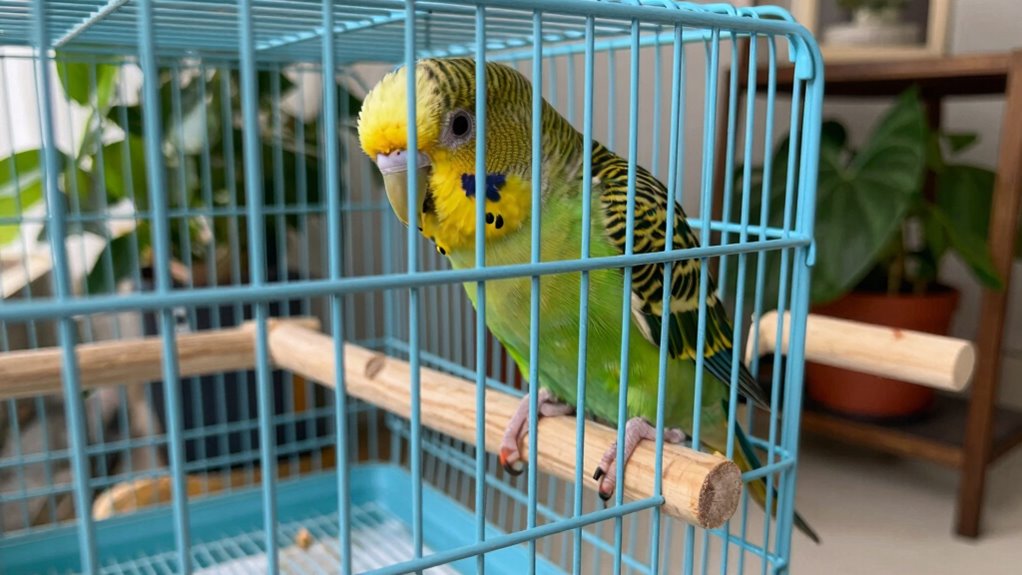
Choosing a safe, parrot-friendly cage guarantees your bird’s health and happiness in the long run. When selecting a future cage, prioritize parrot enrichment by offering various perches, toys, and activities that stimulate your bird mentally and physically. A well-designed cage also balances cage aesthetics with practicality, ensuring it looks attractive while providing safety. Look for bars with proper spacing, avoiding sharp edges, and ensure the cage is sturdy enough to prevent escapes or injuries. Consider your bird’s size and activity level to choose the right dimensions and features. An aesthetically pleasing cage that promotes enrichment helps keep your parrot engaged and comfortable, reducing stress and preventing behavioral issues. Ultimately, a thoughtfully chosen cage enhances your bird’s well-being and your home environment.
Frequently Asked Questions
What Are the Signs of Toe Injuries Caused by Cage Bar Spacing?
If your parrot shows signs of toe injuries from cage bar spacing, look for swelling, redness, or bleeding around the toes. You might notice beak damage if they try to chew on bars or feather loss from over-preening due to discomfort. Watch for limping or reluctance to use one foot, indicating pain or injury. Regularly check the cage to prevent bar spacing issues that can cause these problems.
Can Incorrect Bar Spacing Cause Long-Term Health Issues in Parrots?
Yes, incorrect bar spacing can cause long-term health issues in parrots. When the spacing is too narrow or too wide, it can affect their bird anatomy, leading to stress injuries or deformities over time. Proper cage maintenance guarantees the right bar spacing, preventing these problems. Regularly check your cage to ensure the bars are appropriately spaced, supporting your parrot’s health and well-being in the long run.
Are There Specific Cage Brands Known for Proper Bar Spacing?
When choosing a cage, look for reputable brands known for proper bar spacing, quality, and safety. Brands like Vision, Prevue Hendryx, and A&E Cage Co. often meet these standards. Proper bar spacing guarantees easy cage cleaning and promotes bird enrichment by providing a safe environment. You’ll want a cage that prevents injuries, allows for easy maintenance, and encourages natural behaviors, so always research and select trusted brands for your parrot’s health and happiness.
How Often Should I Inspect Cage Bars for Potential Hazards?
You should inspect cage bars weekly during your cage cleaning routine to spot potential hazards early. Look for bent or loose bars that could injure your bird’s toes and guarantee proper bar spacing for bird enrichment. Regular inspections help prevent injuries and keep your parrot safe, while maintaining a clean cage creates a healthy environment. Staying vigilant with these checks ensures your bird’s well-being and happiness.
What Materials Are Best for Cage Bars to Prevent Injury?
Choose cage bars made of metal safety materials like stainless steel to prevent rust and breakage, ensuring durability and safety. Avoid brittle plastics, as they can crack or splinter over time, risking injury. Opt for sturdy, non-toxic plastics if you prefer lightweight options, but always prioritize metal safety for long-term durability. Regular inspections help identify any wear, but selecting the right materials initially keeps your bird safe and secure.
Conclusion
Ensuring the right cage bar spacing keeps your parrot safe and happy—sometimes, a simple measurement can prevent a painful accident. When you pay close attention, you might notice that the tiniest adjustments make a big difference, reminding you that caring for your bird is about the details. In the end, safeguarding their toes isn’t just about the cage, but about the quiet moments where your attentiveness turns into their well-being.