
Placing your outdoor kennel in shade isn’t enough to keep your dog cool if you overlook airflow, ground heat, and proper site selection. Shade only blocks sunlight, but poor ventilation and radiating ground heat can turn what seems cool into a scorching oven. To prevent this, you need to find a spot with good airflow, natural shade, and proper drainage. Keep your dog safe and comfortable by paying attention to these factors; here’s how you can make sure your kennel stays cool.
Key Takeaways
- Shade reduces sunlight but does not prevent heat buildup without proper ventilation and airflow.
- Poor placement can cause ground radiated heat to raise kennel temperatures, turning shade into a hot spot.
- Position kennels where natural breezes and airflow are maximized to avoid stagnant, overheated environments.
- Avoid placing kennels in low-lying or waterlogged areas prone to poor drainage and heat retention.
- Combine shade with elevation, ventilation, and water access to effectively cool outdoor kennels and prevent heat stress.
Why Shade Isn’t Enough to Keep Your Dog Cool
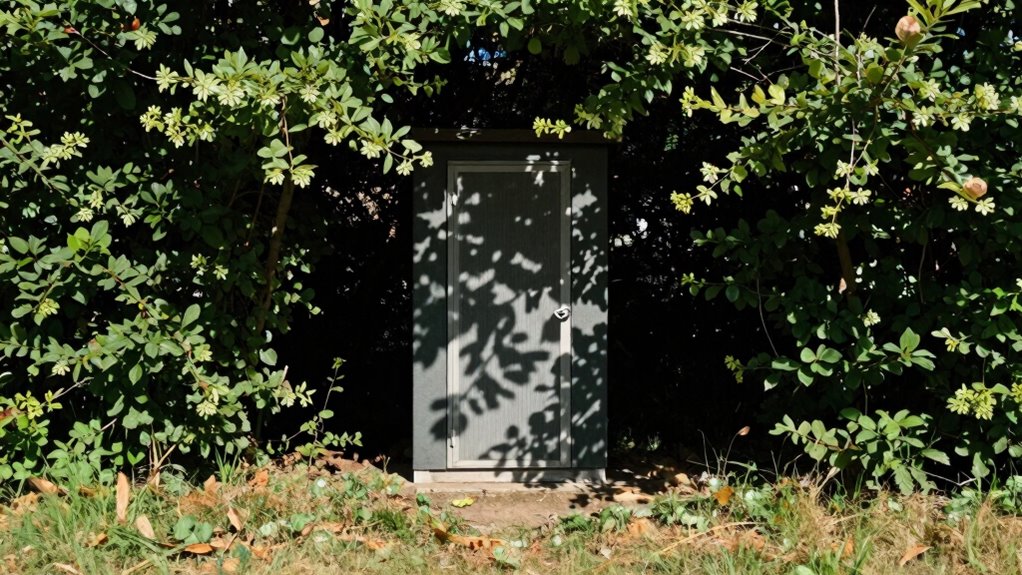
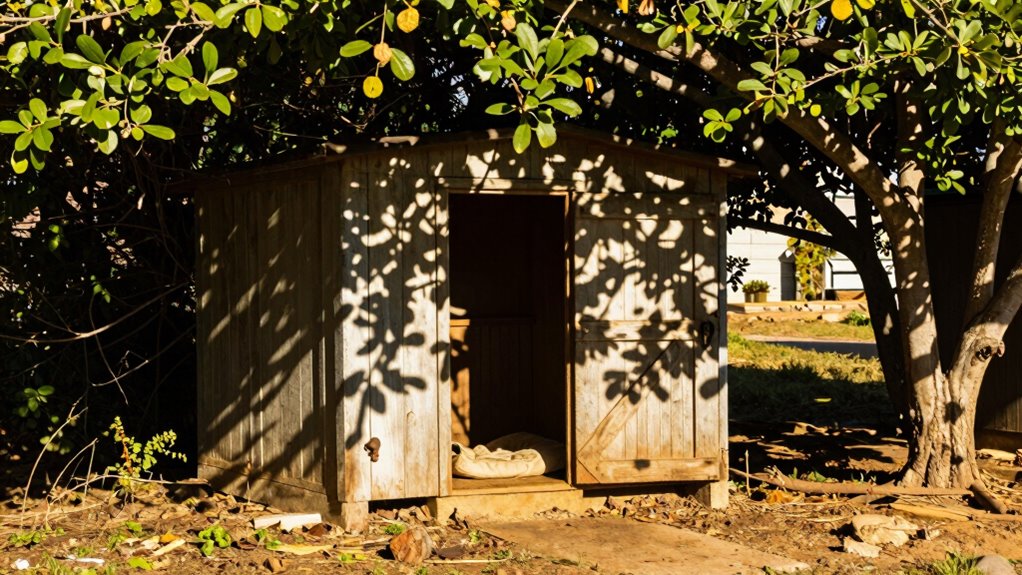
While providing shade is a helpful step, it’s not enough to keep your dog truly cool outdoors. Relying solely on a dog shade or placing the kennel in a shaded area can create a false sense of security. Shade can reduce direct sunlight, but it doesn’t control temperature or airflow. If the kennel is placed in a spot with poor ventilation, heat can still build up quickly. Additionally, shade alone doesn’t prevent ground heat from radiating upward or block the sun’s rays during peak hours. To keep your dog comfortable, it’s essential to think about not just shade but also proper kennel placement. Position your dog’s kennel where airflow is good and direct sunlight is minimized, ensuring a cooler, healthier environment. Understanding home cooling principles can help you create a more comfortable outdoor space for your pet, including considerations like ventilation and ground heat. Proper site selection is crucial for maintaining a safe and comfortable outdoor environment, especially by considering thermal regulation techniques.
How Proper Placement and Ventilation Keep Your Kennel Comfortable
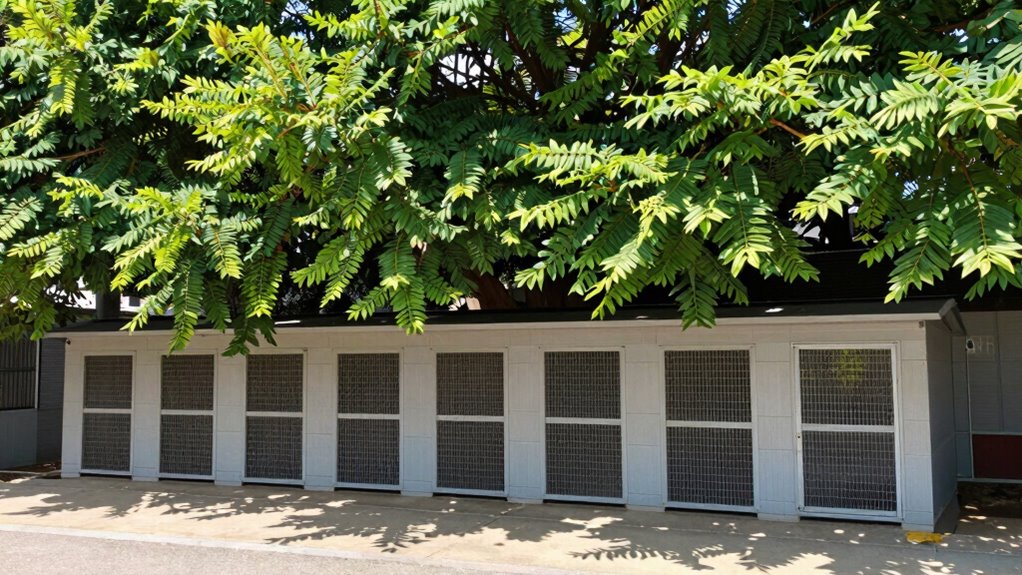
Choosing the right spot for your kennel guarantees your dog stays comfortable year-round. Proper placement takes advantage of natural shade and prevailing breezes, keeping the air fresh and cool. Improving airflow efficiency helps prevent overheating and creates a healthier environment for your pet. Incorporating sound therapy techniques can also contribute to a calming environment for your dog, reducing stress caused by environmental noise. Additionally, understanding water chemistry and maintaining proper ventilation can further enhance the overall comfort and safety of the kennel environment. Regularly monitoring ventilation effectiveness ensures that airflow remains sufficient to maintain a comfortable temperature and humidity level inside the kennel, preventing issues like stale air buildup that can compromise your pet’s health.
Optimal Shelter Placement
Proper shelter placement is essential for keeping your outdoor kennel comfortable and safe. Position the shelter within your garden fencing where it’s shielded from direct sunlight and prevailing winds. Placing it near trees or structures can provide natural shade and help maintain cooler temperatures. Avoid areas prone to flooding or where water tends to pool after rain. Think about your dog’s enrichment—placing the shelter where it has a view of the yard encourages natural exploration and reduces stress. Make sure the shelter is accessible and not tucked away in a corner that limits airflow or makes cleaning difficult. Proper placement ensures your dog benefits from a comfortable, well-ventilated space, reducing heat buildup and creating a safe environment year-round.
Enhance Airflow Efficiency
Positioning your outdoor kennel thoughtfully can considerably improve airflow and keep your dog comfortable. By placing it in a well-ventilated area, you enhance water circulation around the structure, preventing stagnant air and humidity buildup. Proper placement allows prevailing breezes to flow through, maximizing airflow efficiency and reducing heat accumulation. Guarantee the kennel isn’t tucked into corners or shaded areas that block natural ventilation. Consider elevating the kennel slightly off the ground to promote better air movement underneath. Installing vents or mesh panels further boosts airflow and prevents stale air from lingering inside. With ideal placement, you create a cooler environment that harnesses outdoor breezes, reduces heat stress, and promotes better water circulation, all of which keep your dog healthier and more comfortable during hot days. Proper placement is essential for maintaining a safe and comfortable outdoor environment for your pet.
Common Mistakes When Placing Your Dog’s Kennel in the Shade

Many pet owners assume placing the kennel in the shade is enough, but misjudging sun exposure can still cause discomfort. Ignoring wind patterns may leave your dog exposed to chilly drafts or strong gusts, and overlooking drainage can lead to muddy, damp conditions. To keep your dog safe and comfortable, consider all these factors carefully when choosing a shaded spot. Incorporating local automation can help monitor environmental conditions and optimize shelter placement for your pet’s well-being.
Misjudging Sun Exposure
Have you ever underestimated how much sun exposure your dog’s kennel will get throughout the day? Many pet owners make the mistake of assuming shade equals safety, but shade misjudgment can lead to serious problems. Too much sun exposure, especially in the hottest parts of the day, can turn a cool shelter into an oven. To avoid this, consider these factors:
- The position of the sun at different times of day and season
- Nearby structures or trees that may cast fleeting or partial shade
- The duration of direct sunlight the kennel receives
- Understanding the culinary principles behind food temperature and how they relate to outdoor environments to better assess shelter conditions
Ignoring Wind Patterns
Do you consider how wind might affect your dog’s outdoor kennel placement? Ignoring wind flow and breeze direction can turn a shaded spot into a chilly or drafty environment, stressing your dog. Wind can carry cold air or debris, making the kennel less comfortable and potentially unsafe. To understand wind patterns, observe the breeze direction at different times of day. Being aware of Free Floating conditions can help you select the best location for your dog’s comfort. Additionally, understanding natural airflow can assist in optimizing shelter placement to prevent drafts and ensure proper ventilation. Recognizing how air circulation impacts the area will help you create a safer, more comfortable outdoor space for your dog. Proper ventilation is essential in avoiding stagnant air that can lead to health issues. Paying attention to airflow dynamics can further improve the overall environment, ensuring consistent airflow without uncomfortable drafts.
Overlooking Drainage Needs
Did you consider how water drainage might impact your dog’s outdoor kennel placement? Poor drainage can lead to muddy, uncomfortable conditions and damage your landscape aesthetics. When choosing a spot, guarantee it’s slightly elevated to avoid standing water after rain. Also, consider property boundaries; placing the kennel near sloped areas or drainage ditches can redirect water away from your dog’s space. Proper drainage management planning can help prevent costly landscape repairs and ensure a safe environment for your pet.
Key points to keep in mind include:
- Elevate the site to prevent water pooling
- Avoid low-lying areas prone to flooding
- Ensure proper grading to guide runoff away from the kennel
Overlooking drainage needs risks creating a soggy, unsafe environment that could harm your dog and disrupt your yard’s visual appeal. Proper planning safeguards both your pet and your landscape.
Finding the Best Spot for Your Outdoor Dog Kennel
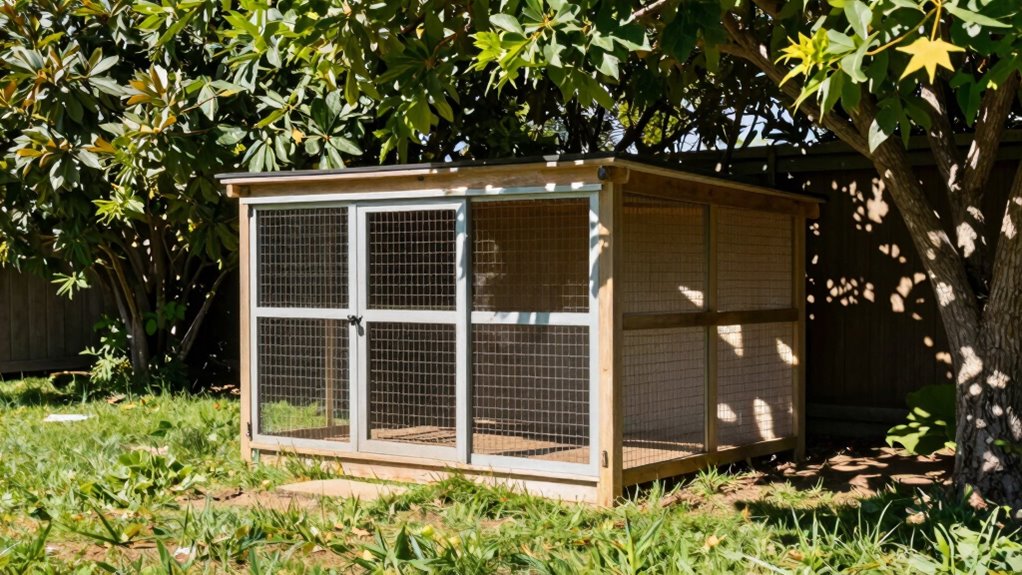
Choosing the right location for your outdoor dog kennel is crucial to guarantee your pet’s safety, comfort, and well-being. You want a spot that balances shade, ventilation, and accessibility. Consider the dog house aesthetics; select an area that complements your yard and doesn’t clash with your landscape. Avoid placing the kennel directly under trees that drop debris or near busy pathways that cause stress. When selecting fencing materials, ensure they’re durable and secure, preventing escapes while withstanding weather. Placement on level ground helps with stability and drainage. Keep the kennel away from noise sources like roads or loud equipment. By thoughtfully choosing the spot, you create a comfortable environment that promotes your dog’s health and happiness. Incorporating placement strategies with the help of AI tools can further optimize your decision-making process. Additionally, considering weather patterns can help you select a location that provides consistent shelter from extreme temperatures. Understanding environmental factors is key to ensuring your dog remains comfortable year-round, and leveraging ambient‑light considerations can prevent overheating during hot days.
Using Shade and Ventilation the Right Way
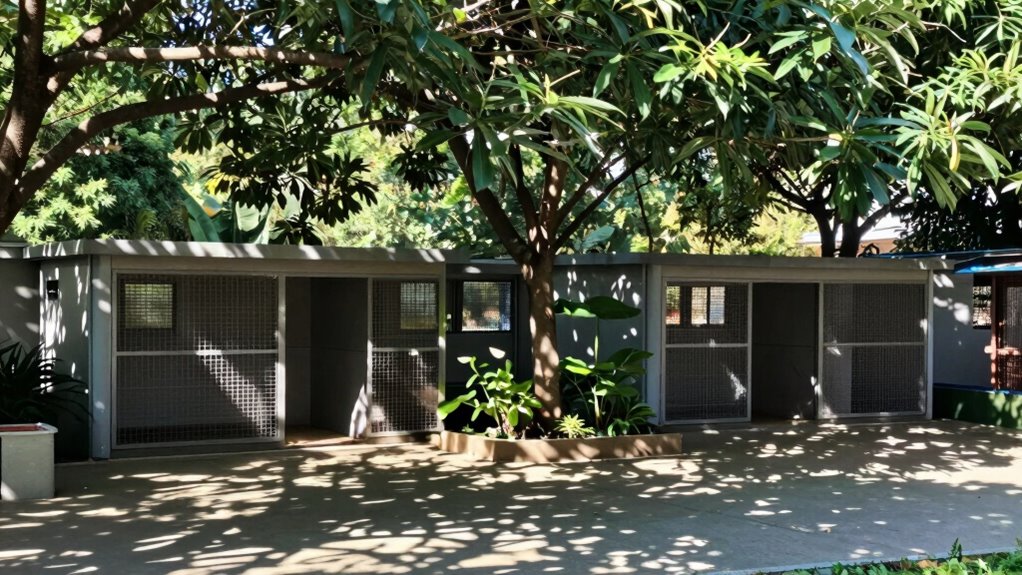
Effective shade and ventilation are essential for keeping your outdoor dog kennel comfortable and safe. Proper sun protection prevents overheating, while good airflow ensures fresh air circulation. To optimize these elements, consider these key points:
Ensure your outdoor dog kennel stays cool and safe with proper shade and airflow.
- Position the kennel in a shaded area that blocks direct sunlight during peak hours, reducing heat buildup. Strategic placement is crucial for maximizing shade effectiveness and preventing unnecessary heat absorption. Additionally, understanding airflow dynamics can help you design a layout that minimizes stagnant air zones.
- Use vents or open panels to promote cross-ventilation, keeping the air moving and preventing stuffiness.
- Ensure water accessibility nearby, so your dog stays hydrated without needing to leave the shade or ventilation zone.
- Incorporate outdoor kennel design principles that prioritize both shade and airflow for optimal comfort. Additionally, selecting ventilation systems designed specifically for outdoor enclosures can significantly improve airflow and overall kennel environment.
Tips for Monitoring and Adjusting Your Kennel on Hot Days
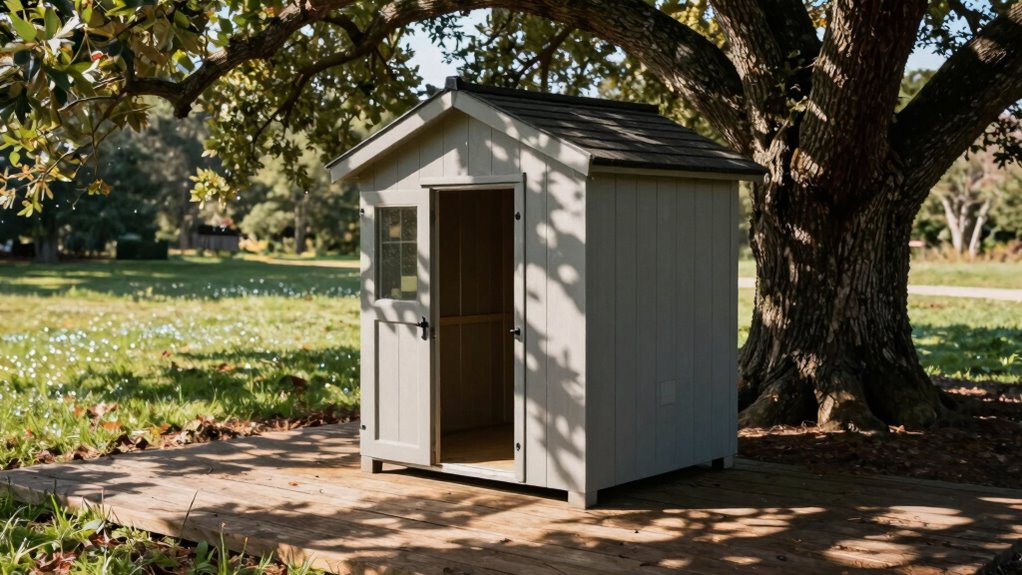
On hot days, simply setting up shade and ventilation isn’t enough—you need to actively monitor your kennel to guarantee your dog stays comfortable. Check frequently for signs of overheating, like excessive panting or lethargy. Adjust your watering schedule to ensure fresh water is always available, encouraging your dog to hydrate regularly. Incorporate grooming routines, such as removing excess fur, to help keep your dog cool. Use this table to guide your monitoring efforts:
| Action | Frequency |
|---|---|
| Check for signs of heat | Every 1-2 hours |
| Refill water bowls | At least twice daily |
| Groom your dog | Daily during heatwaves |
| Adjust shade/ventilation | As needed based on weather |
Consistent monitoring and proactive adjustments keep your dog safe during hot days.
Additional Ways to Cool Down Your Dog Outdoors

Looking for additional ways to cool down your dog outdoors? You can enhance their comfort with simple strategies. First, make sure your dog has access to plenty of fresh water to stay hydrated, especially during hot days. Second, consider using cooling accessories like cooling mats or vests that absorb and dissipate heat effectively. Third, create shaded areas with portable canopies or umbrellas, even if the primary shade is inadequate, to reduce direct sun exposure. These methods help maintain a safe temperature and prevent overheating. Remember, proper dog hydration combined with cooling accessories makes a significant difference. Regularly monitor your dog for signs of heat stress, and adjust these cooling measures as needed to keep your furry friend safe and comfortable outdoors.
Key Tips to Avoid Shade Placement Mistakes
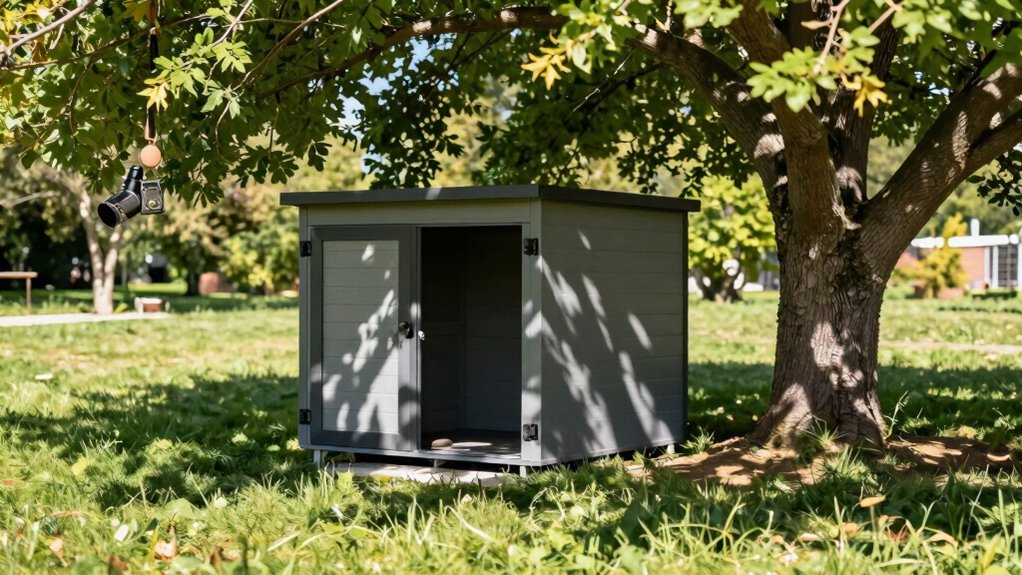
Proper shade placement is essential to keep your dog comfortable and safe outdoors, but mistakes can easily happen if you’re not careful. To avoid this, consider the angle and duration of shade throughout the day, ensuring it’s not just a temporary fix but consistently protective. Position the kennel in a spot that offers natural shade during peak heat hours, and avoid placing it in low-ventilation areas that trap heat. Incorporate effective ventilation strategies by adding raised floors, vents, or fans to promote airflow. Keep in mind that shade alone isn’t enough; proper ventilation helps prevent overheating even in shaded areas. Regularly check your setup to ensure shade doesn’t shift or become ineffective, and always prioritize your dog’s comfort and safety.
Final Checklist for Safe and Comfortable Outdoor Kennel Placement
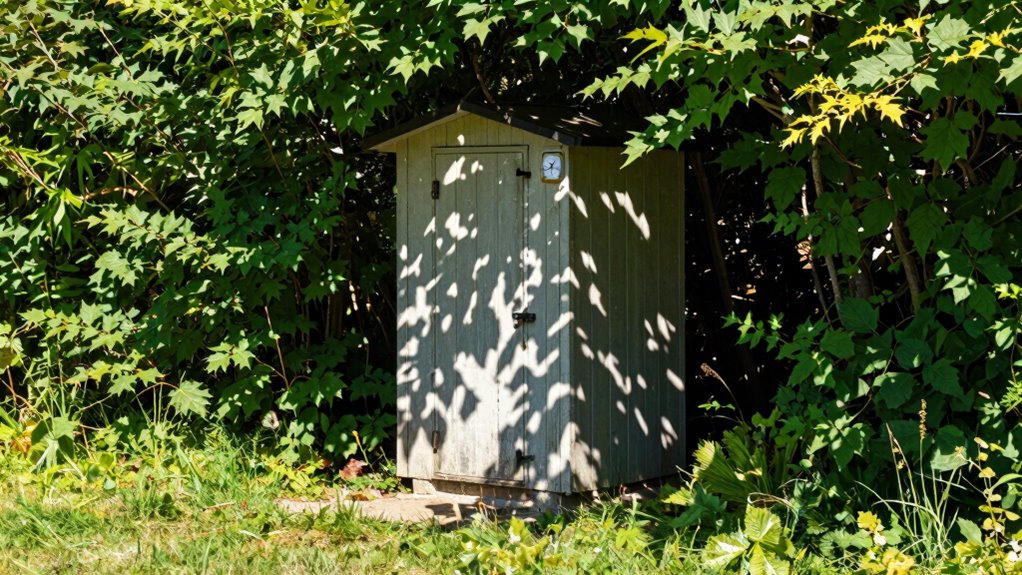
To guarantee your outdoor kennel provides a safe and comfortable environment for your dog, it’s essential to follow a thorough final checklist. First, assess your garden landscaping to ensure the ground is level and free of sharp objects or debris that could harm your pet. Second, verify the placement of outdoor furniture and shade sources, making sure they don’t block ventilation or create heat traps. Third, confirm the kennel is positioned in a shaded area with adequate airflow, avoiding direct sunlight during peak hours. Additionally, check that water sources are accessible and clean. By paying attention to these details, you create a secure space that promotes your dog’s well-being and prevents overheating or discomfort.
Frequently Asked Questions
How Can I Tell if My Dog Is Overheating Outdoors?
You can tell if your dog is overheating outdoors by watching for excessive panting, drooling, weakness, or glazed eyes. Feel their nose and gums—if they’re hot or dry, it’s a sign. Use dog cooling mats in shaded areas and make certain outdoor fan placement keeps the air circulating. If your dog shows signs of distress, move them to a cooler spot immediately and offer water.
What Materials Are Best for Outdoor Kennel Flooring?
You should opt for dog-friendly turf or rubber matting for outdoor kennel flooring. Studies show turf reduces heat absorption, keeping surfaces cooler, while rubber matting provides insulation and comfort. Both materials are durable, easy to clean, and safe for dogs, preventing overheating and paw injuries. Choosing the right flooring helps maintain a safe, cool environment, especially during hot weather, ensuring your dog stays comfortable and healthy outdoors.
How Often Should I Check on My Dog During Hot Days?
You should check on your dog at least every 30 minutes during hot days. Keep an eye on signs of overheating like excessive panting or lethargy. Make sure the dog house insulation is adequate to maintain a cooler environment. Follow a regular kennel cleaning schedule to prevent buildup of bacteria and pests, which can worsen heat stress. Frequent checks help you keep your pup safe and comfortable in the heat.
Are There Specific Plants That Can Help Cool the Kennel Area?
Certain shade plants and cooling foliage can help make your kennel area cooler. Plants like ferns, hostas, and creeping Jenny thrive in shade and provide natural cooling. They create a barrier from direct sunlight, reducing heat buildup. Incorporate these shade plants around the kennel to enhance airflow and lower temperatures. Regularly check on your dog during hot days, and remember, green, leafy plants are your best allies in creating a cooler, more comfortable space.
What Signs Indicate My Dog Needs Immediate Cooling?
If your dog shows heavy panting, drooling, weakness, or glazed eyes, they need immediate cooling. Watch for signs of distress like rapid heartbeat or disorientation. Guarantee your fencing tips include shaded, well-ventilated areas and regular pest control to prevent insects that can stress or harm your pet. Acting quickly by providing water, shade, or cooling mats can prevent heatstroke and keep your dog safe in their outdoor kennel.
Conclusion
Remember, your outdoor kennel is like a delicate oasis—what seems like shade can turn into a blazing trap if placed wrong. By choosing the right spot, ensuring proper ventilation, and staying vigilant on hot days, you create a cool haven where your dog can thrive. Think of it as tending a garden; with careful attention and patience, you’ll turn a simple shelter into a sanctuary of comfort and safety for your furry friend.