Reef tanks mainly fail because of unstable water parameters, which stress delicate corals and fish. To prevent this, you need to monitor and maintain steady pH, temperature, salinity, calcium, alkalinity, and magnesium levels. Use reliable test kits, automate dosing, and perform regular water changes to keep conditions stable. Small fluctuations can be harmful, so staying vigilant is key. Keep going, and you’ll discover how to achieve consistent water chemistry for a thriving reef.
Key Takeaways
- Regularly test water parameters and record results to detect fluctuations early.
- Perform consistent water changes and use stable supplements to maintain chemical balance.
- Keep temperature, salinity, and pH within optimal ranges with automated dosing and proper equipment.
- Monitor fish behavior and coral coloration as visual indicators of parameter stability.
- Respond promptly to any parameter swings with partial water changes and adjustments to avoid tank failure.
Why Stable Water Parameters Are Critical for a Healthy Reef Tank
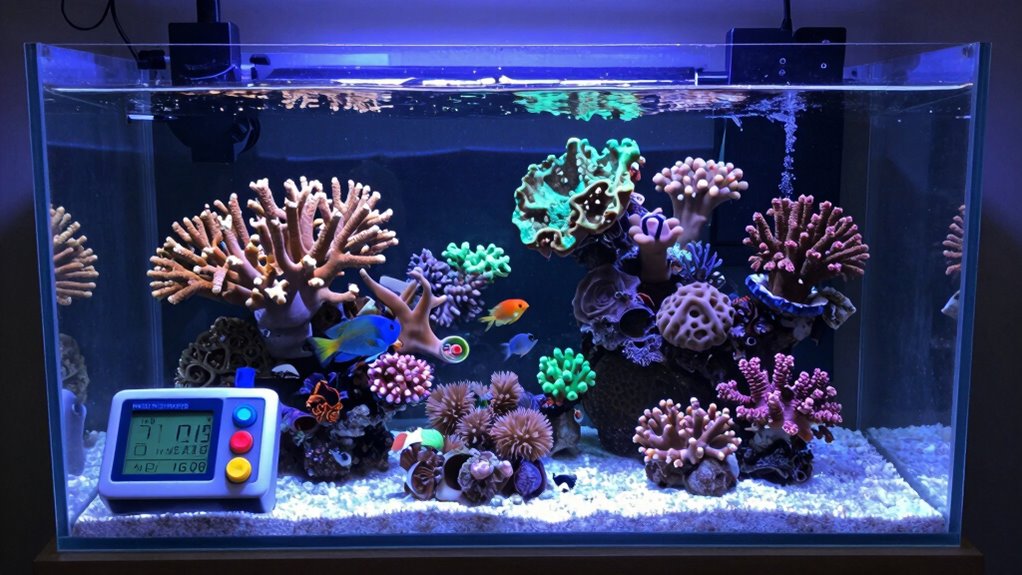
Maintaining stable water parameters is essential because even slight fluctuations can stress or harm delicate reef creatures. When parameters like pH, temperature, or salinity shift unexpectedly, your corals can lose their vibrant coloration, turning dull or faded. This color loss signals stress and can weaken their overall health. Additionally, unstable conditions often trigger algae outbreaks, as excess nutrients and imbalanced chemistry provide perfect growth conditions for nuisance algae. These outbreaks not only compete with corals for light and nutrients but also further degrade water quality. By keeping your water parameters steady, you promote healthy coral coloration and prevent algae blooms. Energy-efficient monitoring and adjustments are key to creating a resilient environment where your reef thrives, avoiding the common pitfalls caused by parameter instability.
How to Spot Signs of Water Parameter Instability in Your Reef

You can often spot water parameter issues by watching for visible changes in your tank, like cloudiness or algae blooms. Pay attention to your fish’s behavior; signs of stress, such as darting or lethargy, can indicate water problems. Staying alert to these signs helps you catch instability early and keep your reef healthy. Additionally, monitoring your tank’s water quality parameters regularly ensures you maintain stable conditions essential for a thriving reef.
Visible Water Changes
Visible water changes are one of the quickest ways to detect instability in your reef tank’s parameters. When water quality shifts, you’ll notice changes like dull coral coloration or excessive algae growth. These signs indicate your tank’s balance is off and needs attention. Keep an eye out for:
- Sudden cloudiness or haziness in the water
- Unusual algae covering rocks or glass
- Faded or bleached coral colors
- Persistent algae outbreaks despite cleaning efforts
These visual cues often point to nutrient imbalances or unstable pH levels. Respond promptly to these signs to prevent further deterioration. Regular observation helps you catch issues early, ensuring your reef remains healthy and vibrant. Remember, stable parameters keep your corals colorful and algae growth in check, and maintaining appropriate water chemistry is essential for reef success.
Behavioral Fish Indicators
How can you tell if your fish are acting unusual, hinting at water quality issues? Watch for changes in fish behavior, such as increased aggression or hiding. Territorial disputes may become frequent, with fish chasing each other more than usual. These signs often indicate unstable water parameters affecting their stress levels. Additionally, monitoring free floating conditions can help identify early signs of imbalance that impact fish health. Recognizing behavioral cues linked to water parameter instability can enable timely adjustments to maintain a healthy reef environment. Being attentive to these signs and understanding their behavioral indicators can significantly improve your ability to maintain stable water conditions. Moreover, understanding the behavioral responses of fish to environmental stressors can help you anticipate and address issues before they escalate. Regular observation of fish activity patterns is essential for early detection of potential problems and maintaining overall reef health.
Key Water Parameters to Monitor for Reef Success
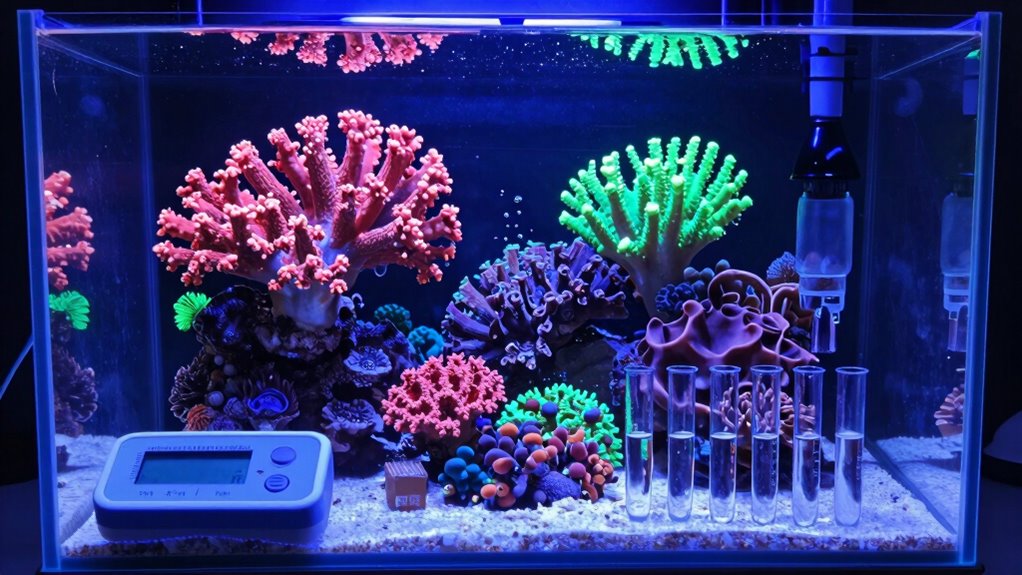
Maintaining ideal water parameters is essential for a thriving reef tank, as fluctuations can quickly jeopardize coral growth and lead to algae blooms. Monitoring key parameters helps you prevent issues before they escalate. Keep an eye on:
- Temperature: Keep it steady around 75-78°F to support coral health and prevent stress.
- Salinity: Maintain a specific gravity of 1.025–1.026 to ensure proper osmoregulation.
- Nitrate and Phosphate Levels: Low levels promote coral growth and reduce algae blooms.
- pH Levels: Stay between 8.1 and 8.4 to support biological processes and overall stability.
- Efficient Testing Methods: Regular use of reliable testing kits can help you quickly identify and correct parameter fluctuations, ensuring a stable environment for your corals. Using accurate testing protocols helps minimize errors and maintain consistent water quality. Implementing automated testing devices can further enhance precision and reduce manual effort.
Consistent testing and adjustments help you create a stable environment, fostering vibrant corals and minimizing algae problems.
Simple Ways to Stabilize pH, Alk, Calcium, and Magnesium
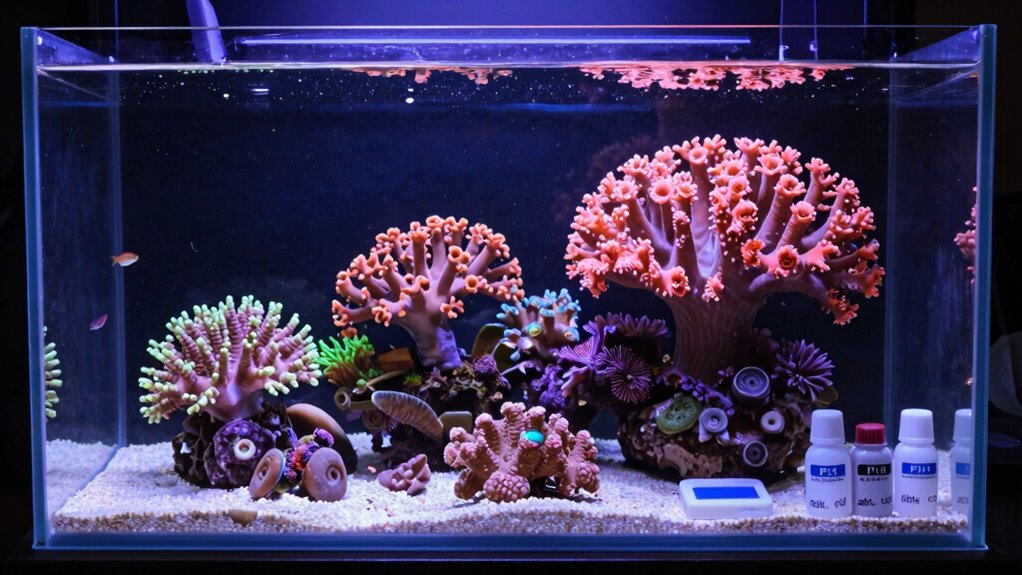
To keep your reef tank stable, you need a solid testing routine, so you catch changes early. Regular water changes help maintain consistent water chemistry, preventing fluctuations. Using stable supplements guarantees your pH, alk, calcium, and magnesium stay within safe ranges, supporting coral health. Incorporating essential oils for water quality into your maintenance routine can further promote a healthy aquatic environment.
Regular Testing Schedule
Regular testing is essential to keep your reef tank stable, as fluctuations in pH, alkalinity, calcium, and magnesium can quickly lead to problems. Consistent testing helps you catch issues early, preventing negative effects like dull coral coloration or excessive algae growth. Establish a testing schedule, such as daily for pH and weekly for alkalinity, calcium, and magnesium. Use reliable test kits and record your results to identify trends. Adjust parameters gradually based on your readings to maintain stability. Regular testing enables you to respond promptly to changes, keeping your water chemistry balanced. Incorporating test kits that are easy to use and accurate can further improve your monitoring process. Additionally, understanding the importance of stable parameters helps guide your adjustments and prevent sudden fluctuations that can harm your corals, especially through the use of professional services that can assist with complex issues. Utilizing automatic testing devices can also streamline your monitoring and ensure more consistent results.
Consistent Water Changes
Since stable water parameters are essential for a healthy reef tank, performing consistent water changes is one of the simplest and most effective ways to achieve this. Regular water changes help maintain stable pH, alkalinity, calcium, and magnesium levels, preventing sudden swings that stress corals. They also support algae control by removing excess nutrients that fuel unwanted growth. To maximize stability, coordinate water changes with your lighting schedules, as lighting influences algae growth and water chemistry. Consistent changes ensure your tank’s chemistry remains balanced, reducing the risk of parameter fluctuations. Incorporating proper filtration and sanitation into your routine can further enhance water stability. Additionally, using easy-to-follow maintenance routines can help you stay consistent with your water quality efforts. Establishing a monitoring schedule ensures you stay on top of water parameters and catch imbalances early. By sticking to a routine, you’ll promote a stable environment where corals and other inhabitants thrive, and algae growth stays in check. Regular water changes are a cornerstone of a resilient, healthy reef tank.
Use Stable Supplements
Using stable supplements is key to maintaining consistent water parameters in your reef tank. When you keep pH, alkalinity, calcium, and magnesium stable, you promote vibrant coral coloration and reduce unwanted algae growth. To do this effectively:
- Use automated dosing systems for precision
- Test water parameters regularly to catch fluctuations early
- Choose high-quality supplements formulated for reef tanks
- Maintain a consistent supplementation schedule, avoiding sudden changes
- Incorporate safer riding habits and proper handling techniques to prevent accidents that can disrupt water chemistry
Additionally, understanding the fundamentals of water chemistry stability helps prevent sudden swings that stress corals and encourage algae. Proper cable management and equipment setup can also reduce the risk of disruptions caused by loose connections or faulty wiring. Implementing monitoring protocols allows for early detection of parameter deviations before they impact your corals. Stabilizing these elements prevents stress on corals and keeps algae growth in check. Proper supplementation ensures your tank’s chemistry stays balanced, fostering healthy, colorful corals and clear water. By sticking to a reliable supplement routine, you minimize parameter swings that compromise your reef’s stability and overall health.
Using Test Kits and Dosing Systems to Keep Parameters Stable
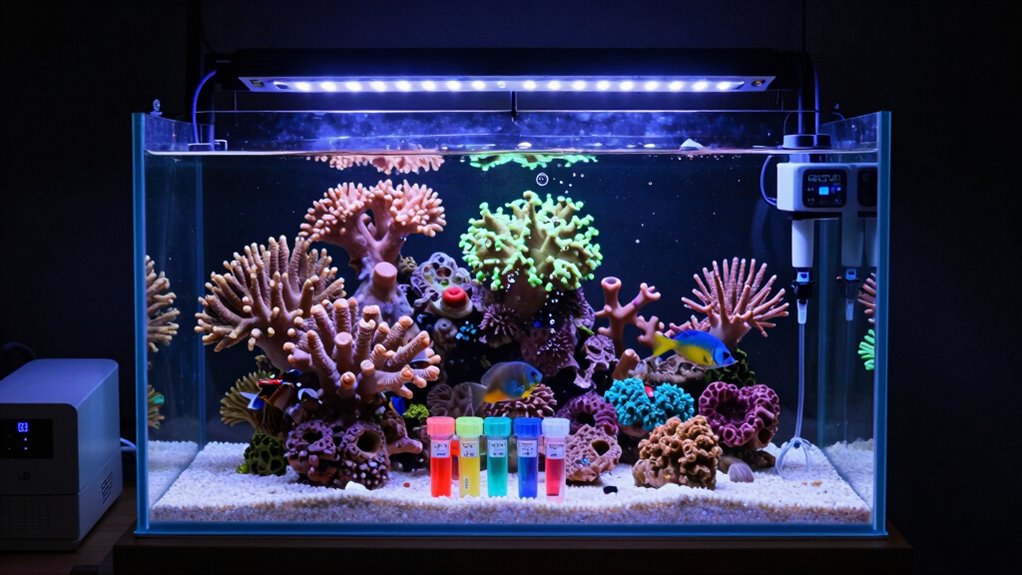
Maintaining stable water parameters is essential for a reef tank’s success, and this is where test kits and dosing systems come into play. Regular testing helps you monitor key levels like calcium, alkalinity, and magnesium. Use dosing systems to add precise amounts of supplements, preventing sudden fluctuations. This consistency supports coral compatibility and reduces stress, promoting healthy growth. Adjust lighting as needed based on test results to prevent algae overgrowth and guarantee ideal coral health. Keep a close eye on your readings to catch changes early.
| Parameter | Ideal Range |
|---|---|
| Calcium | 400-450 ppm |
| Alkalinity | 8-12 dKH |
| Magnesium | 1250-1350 ppm |
| pH | 8.1-8.4 |
What to Do When Water Parameters Fluctuate Unexpectedly
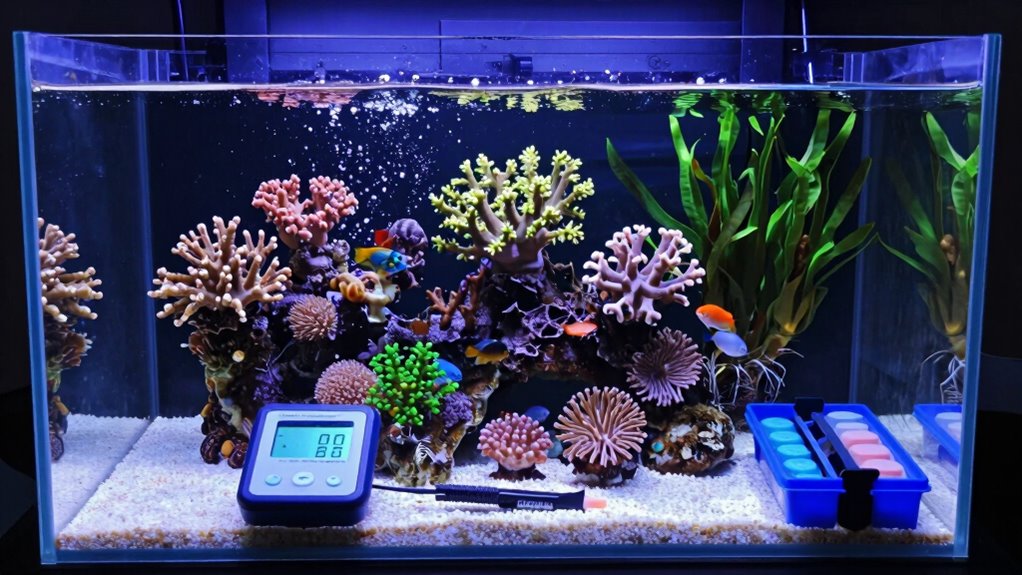
When water parameters suddenly change, quick action is crucial to prevent stress or damage to your corals and fish. First, test your water immediately to identify the fluctuations. Then, consider these steps:
- Perform a partial water change to quickly restore stability.
- Check your aquarium lighting to ensure it’s not contributing to algae overgrowth, which can cause parameter swings.
- Adjust dosing if you’re using supplements, avoiding overcorrection.
- Enhance algae control by reducing excess nutrients, preventing further fluctuations.
Monitoring closely after these steps helps prevent further instability. Keep a close eye on temperature, pH, and nitrate levels. Acting swiftly and maintaining consistent routines are key to restoring your reef tank’s balance.
Long-Term Tips to Maintain Stable Reef Tank Water Conditions
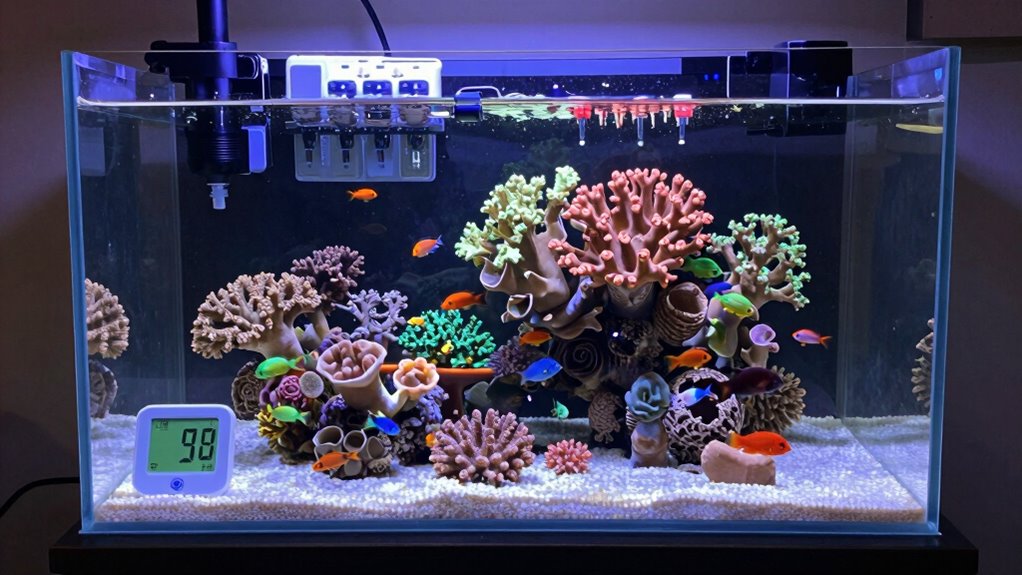
Consistent monitoring and proactive management are key to keeping your reef tank’s water parameters stable over the long term. Regular testing helps you spot trends that could impact coral coloration and algae control. Maintain stable temperature, salinity, and pH by adjusting equipment promptly. Use a dosing schedule to keep nutrients balanced, preventing algae overgrowth. Consider setting up automated dosing systems for consistency. The table below illustrates common parameters and their ideal ranges:
| Parameter | Ideal Range | Tips |
|---|---|---|
| Calcium | 400-450 ppm | Top off with calcium-rich supplements |
| Alkalinity | 8-12 dKH | Regularly test and dose as needed |
| Nitrate/Nitrite | 0-5 ppm / 0 ppm | Use algae control methods |
| Phosphate | <0.03 ppm | Use phosphate removers |
Frequently Asked Questions
How Often Should I Test My Reef Tank Water Parameters?
You should test your reef tank water parameters at least weekly to catch issues early. Regular testing helps you spot algae outbreaks and make timely lighting adjustments before problems escalate. Keep a consistent schedule, especially if you notice fluctuations, and record your results to track trends. This proactive approach stabilizes your tank’s environment, preventing instability that can lead to algae outbreaks and other health issues for your corals and fish.
What Are Common Causes of Unstable Water Parameters?
You often face unstable water parameters due to causes like algae overgrowth and equipment malfunctions. Algae overgrowth can disrupt nutrient levels, making parameters fluctuate. Equipment malfunctions, such as failing filters or heaters, prevent proper water circulation and stability. Regular maintenance and prompt repairs help prevent these issues. Monitoring water regularly and addressing algae and equipment problems quickly keeps your reef tank parameters stable, ensuring a healthy environment for your corals and fish.
Can Natural Filtration Methods Improve Water Stability?
Absolutely, natural filtration nurtures a nuanced, natural balance. By encouraging biological balance, you promote stable water parameters, reducing fluctuations and fostering a thriving reef. Biological processes like live rock, sand beds, and beneficial bacteria naturally filter out toxins and maintain consistent conditions. This sustainable, serene system minimizes the need for frequent adjustments, making your tank more resilient, reliable, and rewarding—creating a vibrant, vibrant reef ecosystem you can truly enjoy.
How Do Temperature Fluctuations Affect Water Parameter Stability?
Temperature fluctuations directly threaten water parameter stability in your reef tank. When the temperature isn’t well-regulated, it causes shifts in pH, alkalinity, and other essential parameters, stressing your marine life. To maintain parameter consistency, you should invest in a reliable heater and thermometer, set a consistent temperature, and monitor it regularly. Proper temperature regulation ensures your tank stays stable, promoting healthy coral growth and vibrant marine ecosystems.
What’s the Best Way to Troubleshoot Persistent Parameter Swings?
To troubleshoot persistent parameter swings, start by checking your testing accuracy and consistency. Adjust your lighting schedules gradually to prevent stress on corals, which can impact water stability. Monitor your water parameters daily and document changes. If swings continue, consider upgrading your filtration or dosing methods, and make certain your equipment, like heaters and pumps, are functioning properly. Consistent monitoring and gradual adjustments help maintain coral health and stabilize water conditions.
Conclusion
Keeping your reef tank’s water parameters stable is like tending a delicate garden—you’ll see vibrant growth and thriving corals when you nurture it carefully. Regular testing, timely adjustments, and staying vigilant can prevent chaos from creeping in. Remember, stability isn’t a one-time fix but a daily habit. Stay proactive, and your reef will flourish like a colorful underwater paradise, proving that patience and consistency are your best tools in this underwater adventure.