
If you think tiny bowls are enough for your betta, you’re mistaken. Bettas need larger tanks with proper filtration, stable water temperature, and enough space to swim freely. Small bowls limit their natural behaviors, increase stress, and can harm their health. Upgrading to a better habitat kit makes a huge difference in their happiness and well-being. Keep going now to discover how choosing the right tank supports a thriving, stress-free betta.

Get pet supplies delivered free — and shop member deals
- Fast, free delivery on millions of items
- Access to Prime Big Deal Days deals on October 6–7
- Prime Video, Amazon Music and more included
Key Takeaways
- Tiny bowls do not provide enough space for bettas to swim, stress reduction, or natural behaviors.
- Larger tanks improve water quality, temperature stability, and oxygenation, promoting betta health.
- Proper habitat kits include filtration, decorations, and space essential for enriching environments.
- Avoid overdecorating small tanks, which can cause stress or injury to bettas.
- Investing in bigger tanks leads to healthier, happier, and longer-lived betta fish.
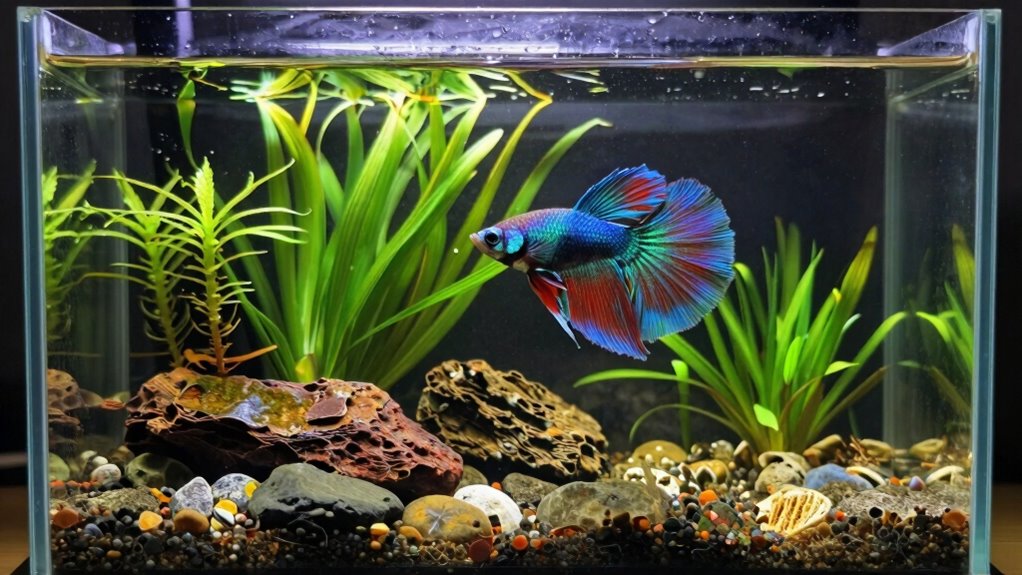
betta fish habitat kit with filtration
As an affiliate, we earn on qualifying purchases.
As an affiliate, we earn on qualifying purchases.
Why Betta Fish Need Bigger Tanks Than You Might Think
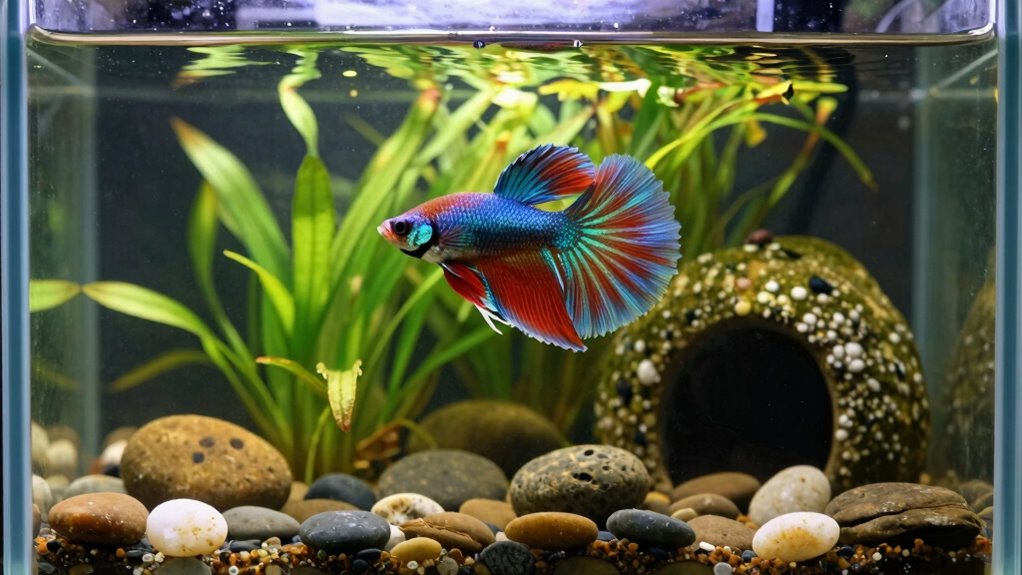
Many people assume that a small bowl is enough for a betta fish, but in reality, they need much larger tanks to stay healthy. A bigger tank provides space for natural behaviors, reducing stress and promoting overall well-being. Including aquarium plants not only creates a natural environment but also helps stabilize water quality and temperature. Betta fish thrive in water temperatures between 76-82°F, which is easier to maintain in larger tanks with proper filtration. Smaller bowls quickly become polluted, making it harder to keep water conditions safe. A larger tank allows for better heat distribution and oxygenation, essential for your betta’s health. Providing ample space, plants, and stable water conditions ensures your betta lives happily and actively. Additionally, a larger tank can support beneficial bacteria growth, which is crucial for maintaining healthy nitrogen levels and preventing harmful toxins. Proper filtration further enhances water quality and helps sustain a clean environment for your fish. Moreover, a well-designed aquarium encourages beneficial microbial activity that naturally keeps water parameters balanced, supporting the overall health of your betta. In fact, larger tanks also provide more space for enrichment, which is vital for reducing boredom and promoting natural activity levels.
Debunking the Tiny Bowl Myth: Bigger Habitats Mean Happier Bettas
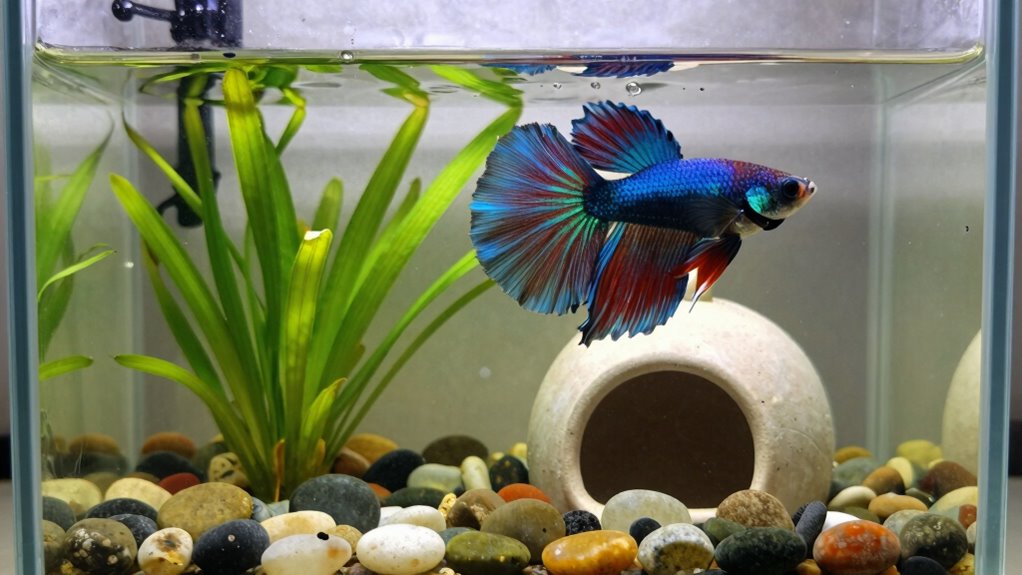
Believing that a tiny bowl is enough for a betta fish is a common misconception that can harm their health and happiness. Larger habitats provide space for more natural behavior and better overall well-being. With a bigger tank, you can include aquarium plants that offer shelter and reduce stress, creating a more enriching environment. Maintaining appropriate water temperature becomes easier, preventing temperature swings that can weaken your betta’s immune system. Plus, spacious tanks help keep water cleaner and reduce the need for frequent changes. Remember, your betta thrives in an environment that mimics its natural habitat, which simply isn’t possible in a tiny bowl.
A larger tank enhances your betta’s health, happiness, and natural behavior.
- Aquarium plants create hiding spots and promote mental health
- Larger space stabilizes water temperature naturally
- Better filtration reduces water quality issues
- More room encourages active swimming and exploration
- Overall, bigger habitats lead to happier, healthier bettas
What Do Betta Fish Really Need? Space, Filtration, and a Healthy Environment
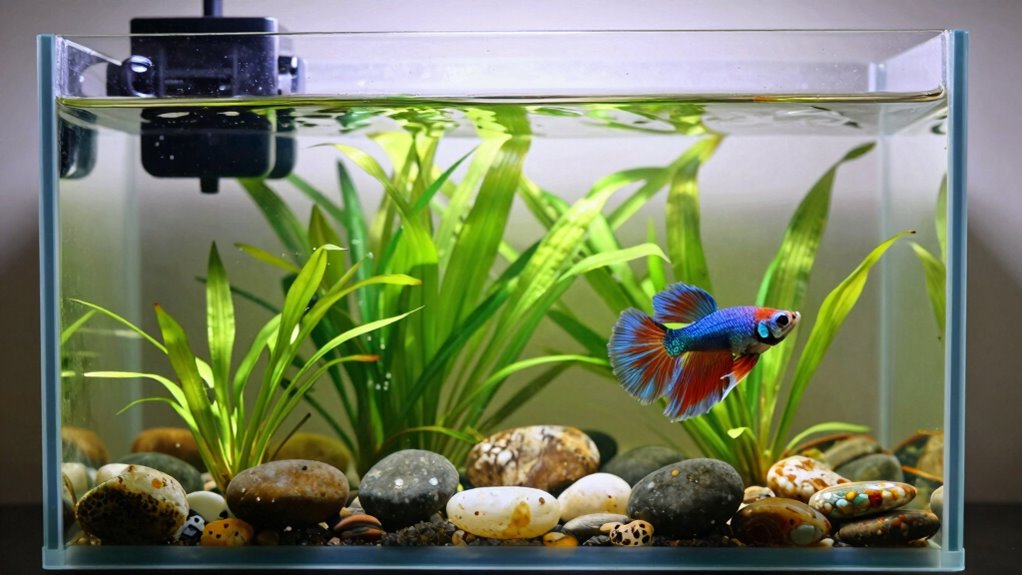
To keep your betta fish healthy and happy, you need to focus on providing enough space, proper filtration, and a stable environment. A larger tank allows your betta to swim freely, reducing stress and promoting natural behaviors. Including colorful decorations offers hiding spots and enrichment, but guarantee they don’t overcrowd the space. Maintaining a consistent water temperature between 76-82°F is vital, as bettas are tropical fish. Good filtration keeps the water clean and oxygenated, preventing harmful toxins from building up. Avoid tiny bowls that restrict movement and cause poor water quality. Instead, choose a habitat that supports a healthy environment, giving your betta the space and conditions it needs to thrive. This approach promotes longer, healthier, and more vibrant life for your fish. Additionally, understanding contrast ratio helps in selecting the right lighting setup to ensure your tank’s environment remains comfortable and visually appealing. Proper lighting also plays a crucial role in wellness, supporting your betta’s natural circadian rhythms and overall health. Ensuring the tank has appropriate lighting and lighting conditions can also prevent stress and encourage natural coloration, especially when considering the lighting spectrum for optimal visual comfort. Moreover, selecting lighting with an appropriate lighting intensity can enhance your fish’s environment and health.
How a Larger Tank Improves Your Betta’s Health and Happiness
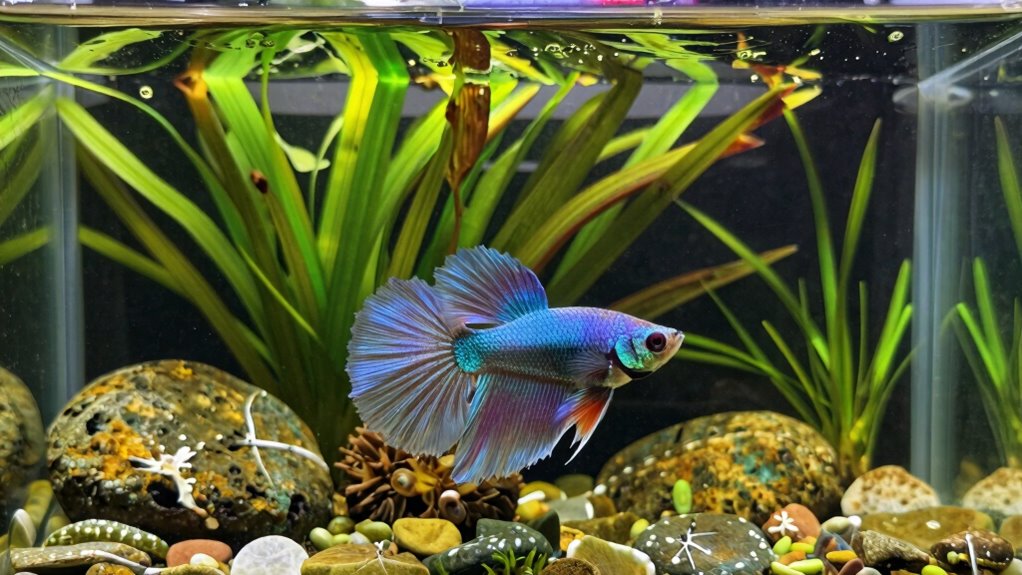
A larger tank gives your betta more space to explore and feel comfortable. With more room, your fish can move freely and engage in natural behaviors. This extra space directly boosts their overall health and happiness.
Spacious Environment Benefits
Providing your betta with a larger tank creates a healthier and more stimulating environment, which directly boosts its well-being. With more space, your betta can explore, hide, and establish territory, reducing stress. A bigger tank allows for the addition of aquarium plants, which improve water quality and give your betta places to rest. It also helps maintain a stable water temperature, preventing sudden fluctuations that can harm your fish. Plus, increased space enables better filtration and oxygen flow, promoting overall health. Remember, a spacious environment not only keeps your betta happy but also makes caring for it easier and more effective. European cloud innovation can serve as a model for sustainable and efficient aquatic habitats, inspiring better tank design and technology.
Enhanced Movement and Play
With a larger tank, your betta has more space to swim freely and engage in natural behaviors, which keeps it active and mentally stimulated. More room allows your betta to explore around aquarium plants, creating hiding spots and enrichment opportunities. It also promotes better water circulation, helping maintain stable water temperature, which is essential for your betta’s health. When the water temperature stays consistent, your fish is less stressed and more likely to exhibit playful behaviors. A bigger tank encourages your betta to move more, reducing boredom and preventing issues like lethargy. Plus, the added space makes it easier to create a dynamic environment that promotes play, exploration, and overall well-being. All these factors contribute to a happier, healthier betta.
Choosing the Best Betta Habitat Kit: Features to Look For
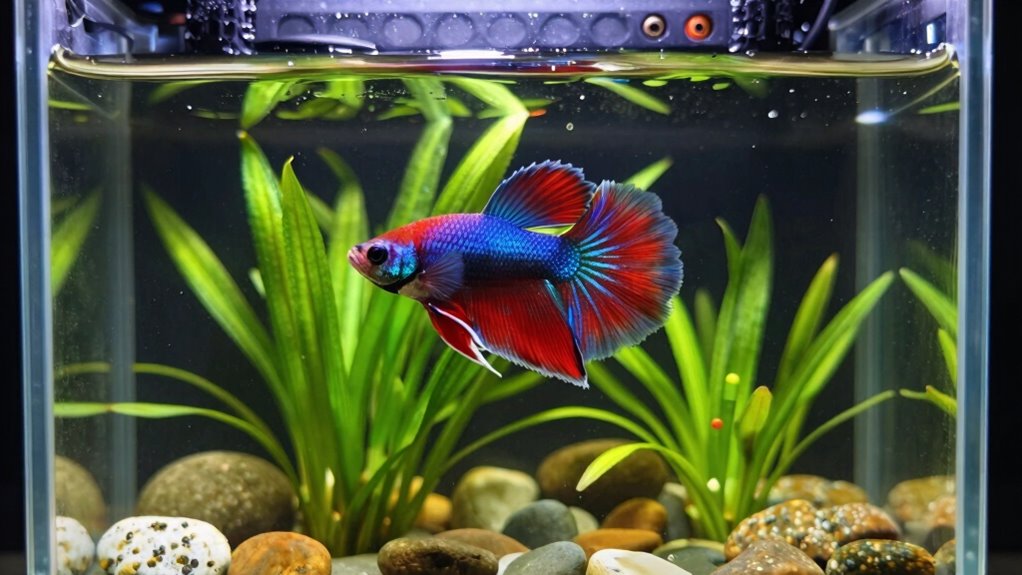
When selecting a betta habitat kit, focusing on key features guarantees your fish has a comfortable and healthy environment. Look for kits that include space for aquarium decorations, which provide enrichment and hiding spots. Guarantee the kit maintains stable water temperature, vital for your betta’s well-being. A filter helps keep water clean and oxygenated without creating strong currents. Check that the kit is easy to set up and clean, saving you time and effort. Additionally, opt for a kit with a secure lid to prevent escapes. These features support your betta’s health and happiness, giving you peace of mind that your fish thrives in a well-designed habitat. Creating an environment aligned with your betta’s natural needs can also promote their emotional well-being energetic alignment, resulting in a more vibrant and stress-free pet. Understanding water quality and proper filtration can significantly reduce maintenance and improve your fish’s overall health. Proper aquarium size is also crucial, as it provides ample space for movement and reduces stress levels. Selecting a kit with easy maintenance features can make ongoing care more manageable and enjoyable, while considering holistic SEO practices can help ensure you choose the best products and resources for your hobby.
Common Mistakes When Setting Up Your Betta’s Habitat: And How to Avoid Them
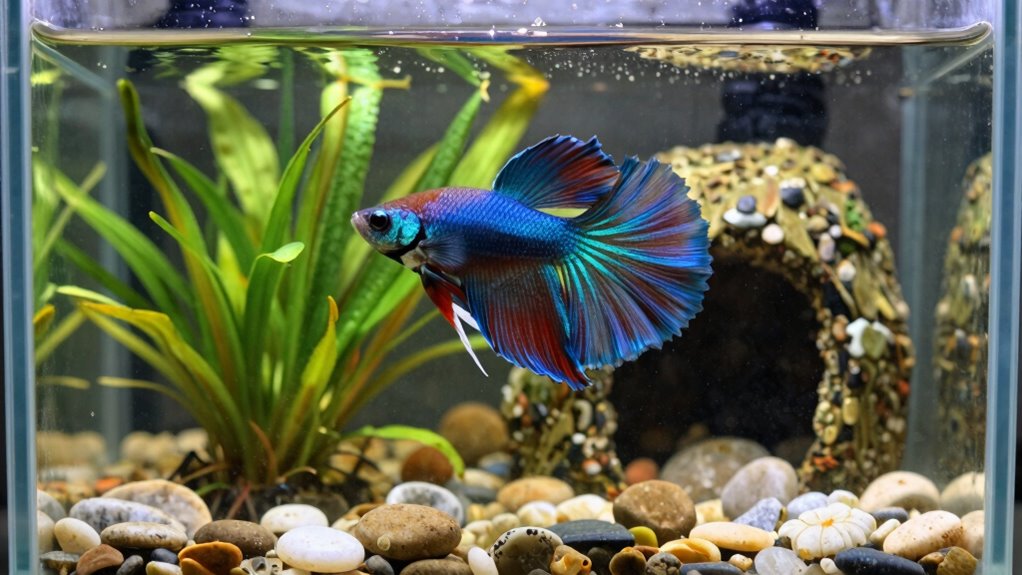
Setting up your betta’s habitat correctly from the start is essential to prevent common mistakes that can harm your fish. Avoid overcrowding by choosing appropriate aquarium decorations that don’t stress or trap your betta. Confirm your tank size supports good water quality and fish compatibility—bettas dislike aggressive tank mates or cramped spaces. A frequent mistake is adding incompatible decorations or plants that may harm your fish or limit swimming space. Use this quick guide to avoid errors:
| Mistake | Solution | Impact |
|---|---|---|
| Overdecorating | Keep decorations minimal and smooth | Stress and injury |
| Incompatible Fish | Research tank mates before adding | Aggression or death |
| Small or Tiny Tanks | Use a tank large enough for swimming | Poor water quality, stress |
Additionally, understanding Free Floating habitat principles can help create a more natural and comfortable environment for your betta. Creating a suitable aquatic environment that mimics their natural habitat supports their well-being and encourages healthy behaviors. Incorporating proper filtration systems can also improve water quality and reduce maintenance efforts. Properly monitoring water parameters like pH and ammonia levels is crucial for maintaining a healthy environment. Considering appropriate tank size is crucial for maintaining healthy water parameters and providing adequate swimming space for your betta. Avoid these pitfalls for a healthy, happy betta.
Compare Your Options: Small Bowls vs. Proper Betta Tanks
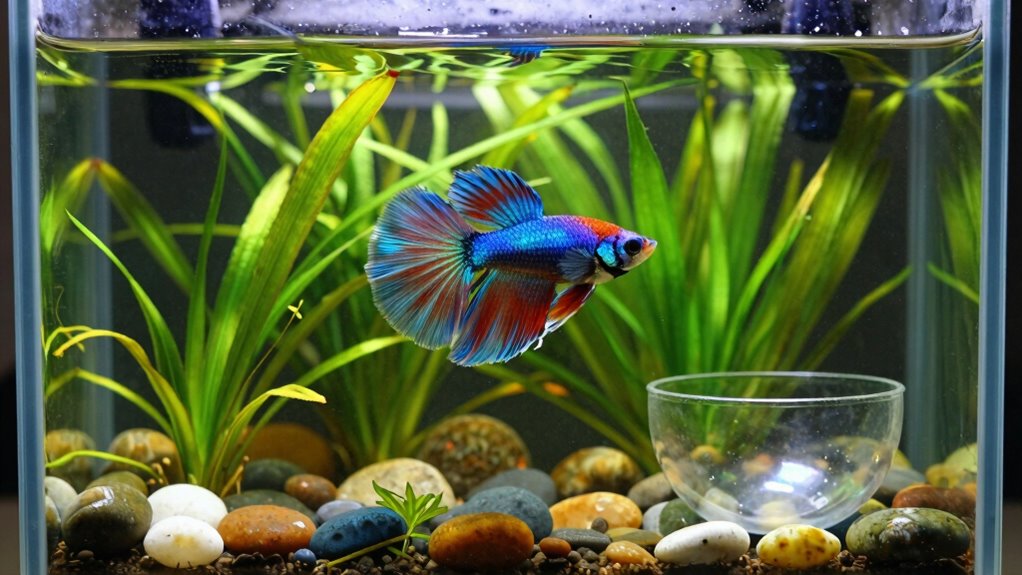
Choosing the right habitat size makes a big difference in your betta’s health and happiness. Small bowls may seem convenient, but they limit space for swimming and decorating, which can cause stress. Proper betta tanks, on the other hand, provide ample room for aquarium decorations that enhance your fish’s environment and showcase its vibrant betta coloring. When comparing options, consider these points:
A spacious tank promotes your betta’s health, happiness, and vibrant colors.
- Larger tanks improve water quality and reduce maintenance
- More space allows for natural behaviors and exercise
- Better support for aquarium decorations creates a stimulating environment
- Increased volume stabilizes temperature and water parameters
- Betta coloring appears more vivid in spacious, well-maintained tanks
- Vetted – Witbeck Vacuums emphasizes that performance ratings are based on suction power and durability, which are important factors when choosing filtration systems for larger tanks. Additionally, adequate filtration is essential for maintaining a healthy aquatic environment and preventing water quality issues. Using a larger tank also helps to minimize water changes, making maintenance more manageable and less stressful for your betta.
Furthermore, a properly sized tank encourages healthier growth and longevity for your betta, leading to a more fulfilling pet ownership experience.
Keeping Your Betta Stress-Free: Tips for a Healthy, Happy Home
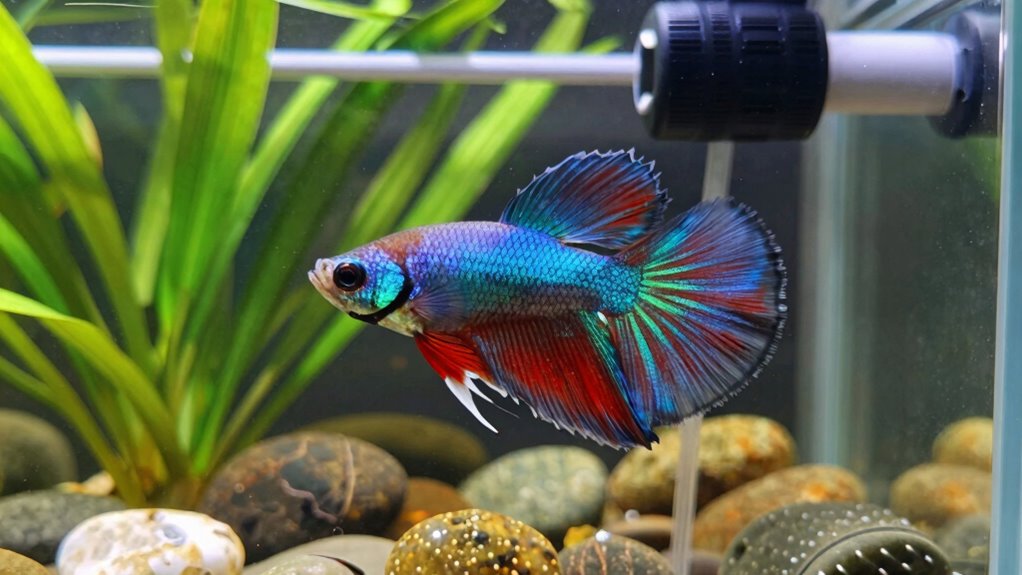
Creating a stress-free environment for your betta is essential for its health and happiness. Start by choosing the right aquarium accessories, like plants and hiding spots, to mimic its natural habitat and reduce anxiety. Keep the water clean and at a stable temperature to prevent stress and illness. Proper fish nutrition is equally important; feed high-quality, balanced food to support your betta’s immune system and energy levels. Avoid sudden movements or loud noises around the tank, and handle your betta gently if needed. Regular water changes and maintaining an appropriate tank size help prevent boredom and stress. A calm, well-equipped home promotes a healthy, vibrant betta that’s happier and more active.
Frequently Asked Questions
What Are the Long-Term Health Risks of Tiny Bowls for Bettas?
Using tiny bowls for your betta can lead to long-term health risks like bacterial growth and ammonia buildup, which harm their delicate gills and immune system. Small spaces make it harder to maintain clean water, increasing toxin levels. Over time, this stress weakens your betta’s health, making them more prone to infections and diseases. To keep your betta healthy, provide a larger, properly filtered tank and perform regular water changes.
How Often Should I Clean a Larger Betta Tank?
You should clean a larger betta tank weekly to maintain ideal tank maintenance and water quality. Regular partial water changes of about 25-30% help remove toxins and keep your betta healthy. Keep an eye on water parameters like ammonia, nitrite, and nitrate levels, and clean any debris or algae promptly. Consistent cleaning ensures your betta stays happy, healthy, and stress-free in a clean environment.
Can Bettas Thrive Without Filtration in Bigger Tanks?
You might think bettas can thrive without filtration in larger tanks, but that’s a myth. Without filtration, tank cycling becomes harder, risking ammonia spikes that harm your fish. Maintaining proper water temperature and cycling your tank guarantees healthy water conditions. Even in bigger tanks, filtration helps keep water clean and stable, reducing stress and disease risk for your betta. So, always consider adding a filter for a healthier, happier fish.
What Specific Filtration System Is Best for a Betta Habitat?
You should choose a gentle filtration system that promotes water circulation without creating strong currents, which can stress your betta. Look for sponge filters or hang-on-back filters designed for small tanks; these types offer effective biological filtration and maintain water quality. Avoid powerful filters that cause turbulence, and make sure your setup keeps the water clean while keeping your betta comfortable and stress-free.
How Does Tank Size Impact Betta Aggression and Stress Levels?
A larger tank size considerably reduces betta stress and aggression. When your betta lives in a spacious tank, it has more room to explore and establish territory, which minimizes confrontations. Small tanks or bowls increase stress and aggressive behaviors because the fish feels trapped and threatened. To keep your betta healthy and peaceful, choose a tank that provides ample space, ideally 5 gallons or more, to promote calmness and reduce stress levels.
Conclusion
Remember, bigger tanks mean healthier fish, clearer water, and happier bettas. Avoid the myth of tiny bowls, and instead, choose space, filtration, and proper care. Provide your betta with room to swim, a clean environment to thrive, and a stress-free habitat to flourish. By making these choices, you’ll create a vibrant, lively home where your betta can truly thrive, not just survive. Your betta’s happiness depends on the space you give it.
Fall Picks
fall essentials
As an affiliate, we earn on qualifying purchases.