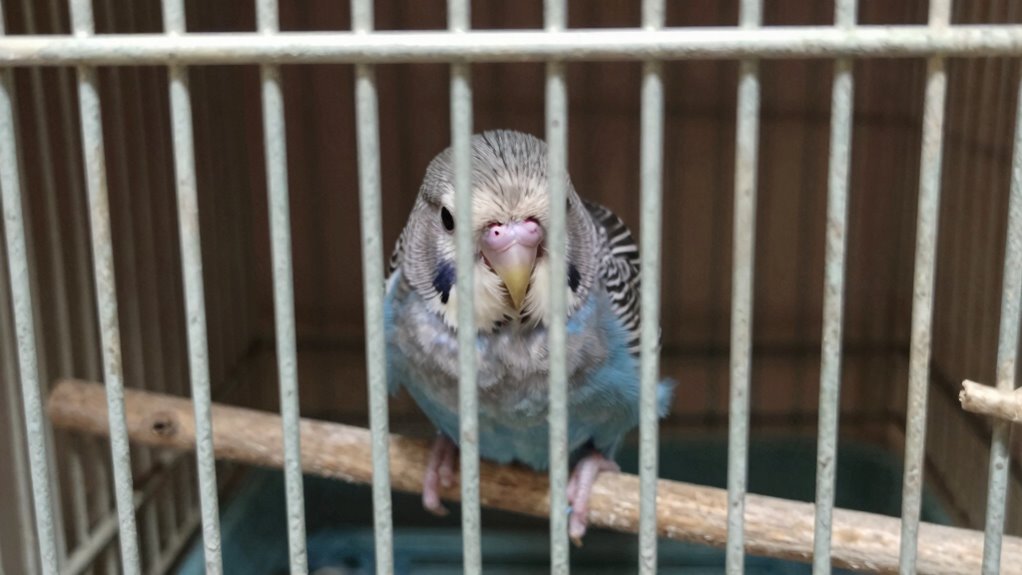

You can tell if your bird’s cage is too small if it can’t fully stretch its wings, fly comfortably, or move without pressing against the sides. Watch for signs like restlessness, feather plucking, or limited activity. Overcrowding with toys or accessories also makes the space feel cramped. A cage that restricts natural behaviors or causes visible stress indicates it’s too small. Keep these tips in mind, and you’ll discover more ways to guarantee a healthy environment for your bird.

Get pet supplies delivered free with Prime
- Fast, free delivery on millions of items
- Prime Video, Amazon Music and more included
- Member-only deals all year
Key Takeaways
- The cage is less than twice the bird’s wingspan when fully stretched.
- The bird presses against the sides or struggles to spread its wings comfortably.
- Natural behaviors like flying, hopping, or foraging are restricted or impossible.
- You notice signs of stress, boredom, or feather plucking, indicating inadequate space.
- The cage appears cluttered with toys and accessories, making it feel cramped.
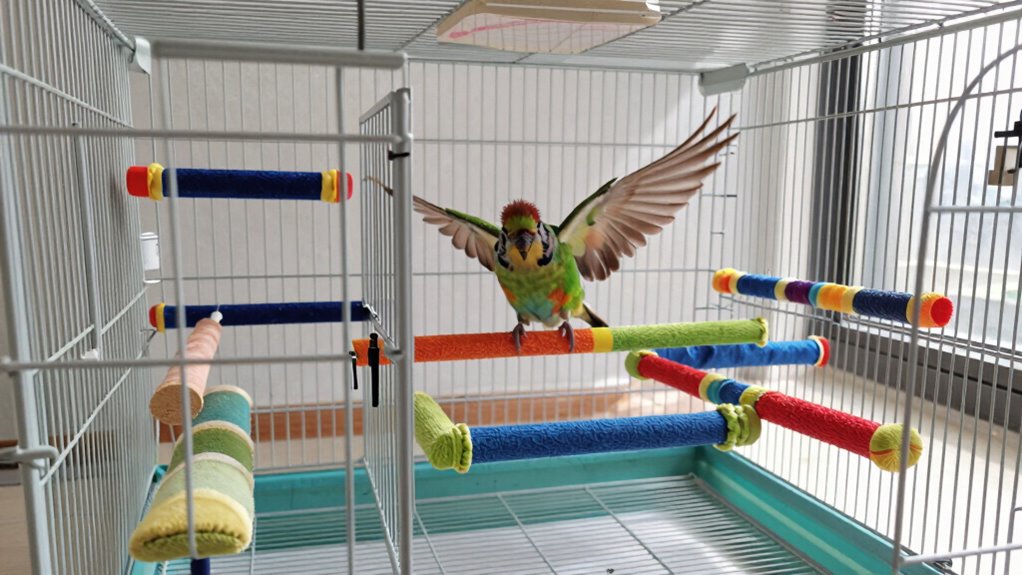
Have you ever wondered if your bird’s cage provides enough space for it to thrive? The size of your bird’s enclosure plays a crucial role in your feathered friend’s happiness and health. When evaluating whether a cage is suitable, start by examining the bird enclosure dimensions. A too-small cage restricts your bird’s movement, leading to stress, boredom, and even health issues. Ideally, the cage should be at least twice the wingspan of your bird when fully stretched out, providing ample room for flying and stretching. For active species, bigger is always better. If your cage feels cramped or you notice your bird struggling to move comfortably, it’s a clear sign it’s time for a larger space.
Beyond size, the durability of the cage material matters considerably. You want a cage made from sturdy, long-lasting materials that can withstand your bird’s behavior. Chewing, scratching, and climbing are natural activities, so a cage with durable construction prevents accidents or escapes. Metal cages, especially those made from powder-coated or stainless steel, tend to be the most durable choices. Avoid flimsy plastic or low-quality wire that can bend or break easily, exposing your bird to potential injuries or escapes. Remember, a well-made cage not only lasts longer but also keeps your bird safe and secure. Additionally, appropriate cage materials can prevent your bird from ingesting harmful substances or damaging the cage. Using safe, non-toxic materials is essential for your bird’s health. Furthermore, ensuring proper ventilation in the cage design can enhance airflow and reduce the buildup of harmful fumes or bacteria. Incorporating adequate enclosure size can also improve your bird’s overall well-being by providing enough space for natural behaviors.
Choose sturdy, durable materials like stainless steel or powder-coated metal for a safe, long-lasting bird cage.
Another indicator that your cage might be too small is your bird’s behavior. If it constantly presses against the sides, appears restless, or is unable to spread its wings fully, these are signs of inadequate space. Boredom can lead to destructive behaviors like feather plucking or excessive screaming, which often stem from confinement. Additionally, observe how your bird interacts within its environment. A cramped space limits natural behaviors like flying, hopping, or foraging, making your bird less active and more prone to stress. Providing ample space encourages natural activity and helps maintain your bird’s mental well-being.
Finally, consider the overall setup of the cage. Even if the dimensions are adequate, overcrowding with toys, perches, and accessories can make the space feel cluttered and uncomfortable. A spacious cage should have enough room for your bird to move freely without feeling overwhelmed. Regularly inspect the cage’s condition—if it’s showing signs of wear or if your bird seems less energetic, it might be time to upgrade to a larger, more durable enclosure. Remember, a bigger, sturdy cage isn’t just about meeting standards; it’s about providing a safe, stimulating environment where your bird can thrive.
As an affiliate, we earn on qualifying purchases.
Frequently Asked Questions
What Are the Best Cage Materials for Bird Safety?
You should choose cage materials that prioritize bird safety, like durable metals such as stainless steel or powder-coated steel, which resist rust and are non-toxic. Avoid cheap or flimsy materials that may chip or contain harmful finishes. Look for cages with non-toxic cage finishes to prevent poisoning if your bird chews on the bars. Durable cage materials and safe finishes guarantee your bird stays healthy and secure in its environment.
How Often Should I Clean My Bird’s Cage?
You should clean your bird’s cage at least once a week, but daily cage cleaning schedule is even better for bird cage hygiene. Ironically, neglecting this routine can make your feathered friend’s home less inviting—and less healthy. Regular cleaning prevents odor buildup, eliminates waste, and keeps your bird happy. So, don’t wait until it’s a mess—stay proactive with cage cleaning and enjoy a healthier, happier bird.
What Toys Are Suitable for Small Cages?
For small cages, choose bird enrichment toys like mirrors, bells, and small swings that fit comfortably without overcrowding. Focus on cage accessories that promote activity, such as ladders or perches of varying textures. These items keep your bird entertained and mentally stimulated without crowding the space. Always guarantee toys and accessories are safe, non-toxic, and suitable for your bird’s size to prevent injuries and foster a healthy environment.
Can a Cage Be Too Tall for My Bird?
Yes, a cage can be too tall for your bird if it hampers your bird’s comfort or safety. Check the cage dimensions and guarantee the bird’s height, when perched, allows enough space for movement without feeling cramped. A proper height provides ample room for stretching and flying. If the cage is excessively tall, it might make cleaning difficult or cause instability, so always balance height with overall cage size and your bird’s needs.
How Can I Make My Bird Feel More Secure?
Your bird needs to feel like it’s wrapped in a cozy blanket, so creating a secure environment is key. Make sure the bird enclosure has enough space to move comfortably, which means choosing the right cage size. Add familiar toys, perches, and hiding spots to boost their confidence. Speak softly and maintain a calm atmosphere, helping your bird feel safe and secure, like a nest in the wild.
Conclusion
Remember, giving your bird enough space is essential for its happiness and health. Did you know that over 50% of pet birds suffer from obesity or behavioral issues due to inadequate cage sizes? If your bird seems stressed, constantly squawks, or can’t stretch its wings fully, it’s a clear sign your cage is too small. Ensuring a spacious, enriching environment shows you truly care—because a happy bird makes a happy home.
Halloween Picks
halloween
As an affiliate, we earn on qualifying purchases.