
If you’re new to budgies, you’re in for a treat! These colorful parrots are lively companions that require a spacious cage (at least 18x18x24 inches) filled with perches and toys. Their diet should include high-quality seeds, fresh fruits, and veggies, while also avoiding toxic foods like avocado. Budgies thrive on social interaction, so spend time talking and playing with them to build a strong bond. Stick around to learn more about their care and needs!
Key Takeaways
- Choose a spacious cage (at least 18x18x24 inches) to allow for wing stretching and playful activity.
- Provide a balanced diet of high-quality seeds, fresh fruits, and vegetables while avoiding toxic foods.
- Ensure daily social interaction with your budgie through talking and play to strengthen your bond.
- Regularly clean the cage and update accessories to maintain a healthy environment for your budgie.
- Always have fresh water available and change it daily to keep your budgie hydrated.
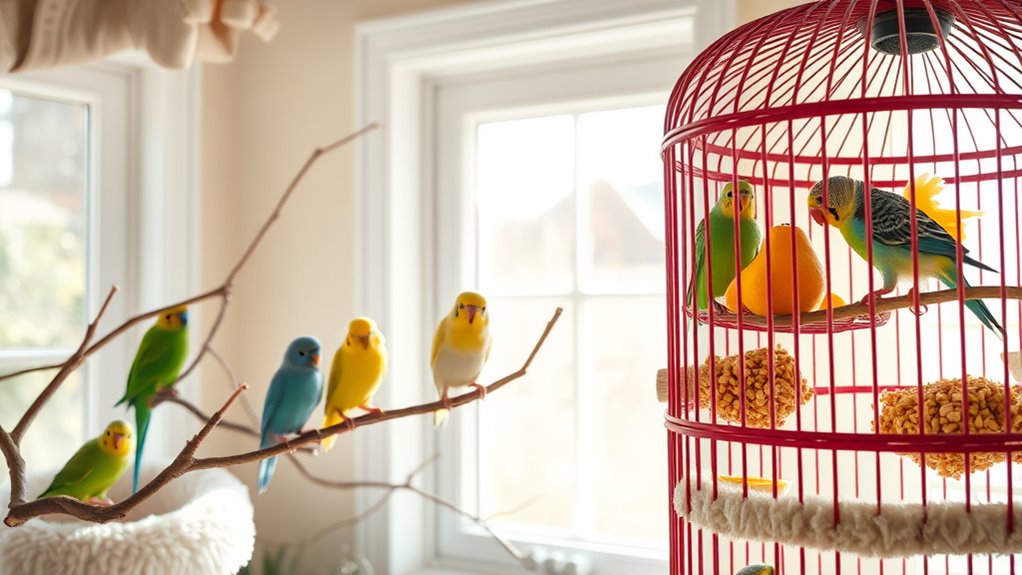
If you’ve ever considered adding a lively companion to your home, budgies might be the perfect choice for you. These charming little birds are not only colorful and entertaining, but they’re also relatively easy to care for, making them an ideal pet for beginners. Before you bring one home, though, it’s essential to understand their needs, including cage size and diet essentials.
Considering a lively companion? Budgies are colorful, entertaining, and easy to care for, perfect for beginner pet owners.
When it comes to cage size, you want to make certain your budgie has ample space to move around. A good rule of thumb is to choose a cage that’s at least 18 inches long, 18 inches wide, and 24 inches high. This gives your budgie enough room to stretch its wings and engage in playful activity. If you can, opt for a larger cage; the more space you provide, the happier and healthier your bird will be. Remember, budgies are social creatures, and they thrive in an environment where they can explore and interact. Including perches at different heights and some toys can create an enriching environment for your new friend.
Next, let’s talk about diet essentials. A balanced diet is critical for your budgie’s health. You should provide a high-quality seed mix specifically formulated for budgies, which typically includes a variety of seeds, grains, and nuts. Fresh fruits and vegetables are also important; think about adding chopped carrots, apples, or leafy greens to their food routine. Just be cautious to avoid toxic foods like avocado or chocolate. Fresh water should always be available, and it’s a good idea to change it daily to keep it clean. Supplementing their diet with occasional treats, like millet sprays, can also add variety and keep your budgie engaged.
Finally, don’t forget about social interaction. Budgies thrive on companionship, whether that’s with you or another budgie. Spending time talking to and playing with your bird can help establish a strong bond, leading to a happier pet.
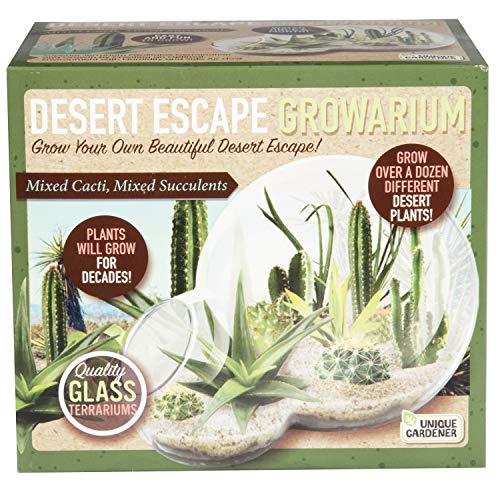
Grow Your Own Desert Escape in A Quality Glass Terrarium Starter Kit with Complete Supplies - Easy to Maintain Indoor Cacti and Succulents - Over A Dozen Desert Plants That Will Last for Years!
Unique Double Sphere Design: Engineered for optimal growth, providing the best growing experience possible. The plant terrarium kit...
As an affiliate, we earn on qualifying purchases.
Frequently Asked Questions
How Do I Tell if My Budgie Is Happy?
You can tell if your budgie’s happy by observing its body language and vocalizations. Look for signs like fluffed feathers, playful hopping, and active wing flapping. If your budgie chirps, whistles, or mimics sounds, it’s likely in a good mood. A happy budgie often enjoys interacting with you, whether it’s by singing or nuzzling against you. Pay attention to these cues, and you’ll get a clear picture of your feathered friend’s happiness!
Can Budgies Live Alone or Need a Companion?
Budgies thrive in social environments, so they shouldn’t live alone. In fact, studies show that nearly 75% of budgies are happier with a companion. While a single bird can bond closely with you, it might miss out on the social interactions that come from having another budgie. If you’re considering solo vs. social needs, remember that two birds can play, chirp, and engage in natural behaviors together, enhancing their well-being.
What Are Common Health Issues in Budgies?
Common health issues in budgies include diet deficiencies and feather plucking. If your budgie isn’t getting a balanced diet, it might develop nutritional problems, leading to poor feather quality or lethargy. Feather plucking can indicate stress, boredom, or health issues, so keep an eye on your bird’s behavior. Regular vet check-ups and a nutritious diet can help prevent these problems, ensuring your budgie stays happy and healthy.
How Often Should I Clean My Budgie’s Cage?
You should clean your budgie’s cage at least once a week, but daily spot cleaning is essential for maintaining hygiene. Imagine opening the cage and finding an inviting space, free of debris! Regular hygiene routines keep your feathered friend healthy and happy. Remove droppings, old food, and soiled bedding daily, then give the entire cage a thorough clean weekly. You’ll be amazed at how a clean environment boosts your budgie’s mood!
Can Budgies Be Trained to Talk Easily?
Yes, budgies can be trained to talk easily! Their talking ability is impressive, and they love mimicking sounds. Start by repeating simple words or phrases consistently. Use positive reinforcement, like treats or praise, to encourage them. Make sure to spend time with your budgie daily, as bonding helps them feel comfortable. With patience and practice, you’ll be amazed at how quickly they pick up new words and sounds!

PYEF CRAFTS DIY Terrarium Kit for Plants – Build a Self‑Sustaining Closed Ecosystem – Supplies for Up to 68 oz (1‑2 Liter) – Succulents, Air Plants (Tillandsia), Fern – Jar Not Included
Easy to use: Such a terrarium kit for plant creations is designed to be easy to use and...
As an affiliate, we earn on qualifying purchases.
Conclusion
In conclusion, keeping budgies brings boundless joy and vibrant companionship into your life. By providing proper care, a playful environment, and plenty of love, you’ll foster a flourishing friendship with these feathery friends. Remember, patience and persistence are key to perfecting your budgie-keeping skills. So, embrace the adventure, and let your heart soar alongside your lively little companions. With dedication and delight, you’ll create a harmonious home for your delightful budgies!
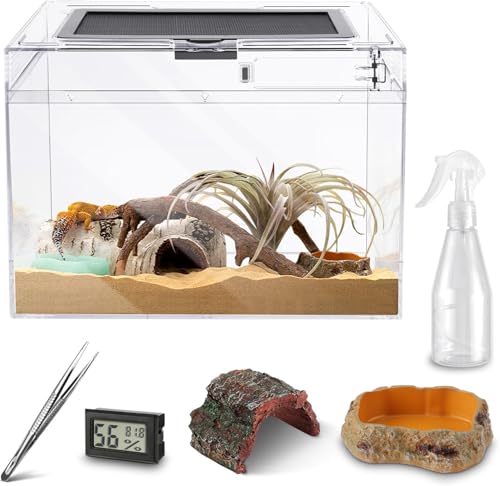
HELIME Reptile Polycarbonate Terrarium Kit 5 Piece Starter Habitat for Tarantula,Lizards,Frogs,Geckos,or Hermit Crabs,Tank with Escape-Proof Locking Lid,Hygrometer,Hide,Tweezer,Bowl,Sprayer
Durable PC Material build: crafted from premium thickened polycarbonate, stronger and safer than glass. Offers a crystal-clear 360°...
As an affiliate, we earn on qualifying purchases.

Terrarium Kit with Grow Light – 24-Piece DIY Glass Terrarium Set with Tools, Moss, Driftwood, Soil & Pebbles – Mini Gardening Kit for Air Plants, Succulents & Indoor Desk Decoration Gift
1. 【Build Your Own Mini Landscape in Glass】 Create a small natural scene inside the included glass container....
As an affiliate, we earn on qualifying purchases.