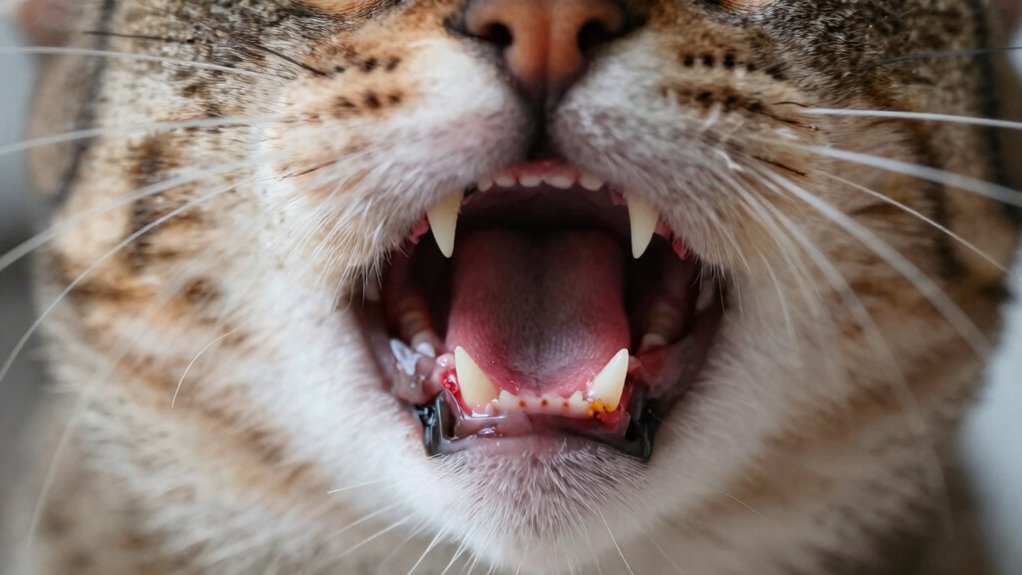

If you’re concerned about your cat’s oral health, look for early signs like bad breath, drooling, pawing at the mouth, or reluctance to eat. Conduct gentle home checks to spot redness, swelling, or tartar buildup. Using dental products like toothbrushes, toothpaste, and treats can help prevent issues. Recognizing these subtle clues and knowing when to see your vet makes all the difference—discover more tips to keep your cat’s mouth healthy.
Key Takeaways
- Look for subtle behavioral changes like pawing at the face or decreased grooming, which may indicate early mouth pain.
- Regular home mouth checks can help detect redness, swelling, tartar, or broken teeth before symptoms worsen.
- Use cat-specific dental products such as toothbrushes, toothpaste, and dental treats to prevent plaque buildup.
- Chewing treats and chews promote natural cleaning, reduce plaque, and support overall oral health.
- Early detection of signs like bad breath and reluctance to eat allows timely veterinary intervention.
What Are the Early Signs of Mouth Pain in Cats?
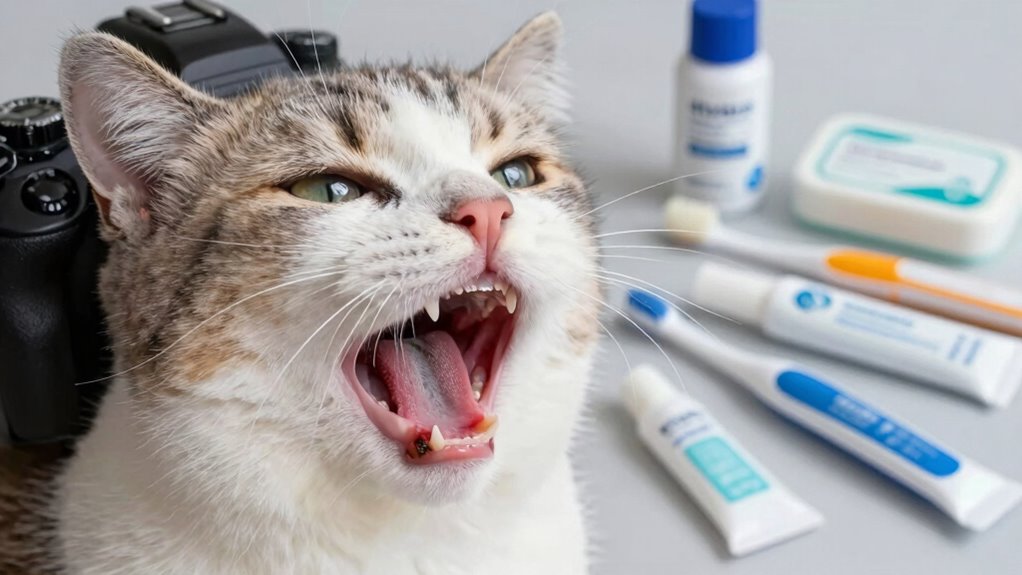
Recognizing the early signs of mouth pain in cats is essential for prompt treatment and maintaining their overall health. If you notice your cat avoiding grooming, especially around their face and mouth, it could signal discomfort. Changes in eating habits, like dropping food or difficulty chewing, are key indicators. Poor feline nutrition results when mouth pain discourages proper eating, leading to weight loss or lethargy. Watch for excessive drooling or bad breath, which often accompany oral issues. You might also see your cat pawing at their face or reluctance to open their mouth during grooming. Additionally, free floating in the mouth can contribute to pain and discomfort, making it crucial to monitor for signs of oral issues. mouth pain severity can influence how quickly symptoms appear and worsen if left untreated. Recognizing early signs of oral discomfort allows for timely intervention and prevents more serious health problems. These signs suggest mouth pain that needs attention. Being attentive to these early clues helps you address problems before they worsen, ensuring your cat stays comfortable and healthy. Regular veterinary checkups are also vital for early detection and prevention of dental issues.
How Can You Safely Check Your Cat’s Mouth at Home?
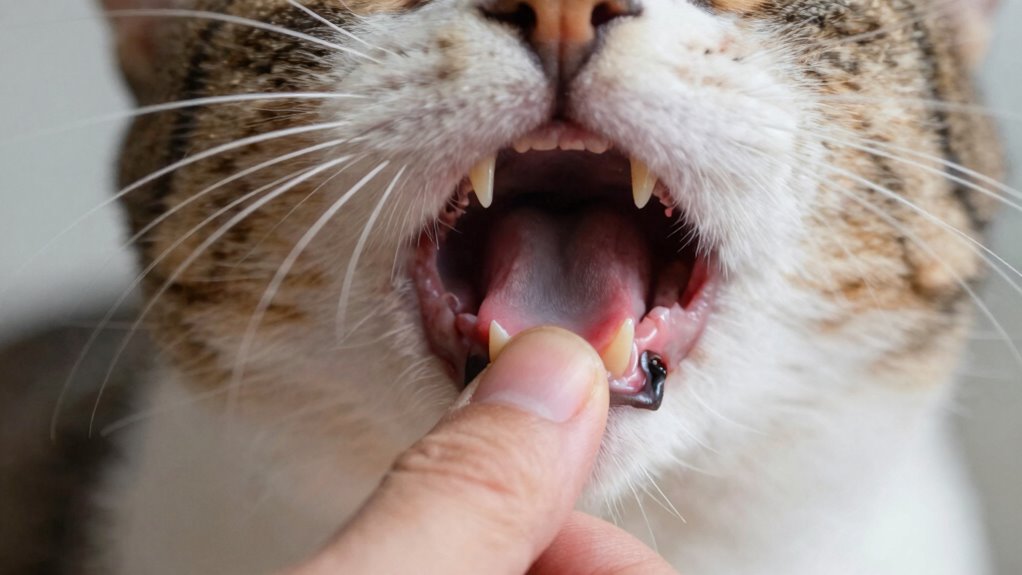
To safely check your cat’s mouth at home, it’s important to approach gently and patiently. Start by calming your cat through gentle petting or grooming, which eases tension. Use a soft towel to gently hold your cat’s head if needed. Carefully lift the lips to examine teeth and gums, looking for redness, swelling, or tartar. Avoid forcing the mouth open; instead, observe what you can see comfortably. Regularly inspecting your cat’s mouth supports veterinary dentistry efforts and helps catch issues early. Additionally, being aware of early signs of mouth pain can help you identify problems before they worsen. Recognizing the predictive validity of these signs enhances your ability to seek timely veterinary care. Understanding common symptoms can further empower you to take prompt action. It’s also helpful to familiarize yourself with common dental issues that cats may experience. Being aware of preventive dental care methods can reduce the risk of dental disease. Here’s a helpful guide:
| Step | Action | Tips |
|---|---|---|
| 1 | Calm your cat | Use soothing voice and gentle touch |
| 2 | Gently lift lips | Do not force; be patient |
| 3 | Check teeth and gums | Look for discoloration or swelling |
| 4 | Observe for signs of pain | Note any resistance or discomfort |
| 5 | Seek vet advice if unsure | Consult if abnormalities appear |
What Dental Care Products Help Keep Your Cat’s Mouth Healthy?
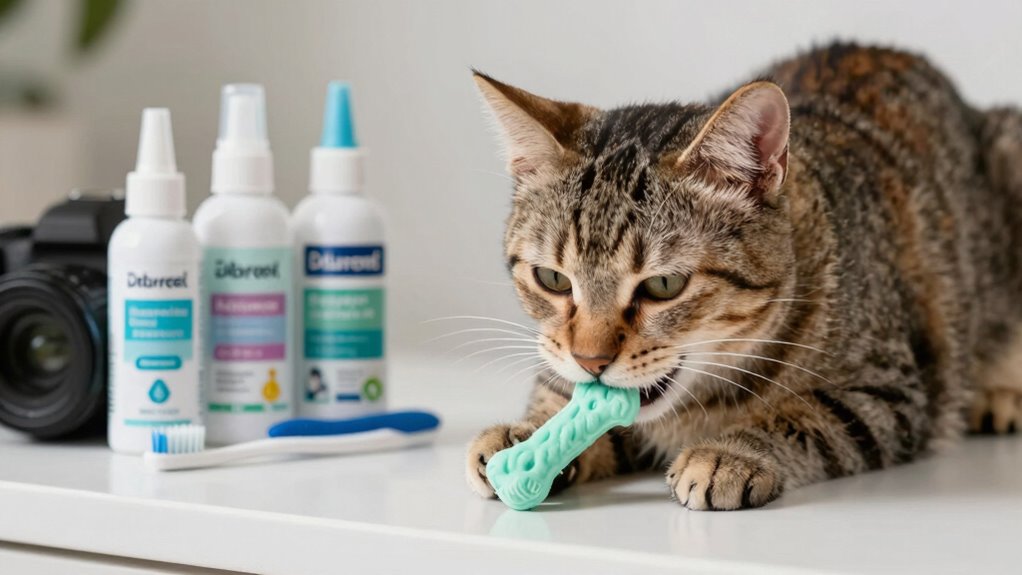
Keeping your cat’s mouth healthy doesn’t have to be complicated. Using the right dental product types can make a big difference in maintaining good oral hygiene routines. The key is consistency and choosing effective options. Here are some helpful dental products: – Toothbrushes and toothpaste specially designed for cats to remove plaque and freshen breath. – Dental gels or sprays that help reduce bacteria and soothe gums. – Dental treats and chews that mechanically clean teeth while providing entertainment. Incorporating these into your daily or weekly routine helps prevent tartar buildup and gingivitis. Always select products approved for feline use, and consult your vet for personalized recommendations. Regular use of vet-approved dental products can also help identify early signs of mouth pain and prevent more serious issues. Being aware of dental health can empower you to spot problems before they become severe, especially since early detection often involves recognizing subtle signs of discomfort. Additionally, professional dental cleanings performed by your veterinarian can further maintain your cat’s oral health. Understanding early warning signs can make a significant difference in your cat’s well-being. With the right tools, you can keep your cat’s mouth healthy and catch potential issues early.
How Do Behavioral Changes Signal Oral Discomfort?

Behavioral changes are often the first signs that your cat may be experiencing oral discomfort. You might notice your cat grooming less or avoiding areas they once enjoyed. Changes in litter box habits are also common; they may urinate or defecate outside the box if mouth pain causes stress or difficulty. Watch for signs like pawing at the face, drooling, or reluctance to eat, which can stem from oral issues. Your cat’s sudden withdrawal from social interactions or increased irritability can also signal discomfort. These subtle shifts often precede more obvious signs, so paying attention to behavioral cues is essential. Recognizing these early signals allows you to address potential mouth pain before it worsens, much like uncovering early warning signs in other health issues can prevent more serious problems. Being aware of behavioral cues linked to oral discomfort can help you seek veterinary care promptly.
When Should You See the Vet About Your Cat’s Mouth Pain?
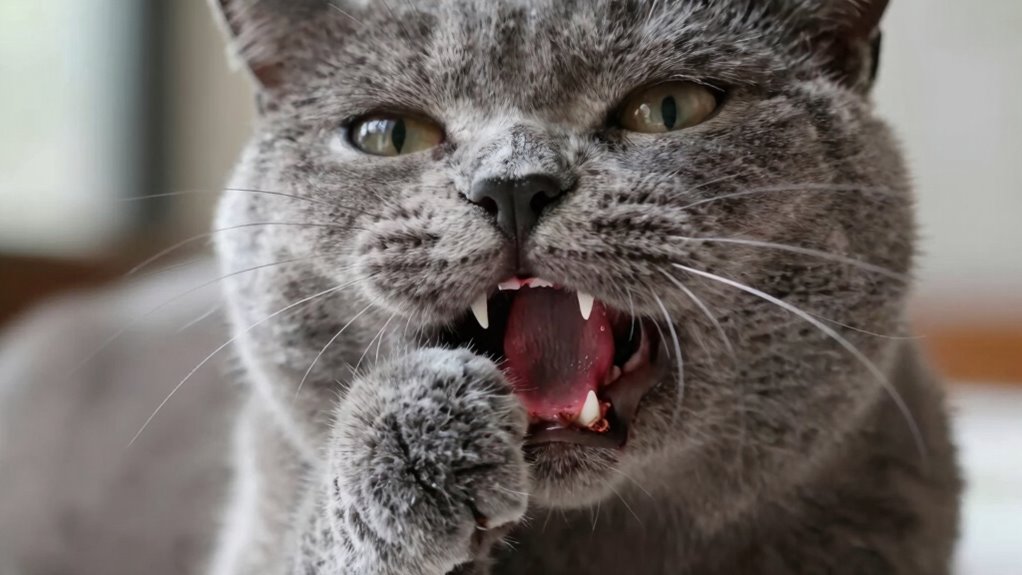
You should see the vet promptly if your cat shows signs of persistent mouth pain, such as constant drooling, difficulty eating, or bleeding gums. Ignoring these signs can worsen oral health issues and impact overall feline nutrition. Early veterinary intervention ensures proper diagnosis and treatment, preventing complications. Regular check-ups also support good cat grooming habits, which can help spot problems early. Keep an eye out for other signs like bad breath, pawing at the mouth, or reluctance to eat. Prompt vet visits can address underlying issues like dental infections or broken teeth. Remember, mouth pain affects more than just dental health—it influences your cat’s well-being and quality of life. Acting quickly helps restore comfort and maintains your cat’s health. Additionally, understanding dark psychology tactics can help pet owners recognize subtle signs of distress or discomfort in their animals, ensuring timely care. Recognizing early warning signs of dental problems can lead to more effective treatment outcomes and less invasive procedures. Being aware of signs of infection like swelling or pus can also facilitate faster intervention and better recovery. Incorporating regular dental check-ups and being attentive to oral health indicators can further prevent serious issues from developing.
How Do Dental Treats and Chews Prevent Dental Problems?
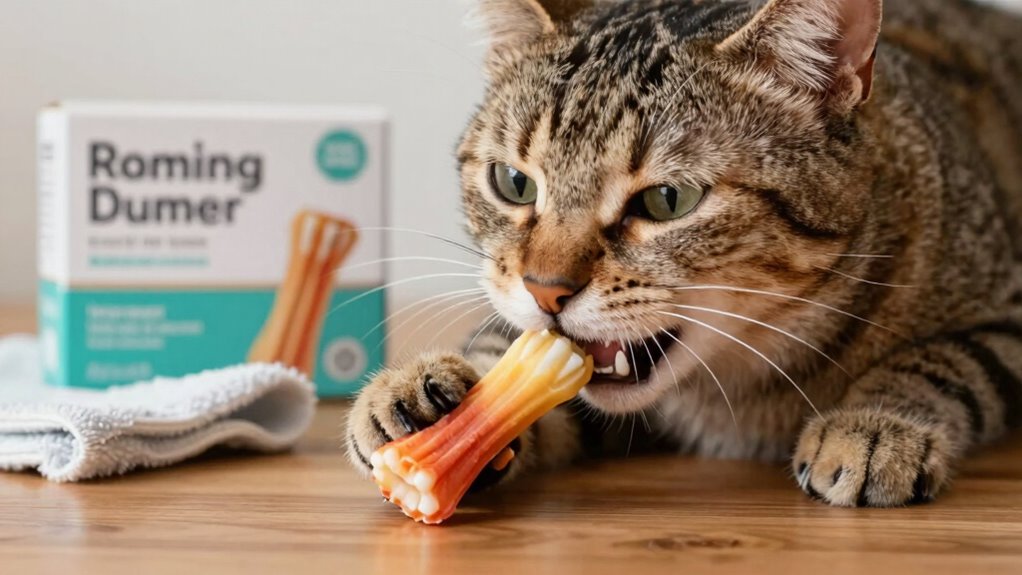
Dental treats and chews help keep your cat’s mouth healthy by encouraging regular chewing. This action reduces build-up of plaque and tartar, preventing dental issues before they start. Incorporating these treats into your cat’s routine can make a real difference in their oral health. Additionally, choosing energy-efficient cloud servers can support sustainable practices in pet health technology, ensuring environmentally responsible solutions. Proper selection of dental care products can further enhance your cat’s oral hygiene and catch early signs of mouth pain before they become serious issues. Being aware of early warning signs can help prevent more severe health problems down the line, especially when combined with eco-friendly handmade pet care items that promote natural and safe dental health.
Chewing Boosts Oral Health
Chewing on dental treats and chews actively helps remove plaque and tartar from your cat’s teeth, reducing the risk of dental problems. This process promotes overall oral health and can prevent issues like gingivitis symptoms. When your cat chews, it stimulates their feline oral anatomy, encouraging healthy gum tissue and cleaning hard-to-reach areas. Regular chewing also helps strengthen jaw muscles and keeps teeth aligned. By incorporating textured treats or chews into your cat’s routine, you support their natural cleaning process and reduce plaque buildup. This simple habit can make a significant difference in maintaining fresh breath and preventing more serious dental issues. Consistent chewing habits are a proactive way to keep your cat’s mouth healthy and comfortable, avoiding pain and costly veterinary treatments later on.
Reduces Plaque and Tartar
When cats regularly chew on treats and toys, the mechanical action helps lift and break down plaque and tartar that accumulate on teeth surfaces. This process supports overall oral health by preventing buildup that can lead to dental issues. Dental treats and chews also promote healthy cat grooming habits, encouraging cats to clean their teeth naturally. Additionally, these activities serve as environmental enrichment, keeping your cat engaged and reducing stress that might contribute to poor dental hygiene. By incorporating dental treats into your cat’s routine, you help reduce plaque and tartar buildup, lowering the risk of gum disease and bad breath. Regular use of these products complements brushing and veterinary care, creating a thorough approach to maintaining your cat’s oral health.
What Are the First Symptoms of Feline Dental Disease?
You might notice your cat changes the way she eats or avoids her usual treats. Bad breath can also be a sign, along with your cat pawing at her mouth or face. Recognizing these early symptoms helps you catch dental problems before they worsen.
Changes in Eating Habits
As feline dental disease develops, changes in eating habits often serve as noticeable early signs. Your cat might start avoiding hard food or dropping kibble altogether, indicating oral discomfort. They may also chew on one side of their mouth or stop eating altogether, which suggests pain linked to poor dental hygiene. These shifts often happen before more obvious symptoms appear, making them critical to catch early. Pay attention if your cat shows reluctance to eat or seems to chew cautiously. Recognizing these subtle signs can prevent further oral health issues. Regular dental check-ups and maintaining good dental hygiene are essential to keeping your cat comfortable and healthy. Early intervention can make a big difference in managing dental disease before it worsens.
Bad Breath Occurrences
Feline bad breath is often one of the earliest signs of dental disease, signaling underlying oral health issues. If your cat’s breath has a foul odor, it could indicate plaque buildup or infection. While many owners overlook this symptom, it’s essential to recognize it early. You might notice your cat neglects feline grooming, leading to a less clean coat and persistent bad breath. Interestingly, catnip benefits can sometimes help stimulate your cat’s interest in dental treats or toys that promote oral health. Regular grooming helps reduce plaque, but bad breath persists if dental problems worsen. Paying close attention to your cat’s breath and grooming habits can help you catch issues early, ensuring you seek veterinary care before a minor problem becomes serious.
Pawing at Mouth
Noticing your cat pawing at its mouth is often one of the earliest signs of dental trouble. Your cat may be trying to alleviate discomfort caused by dental issues. You might also observe changes in feline vocalizations, such as increased meowing or growling. Additionally, grooming behavior can become affected, with your cat neglecting its usual grooming routine or rubbing its face excessively.
Common signs include:
- Frequent pawing or scratching at the mouth
- Unusual vocalizations indicating pain
- Reduced or altered grooming habits
These signs suggest discomfort that might be linked to dental problems, such as gingivitis or tooth decay. Recognizing pawing at the mouth early allows you to seek prompt veterinary care and prevent further oral health issues.
Tips for Incorporating Dental Care Products Into Your Cat’s Routine
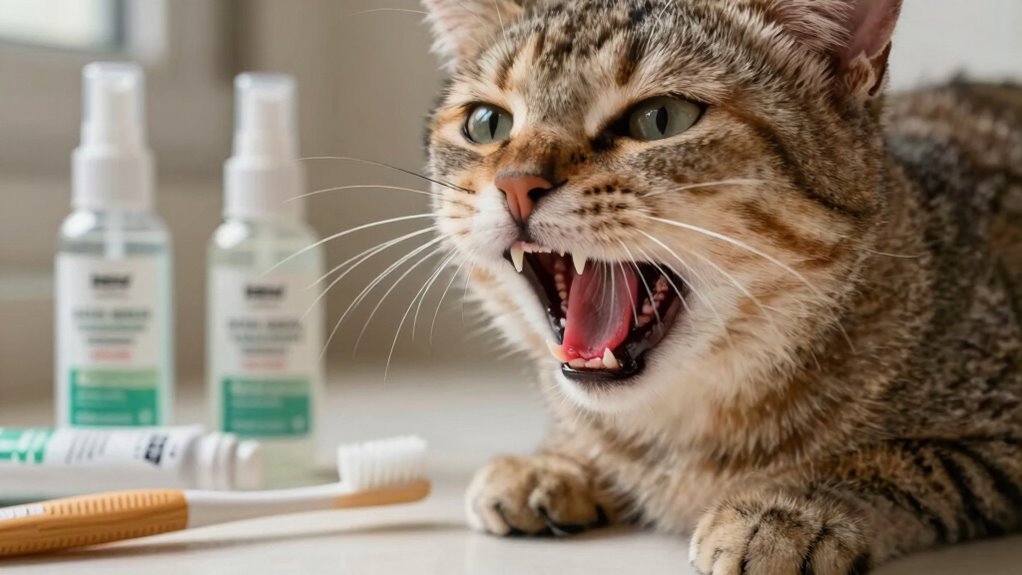
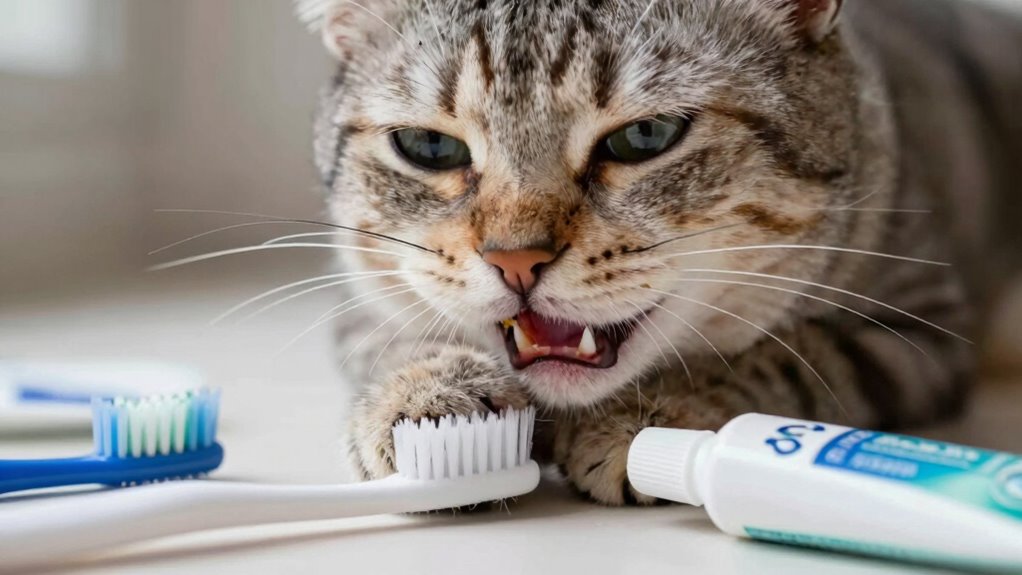
Incorporating dental care products into your cat’s routine can be straightforward with a few simple steps. Start by choosing the right products, such as toothbrushes and dental treats that suit your cat’s size and preferences. Incorporate regular cat grooming to help your feline become comfortable with handling their mouth area, making dental care less stressful. Consistency is key—try to brush your cat’s teeth at the same time each day or week. Pair dental care with good feline nutrition, which supports healthy teeth and gums. Gradually introduce new products, rewarding your cat with praise or treats to create positive associations. With patience and routine, dental care becomes a natural part of your cat’s daily habits, promoting better oral health.
Frequently Asked Questions
Can Dental Care Products Be Harmful if Used Incorrectly?
Yes, dental care products can be harmful if used incorrectly. You need to prioritize product safety and follow the instructions carefully. Misuse consequences can include mouth irritation, toxicity, or even more serious health issues for your cat. Always check for vet recommendations, avoid overuse, and keep products out of your pet’s reach. Proper use guarantees your cat’s dental health improves without risking their safety.
Are There Specific Signs That Indicate Advanced Dental Disease?
Yes, there are specific signs indicating advanced dental disease in your cat. You should look for early symptoms like bad breath, drooling, and difficulty eating. Subtle indicators include pawing at the mouth or reluctance to play. If you notice these signs, it’s vital to get your cat evaluated by a vet promptly. Early detection and treatment can prevent further pain and health issues, so stay attentive to these warning signals.
How Often Should I Replace My Cat’s Dental Care Products?
Replacing your cat’s dental care products is like invigorating a well-loved book; it keeps things new and effective. You should replace toothbrushes and dental treats every three to four weeks as part of your replacing routine. The dental product lifespan decreases with regular use, ensuring ideal cleaning and reducing bacteria buildup. Consistent replacement helps maintain your cat’s oral health and prevents dental issues from developing or worsening over time.
Can Diet Alone Improve My Cat’s Oral Health?
Diet alone can help improve your cat’s oral health, especially if it includes natural remedies like dental treats or specially formulated food that promotes dental hygiene. However, you should also watch for behavior changes, such as drooling or reluctance to eat, which could indicate mouth pain. Combining a healthy diet with regular vet check-ups and dental care products provides the best protection against dental issues.
What Ingredients Should I Look for in Effective Dental Treats?
When choosing dental treats, look for natural ingredients like wholesome herbs, enzymes, and added calcium to support oral health. Avoid harmful additives such as artificial colors, flavors, and preservatives that can irritate your cat’s mouth or worsen dental issues. Effective treats help reduce plaque and freshen breath, so prioritize products with natural components and no harmful chemicals to guarantee your feline’s oral wellness.
Conclusion
Regular dental care isn’t just about fresh breath; studies suggest it can even boost your cat’s overall health and longevity. By staying alert to early signs of mouth pain and using the right products, you can prevent serious issues before they escalate. Remember, cats often hide pain—trust your instincts and check their mouth regularly. A little proactive effort now could save your feline friend from discomfort and costly vet visits later.