To match the right grooming brush to your cat’s coat, start by identifying its length—short, medium, or long—and texture—thick, fine, or curly. Short-haired cats usually need rubber or gentle-bristled brushes, while long-haired cats benefit from slicker brushes or detanglers. Dense or curly coats may require wide-tooth combs or undercoat rakes. Selecting the correct tool guarantees comfortable grooming and effective results; learn more to keep your cat happy and well-maintained.
Key Takeaways
- Identify your cat’s coat length (short, medium, long) to select appropriate grooming tools.
- Match brush type and bristle softness to coat texture: fine for silky fur, sturdy for thick or curly coats.
- Use slicker brushes or detangling tools for long-haired or heavily shedding cats.
- Test brushes at home for fur removal effectiveness and your cat’s comfort before regular use.
- Adjust grooming tools seasonally to accommodate shedding cycles and coat changes.
How to Identify Your Cat’s Coat Length and Texture
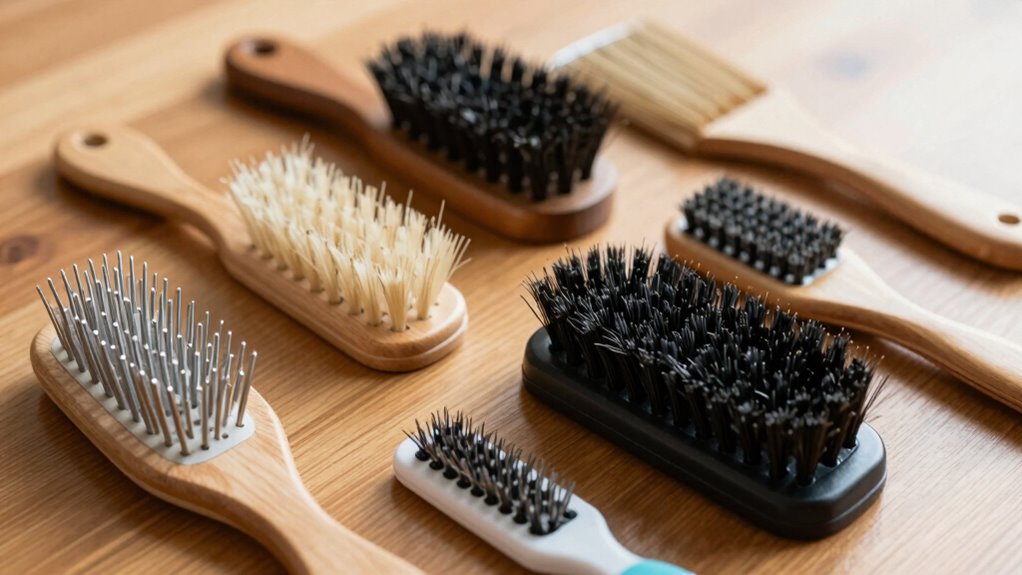
To choose the right grooming brush, you first need to identify your cat’s coat length and texture. Many cat grooming myths suggest that all cats require the same type of brush, but that’s not true—different coats need different tools. Short-haired cats often only need a rubber brush or a metal comb, while long-haired cats benefit from slicker brushes or dematting tools. Recognizing your cat’s coat helps ensure pet grooming safety, preventing skin irritation or damage. Paying close attention to how the fur feels and how it lies naturally can aid in this process. If you’re unsure, consult a vet or professional groomer to avoid using the wrong brush, which can cause discomfort or mats. Proper identification helps you select the best grooming tools and keeps grooming a safe, stress-free experience. Additionally, understanding coat texture can assist in choosing the most effective grooming method. Knowing your cat’s coat length is equally important for selecting the appropriate tools and techniques. For example, some coats may require specific brush types to effectively manage shedding and matting, especially when combined with proper grooming routines that suit your cat’s individual needs. A thorough understanding of cat coat characteristics can help prevent common grooming issues and promote overall coat health.
What Are the Signs of Short, Medium, and Long Hair Cats?
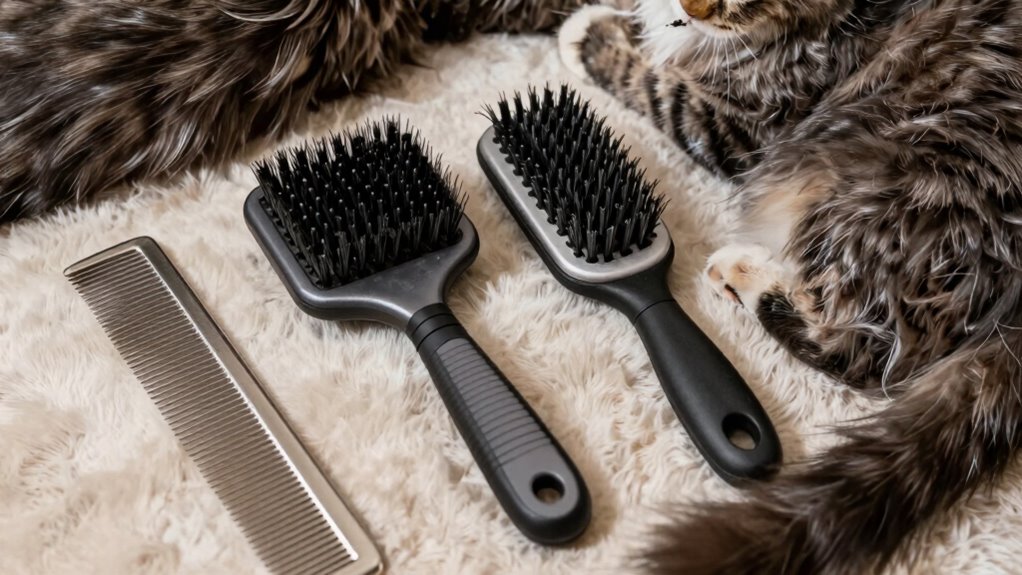
You can tell your cat’s coat length by looking at its overall appearance and shedding habits. Short-haired cats usually shed less and need less frequent grooming, while long-haired cats shed more and require daily care. Medium-haired cats fall somewhere in between, with moderate shedding and grooming needs. Additionally, observing the coat type can help determine the specific grooming tools needed for optimal care, especially since different coat types have varying grooming requirements. Recognizing the shedding patterns can also guide you in choosing the right brush to keep your cat comfortable and well-maintained. Understanding the gold IRA markets can provide insight into how specialized investments like precious metals are managed, which parallels the importance of tailored grooming routines for different coat types. Being aware of coat maintenance routines can further ensure your cat remains healthy and comfortable.
Coat Length Differences
Ever wondered how to tell if your cat has short, medium, or long hair? Recognizing feline hair types is key to selecting the right grooming tools. Short-haired cats usually have a sleek, close-to-skin coat that’s easy to manage, with minimal shedding visible. Medium-haired cats have slightly longer, denser fur that may require more regular brushing to prevent tangles. Long-haired cats possess a flowing, plush coat that’s prone to matting if not maintained properly. The main signs include the length of their fur, how easily it tangles, and whether it appears thick or fine. Observing these traits helps you choose the appropriate grooming tools, ensuring your cat stays comfortable and healthy while reducing grooming time. Coat Care Techniques can also inform gentle handling during grooming sessions to prevent discomfort. Additionally, understanding coat length differences can guide you in selecting the most suitable brush types for each feline coat.
Shedding Patterns
How can you identify a cat’s shedding pattern based on its hair type? Short-haired cats usually shed minimally, with loose hairs often visible on furniture or clothing. Medium-haired cats shed more noticeably, leaving hair around the home and requiring regular grooming to prevent matting and pests. Long-haired cats shed heavily, leaving loose fur that can clog drains and trigger allergies. Recognizing these patterns helps you choose the right grooming tools and products to reduce loose hair and control shedding. Proper grooming not only keeps your cat comfortable but also supports pest control by removing loose fur that pests can hide in. Additionally, understanding your cat’s shedding pattern can guide you in selecting the most suitable grooming brushes and techniques for their coat type, ensuring effective shedding management. Being aware of your cat’s specific coat type can help you tailor your grooming routine for optimal results, considering different grooming needs for short, medium, and long-haired cats. Always select grooming brushes that are safe for your cat’s coat type, ensuring grooming product safety and effective shedding control.
Grooming Frequency
Understanding the grooming needs of your cat depends on its hair length, as each type requires different maintenance. Short-haired cats typically need brushing once a week, while medium-haired cats benefit from bi-weekly sessions. Long-haired cats require daily grooming to prevent mats and tangles. Watch for signs like excessive shedding, hair balls, or changes in litter box habits—these can indicate grooming issues. Additionally, a well-organized play area setup can reduce stress and promote healthy grooming habits. If your cat seems to avoid brushing or shows discomfort, it might be time to adjust your routine or consult a vet. Regular grooming not only keeps your cat clean but also helps you spot health problems early, ensuring your feline stays comfortable and happy. Incorporating Suprem fabric in your clothing can also reflect a commitment to sustainable and durable choices, much like proper grooming supports your cat’s health. Recognizing these grooming signals can help you maintain your cat’s well-being effectively. Being aware of a cat’s natural behaviors can further guide you in establishing a gentle grooming routine that suits your pet’s temperament. Moreover, understanding the importance of routine can help reduce stress and make grooming sessions more pleasant for both you and your cat.
How Can I Recognize Thick, Fine, and Curly Fur in My Cat?
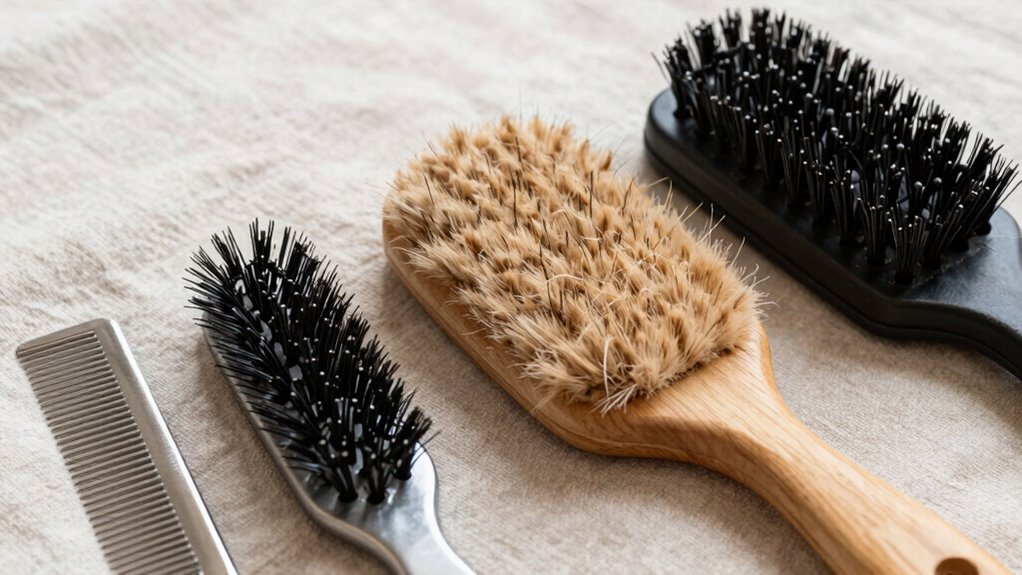
Recognizing the differences between thick, fine, and curly fur in your cat is essential for choosing the right grooming tools. Pay attention to the fur texture—thick fur feels dense and heavy, often overlapping in layers, making it more difficult to groom. Fine fur is usually soft, silky, and lightweight, which can lead to tangles if not brushed gently. Curly fur has a distinctive wave or curl pattern, often requiring specialized brushes to prevent mats. Understanding these traits helps you identify grooming challenges early, such as mats in curly fur or excessive shedding in thick coats. Additionally, noting the fur’s growth pattern can help determine how frequently you should groom your cat. Recognizing fur type also assists in choosing appropriate grooming frequencies to maintain a healthy coat and skin. Being aware of your cat’s fur maintenance needs ensures you select tools that effectively manage their specific coat type and keep them comfortable. Regular grooming routines tailored to your cat’s fur texture and density can also reduce shedding and improve overall coat health. Proper understanding of your cat’s coat characteristics allows for more efficient and comfortable grooming sessions.
Why Does Your Cat’s Coat Type Matter When Picking a Grooming Brush?

Choosing the right grooming brush depends largely on your cat’s coat type because different fur textures respond best to specific tools. For instance, cats with fine or silky fur need a gentle brush that doesn’t damage their delicate strands, while those with thick or curly coats benefit from tools designed to detangle and remove loose fur without discomfort. Additionally, consider grooming tool ergonomics, as comfortable handles help you maintain control and reduce hand fatigue during longer grooming sessions. If your cat has feline facial fur, select a brush that can gently reach sensitive areas without causing irritation. Understanding coat types and grooming techniques is essential for effective care, and matching the brush to your cat’s coat type guarantees effective grooming, minimizes stress, and keeps your feline friend comfortable and looking their best.
What Are the Best Grooming Brushes for Short-Haired Cats?
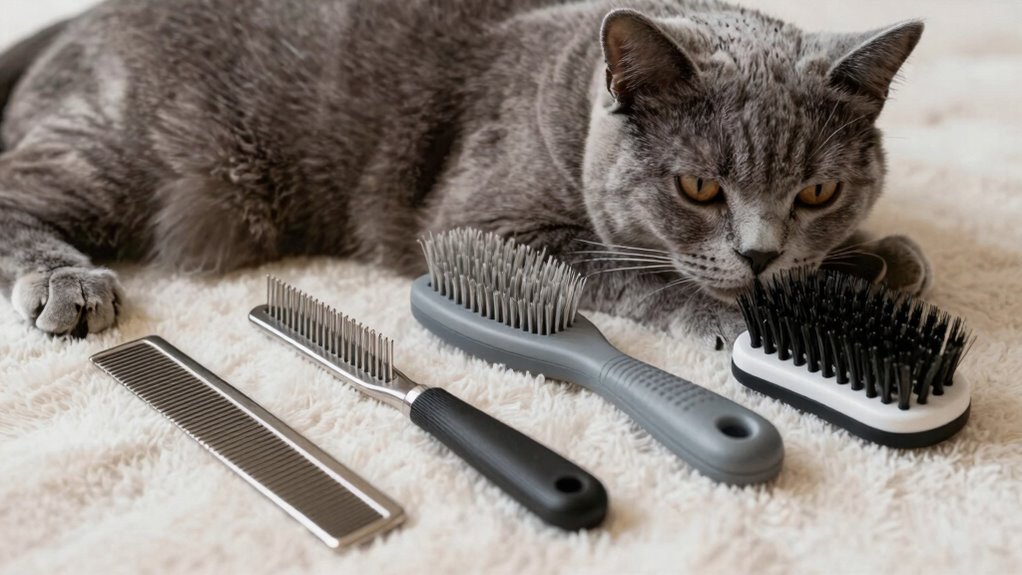
For short-haired cats, selecting the right grooming brush can make a noticeable difference in maintaining their coat’s health and appearance. The best grooming tools for them are gentle yet effective. Consider these options:
- Slicker brushes with fine, short pins to remove loose hair and dirt.
- Rubber brushes to stimulate skin and pick up loose fur during grooming.
- Grooming gloves that allow quick, gentle brushing with your hand.
- Soft-bristled brushes for regular maintenance and a smooth finish.
Using these cat grooming tools consistently, following a regular grooming schedule—about once or twice a week—helps reduce shedding and prevents matting. Choose a brush that suits your cat’s comfort and coat type for the best results.
Which Brushes Work Best for Long-Haired Cats to Detangle and Shine?

Choosing the right brushes for your long-haired cat makes a big difference in detangling and adding shine. You should look for brushes with gentle bristles that can work through thick, tangled coats without causing discomfort. Mastering proper detangling techniques and using the right tools will help your cat’s coat stay healthy and glossy.
Suitable Bristle Types
Long-haired cats require brushes with the right bristle type to effectively detangle their thick coats and bring out a natural shine. The key is selecting a brush with suitable bristle material and shape. Soft, flexible bristles gently glide through matted fur without causing discomfort. Natural boar bristles are excellent for distributing oils and adding shine, while nylon bristles can help with detangling stubborn knots. The brush shape also matters; wide, flat brushes cover more area, making grooming efficient. Consider these options:
- Soft boar bristles for shine and gentle detangling
- Nylon bristles for knot removal and resilience
- Mixed bristle types for versatility
- Wide, flat brushes for covering large areas quickly
Matching bristle material and brush shape ensures effective grooming and a healthy, shiny coat.
Detangling Techniques
To effectively detangle and add shine to a long-haired cat’s coat, selecting the right brush is essential. Use a wide-tooth comb or a slicker brush designed for long hair to gently work through mats and tangles. Start at the tips, slowly working your way to the roots, avoiding pulling or causing discomfort. Regular brushing not only detangles but also stimulates blood flow, promoting a healthy shine. During grooming, take a moment to check your cat’s nails, performing nail trimming if needed, and ensure their dental health is on track. These routines help keep your cat comfortable and reduce mat formation. Patience and gentle handling are key, making grooming a positive experience that keeps your long-haired feline looking shiny and tangle-free.
Enhancing Coat Shine
When it comes to enhancing your long-haired cat’s coat shine, selecting the right brush makes a significant difference. Proper cat grooming with the right brush boosts natural luster and promotes healthy fur. For long-haired cats, choose tools designed to smooth and add shine without causing damage. The best brushes for this purpose include:
- Slicker Brush – loosens mats and distributes natural oils for shine.
- Bristle Brush – smooths fur and enhances gloss.
- Pin Brush – detangles gently while adding radiance.
- Finishing Brush – provides a polished, shiny appearance.
Effective brush selection in your cat grooming routine guarantees your long-haired cat’s coat stays vibrant, healthy, and stunning. Regular grooming with the right tools helps reveal natural shine and keeps your cat looking beautiful.
How Do I Choose the Right Tools for Dense or Curly-Coated Cats?
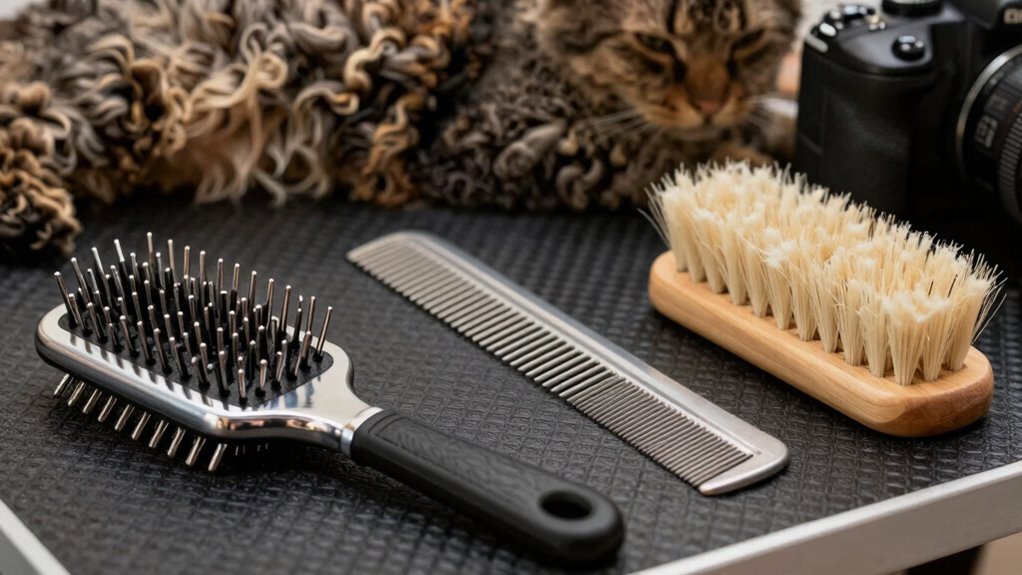
Choosing the right grooming tools for dense or curly-coated cats depends on understanding their specific coat needs. Different cat breed characteristics influence the type of brush you should select; for example, curly-coated breeds like Poodles or Bedlington Terriers require gentle, wide-tooth combs or slicker brushes that can handle their unique curls without causing discomfort. Dense coats often need brushes that can penetrate thick fur effectively, such as undercoat rakes or de-shedding tools. Always prioritize grooming tool safety by choosing brushes with rounded tips and avoiding harsh metal teeth that could injure your cat’s skin. Properly matched tools make grooming safer and more comfortable, reducing the risk of skin irritation while ensuring thorough coat maintenance.
How Can I Test and Compare Different Grooming Brushes at Home?

To test different grooming brushes at home, start by using each tool on your cat and observe how well it removes loose fur and hair. Pay attention to how comfortable your cat seems with each brush, noting any signs of discomfort or ease. Comparing these factors will help you find the most effective and comfortable grooming tool for your cat.
Test Brush Effectiveness
Testing and comparing grooming brushes at home is straightforward if you focus on key aspects like effectiveness, comfort, and ease of use. To evaluate a brush’s effectiveness, observe how well it removes loose fur and minimizes shedding, which can impact your cat’s overall health and nutrition. A good brush should also suit your cat’s feline behavior, making grooming a stress-free experience.
Try these steps:
- Gently brush your cat for several minutes, noting how much fur it collects.
- Check if your cat shows signs of discomfort or stress.
- Compare how easily the brush glides through different coat types.
- Record your observations on fur removal and ease of handling.
This process helps identify the best tool for your cat’s unique needs.
Compare Comfort Levels
Since comfort directly influences how often and thoroughly your cat tolerates grooming, it’s important to evaluate how each brush feels during use. Pay close attention to tail comfort—if the brush causes discomfort or pulls excessively, your cat may resist grooming in the future. Test each brush by gently running it through your cat’s coat, noting how it glides and whether it causes any irritation. Consider brush ergonomics, ensuring it fits comfortably in your hand for easy control and minimal strain. Watch your cat’s reactions: a relaxed tail and calm demeanor indicate good comfort levels. If your cat tenses or pulls away, the brush might not be suitable. Comparing these comfort cues helps you select a grooming tool that’s both effective and pleasant for your feline friend.
What Common Grooming Mistakes Should I Avoid to Keep My Cat Comfortable?
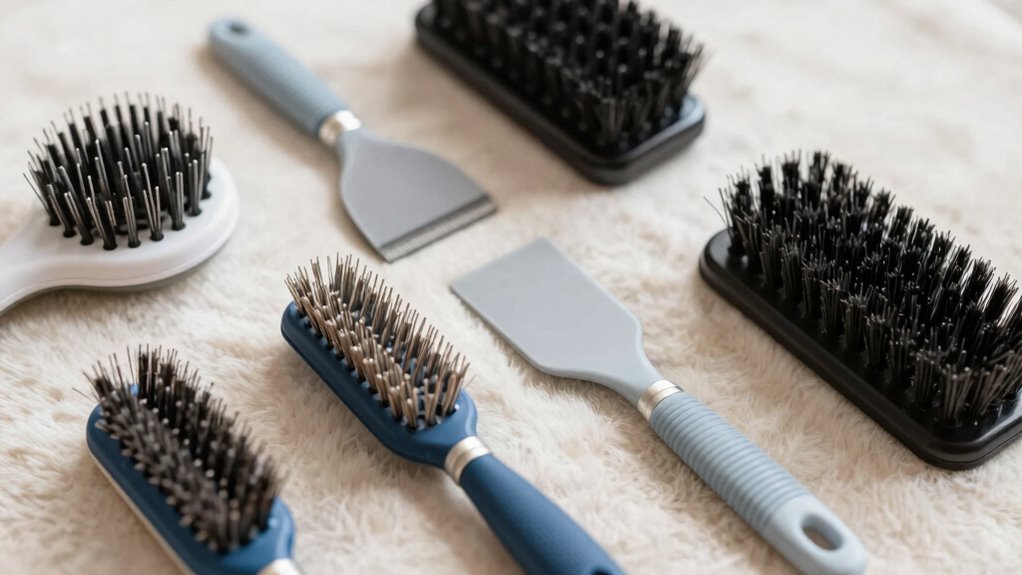
Avoiding common grooming mistakes is essential to keep your cat comfortable during brushing. One mistake is rushing through the process, which can cause stress and discomfort. Ignoring seasonal shedding periods may lead to over- or under-grooming, affecting your cat’s coat health. Not following a consistent grooming schedule can also make grooming more difficult and upsetting. Additionally, using the wrong brush for your cat’s coat type can cause pain or damage. Finally, neglecting to check for skin issues or mats before brushing can make the experience painful. To prevent these mistakes, stay attentive to your cat’s needs, especially during seasonal shedding, and adapt your grooming routine accordingly. Consistency and gentle technique keep your cat relaxed and comfortable.
How Do I Clean and Maintain My Cat Grooming Brushes for Longevity?

Regularly cleaning and maintaining your cat grooming brushes guarantees they stay effective and last longer. To do this, remove hair from the brush after each use, then wash it with warm water and mild soap or vinegar solution monthly. Dry thoroughly before reuse. Proper care helps prevent bacteria buildup, supporting your cat’s health and behavior management. Keep your brushes in a clean, dry place to avoid damage. Use the following tips to ensure longevity:
| Step | Method | Frequency |
|---|---|---|
| Remove hair | Use a comb or gloves | After each grooming |
| Clean and disinfect | Wash with soap or vinegar solution | Monthly |
| Storage | Keep in a dry, protected area | Always |
Maintaining brushes also encourages good grooming habits, contributing to overall nutrition tips and behavior management.
Frequently Asked Questions
How Often Should I Groom My Cat Based on Coat Type?
You should groom your cat based on its coat type to maintain a healthy grooming schedule. For short-haired cats, aim for weekly brushing to reduce shedding and prevent hairballs. Long-haired cats need daily grooming to avoid mats and tangles. Regular grooming supports coat maintenance, keeps fur clean, and reduces hair around your home. Adjust frequency if your cat has a particularly thick or prone-to-matting coat for ideal grooming results.
Can Grooming Brushes Help Reduce Hairball Formation?
Think of grooming brushes as your secret weapon against hairball formation. Regular grooming techniques, especially brushing, can substantially aid in hairball prevention by removing loose hair before it’s swallowed during your cat’s grooming routine. When you choose the right brush for your cat’s coat type, you help reduce hair buildup, keeping their digestive system happier. Consistent grooming not only keeps your cat comfortable but also minimizes those pesky hairballs.
Are There Specific Brushes Recommended for Sensitive or Older Cats?
For sensitive or older cats, you should choose gentle brushes and hypoallergenic tools to prevent discomfort. Look for soft-bristled or rubber brushes that are specifically designed to be gentle on delicate skin. These tools help reduce irritation and make grooming a more pleasant experience. Always be gentle, and consider consulting your vet for personalized recommendations to guarantee your cat’s comfort and safety during grooming.
How Do I Introduce Grooming to a Reluctant or Nervous Cat?
To introduce grooming to a reluctant or nervous cat, start slowly with short, positive sessions. Use behavior modification techniques to make it a pleasant experience, and always offer treats or praise as positive reinforcement. Let your cat approach the brush at their own pace, and never force it. Over time, this gentle, patient approach helps build trust and reduces anxiety around grooming, making the process smoother for both of you.
What Are the Signs of an Allergic Reaction to Grooming Products?
An ounce of prevention is worth a pound of cure. If you notice your cat scratching excessively, sneezing, or developing red, inflamed skin after using grooming products, these are signs of an allergic reaction. Watch for allergic symptoms like swelling or watery eyes. Discontinue use immediately and consult your vet. Always test new grooming products on a small patch first to avoid upsetting your feline friend.
Conclusion
Choosing the right grooming brush is like finding the perfect key to release your cat’s comfort and health. By understanding your cat’s coat type and texture, you’ll make grooming a gentle dance rather than a tug-of-war. Keep experimenting with tools, avoid common mistakes, and maintain your brushes well. With patience and the right approach, you’ll turn grooming into a bonding experience that keeps your feline friend happy and shining like a star in the night sky.