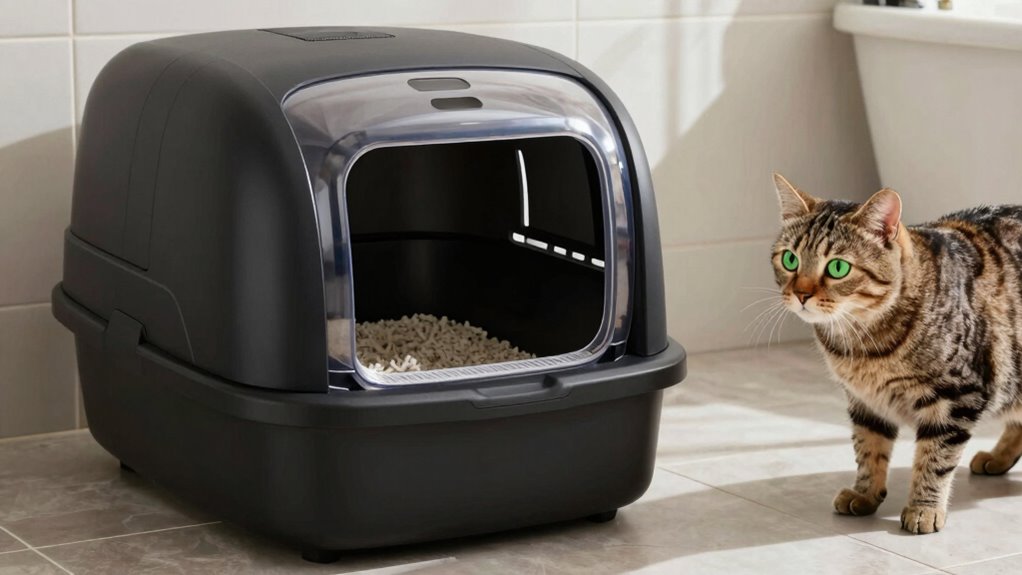

Self-cleaning litter boxes can save you time by automatically removing waste and controlling odors, but they can’t handle everything. Heavy, sticky, or vomited waste may clog or overwhelm the system, requiring manual cleanup. They also can’t fully eliminate odor or mess, especially if filters or maintenance are neglected. Compatibility with certain litter types matters, and technical issues can arise. To make certain everything runs smoothly, you’ll need to stay on top of maintenance and understand their limits—more details await.
Key Takeaways
- Self-cleaning litter boxes cannot fully eliminate odors; regular cleaning and filter maintenance are still necessary.
- They are not effective at removing vomit, large debris, or unexpected messes requiring manual cleaning.
- Sensors and mechanisms can malfunction, needing periodic inspection, cleaning, and replacement to ensure proper operation.
- Compatibility with specific litter types is essential; incompatible litters may cause clogs or reduce efficiency.
- They do not address behavioral issues or ensure your cat will consistently use the system.
self-cleaning cat litter box with odor control
As an affiliate, we earn on qualifying purchases.
As an affiliate, we earn on qualifying purchases.
What Are Self-Cleaning Cat Litter Boxes and How Do They Work?
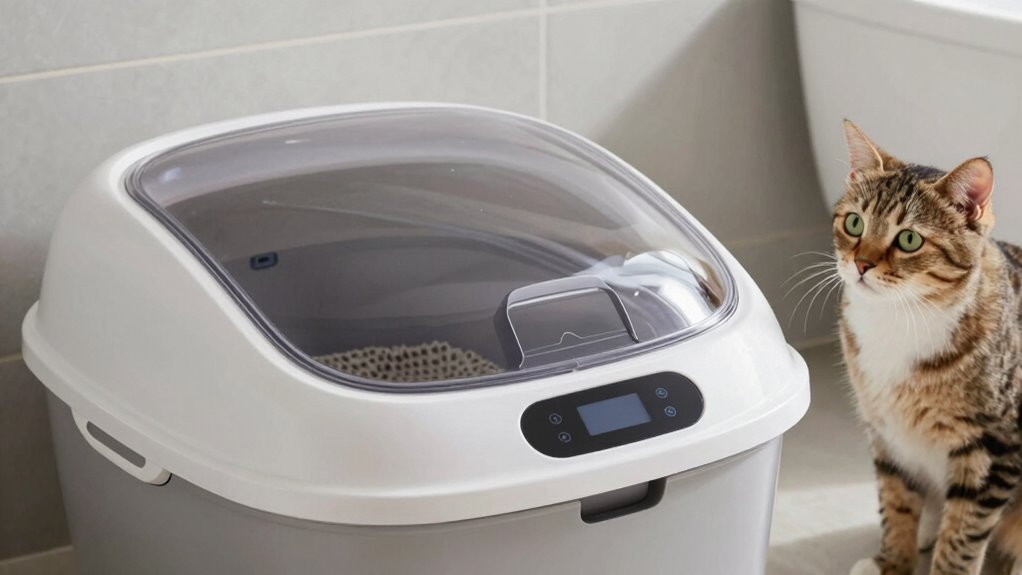
Self-cleaning cat litter boxes are designed to automatically remove waste, making litter box maintenance easier for you. They often feature sensors that detect when your cat has left the box, triggering a cleaning cycle. These units typically separate clean litter from waste, trapping the waste in a sealed compartment to control odors effectively. Odor control is a key benefit, as the automatic system minimizes smells compared to traditional litter boxes. When choosing a self-cleaning litter box, ensure it’s compatible with the type of litter your cat prefers; some models work best with clumping or crystal litters. This compatibility helps the device operate smoothly and prevents jams. Overall, these systems simplify cleanup and help maintain a fresher-smelling home, but understanding their features is essential for ideal use. Additionally, color accuracy in the system’s components can influence how well the waste is segregated and detected, ensuring optimal performance. Moreover, advancements in sensor technology are continually improving the efficiency and reliability of these devices. Incorporating proper maintenance practices can further enhance their longevity and effectiveness.
automatic cat litter box compatible with clumping litter
As an affiliate, we earn on qualifying purchases.
As an affiliate, we earn on qualifying purchases.
Do Self-Cleaning Litter Boxes Really Eliminate Odors and Messes?
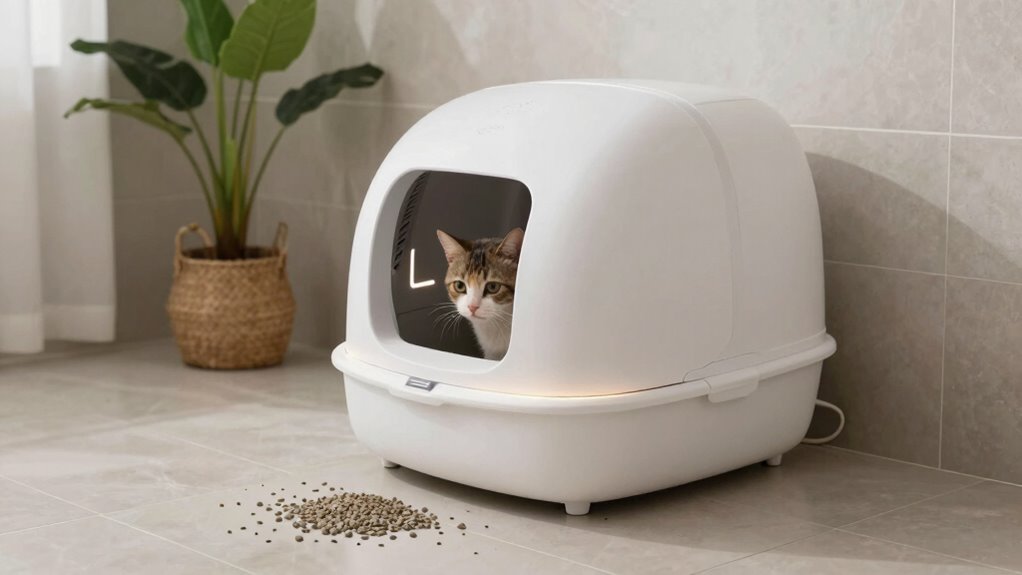
Many pet owners wonder if self-cleaning litter boxes truly live up to their promise of controlling odors and messes. While they often reduce smell, they don’t eliminate it completely. Odor control depends on the litter type and the box’s filtration system. Noise levels can also be an issue, as some units make loud noises during cleaning cycles. Here’s a quick look at what to expect:
| Feature | Effectiveness | Common Concerns |
|---|---|---|
| Odor Control | Usually reduces smell but may not eliminate it | Some odors persist |
| Noise Levels | Vary between models; can be loud | Disrupts quiet environments |
| Mess Containment | Often contains scattered litter | Spills may still occur |
| Maintenance Needs | Requires regular cleaning of parts | Maintenance can be overlooked |
| User Experience | Convenient but not fully hands-off | Adjusting to noise |
Self-cleaning boxes help, but they aren’t perfect odor or mess eliminators. Additionally, understanding litter box design can help optimize their effectiveness. Proper ventilation systems and regular maintenance can also improve overall performance. Being aware of the filtering mechanisms used in these units can further enhance odor control. Informed choices about features such as automatic cleaning cycles can significantly impact their performance. Incorporating effective odor neutralizers into the maintenance routine can also make a noticeable difference.
cat litter box filter replacement
As an affiliate, we earn on qualifying purchases.
As an affiliate, we earn on qualifying purchases.
What Ongoing Maintenance Do Self-Cleaning Litter Boxes Require?

To keep your self-cleaning litter box functioning properly, you’ll need to replace the automatic filters regularly. It’s also important to inspect the unit frequently and give it a thorough cleaning when needed. Staying on top of these tasks guarantees your cat’s litter box stays odor-free and reliable. Additionally, monitoring the performance cookies that track the system’s efficiency can help identify any issues early. Incorporating smart maintenance reminders can further streamline your upkeep routine and ensure optimal operation. Regularly checking and cleaning filters in accordance with manufacturer guidelines helps maintain air purifier efficiency and prolongs the life of your system. Understanding the importance of proper cleaning techniques can prevent malfunctions and extend the lifespan of your self-cleaning unit. Implementing simple seasonal checklists for cleaning and maintenance ensures consistent performance year-round.
Automatic Filter Replacement
How often you need to replace the filter depends on the model and how frequently your cat uses the litter box. Typically, you’ll need to perform a filter replacement every few months, but high usage may require more frequent changes. To keep your self-cleaning litter box functioning at its best, monitor the automatic filter for signs of wear or odor buildup. Regularly check the indicator lights, if available, to determine if a filter replacement is necessary. Proper filter maintenance is essential to prevent malfunctions and ensure odor control, helping your device operate efficiently over time.
Regular Cleaning and Inspection
Regular cleaning and inspection are essential to keep your self-cleaning litter box operating efficiently. You should regularly check for any buildup or clumped waste that might hinder odor control. Remove any soiled litter or debris to prevent unpleasant smells and ensure the system functions properly. Inspect the moving parts and sensors to confirm they’re clean and unobstructed, which helps maintain consistent performance and reduces unnecessary power consumption. Keep the litter level appropriate, as overfilling can interfere with cleaning cycles, increasing energy use and reducing odor control effectiveness. Periodic deep cleaning of the entire unit, following the manufacturer’s instructions, prolongs its lifespan. Additionally, understanding high-quality craftsmanship ensures that you can better maintain and troubleshoot your unit, ultimately extending its durability. Regularly monitoring smart device maintenance practices can help you identify potential issues early and keep your litter box functioning optimally. Staying attentive to these tasks guarantees your litter box remains odor-free, energy-efficient, and reliable for your cat’s comfort. Recognizing the importance of proper maintenance procedures can further improve your experience and prevent costly repairs. Being aware of global cloud service vulnerabilities, as seen during recent outages, can encourage you to develop contingency plans for essential device operations. Implementing routine software updates can also enhance security and performance, safeguarding your device against potential issues.
best self-cleaning litter box for large messes
As an affiliate, we earn on qualifying purchases.
As an affiliate, we earn on qualifying purchases.
Are There Limits on the Types of Cat Litter You Can Use?
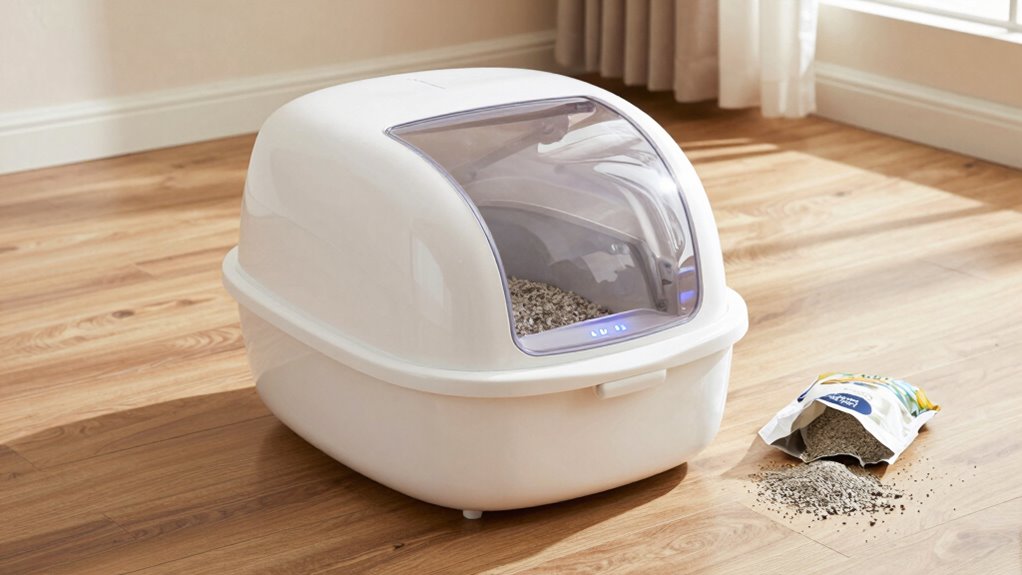
While self-cleaning litter boxes offer convenience, there are still some limits on the types of cat litter you can use. Many models have material restrictions that affect which litter type is suitable. Clumping litter, for example, often works well because it forms solid masses that the system can detect and remove. However, non-clumping or crystal litters may not be compatible, as they can interfere with the sensors or clog the mechanism. Some self-cleaning boxes also require specific grain sizes or textures; fine or very dusty litter can cause malfunctions. Before choosing a litter, always check the manufacturer’s instructions for material restrictions to guarantee compatibility. Using the wrong type may reduce the box’s effectiveness or cause damage, so selecting the appropriate litter is essential.
Can These Litter Boxes Handle All Cat Waste and Accidents?
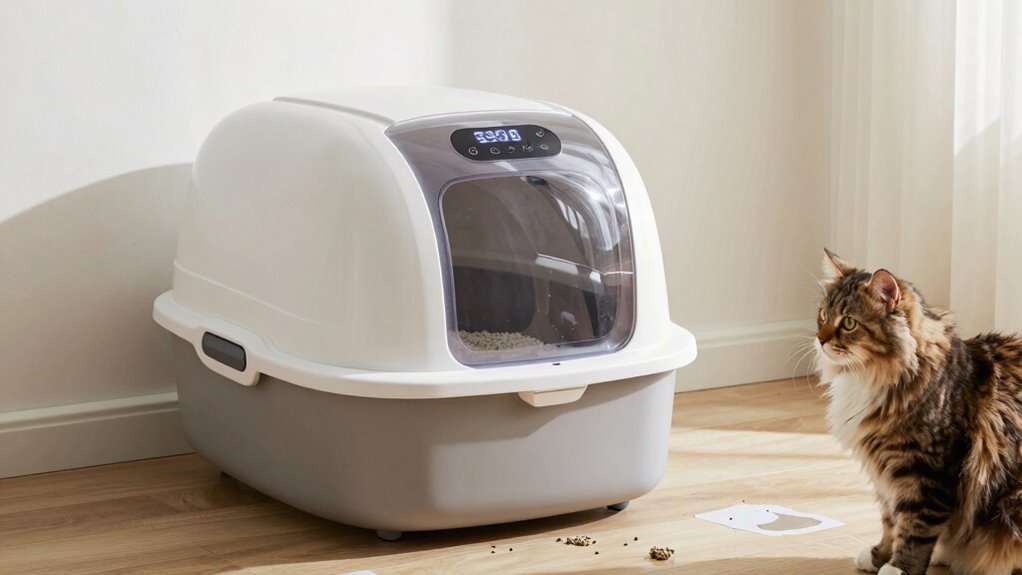
Self-cleaning litter boxes are designed to manage typical cat waste efficiently, but they may not be equipped to handle all types of accidents or unusual waste. You might find that they excel at odor control for regular use, but unexpected messes can overwhelm their systems. Heavy or sticky waste, for example, may not be fully scooped or filtered out. Compatibility with your chosen litter also plays a role; some litters clog mechanisms or reduce effectiveness. For accidents like vomit or large debris, manual cleaning remains necessary. Additionally, the support for diverse litter types can influence how well the self-cleaning system functions and how frequently maintenance is needed. Proper maintenance and upkeep are essential to ensure optimal performance and longevity of the system. While these boxes handle routine waste well, they aren’t a catch-all solution. To help you understand their limits, here’s a quick comparison: Litter Compatibility is crucial for optimal performance and maintenance. Additionally, some models may struggle with heavy waste, which can lead to malfunctions or reduced efficiency. Proper maintenance and understanding the limitations of self-cleaning systems can help ensure your cat’s environment remains clean and healthy.
What Common Technical Problems Can Occur With Self-Cleaning Litter Boxes?

Have you ever experienced your self-cleaning litter box malfunctioning unexpectedly? One common issue is sensor malfunctions, where the device fails to detect waste or misreads when it’s time to clean. This can cause the unit to skip cleaning cycles or run unnecessarily. Power outages are another problem; without electricity, the box can’t operate, leaving waste uncleaned and potentially attracting odors. Sometimes, sensors get dirty or misaligned, which worsens the issue. Additionally, if your power supply is unstable or interrupted frequently, it can damage internal components over time. Regular maintenance, such as cleaning sensors and using a reliable power source, can help prevent these problems. Recognizing these issues early ensures your self-cleaning litter box functions smoothly and keeps your cat comfortable.
Is a Self-Cleaning Litter Box Right for Your Cat and Home?
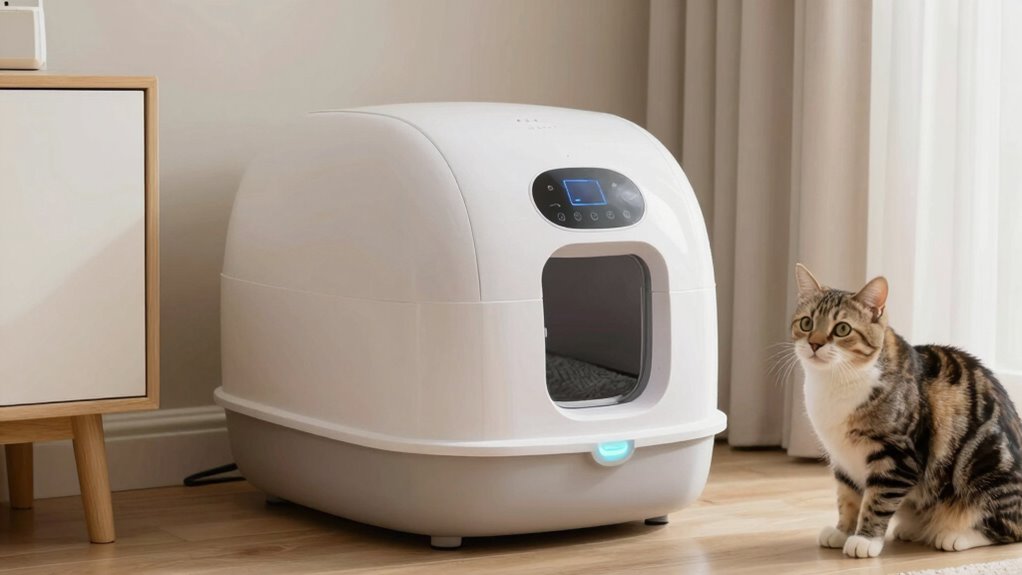
Before deciding if a self-cleaning litter box is right for your home, consider your space and whether the unit fits comfortably. Think about the costs involved and the ongoing maintenance to keep it working smoothly. Also, assess if your cat is comfortable with the technology and if it suits their habits and preferences.
Space and Placement Needs
Is your home’s layout suitable for a self-cleaning litter box? Consider the placement considerations carefully. These boxes need enough space for the unit itself, plus room for your cat to comfortably enter, exit, and turn around. Check the space requirements before purchasing to ensure the area isn’t cramped or obstructed. Avoid placing the box near food or water bowls, as cats prefer their litter box separate from their eating zones. Also, choose a quiet, low-traffic spot to minimize stress and prevent accidental displacements. Remember, a self-cleaning litter box still needs a stable, accessible location that suits your cat’s habits. Proper placement will encourage consistent use and help maintain your home’s cleanliness and your cat’s comfort.
Cost and Maintenance Factors
Considering the costs and ongoing maintenance, deciding whether a self-cleaning litter box suits your home and budget requires careful thought. These units often come with higher upfront prices but can save time and effort in the long run. Keep in mind that you’ll need to monitor and replace parts periodically. Think about:
- The energy consumption needed to power the cleaning cycle, which can add to your utility bills.
- How well the odor control features work, since some units may require extra filters or deodorizing products.
- The frequency of maintenance tasks, like refilling power sources or cleaning sensors, to keep the box functioning smoothly.
While they reduce daily scooping, these factors impact overall convenience and cost. Weighing these considerations helps determine if a self-cleaning litter box fits your lifestyle and budget.
Cat Compatibility Concerns
Self-cleaning litter boxes may not be suitable for every cat, especially those that are shy, anxious, or highly particular about their environment. Some cats prefer digging and covering their waste, which these boxes may disrupt, leading to stress or avoidance. In multi-cat households, conflicts can arise if one cat is uncomfortable with the automated system, causing tension or territorial disputes. Additionally, cats with certain behaviors—like hesitation or sensitivity to noise—may refuse to use self-cleaning units altogether. It’s essential to observe your cat’s behavior before switching. If your cat shows signs of discomfort or reluctance, a traditional litter box might be a better choice. Understanding your cat’s personality and habits will help determine if a self-cleaning litter box suits your home.
What Hidden Costs and Realities Should You Know Before Buying?
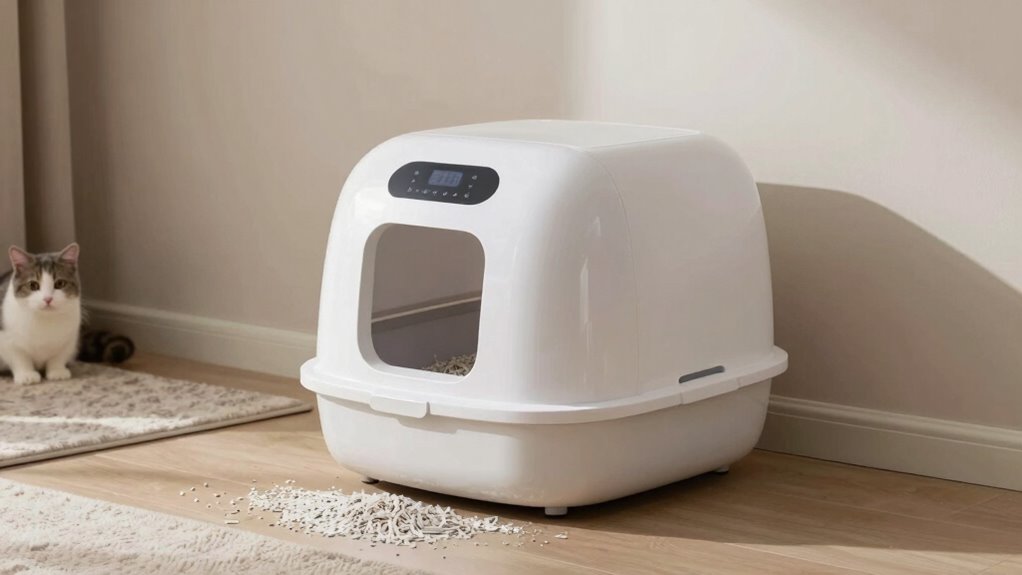
Although self-cleaning litter boxes promise convenience, they often come with hidden costs that can catch you off guard. Beyond the initial price, you might face ongoing expenses or surprises that clash with your user expectations. These hidden costs include:
- Higher maintenance fees for replacement parts or filters
- Increased electricity bills due to continuous operation
- Unexpected repairs if the mechanism breaks down
These costs can add up quickly, making the device less economical than it first appears. It’s essential to contemplate not just the upfront investment but also the long-term financial commitment. Understanding these hidden costs helps you make a smarter choice and avoid frustration down the line. Be prepared for the realities of owning a self-cleaning litter box beyond its promise of ease.
Frequently Asked Questions
Can Self-Cleaning Litter Boxes Accommodate Multiple Cats Comfortably?
Self-cleaning litter boxes can handle multiple cats, but their multi-cat compatibility hinges on litter box capacity. If the box is large enough and designed for several cats, it can work well. However, with more than two or three cats, you might need multiple units or larger models to prevent territorial disputes and ensure each cat has enough space. Always choose a litter box that matches your cats’ number and size.
Do Self-Cleaning Litter Boxes Require Electricity or Batteries?
Think of a self-cleaning litter box as a high-tech wizard—yes, it needs electricity or batteries to perform its magic. Most models require an electrical outlet to power the cleaning mechanism, while some offer battery operation for added convenience. Without electricity or batteries, the device can’t function, so you’ll need to guarantee a power source nearby. This tech keeps your cat’s litter fresh, but it relies heavily on power to do its job.
Are Self-Cleaning Litter Boxes Safe for Kittens and Senior Cats?
Self-cleaning litter boxes are generally safe for kittens and senior cats if you choose models designed with cat safety in mind. You should always monitor their behavior and make certain of proper litter box maintenance, especially for young or older cats. Some models may have safety features to prevent accidents, but it’s crucial to observe your cats and consult your vet if you’re unsure. Proper setup helps keep everyone safe and comfortable.
How Effective Are These Boxes in Controlling Bacterial Growth?
Think of your self-cleaning litter box as a fortress, but even fortresses face breaches. It effectively reduces bacterial growth through automatic sanitation maintenance, preventing buildup. However, it doesn’t eliminate all bacteria; some may develop resistance over time. You still need to regularly monitor and clean the unit to guarantee ideal hygiene. While it’s a helpful tool, don’t rely on it alone—personal vigilance keeps your cat’s environment truly safe.
What Should I Do if My Cat Refuses to Use the Self-Cleaning Box?
If your cat refuses to use the self-cleaning box, you should first observe their behavior and look for possible cleaning challenges or discomfort. Try placing the box in a quiet, accessible spot and keep it spotless. Sometimes, cats prefer traditional litter or specific textures. Gradually shift or offer incentives. If problems persist, consult your vet to rule out health issues or stress that might affect their litter box habits.
Conclusion
Think of a self-cleaning litter box as a loyal but imperfect guardian. It can keep your home fresh and your cat comfortable, but it’s not a magic wand. Like any guardian, it has limits and needs your guidance. By understanding what it can’t do and staying attentive, you guarantee a harmonious home. Embrace it as a helpful partner—not a replacement for your care—and enjoy the peace of mind it can bring.