TL;DR

Get pet supplies delivered free with Prime
- Fast, free delivery on millions of items
- Prime Video, Amazon Music and more included
- Member-only deals all year
A Veterinary Practice News report by veterinary technician Beth Armstrong outlines low-stress handling practices for cats with known or suspected heart disease. It advises veterinary teams to minimize stimulation and restraint, watch for breathing changes, and prioritize oxygen and stabilization over diagnostics when a cat is in respiratory distress.
Veterinary Practice News has published guidance for veterinary technicians handling cats with known or suspected heart disease, recommending minimal restraint, a quiet environment and early attention to breathing changes. The report, written by Beth Armstrong, says stress can place additional strain on cardiac patients and advises teams to prioritize stabilization over diagnostic procedures when a cat is having respiratory difficulty.
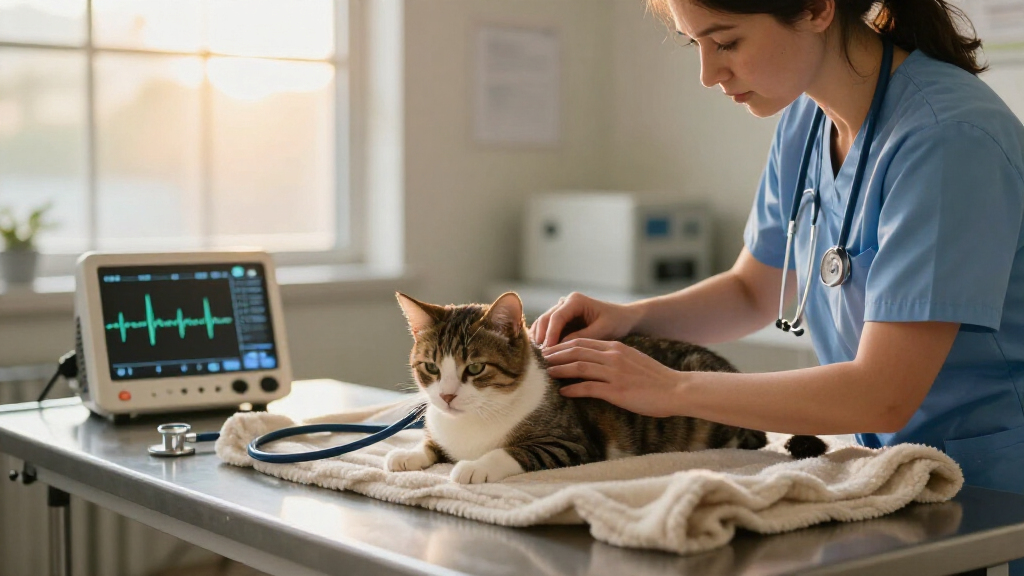
Armstrong recommends starting with the setting rather than immediately handling the cat: reduce noise and room traffic, use dim lighting where practical, and move the patient away from a busy waiting area. A cat may feel safer in its carrier, so the report advises beginning with quiet visual observation of respiratory rate, breathing effort and posture when possible.
During necessary examination or treatment, the guidance favors slow movements and gentle support of the chest and hindquarters over forceful restraint. It advises avoiding scruffing when possible, keeping the cat in a sternal position if tolerated, and using a towel for gentle containment or to limit visual stimulation. Grouping procedures can reduce repeated handling, while unnecessary interactions should be avoided.
The report says staff should watch for early signs of stress, including dilated pupils, tail movement, rotated ears, body tension and a rising respiratory rate. Open-mouth breathing, blue-tinged gums or other cyanosis, labored breathing with vocalization, or collapse call for immediate reassessment of handling. Armstrong writes that continuing restraint in such circumstances may worsen the patient’s condition.
For cats showing respiratory compromise, the article says oxygen should take priority over diagnostics. An oxygen cage can provide support with less handling; flow-by oxygen may be used while a more stable setup is prepared. Nasal oxygen may suit selected patients if tolerated. The report advises postponing procedures such as radiographs and blood draws until the patient is stable, and suggests adapting blood pressure measurement, positioning and sampling to limit stress and handling time.
Handling Can Affect Cardiac Stability
The report’s central point is that handling is not merely a technical step for a cat with heart disease: stress may add physiological strain at a time when the patient’s reserve is limited. Armstrong describes possible effects including a faster heart rate, increased blood pressure and greater demand for oxygen by the heart. These are clinical concerns presented in the article, not a guarantee that every stressed cat will deteriorate.
For veterinary teams, the practical implication is to make decisions about timing and restraint part of patient care. A quieter intake, fewer handling episodes and prompt oxygen support when breathing is compromised may help avoid adding unnecessary stimulation before stabilization. For pet owners, the guidance also explains why a veterinary team might observe a cat before attempting a full examination or delay tests until the patient can tolerate them.
Products Worth Considering

PETLIBRO Automatic Cat Feeder for Two Cats with AI Recognition Camera

PETLIBRO Granary 2 Vision Duo Automatic Cat Feeder for Two Cats

PetSafe Microchip Cat Door, Interior/Exterior, Multi-Pet, 4-Way Lock
As an affiliate, we earn on qualifying purchases.
Why Cardiac Cats Need Gentle Care
The source article says feline cardiac disease may be diagnosed or remain unrecognized. It identifies hypertrophic cardiomyopathy (HCM) as the most common feline cardiac disease and explains that affected hearts can have reduced ventricular compliance. In the report’s account, increased demand during stress may be harder for such a heart to accommodate.
The recommendations are directed at veterinary technicians in both general practice and emergency settings. They focus on managing the immediate environment and adapting routine care, rather than setting out a complete treatment protocol for heart disease. The supplied source text does not include a publication date, clinical study results or a named professional organization issuing a formal guideline.
Limits of the Available Guidance
The supplied report offers practical recommendations but does not provide comparative trial data showing how much each measure changes outcomes. It also does not specify a publication date or describe an individual patient case. The source emphasizes that choices such as oxygen delivery and diagnostic timing depend on the patient; nasal oxygen is described as suitable only in selected cases if tolerated.
There is no information in the supplied material about how widely clinics have adopted these practices, or whether professional bodies have issued separate protocols. The article’s recommendations should not be read as a substitute for a veterinarian’s assessment or clinic-specific emergency procedures.
Apply Guidance During Patient Care
The immediate next step described by the report is for veterinary teams to apply low-stress principles during intake, observation, handling and stabilization, adjusting procedures to the individual cat’s condition. When respiratory compromise is present, staff are advised to reduce handling and provide oxygen support before attempting diagnostics, then consider tests once the patient is stable.
The source material does not identify a scheduled follow-up, new study or formal policy change. Further evidence about the effectiveness of particular techniques, and any subsequent guidance from veterinary organizations, is not included in the report provided.
Key Questions
What is the main advice for handling a cat with heart disease?
Keep handling gentle and limited, reduce noise and stimulation, and support the cat rather than using forceful restraint. The report recommends observing breathing and posture before attempting procedures when that is feasible.
Why does the report recommend delaying tests for some cardiac cats?
For a cat showing respiratory compromise, the article advises prioritizing oxygen and stabilization because handling for diagnostics may add stress. Tests can be considered after the patient is stable, with timing determined by the veterinary team.
Which signs should prompt a reassessment of handling?
The report lists open-mouth breathing, cyanosis, labored breathing with vocalization and collapse as serious signs requiring immediate reassessment. Earlier indicators can include a rising respiratory rate, body tension, dilated pupils, tail movement and changes in ear position.
Should a cat be taken out of its carrier right away?
Not necessarily. The guidance says some cats feel safer in the carrier and recommends beginning with quiet observation when possible. The veterinary team should decide whether and when to remove the cat based on its condition and care needs.
Does the article provide a treatment protocol for feline heart disease?
No. It provides handling and stabilization recommendations for veterinary teams, not a complete treatment plan. Diagnosis and treatment decisions should be made by a veterinarian for the individual patient.
Source: veterinarypracticenews.com