
To care for your ferret, provide a high-quality diet rich in protein, with fresh meat as a supplement. Daily playtime is essential for mental and physical stimulation, so engage them with toys and safe exploration outside their cage. Make certain their environment is secure and quiet, with proper temperature control, to keep them happy and healthy. There’s so much more to discover about keeping your ferret thriving, so let’s explore further together.
Key Takeaways
- Provide a high-quality, protein-rich diet while avoiding sugary treats to meet the unique nutritional needs of ferrets.
- Daily interactive playtime is essential to stimulate mental and physical health, preventing boredom.
- Ensure the ferret’s environment is safe, secure, and escape-proof to enhance their well-being.
- Regular grooming with a soft brush maintains a healthy coat, while infrequent bathing preserves natural oils.
- Place the cage in a quiet, draft-free area to maintain a comfortable temperature and support ferret health.

Have you ever wondered what it takes to keep a ferret happy and healthy? Caring for these playful little creatures involves a few key aspects, including ferret grooming, ferret housing, diet, and playtime. Each of these elements plays a significant role in guaranteeing your ferret thrives in a safe and loving environment.
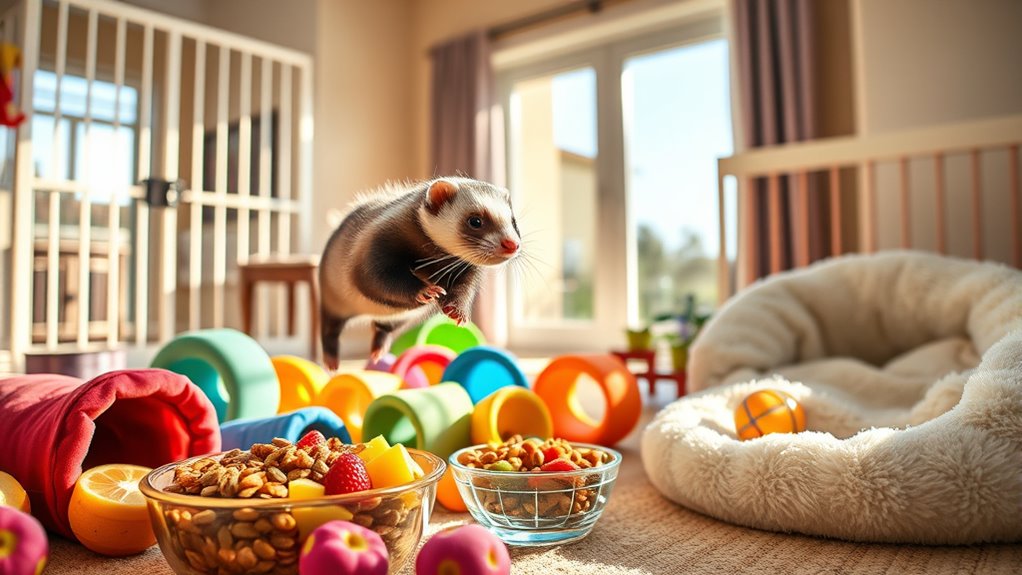
First off, let’s talk about ferret housing. Your ferret needs a spacious, safe area to roam and explore. A large multi-level cage is ideal, providing enough room for sleeping, playing, and hiding. You should line the cage with soft bedding and include hammocks, tunnels, and toys to keep your ferret entertained. Make sure the housing is escape-proof, as ferrets are notorious for their ability to wiggle through tiny spaces. It’s essential to place the cage in a quiet room away from direct sunlight and drafts, maintaining a comfortable temperature for your furry friend.
A spacious, multi-level cage with soft bedding and toys is essential for your ferret’s happiness and safety.
Now, onto ferret grooming. Regular grooming is essential to keep your ferret’s coat healthy and free from any mats or tangles. Use a soft brush to gently groom their fur, ensuring you’re careful around sensitive areas. Ferrets don’t require frequent baths, as this can strip their skin of natural oils. Instead, a bath every few months is sufficient, but only if they get particularly dirty. Don’t forget to check their ears and teeth regularly. Keeping their ears clean and teeth brushed can prevent many health issues down the road.
Your ferret’s diet is another important aspect of care. A high-quality ferret food that’s high in protein and low in carbohydrates is essential. You can supplement their diet with fresh meat, like chicken or turkey, but avoid sugary treats and fruits. Ferrets have unique nutritional needs that differ from other pets, so it’s essential to guarantee they’re getting the right balance. Additionally, understanding ferret grooming practices can enhance your care routine and ensure your ferret remains healthy.
Finally, playtime is essential for your ferret’s mental and physical well-being. Engage them in daily interactive play, using toys like balls, tunnels, and even your hands to stimulate their natural curiosity and hunting instincts. Ferrets love to explore, so let them roam in a safe, supervised area outside their cage.
Frequently Asked Questions
Can Ferrets Be Litter Trained Effectively?
Yes, ferrets can be effectively litter trained. Start by placing a litter box in their favorite spot and using ferret-friendly litter. Observe their sanitation habits; they often return to the same place to relieve themselves. When they use the box, reward them with treats to reinforce positive behavior. It may take time and patience, but with consistency, you’ll help your ferret develop good litter box habits, keeping your space clean.
What Are Common Ferret Health Issues?
Common ferret health issues include adrenal disease, insulinoma, and dental problems. Regular ferret grooming helps you spot any unusual lumps or skin issues early. Keeping up with ferret vaccinations is essential, as it protects them from serious diseases like distemper and rabies. Make sure you schedule routine vet check-ups to monitor your ferret’s health, ensuring they stay happy and active. Staying proactive with these measures can help prevent many health complications.
How Long Do Ferrets Typically Live?
Ferrets typically live around 6 to 10 years, but some can reach up to 12 years with proper care. You might wonder what affects their lifespan. Factors like genetics, diet, and overall health play a big role in their longevity. Ensuring they receive regular vet check-ups, a balanced diet, and plenty of exercise can help you maximize their ferret’s lifespan. So, prioritize their well-being for those extra years of joy!
Can Ferrets Live With Other Pets?
Yes, ferrets can live with other pets, but it requires careful socialization. You’ll want to introduce them gradually to guarantee a safe environment. Many ferret owners report successful interspecies friendships, especially with calm dogs or cats. Keep an eye on their interactions, as ferrets can be playful and sometimes overwhelming. Providing separate spaces for each pet helps maintain harmony while allowing your ferret to enjoy socialization with their new friends.
Are Ferrets Prone to Specific Dietary Allergies?
Ferrets can be like little detectives when it comes to their diets; they often exhibit ferret dietary sensitivities. You might notice ferret allergy symptoms, such as itching or digestive issues, if they react poorly to certain foods. It’s important to monitor what your ferret eats and introduce new treats slowly. If you suspect an allergy, consult your vet for tailored advice to keep your furry friend healthy and happy.
Conclusion
In the vibrant tapestry of ferret care, every thread—play, diet, and safety—intertwines to create a joyful life for your furry friend. By nurturing their playful spirit and providing a balanced diet, you’re not just caring for a pet; you’re fostering a bond that sparkles like starlight. Keep their safety at the forefront, and you’ll find that your ferret’s happiness will reflect back to you, creating a harmonious dance of companionship that brightens your days.