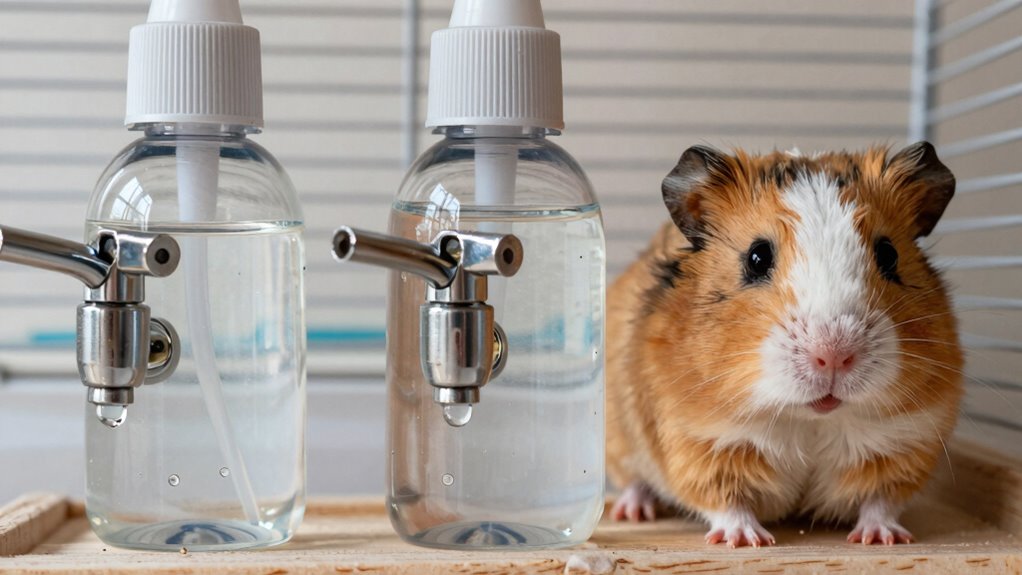
To prevent silent dehydration in your gerbil or hamster, regularly check their water bottles to guarantee they work properly. Press or tilt the nozzle to see if water flows consistently and inspect for blockages or leaks. Keep bottles clean, replace water daily, and position them securely where your pet can easily access, avoiding spills. Staying vigilant with these simple checks will help you keep your pet properly hydrated—discover more tips to maintain their health.
Key Takeaways
- Regularly press and tilt the bottle to ensure water flows freely from the nozzle.
- Check for leaks, clogs, or blockages that could restrict water availability.
- Ensure the bottle is securely attached at an appropriate height for easy access.
- Clean and sterilize the bottle daily to prevent bacterial growth and odors.
- Monitor your pet’s behavior for signs of dehydration like lethargy or dry gums and refill with fresh water promptly.
Why Hydration Is Crucial for Gerbils and Hamsters
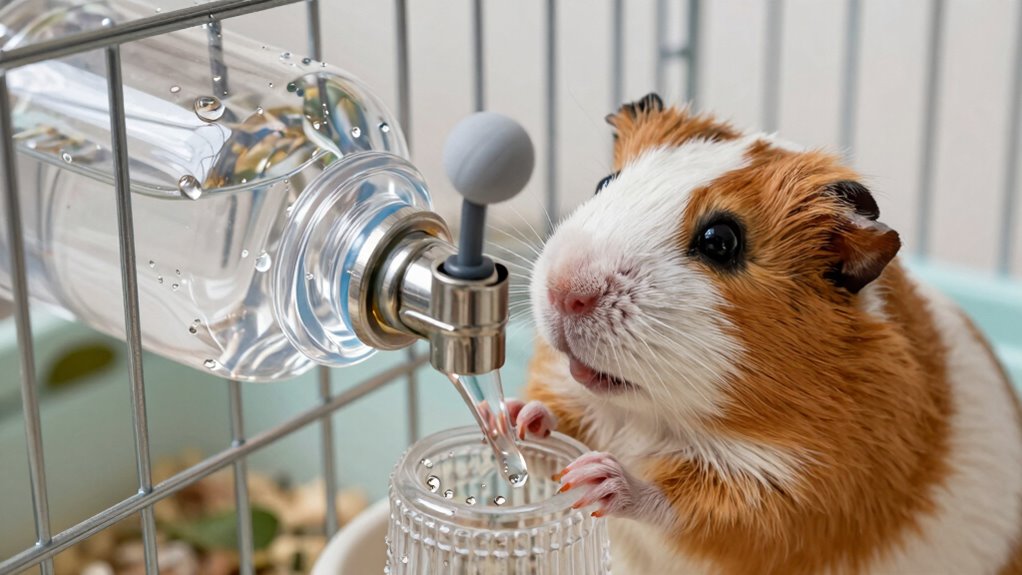
Gerbils and hamsters need to stay well-hydrated to maintain their health and stay active. Proper hydration helps regulate their body temperature, supports digestion, and keeps their organs functioning ideally. Ensuring good water quality is essential because contaminated or stale water can lead to health issues. Regularly check their water bottles for cleanliness and fresh water, as poor water quality can discourage drinking. Watch for hydration signs like dry noses, lethargy, or decreased activity, which indicate they might not be drinking enough. Providing clean, fresh water consistently encourages your pets to stay properly hydrated. Staying attentive to their water intake and water quality helps prevent dehydration and keeps your small pets healthy and lively. Additionally, choosing the right water bottle design can help prevent leaks and contamination, further safeguarding your pet’s hydration.
How to Recognize Dehydration in Small Pets
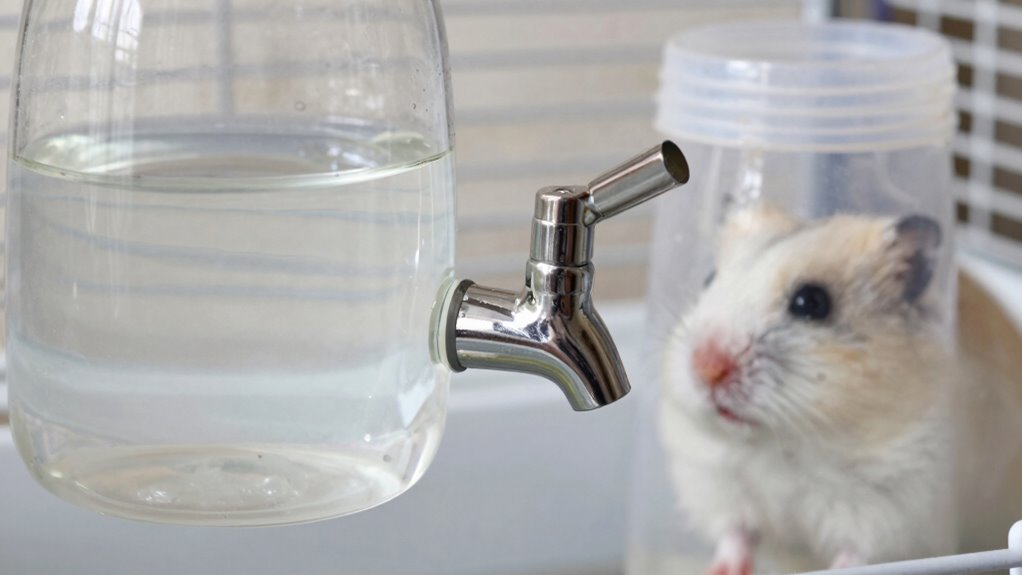
Since small pets can’t tell you when they’re thirsty, it’s important to look for signs of dehydration. Watch for symptoms like lethargy, sunken eyes, or dry, sticky gums, which indicate dehydration and possible signs of illness. You might notice your pet’s coat becoming dull or their skin losing elasticity when gently pinched. These are urgent signals that your pet isn’t getting enough pet hydration. Be alert if your pet shows decreased activity, weight loss, or appears unusually weak. Recognizing these signs early helps prevent serious health issues. Additionally, understanding hydration monitoring can help you better support your pet’s overall well-being. For example, the 16PF personality traits can influence how pets respond to their environment and care routines, highlighting the importance of attentive observation. Remember, silent dehydration can be dangerous, so stay attentive to your pet’s overall behavior and physical condition to keep them healthy and happy.
How to Test If Your Pet’s Water Bottle Is Working Properly
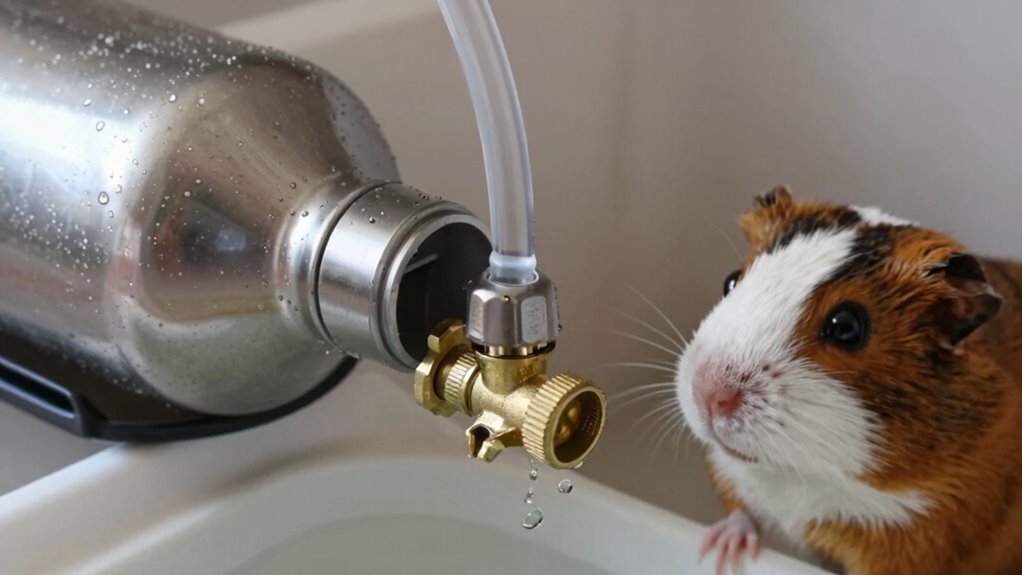
To make certain your pet stays properly hydrated, it’s essential to regularly check that their water bottle is functioning correctly. Water bottle maintenance is simple but vital; you can do this by observing if water drips when you gently press the nozzle or tip the bottle slightly. Fill the bottle and watch for a steady, consistent flow when the valve is activated. If the water isn’t flowing, clean the nozzle and check for blockages, as debris can prevent proper water flow. Regular testing helps reinforce good pet hydration habits and prevents silent dehydration. Remember, even small clogs or leaks can greatly impact your pet’s water intake, so make testing part of your routine to guarantee your pet always has access to fresh water. Proper water bottle maintenance is also essential in households with pets to ensure overall plumbing efficiency and prevent issues that could impact water supply.
Inspecting Your Water Bottle: A Step-by-Step Guide
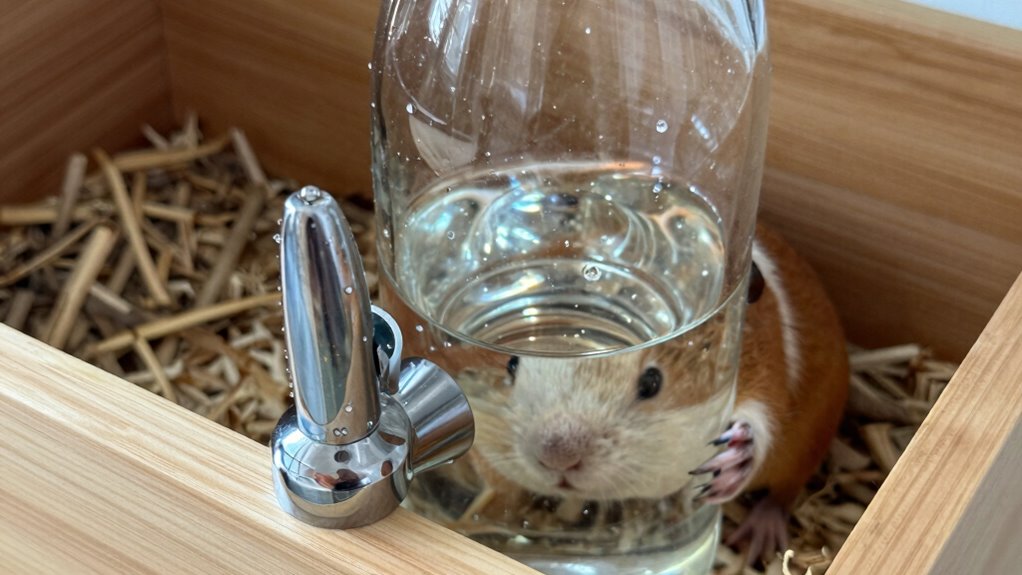
Start by checking your water bottle for any leaks that could cause messes or dry out your pet. Make sure it’s positioned correctly so your pet can easily access the spout without difficulty. Taking these simple steps helps keep your pet’s water clean and readily available. Ensure the water flow rate is appropriate, preventing your pet from struggling to drink or causing spillage. Additionally, inspecting the sauna ventilation can help maintain a healthy environment and prevent mold or odors from developing around the water bottle area. Regularly cleaning and sterilizing the bottle also promotes a healthy hydration, reducing bacteria buildup and ensuring your pet remains well-hydrated. Using a sulfate-free shampoo for cleaning the bottle can help preserve the water quality and protect your pet from potential irritants. Moreover, understanding the net worth of pet celebrities can inspire pet owners to invest in quality supplies for their animals.
Check for Leaks
Are you sure your gerbil or hamster’s water bottle isn’t leaking? Leaks can silently cause dehydration, so it’s vital to check regularly. To do leak detection, gently tap or squeeze the bottle and watch for inconsistent water flow. Look for drips or puddles beneath the cage—these are signs of a leak.
- Feel for damp spots or wet bedding that shouldn’t be there.
- Observe the water flow—if it’s irregular or weak, you might have a blockage or leak.
- Check the nozzle and seals closely for cracks or looseness.
- Remember that affiliate relationships may influence the products recommended, so always verify the quality of your water bottle.
- Regular maintenance of cleaning schedules can help prevent buildup that contributes to leaks or blockages.
- Ensuring proper water flow regulation can also help prevent silent dehydration in your pet.
- Proper inspection techniques can help identify issues before they become serious problems.
- Incorporating quality assurance practices into your pet care routine ensures your water bottle functions correctly and reliably.
Don’t ignore these signs; a small leak can go unnoticed but have big consequences. Regular inspection ensures your pet’s water stays fresh and accessible, preventing silent dehydration.
Ensure Correct Placement
Ensuring your gerbil or hamster’s water bottle is correctly placed is essential for consistent access to fresh water. Start by verifying the placement of the bottle, making sure it’s securely attached and positioned at the right height for your pet. Proper placement allows easy drinking without causing stress or discomfort. Check that the water nozzle is accessible and not blocked by cage bedding or accessories. Regular placement verification helps prevent accidental spills or dislodgement that could compromise pet safety. Avoid placing the bottle too high or too low, as this can hinder your pet’s ability to drink comfortably. Ensuring correct placement promotes hydration and reduces the risk of dehydration caused by inaccessible water. Always observe your pet’s behavior to confirm they’re drinking from the bottle regularly. Proper placement is a key factor in maintaining your pet’s hydration and overall health. Additionally, being aware of market trends and insights related to pet care products can help you choose the best water bottles that ensure safety and durability. Proper placement also helps to prevent issues caused by incorrect positioning, which can lead to water spillage or inaccessible drinking points. Maintaining awareness of product quality can further ensure your pet’s safety and hydration needs are consistently met.
Common Water Bottle Problems That Could Dehydrate Your Pet
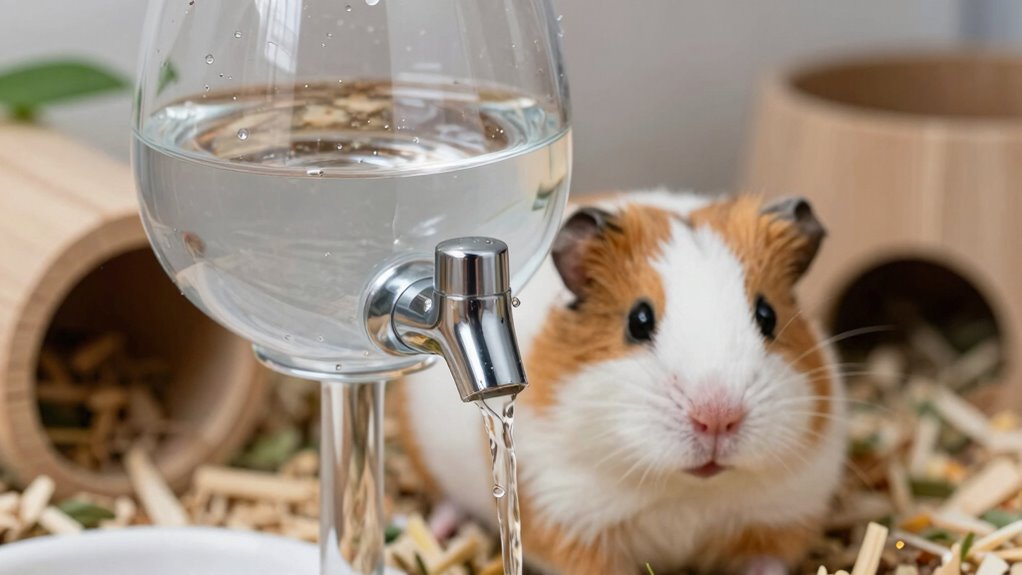
Even small issues with your pet’s water bottle can lead to dehydration, so it’s essential to identify and fix common problems promptly. Problems like inconsistent watering habits or faulty bottle materials can prevent your pet from getting enough water. For example, a leaking bottle may cause your pet to lose confidence in drinking from it, or the material might retain odors that discourage use. Watch out for these issues:
- Cracks or leaks in the bottle, causing water loss and discouraging drinking
- Blockages or clogs in the nozzle that restrict water flow
- Unsuitable bottle materials that develop mold or odors, making pets avoid drinking
- Regular inspections and maintenance can help prevent water delivery issues that might lead to silent dehydration. Additionally, choosing appropriate materials designed for pet safety can extend the lifespan of the bottle and ensure it remains odor-free. Ensuring the correct water flow is essential for consistent hydration, preventing your pet from becoming dehydrated without realizing it. Addressing these problems ensures your pet stays hydrated and healthy. Regular checks will help you prevent silent dehydration caused by simple water bottle issues.
Choosing the Best Water Bottle for Gerbils and Hamsters
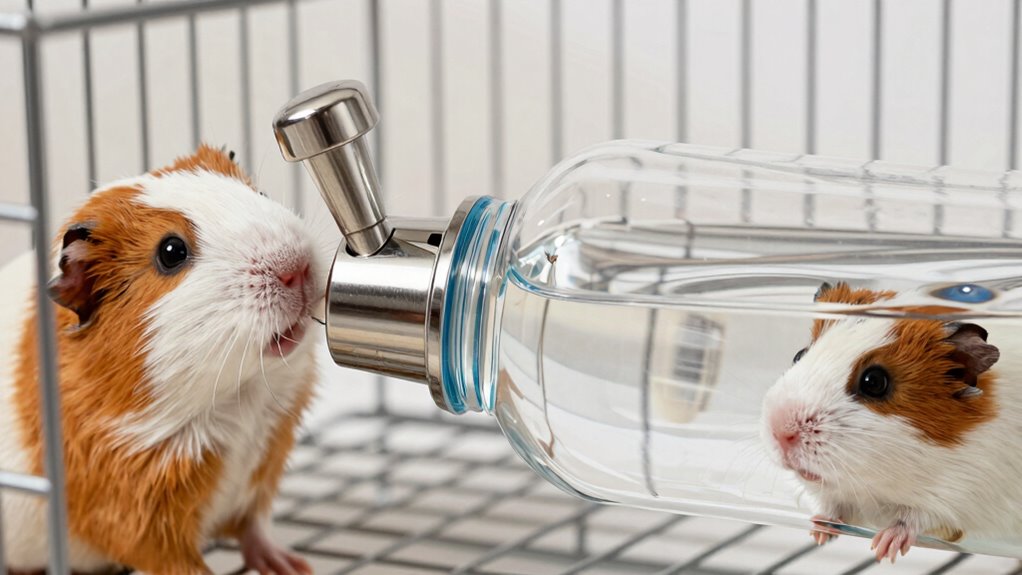
Choosing the right water bottle for your gerbils and hamsters is essential to keep them properly hydrated and healthy. When selecting a water bottle, consider the materials; glass or stainless steel bottles are durable, easy to clean, and free from harmful chemicals, ensuring your pets’ safety. Plastic bottles are lightweight and affordable but may degrade over time or retain odors, so choose high-quality, BPA-free options. Pet comfort is also crucial—look for bottles with secure mounting options, smooth spouts, and a size that fits your pet’s cage without causing clutter. A well-chosen water bottle prevents leaks, encourages drinking, and makes hydration straightforward for your small pets. Prioritize quality and comfort to support their health and well-being.
How Often Should You Refill and Replace Water Bottles?
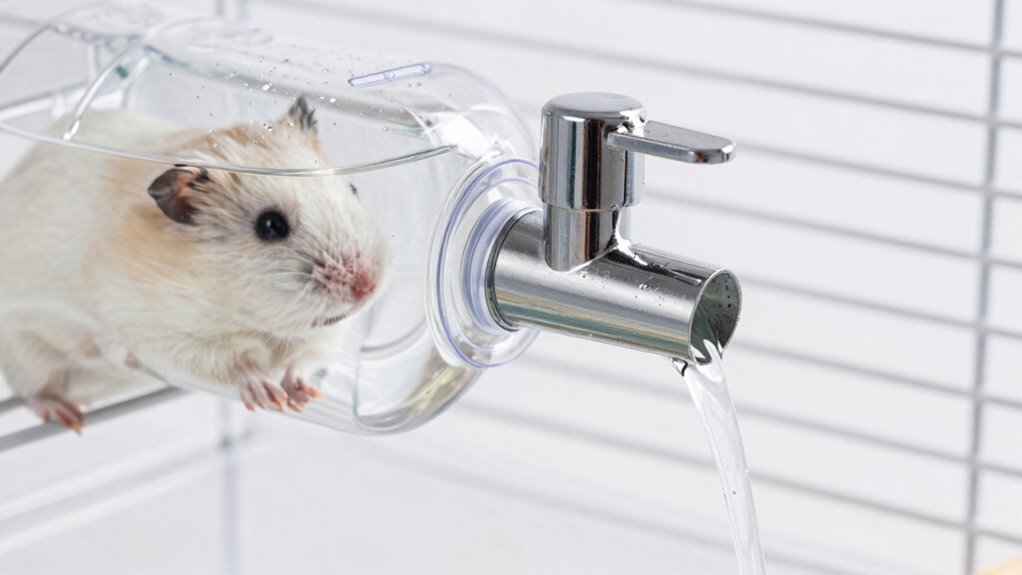
To keep your gerbils and hamsters properly hydrated, you should refill their water bottles daily or at least every 24 hours. Regularly replacing water ensures the best water quality, preventing the buildup of bacteria or algae. It’s also essential to check the bottle material—glass or durable plastic—as some materials can harbor mold or degrade over time.
Be mindful to:
- Refresh water daily to maintain freshness and prevent silent dehydration
- Inspect the bottle for cracks or damage, replacing as needed
- Clean the bottle thoroughly to avoid bacteria growth and ensure water quality
Consistently refilling and replacing water bottles guarantees your pets stay healthy and hydrated, giving you peace of mind.
What to Do If You Suspect Your Pet Is Dehydrated
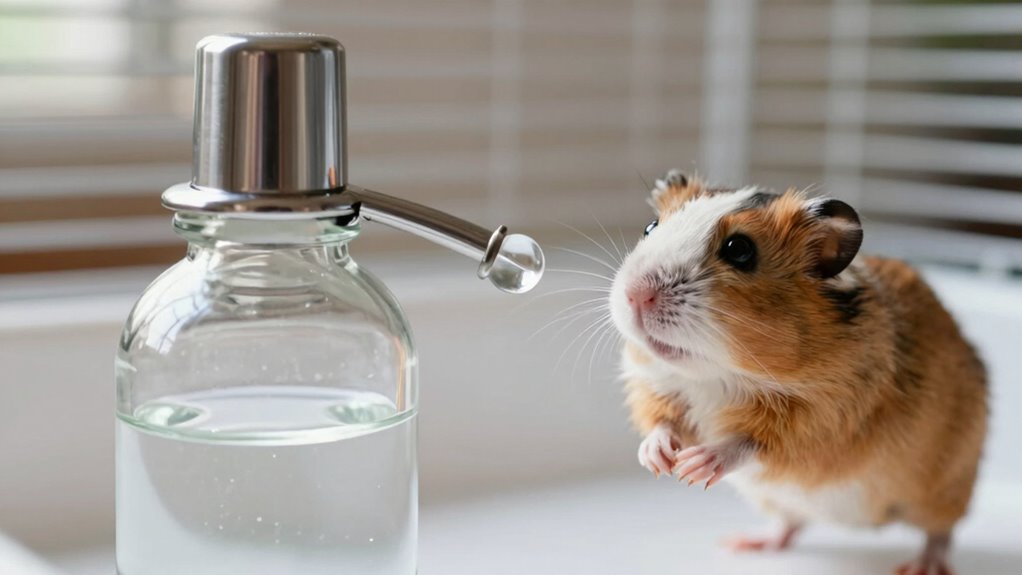
If you notice your pet drinking less than usual or showing signs of lethargy, it might be a sign of dehydration. Act quickly to support their pet hydration by offering fresh water and monitoring their behavior closely. Check the water bottle for proper water bottle maintenance—ensure it’s clean, unblocked, and filled with fresh water. If your pet isn’t drinking enough or shows signs of dehydration, consider offering small amounts of water with a syringe or dropper, especially if they’re reluctant to drink on their own. Keep a close eye on their condition, and if symptoms persist or worsen, consult a veterinarian promptly. Proper pet hydration is critical, so maintaining your water bottle and responding swiftly can prevent serious health issues.
Frequently Asked Questions
How Often Should I Clean My Pet’s Water Bottle?
You should clean your pet’s water bottle at least once a week to guarantee optimal cleaning frequency. Regular cleaning helps maintain water quality, preventing algae, bacteria, and mold buildup that can harm your pet. If you notice any dirt or cloudiness earlier, clean it immediately. Using warm water and a brush, thoroughly scrub all parts of the bottle. Consistent cleaning keeps your pet hydrated with fresh, clean water and supports their health.
Can a Water Bottle Cause Health Issues if Faulty?
A faulty water bottle can definitely cause health issues for your pet. When the bottle leaks or isn’t sealed properly, it can lead to water contamination and bacterial buildup. This increases the risk of infections and dehydration. Regularly checking for leaks, mold, or cracks, and cleaning the bottle thoroughly, helps prevent these problems. Ensuring your pet’s water source is clean and functioning properly keeps them healthy and hydrated.
Are There Specific Brands Recommended for Small Pet Bottles?
Did you know that using the right small pet bottles can reduce dehydration risks by 30%? When choosing, go for trusted brands like Playful Pets, Kaytee, or Rosewood, which are known for durability and safety. These brand recommendations guarantee your gerbil or hamster gets clean, leak-proof water. Always check for quality and ease of refilling to keep your pet healthy and hydrated without worries.
How Can I Encourage My Pet to Drink More Water?
To encourage your pet to drink more water, focus on improving their hydration habits with simple water intake tips. Make sure the water bottle is always clean and filled with fresh water, and position it where they feel comfortable. You can also add small treats or wet food to boost hydration. Regularly check the water level and gently remind your pet to drink, helping them stay properly hydrated.
What Signs Indicate My Pet’s Water Bottle Needs Replacement?
You’ll notice your pet’s water bottle needs replacement if their water intake suddenly drops or the water level stays unchanged for days. Watch for dehydration signs like lethargy, dry mouth, or sunken eyes—these are warning signs that their bottle isn’t providing enough hydration. Don’t wait; if these signs appear, replace the bottle immediately to prevent health issues and make sure your pet stays properly hydrated.
Conclusion
Remember, an ounce of prevention is worth a pound of cure. Regularly check your pet’s water bottle to catch silent dehydration early. By staying attentive and proactive, you guarantee your gerbil or hamster stays healthy and happy. Small pets rely on you for their well-being—don’t let hidden issues go unnoticed. Keep their water clean and functioning, because a well-hydrated pet is a happy, thriving companion.