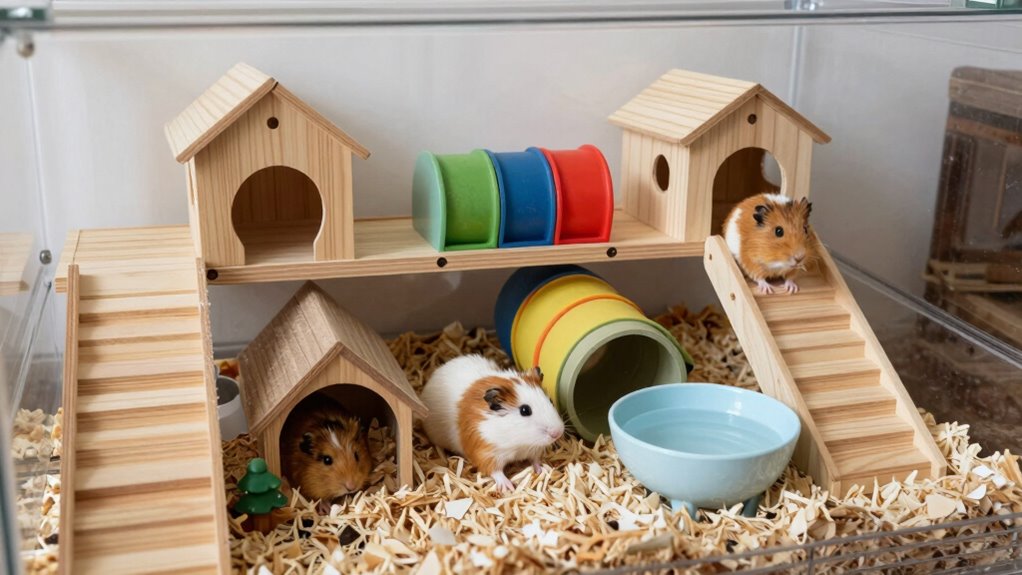

To prevent stress behaviors, provide your gerbils with enough space in their habitat. The minimum is 10 gallons per gerbil, but larger cages with plenty of room for tunnels, wheels, and digging are better. Make sure the cage is properly measured and allows for natural activities. Enrichment features like burrows and platforms help keep them mentally stimulated. If you keep their space adequate, you’ll create a healthier, happier environment—learn more to optimize their habitat.
Key Takeaways
- Provide at least 10 gallons of space per gerbil to support natural behaviors and reduce stress.
- Use larger cages with multiple levels and tunnels to maximize exploration and mental stimulation.
- Ensure proper cage dimensions—length, width, and height—for adequate activity room.
- Incorporate enrichment items like wheels, burrows, and toys to promote physical and mental health.
- Regularly monitor for signs of stress, and upgrade or expand the cage as needed to maintain a healthy environment.
Why Space Is Key to Happy, Healthy Gerbils

Providing enough space is essential for your gerbils to stay happy and healthy. A spacious cage allows them to move freely, which supports their natural behaviors like digging and exploring. Proper bedding choices are vital, as they create a comfortable environment that absorbs waste and prevents odor buildup. When considering a suitable gerbil diet, remember that a larger space makes it easier to include varied foods and treats, promoting a balanced diet. Overcrowding can lead to stress, aggression, and health issues, so never underestimate the importance of ample room. Giving your gerbils enough space not only improves their physical well-being but also encourages mental stimulation, reducing boredom and destructive behaviors. A well-sized habitat is the foundation for a thriving, happy gerbil. Additionally, providing adequate ventilation helps maintain air quality, preventing respiratory problems and keeping your pets comfortable. Ensuring proper airflow is crucial for environmental health, which directly impacts your gerbils’ overall well-being. Incorporating space requirements into your cage setup supports natural activity levels and overall happiness. Moreover, consulting professional services can help in designing optimal habitats tailored to your gerbils’ needs.
How Big Should a Gerbil Cage Be? Recommended Sizes for Comfort
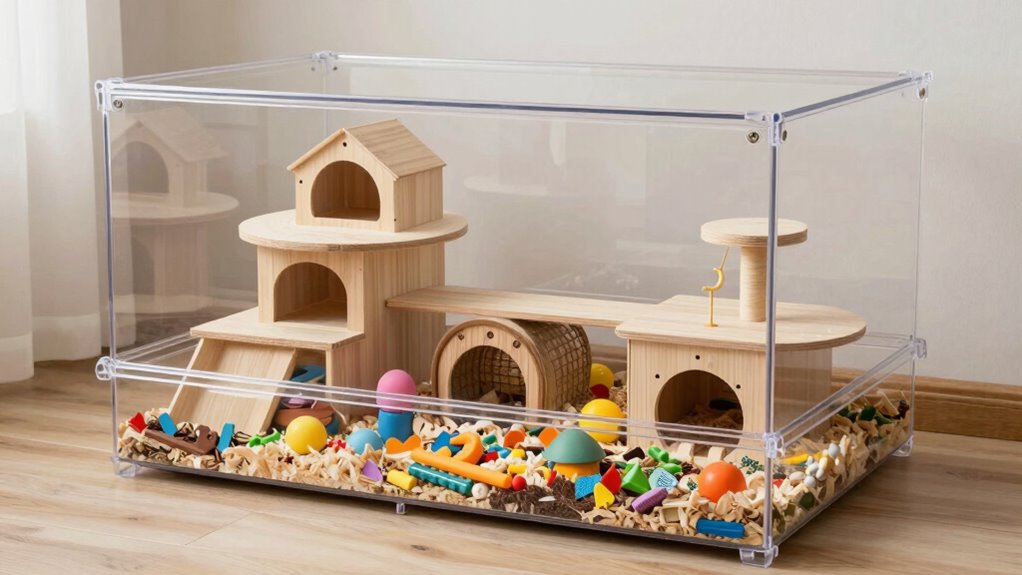
When choosing a gerbil cage, size is vital for guaranteeing your pets have enough space to thrive. A recommended minimum is 10 gallons, but larger is better—aim for at least 20 gallons for comfort. This extra space allows for varied activities like digging, running, and exploring. Incorporate ample gerbil tunnel setups to keep your pets stimulated, and make certain they have enough room to build complex tunnel systems. Bedding material choices are also essential; opt for deep, absorbent bedding to facilitate digging and nesting. Avoid overcrowding by providing enough room for multiple gerbils to coexist peacefully, reducing stress and preventing boredom. Remember, a spacious cage with thoughtful tunnel arrangements and suitable bedding promotes healthier, happier gerbils. Proper water chemistry management within your habitat is also crucial to maintaining a healthy environment. Additionally, ensuring proper ventilation in the cage prevents moisture buildup, which can lead to mold and respiratory issues. Using appropriate ventilation helps keep the air fresh and dry, supporting your gerbils’ well-being. Maintaining optimal environmental conditions further contributes to reducing stress and encouraging natural behaviors.
How to Measure Your Cage and Ensure Enough Room for Your Gerbils
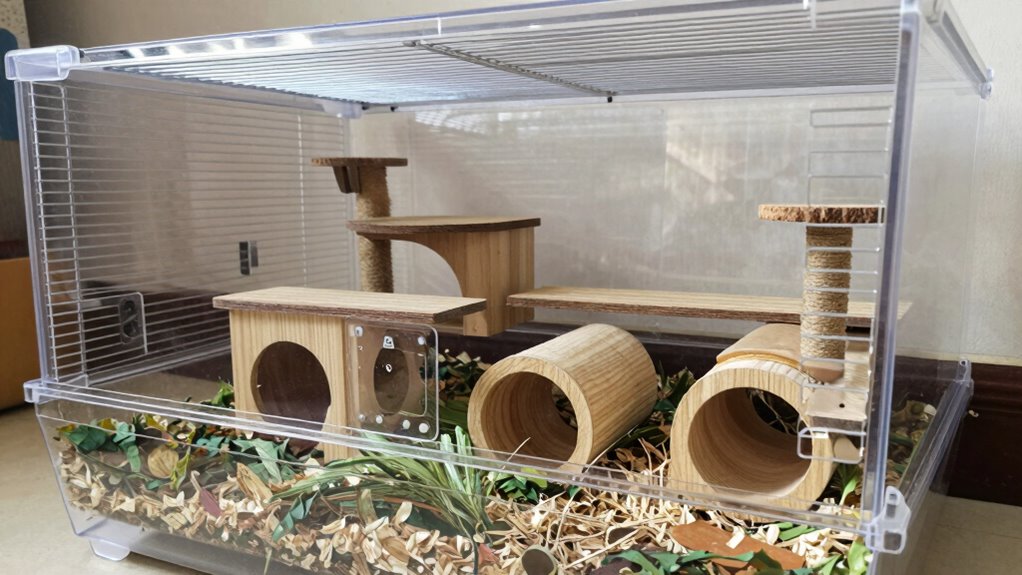
To make certain your gerbils have enough space, start by measuring your cage’s length, width, and height accurately. Then, calculate the minimum space needed based on their size and activity level. Proper measurement guarantees your cage provides the comfort and room your gerbils need to thrive.
Measuring Cage Dimensions
Measuring your gerbil cage accurately is vital to guarantee your pets have enough space to thrive. First, measure the length, width, and height of the cage with a tape measure, ensuring you account for the space needed for activities. When considering nest box placement, leave enough room so your gerbils can access it comfortably without overcrowding. Proper bedding thickness is also essential; measure the bedding layers to ensure they’re deep enough for digging and burrowing behaviors, typically 1.5 to 3 inches. Avoid overcrowding the cage with unnecessary accessories or decorations that reduce usable space. By precisely measuring these dimensions, you’ll create a comfortable environment that minimizes stress and promotes natural behaviors. Accurate measurements are key to maintaining a healthy, happy gerbil habitat.
Calculating Minimum Space
Making sure your gerbils have enough space starts with calculating the minimum cage size they need to thrive. A good rule is providing at least 10 gallons of space per gerbil, but bigger is better for their well-being. Measure your cage carefully, considering length, width, and height, to guarantee it meets this minimum. Measuring cage dimensions accurately is essential to ensure your setup supports your gerbils’ overall health and happiness. Don’t forget that adequate cage lighting is essential for a healthy environment, but it shouldn’t create stress or disrupt their natural behaviors. Keep in mind that a larger space allows room for hiding spots, exercise wheels, and foraging areas, which are crucial for their mental and physical health. Proper calculations ensure your gerbils aren’t cramped, reducing stress and promoting a balanced, healthy diet and lifestyle. Additionally, understanding vetted cage sizes helps ensure your setup supports your gerbils’ overall health and happiness. Providing enough space also allows for social interaction and prevents stress behaviors, which are common in cramped environments.
Top Features That Maximize Space and Enrichment in Gerbil Cages
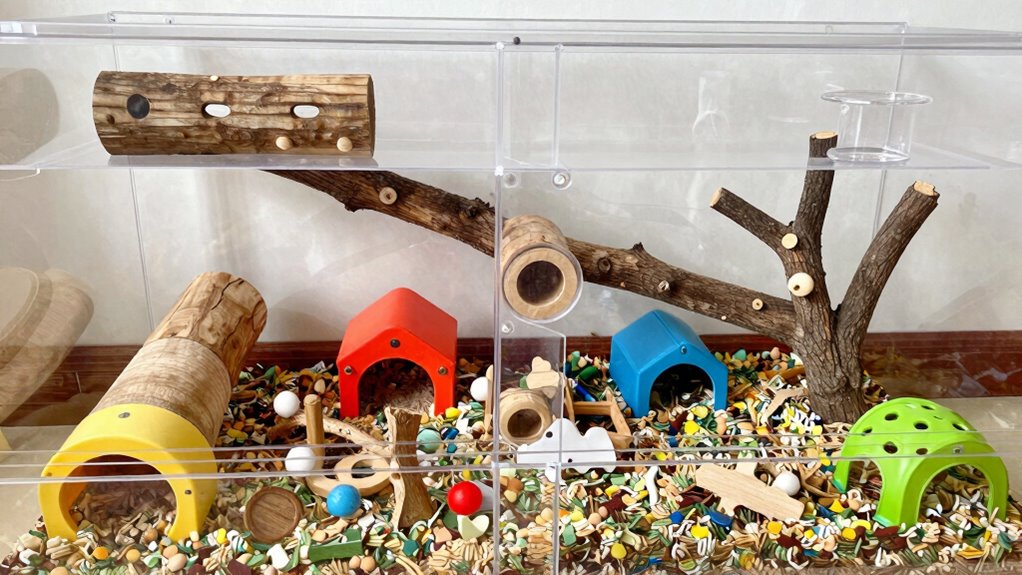
Maximizing space and enrichment in gerbil cages involves selecting features that promote activity and prevent boredom. Including gerbil burrows provides hiding spots and encourages natural digging behaviors, which are essential for mental stimulation. A well-designed cage should also prioritize good cage ventilation to guarantee fresh air circulation, reducing odors and preventing respiratory issues. Elevated platforms and tunnels create multiple levels, giving your gerbils more room to explore and exercise. Incorporating chew toys and wheels keeps them engaged and active. These features not only maximize the usable space but also enhance overall well-being, reducing stress and fostering natural behaviors. Creating environmental enrichment by thoughtfully combining burrows, ventilation, and engaging accessories helps support your gerbils’ health and happiness. Ensuring proper cage size is fundamental in preventing stress behaviors and promoting natural activity levels. Additionally, selecting appropriate cage materials can improve durability and safety for your gerbils. Using proper ventilation techniques can further improve air quality and reduce the buildup of harmful bacteria. Choosing a cage with good airflow design can significantly impact your gerbils’ respiratory health and comfort.
Choosing the Best Cage Type: Which Offers the Most Room?
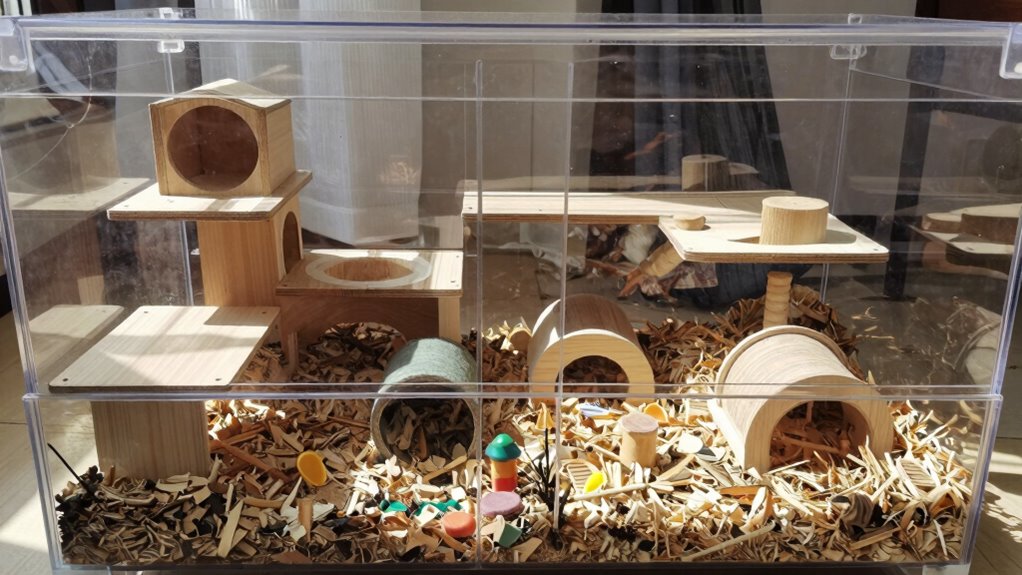
Choosing the right cage type plays a key role in providing your gerbils with ample space to move and explore. Multi-level cages or large tanks offer the most room, allowing your gerbils to run, dig, and burrow comfortably. Good cage ventilation is essential to prevent stuffiness and maintain fresh air, reducing stress and health issues. When selecting a cage, consider how easily it allows for proper airflow and cleaning. Additionally, the cage’s size influences your bedding material choices; larger cages need more bedding to create a cozy, natural environment. Opt for a cage that balances spaciousness with adequate ventilation and easy maintenance, ensuring your gerbils stay healthy, active, and stress-free in their habitat. Proper cage size is vital for supporting natural behaviors and preventing stress-related behaviors. Incorporating adequate ventilation ensures fresh air circulation, which is crucial for your gerbils’ well-being. Selecting a cage with good airflow can significantly improve your gerbils’ overall health and happiness.
Common Mistakes When Picking a Gerbil Cage (And How to Avoid Them)
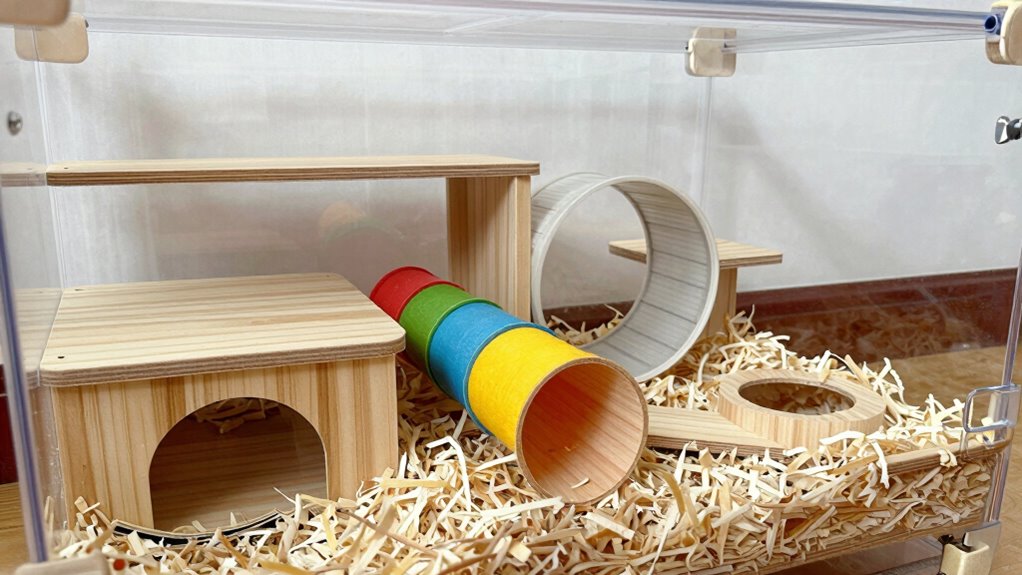
One common mistake when picking a gerbil cage is opting for one that’s too small or cramped, which can cause stress and health problems. To avoid this, consider these key points: 1. Ignoring the importance of adequate space for a balanced gerbil diet and exercise. 2. Overlooking necessary cage accessories like tunnels and wheels that promote activity. 3. Choosing a cage with poor ventilation, risking respiratory issues. 4. Forgetting to check if the cage allows for easy cleaning and maintenance. Additionally, selecting a cage with proper ventilation helps prevent respiratory problems and keeps the environment healthier for your gerbils. A cramped cage limits their movement, increases stress, and can lead to destructive behaviors. Proper space encourages natural foraging, running, and burrowing. Ensuring your cage has adequate airflow is essential for maintaining a healthy environment. Also, considering wire cages over plastic ones can improve ventilation and overall health. Choosing a cage made from breathable materials can further enhance air circulation. Always select a cage that provides room for essential cage accessories, ensuring your gerbil stays healthy and happy. To further improve their well-being, consider adding enrichment items that stimulate natural behaviors. Avoid these mistakes to create a safe, stress-free environment.
Creating a Safe, Spacious Environment Inside Your Gerbil Cage
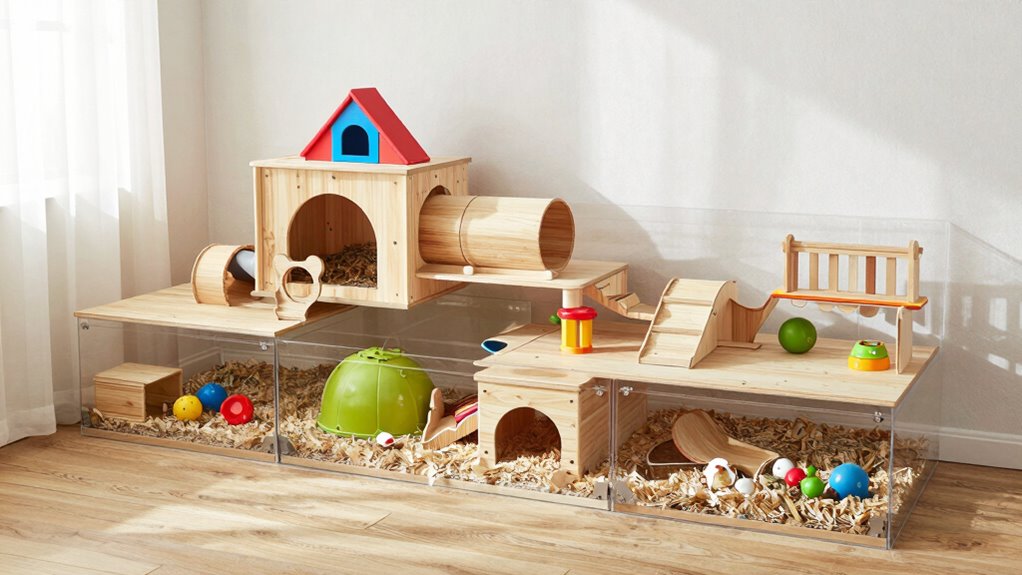
A well-designed gerbil cage provides more than just enough space; it creates a safe environment where your pet can thrive. Guarantee proper cage ventilation to prevent stale air and reduce odors, which keeps your gerbils healthy and comfortable. Use a cage with good airflow, avoiding enclosed or poorly ventilated setups. Inside, arrange your gerbils’ habitat with plenty of tunnels, wheels, and bedding to encourage activity and exploration. Securely attach water bottles at a comfortable height to promote hydration without spills. Avoid overcrowding by choosing a spacious cage, as it minimizes stress and encourages natural behaviors. Regularly clean and refresh water bottles to keep your gerbils hydrated and happy. A spacious, well-ventilated environment is key to preventing stress and promoting overall well-being. Environmental considerations such as proper cage setup and minimal impact help ensure your gerbils stay healthy and stress-free.
Signs Your Gerbils Are Stressed Because of Limited Space
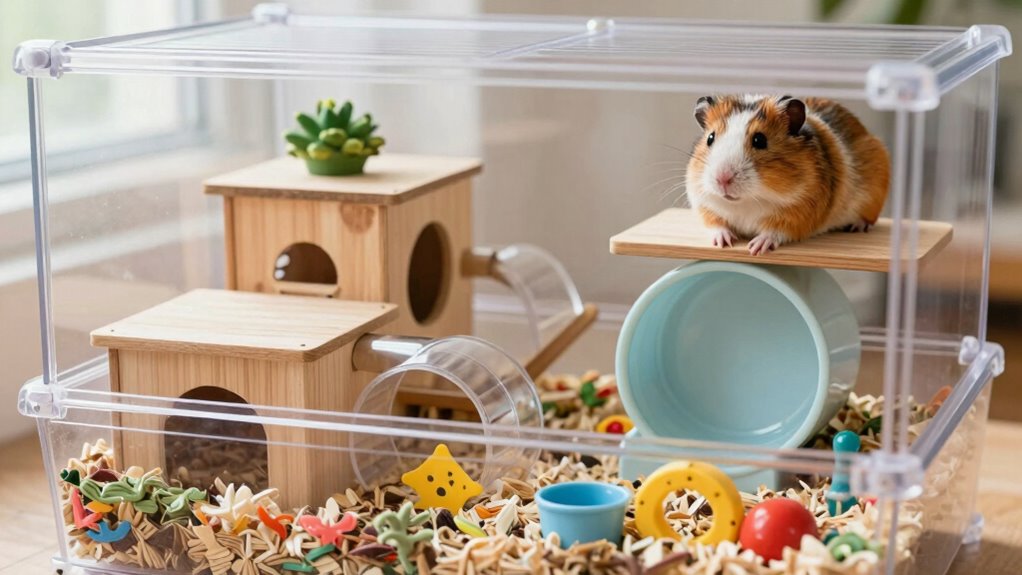
When gerbils feel confined due to limited space, they often display clear signs of stress. You might notice them overgrooming, leading to bald patches, or constant gnawing at the cage bars. Reduced activity levels and lethargy are common, as they struggle to find room to explore. Additionally, watch for aggressive behaviors like biting or chasing each other, which stem from frustration. Poor bedding materials can exacerbate stress, so ensure you provide soft, absorbent bedding to improve comfort. Also, a limited gerbil diet due to restricted space might cause them to hoard food excessively. Recognizing these signs early helps prevent health issues and guides you to create a more suitable habitat, reducing stress and promoting better well-being.
How Upgrading Your Cage Can Reduce Stress and Improve Behavior
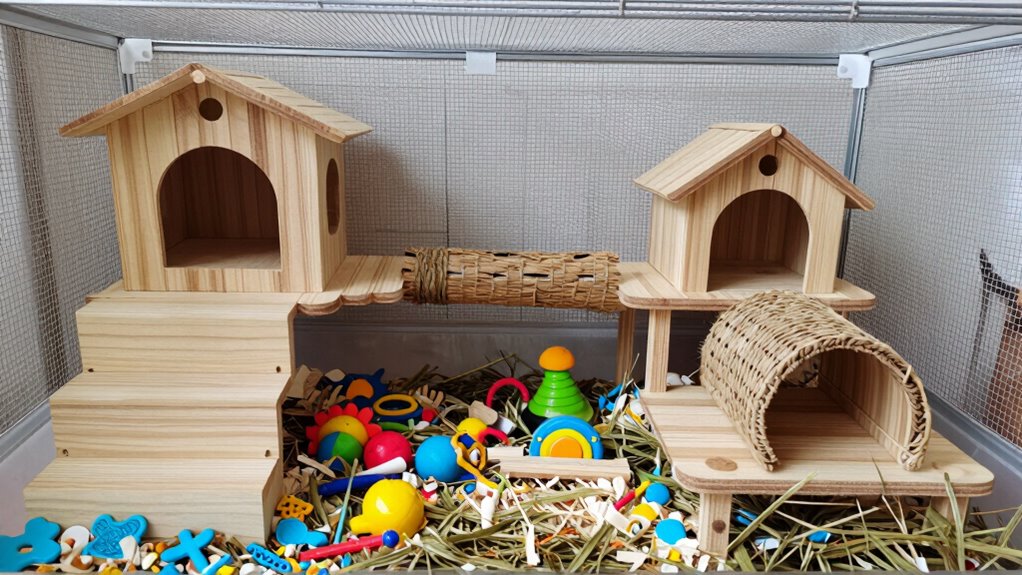
Upgrading your gerbil’s cage gives them enough space to stay active and explore, which keeps boredom at bay. Avoid overcrowding to reduce stress and prevent aggressive behaviors. Adding enrichment items encourages natural activities, making your gerbils happier and healthier.
Adequate Space Promotes Activity
Providing your gerbil with enough space in its cage encourages natural activity and exploration, which are essential for its mental and physical health. When your cage is spacious, your gerbil can:
- Engage in vigorous exercise, reducing stress through physical activity.
- Explore different areas, stimulating curiosity and mental sharpness.
- Use various levels and hideouts, enhancing space aesthetics and enriching their environment.
- Incorporate wireless technology accessories, like motion-activated lights, to create engaging, dynamic spaces that promote activity.
A larger cage prevents boredom and promotes healthier behaviors. Upgrading your gerbil’s habitat not only satisfies their need for space but also makes their environment more stimulating and comfortable. When space is adequate, your gerbil stays active, happy, and less prone to stress behaviors.
Reduced Overcrowding Prevents Stress
Overcrowding in your gerbil’s cage can lead to increased stress and aggressive behaviors. When space is limited, your gerbils struggle to find climbing opportunities or comfortable nesting spots, which heightens their anxiety. Upgrading to a larger cage reduces this overcrowding, giving each gerbil room to explore and climb freely. More space also allows for better nesting comfort, helping your gerbils feel secure and relaxed. When they aren’t forced into close quarters, they’re less likely to compete or lash out. Less stress means healthier, more active gerbils that exhibit natural behaviors. Ensuring your cage isn’t overcrowded directly supports their well-being, creating a calmer environment where stress behaviors are minimized. This simple upgrade can markedly improve your gerbils’ quality of life.
Enrichment Encourages Natural Behaviors
A larger, well-designed cage not only reduces stress by giving your gerbils more space but also offers the opportunity to incorporate enriching elements that promote natural behaviors. You can do this by adding:
- Interactive toys that challenge their problem-solving skills
- Multiple nesting options to encourage nesting and burrowing
- Climbing structures to satisfy their need for height and exploration
- Hideouts that provide a sense of security and reduce anxiety
These additions help mimic their natural environment, stimulate their minds, and prevent boredom. When your gerbils engage with these enrichments, they’re more likely to display natural behaviors such as digging, foraging, and exploring. Enrichment is key to reducing stress and fostering happy, healthy gerbils.
Tips for Maintaining a Spacious, Enriching Habitat for Your Gerbils
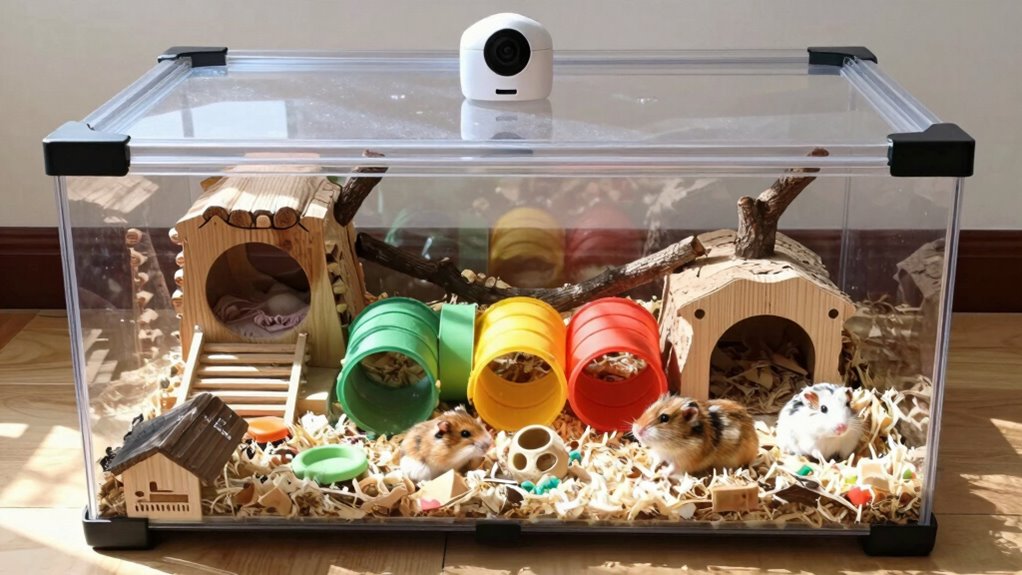
To keep your gerbils happy and healthy, maintaining a spacious and stimulating habitat is essential. Start by choosing an enclosure that offers ample space for running, digging, and exploring. Regularly refresh bedding materials like paper-based or aspen bedding to guarantee a clean, comfortable environment that encourages natural behaviors. Providing a balanced gerbil diet with fresh pellets, seeds, and vegetables supports their health and energy levels. Arrange tunnels, wheels, and hideouts to promote activity and mental engagement. Keep the cage clean and well-ventilated, and avoid overcrowding to prevent stress. By consistently maintaining these elements, you create an enriching habitat that fosters your gerbils’ well-being and prevents stress behaviors.
Frequently Asked Questions
How Often Should I Clean My Gerbil’s Cage to Maintain Space and Hygiene?
You should clean your gerbil’s cage weekly to maintain hygiene and space. Follow a regular cleaning schedule, removing soiled bedding and waste daily, and give the cage a thorough scrub once a week. Make sure good cage ventilation during cleaning to prevent odors and mold. This routine keeps your gerbil healthy, reduces stress, and keeps their environment fresh, so they stay happy and active.
Can Adding Tunnels and Toys Reduce Stress in Small Cages?
Adding tunnels and toys can greatly reduce stress in small cages, like giving a child a favorite hiding spot. Make sure tunnel safety by checking for sharp edges, and select toys that are safe and stimulating. I once saw a gerbil feel more confident after it had a cozy tunnel to retreat to. These enrichments encourage activity, reduce boredom, and make your pet feel secure, promoting overall health and happiness.
What Are the Signs That My Gerbils Need More Space?
If your gerbils show behavior signs like excessive biting, constant digging, or pacing, they likely need enclosure expansion. These behaviors indicate stress or boredom caused by limited space. To improve their well-being, consider increasing their cage size or adding more tunnels and toys. Providing more room helps prevent stress behaviors and keeps your gerbils happy, active, and healthy. Always observe their activity and adjust their environment accordingly.
How Does Cage Shape Affect Gerbils’ Activity Levels?
You’ll notice that cage shape markedly impacts your gerbils’ activity levels. A rectangular or multi-level cage promotes better space utilization, encouraging more movement and exploration. It also provides ample nesting options, which helps reduce stress. Avoid overly small or oddly shaped cages, as they limit activity and can cause boredom. A thoughtfully designed cage shape enhances your gerbils’ natural behaviors, keeping them active, happy, and healthy.
Are Multi-Level Cages Better for Space and Enrichment?
You’ll find multi-level cages are worth their weight in gold, offering more space and enrichment options for your gerbils. They maximize cage size vertically, giving your pets plenty of room to run, explore, and stay active. This setup mimics their natural environment, reduces stress behaviors, and keeps them happy. So, don’t shy away from investing in a multi-level cage — it’s a win-win for both space and enrichment!
Conclusion
By giving your gerbils the right amount of space, you’re not just preventing stress—you’re revealing their full potential for exploration and happiness. Imagine their tiny paws darting across a spacious cage, their curiosity sparked at every corner. But what if you’re just inches away from transforming their world completely? Stay tuned, because the next step could be the game-changer your gerbils have been waiting for—are you ready to discover it?