Grooming long-haired cats is vital for keeping their coats healthy and free from matting. You’ll need to brush them daily to prevent tangles, using tools like wide-toothed combs and slicker brushes. Establish a calm routine, introduce grooming tools slowly, and monitor their skin for any signs of issues. Remember, grooming isn’t just about looks; it’s a bonding experience that strengthens your relationship. Stick around to discover more tips on making grooming enjoyable for both of you!
Key Takeaways
- Long-haired cats, like Persians, require daily brushing to prevent matting and maintain healthy coats.
- Utilize essential grooming tools such as wide-toothed combs and slicker brushes for effective grooming.
- Establish a calm grooming routine, gradually introducing tools to build trust and comfort.
- Regular grooming sessions help monitor your cat’s health, allowing early detection of skin issues or parasites.
- Make grooming a bonding experience by being patient, rewarding your cat, and maintaining a positive atmosphere.
Grooming long-haired cats can seem intimidating, but with the right approach, it becomes a rewarding experience for both you and your feline friend. These beautiful creatures, like Persians or Maine Coons, require regular grooming to maintain their stunning coats and overall health. To get started, it’s important to understand the basics of breed-specific grooming and how to equip yourself with the right tools.
First off, familiarize yourself with the grooming needs of your cat’s specific breed. Each long-haired breed has unique characteristics that influence their grooming routine. For instance, Persians have dense, silky fur that requires daily brushing to prevent matting, while Maine Coons have a more water-resistant coat that benefits from weekly grooming. Tailoring your approach to your cat’s breed ensures you’re addressing their specific needs effectively.
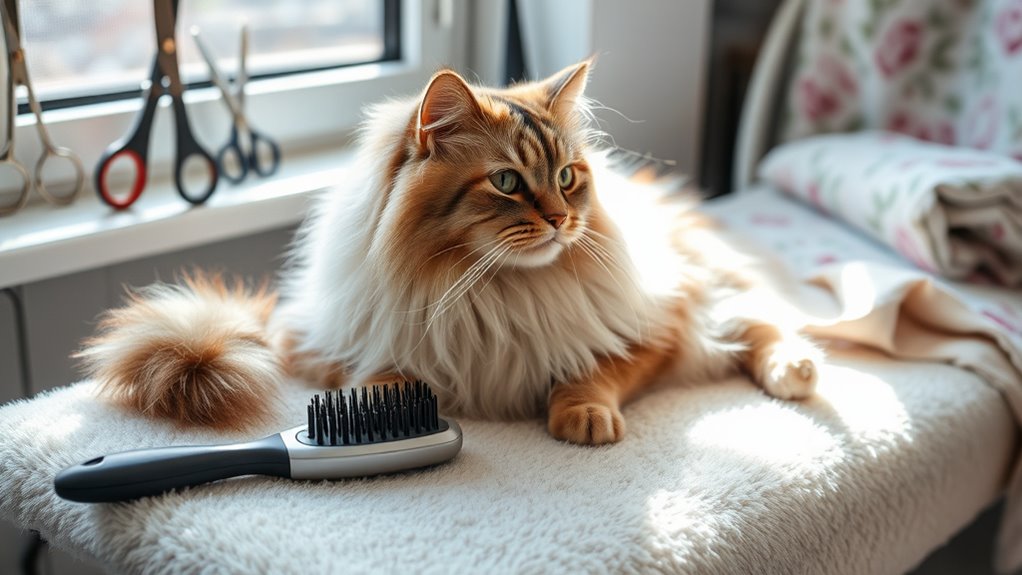
To make grooming a breeze, gather a few essential tools. A wide-tooted comb is great for detangling and removing loose hair. Opt for a slicker brush to remove mats and debris from the undercoat. For those stubborn knots, a dematting tool can be a lifesaver. Don’t forget to pick up a pair of grooming gloves too; they’re perfect for smoothing out your cat’s coat while collecting loose fur. Having the right tools on hand makes the grooming process smoother and more enjoyable for both you and your cat.
Establish a grooming routine that fits your cat’s temperament. Start by choosing a calm environment, free from distractions. Gently introduce your cat to the grooming tools, allowing them to sniff and inspect before you begin. It’s essential to be patient and take your time, especially if your cat seems anxious. Begin with short grooming sessions, gradually increasing the duration as your cat becomes more comfortable. This will help build trust and make grooming a positive experience.
As you groom, keep an eye out for any signs of skin issues or parasites. Regular grooming not only keeps your cat looking fabulous but also helps you notice any potential health concerns early on. Don’t forget to reward your furry friend with treats and affection to reinforce the positive experience.
With consistent practice and the right tools, grooming your long-haired cat can transform from a challenging task into an enjoyable bonding activity, ensuring your feline friend stays healthy and beautiful.
Frequently Asked Questions
How Often Should I Bathe My Long-Haired Cat?
You should bathe your long-haired cat about once every 4 to 6 weeks, depending on its lifestyle and grooming needs. Regularly using cat grooming tools like brushes and combs can help reduce the frequency of baths. Establish a bathing schedule that works for both you and your cat, ensuring it’s a stress-free experience. Always use cat-specific shampoos to keep their coat healthy and avoid skin irritation.
Can I Use Human Shampoo on My Cat?
You glance at the bottle of human shampoo, its vibrant label glistening. But wait! Can you really use it on your cat? The answer’s a firm no. Human shampoo’s formulated for our skin, which has a different pH than feline skin, making it harsh. Your cat’s delicate skin can suffer from irritation and sensitivity. Stick to cat-specific shampoos to keep your furry friend happy and healthy, avoiding any unnecessary discomfort.
What Are Signs of Matting in Long-Haired Cats?
You’ll notice signs of matting in long-haired cats when you see clumps of fur or areas where the fur has become tangled. Cat shedding can exacerbate this issue, leading to fur entanglement that’s uncomfortable for your pet. Look for patches of fur that feel stiff or rough, and check for skin irritation underneath. Regularly inspecting your cat’s coat can help you catch these issues before they become more serious.
Is Professional Grooming Necessary for Long-Haired Cats?
While a well-kept garden blooms beautifully, your long-haired cat deserves the same care. Professional grooming isn’t strictly necessary, but it can be beneficial. Experts wield cat grooming tools with precision, ensuring your feline’s coat stays tangle-free and healthy. Plus, they know grooming safety, minimizing stress for both you and your cat. If you’re unsure or pressed for time, a professional can help maintain that stunning, flowing coat you both admire.
How Can I Prevent Hairballs in Long-Haired Cats?
To prevent hairballs in your long-haired cat, focus on a diet adjustment and regular brushing. A high-fiber diet can help your cat pass hair more easily, reducing hairball formation. Additionally, brushing your cat several times a week will remove loose fur and minimize ingestion during grooming. With these practices, you’ll not only keep your cat comfortable but also reduce the chances of hairballs causing discomfort or digestive issues.
Conclusion
In summary, consistent care creates a content kitty. By dedicating time to daily brushing, you’ll not only prevent pesky tangles but also promote a shiny, healthy coat. Don’t forget to check those ears and trim those nails for a truly tidy and terrific feline friend. With a little love and attention, you’ll foster a fabulous bond with your long-haired companion. Remember, grooming’s not just a chore; it’s a chance to cherish your cat!