
To manage odor with fleece liners without harsh cleaners, start by using highly absorbent fleece paired with waterproof barriers underneath. Spot clean daily, removing soiled sections promptly, and change bedding at least twice a week. Incorporate natural odor absorbers like baking soda or activated charcoal, and guarantee good airflow in the cage. Regular hygiene and gentle washing of fleece help keep your guinea pig’s habitat fresh—more tips to keep odors at bay are just ahead.

Get pet supplies delivered free — and shop member deals
- Fast, free delivery on millions of items
- Access to Prime Big Deal Days deals on October 6–7
- Prime Video, Amazon Music and more included
Key Takeaways
- Change fleece liners at least twice weekly and spot clean daily to prevent odor buildup naturally.
- Use natural odor absorbers like baking soda sprinkled lightly on bedding and activated charcoal in breathable bags.
- Enhance ventilation with proper cage setup and add air circulation materials like Free Floating for fresh airflow.
- Incorporate odor-neutralizing plants such as basil or mint near the cage to naturally combat smells.
- Regularly wash fleece liners in hot water with non-toxic, fragrance-free detergent to maintain freshness without harsh chemicals.
guinea pig fleece bedding liners
As an affiliate, we earn on qualifying purchases.
As an affiliate, we earn on qualifying purchases.
Why Guinea Pigs Need Odor-Free Fleece Bedding
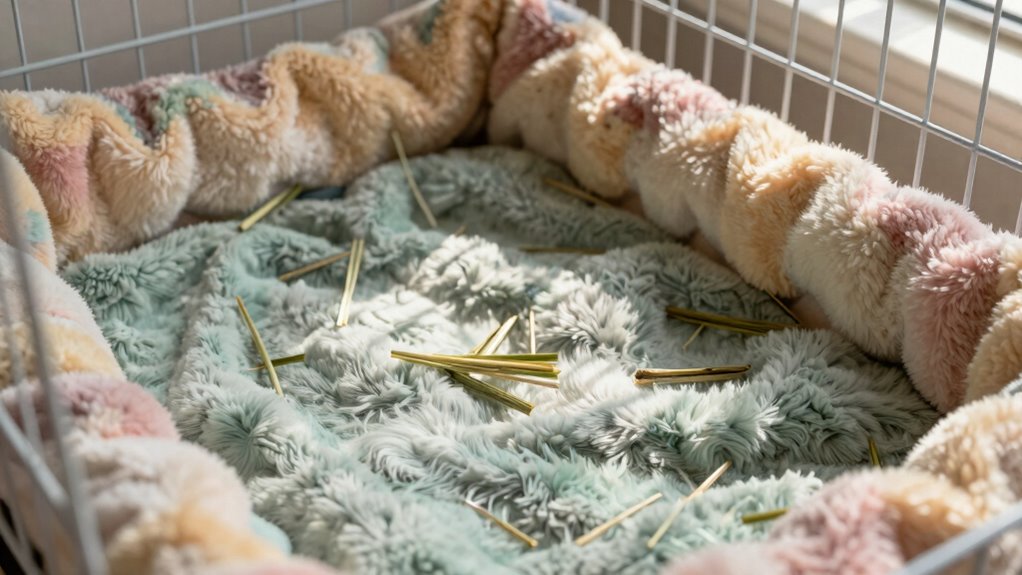
Since guinea pigs produce a lot of waste, using odor-free fleece bedding helps keep their habitat fresh and comfortable. Their natural chewing habits can lead them to gnaw on bedding materials, so choosing fleece prevents ingestion of harmful substances and minimizes odors caused by chew debris. Good cage ventilation is essential, as it allows stale air and moisture to escape, reducing ammonia buildup and dampness that contribute to unpleasant smells. Fleece bedding absorbs moisture effectively, preventing dampness that worsens odors. Without proper bedding, waste and saliva can quickly create a foul environment, stressing your guinea pig. Additionally, proper habitat maintenance and timely cleaning are crucial to controlling odors and ensuring your pet’s health. Regularly replacing fleece liners and ensuring adequate airflow can significantly reduce the buildup of ammonia fumes, which are harmful to your guinea pig’s respiratory system. Using odor-neutralizing additives designed for small animal habitats can also help maintain a fresh environment. Incorporating adequate ventilation systems is essential for dispersing trapped odors and moisture, further enhancing habitat cleanliness. By selecting odor-free fleece liners, you support their chewing tendencies safely and ensure proper airflow, maintaining a clean, odorless, and healthy habitat.
How to Set up Fleece Bedding for Odor Control From Day One
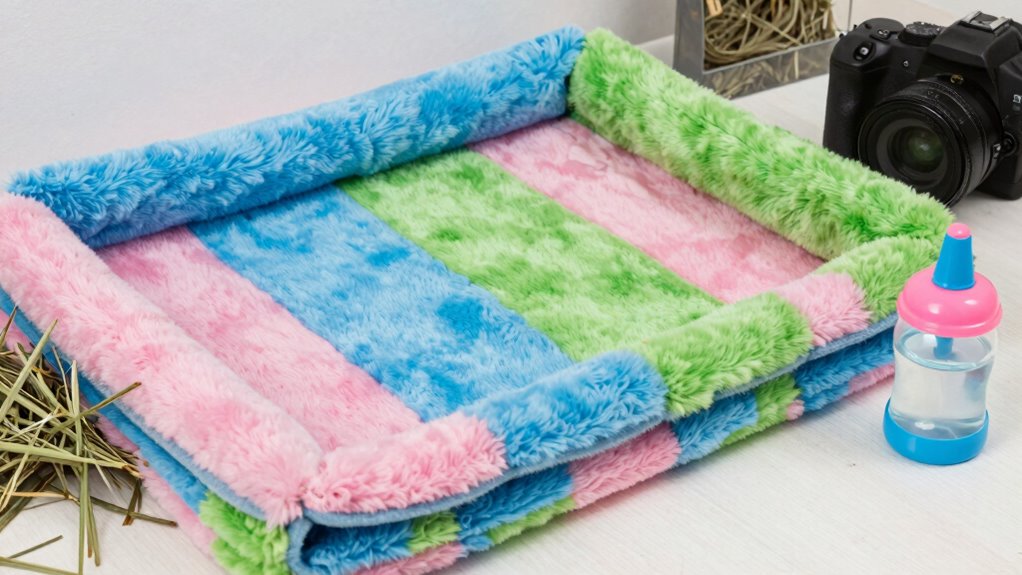
To control odors from the start, choose a highly absorbent fleece material that traps moisture effectively. Make sure to use odor barriers underneath the fleece to prevent leaks and smells from seeping through. Establish a consistent cleaning routine so your guinea pig’s environment stays fresh and odor-free day after day. Incorporating Free Floating materials can help prevent buildup and promote better air circulation. Additionally, selecting energy-efficient cleaning tools can reduce overall maintenance effort and support a sustainable environment. Understanding filtration systems can also help you allocate resources effectively for your pet care needs.
Select Absorbent Fleece Material
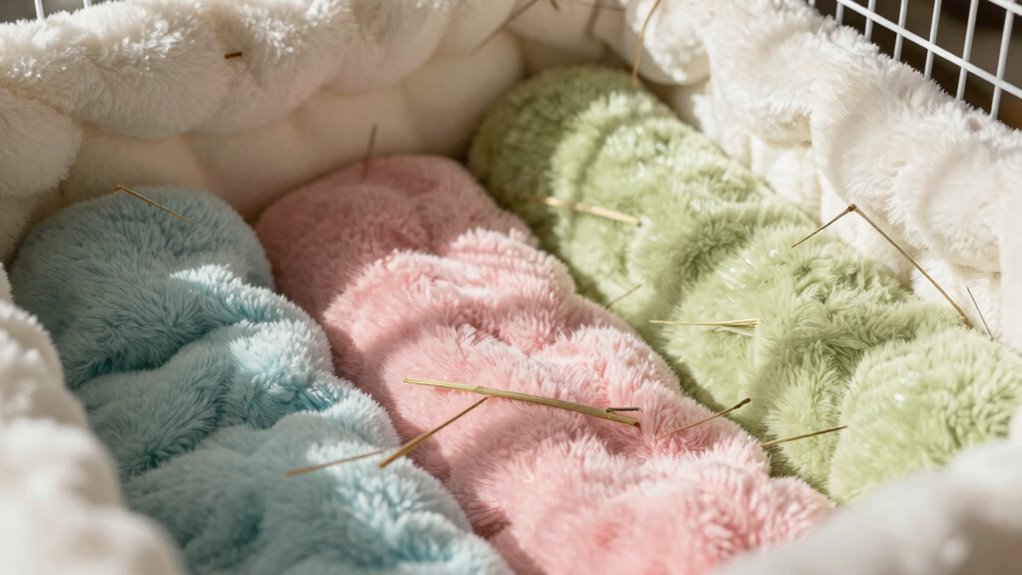
Choosing the right fleece material is essential for effective odor control from day one. You want a fleece that’s highly absorbent and durable to keep your guinea pig’s habitat fresh. When considering a bedding material comparison, look for fleece options with tight weaves that trap moisture effectively. Some fleece alternative options include microfleece, polar fleece, or tightly woven polyester fleece. Keep in mind:
- Thicker fleece layers enhance absorption
- High-quality, tightly woven fabrics prevent leaks
- Some fleece types wick moisture better than others
- Avoid fleece with loose fibers that trap waste
- Test different fabrics to find what works best for your setup
Selecting fleece with moisture-wicking properties ensures odor stays at bay, reducing cleaning frequency and keeping your guinea pig comfortable. Additionally, selecting fleece that is compatible with aquatic exercise principles can promote better moisture management and overall habitat health. Proper fleece selection also helps in managing vetted wave and wind influences, which can impact humidity and odor levels in your guinea pig’s environment. Incorporating fleece with antimicrobial treatments can further inhibit bacterial growth and odor development. Moreover, choosing fleece that incorporates odor-neutralizing technology can significantly improve odor control from the outset.
Use Effective Odor Barriers
Setting up fleece bedding with effective odor barriers starts by layering materials properly. Begin with a waterproof liner or pad to prevent moisture from seeping through, which helps keep your guinea pig’s space fresh and reduces odor. Place a layer of absorbent bedding on top, such as fleece combined with pine or paper-based products. This not only traps odor but also maintains your pet’s comfort. To keep your setup tidy and appealing, consider how this bedding complements your bedroom decor—neutral tones or coordinating colors can make the space more inviting. If you travel with your guinea pig, use portable fleece liners with odor barriers to prevent smells from escaping during pet travel. Proper layering from the start guarantees odor control and makes maintenance easier. Incorporating air purifiers into your home environment can further enhance odor management and improve overall air quality. Additionally, selecting bedding materials with generative AI features can help optimize odor absorption and freshness over time.
Establish Cleaning Routine
Starting a consistent cleaning routine is essential for keeping your guinea pig’s fleece bedding odor-free from day one. Regular cleaning prevents the buildup of waste and minimizes the need for toxic chemicals, which can harm your pet. To establish an effective routine, consider these steps:
- Replace fleece liners at least twice a week to prevent odor buildup
- Use baking soda or enzyme cleaners as natural bedding alternatives
- Spot clean daily to remove soiled areas promptly
- Wash fleece liners in hot water with gentle, non-toxic detergents
- Air out the bedding regularly to reduce moisture and odor
- Maintaining proper air circulation ensures your guinea pig’s environment stays fresh and healthy.
- Incorporate consistent cleaning schedules to help sustain a fresh-smelling habitat over time.
- Regular inspection of the bedding helps catch issues early and maintain odor control.
- Ensuring adequate ventilation can significantly improve odor management and overall cage hygiene.
Sticking to this routine helps control odors without relying on harsh cleaners, ensuring a safe environment for your guinea pig. Consistency is key for odor management and your pet’s health.
The Best Materials and Layering Tips for Fresh-Smelling Guinea Pig Habitats
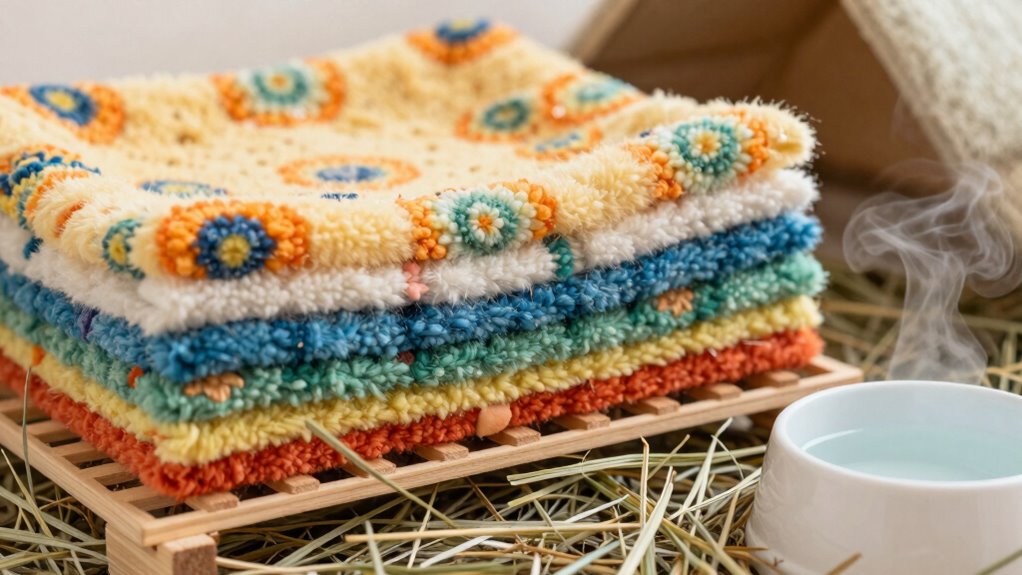
To keep your guinea pig’s habitat smelling fresh and clean, selecting the right bedding materials and layering them properly is essential. Use soft fleece liners combined with absorbent substrates like paper-based bedding to manage moisture and reduce odors. Incorporate a layer of hay or shredded paper on top of the fleece for added absorption and enrichment. Since guinea pigs have strong chewing habits, ensure your cage has good ventilation to prevent ammonia buildup and keep odors at bay. Proper layering helps trap waste and moisture, minimizing smell and making cleaning easier. Regularly check and replace soiled layers promptly. Additionally, using odour control techniques can further enhance freshness without resorting to harsh cleaners. This combination supports a fresh environment, reduces the need for harsh cleaners, and keeps your guinea pig comfortable and happy.
Common Mistakes That Lead to Odor Buildup and How to Avoid Them
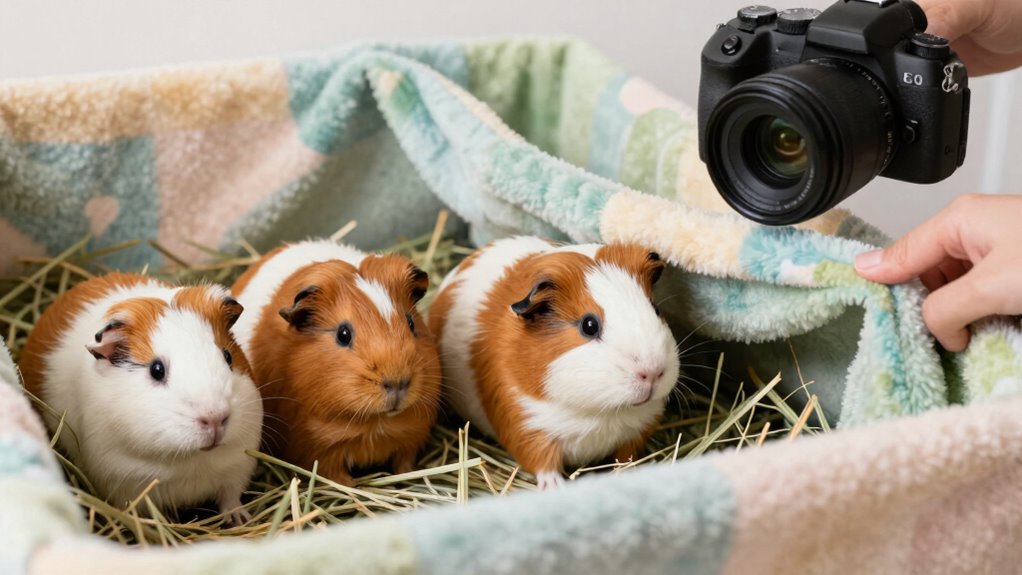
One common mistake that leads to odor buildup is neglecting regular cleaning and not replacing soiled bedding promptly. Poor air circulation can trap moisture and smells, making odors worse. Additionally, using bedding with inappropriate texture can retain moisture and bacteria, increasing odors. To avoid these issues, ensure good airflow in your guinea pig’s habitat. Select fleece liners with a breathable, moisture-wicking texture. Change bedding frequently, especially when soiled. Avoid overcrowding, which restricts airflow further. Regularly inspect and fluff fleece liners to maintain proper bedding texture and prevent dampness. Being aware of habitat conditions can also help in understanding how your guinea pig interacts with its environment and responds to cleaning routines. Choosing appropriate bedding materials that wick moisture away and dry quickly can further reduce odor buildup. By maintaining proper air circulation and choosing the right bedding, you considerably reduce odor buildup and create a more comfortable environment for your guinea pig.
How to Clean and Change Fleece Liners for Maximum Freshness
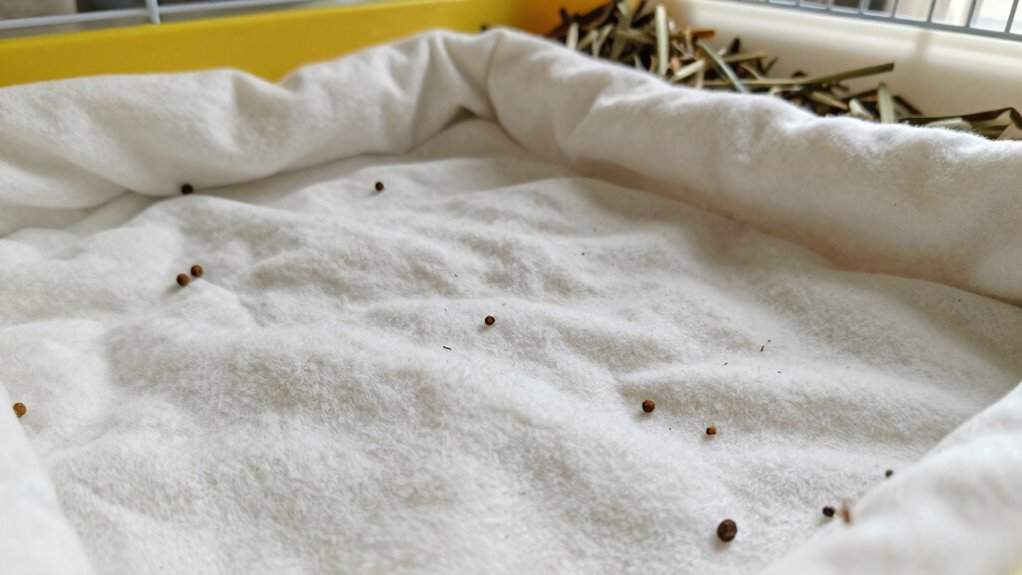
To keep your guinea pig’s environment fresh, you need to wash the fleece liners regularly using gentle detergent. Make sure to replace the liners often enough to prevent odors and bacteria buildup. Consistent cleaning and timely changes will keep your pet comfortable and your cage smelling clean.
Regular Washing Practices
Regularly washing your fleece liners is essential for maintaining a clean and healthy environment for your guinea pig. Consistent cleaning helps prevent odors and keeps your pet comfortable. When washing, consider using odor neutralizing sprays to enhance freshness without harsh chemicals. Here are some tips:
- Wash liners at least once a week to prevent buildup
- Use mild, pet-safe detergents to protect fleece fibers
- Avoid fabric softeners, which can trap odors
- Air dry liners thoroughly before reuse
- Rotate bedding alternatives to reduce moisture and odor buildup
This routine ensures your fleece stays fresh and odor-free, creating a more hygienic space. Incorporating regular cleaning practices with odor neutralizing sprays helps maintain maximum freshness without resorting to harsh cleaners.
Proper Liner Replacement
Ensuring your fleece liners stay fresh requires proper cleaning and timely replacement. Regularly inspect your bedding alternatives and replace fleece liners at least once a week to prevent odor buildup. When changing liners, shake out any loose debris and wash them with a gentle, pet-safe detergent. Consider using odor neutralizers designed for small animals to help control lingering smells between washes. Avoid leaving soiled liners in the cage for too long, as this can lead to unpleasant odors and bacteria growth. When installing new liners, ensure they fit snugly and are free of wrinkles to prevent bedding from shifting. Proper replacement not only keeps your guinea pig’s environment clean but also helps you manage odor effectively without harsh cleaners.
Natural Odor Absorbers for Guinea Pig Bedding: What Works Best
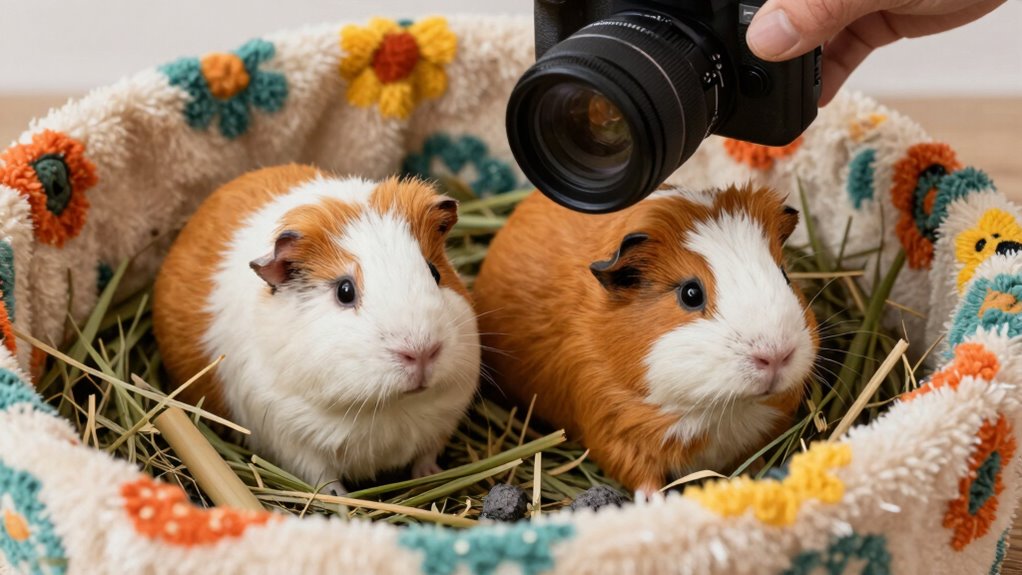
When it comes to keeping your guinea pig’s habitat smelling fresh, natural odor absorbers can be highly effective. Good cage ventilation is key, helping odors disperse before they settle. Additionally, odor neutralizing plants like basil, mint, or lavender can naturally combat smells and add a pleasant scent. You can also try:
- Baking soda sprinkled lightly on bedding
- Activated charcoal in a breathable bag
- Apple cider vinegar sprays (diluted)
- Natural zeolite mineral rocks
- Fresh herbs placed near the cage
These options work best when combined with regular cleaning and proper airflow. Remember, maintaining good cage ventilation and incorporating odor neutralizing plants help keep odors at bay naturally, reducing the need for harsh cleaners while keeping your guinea pig happy and healthy.
Signs Your Bedding Needs Attention and When to Refresh It
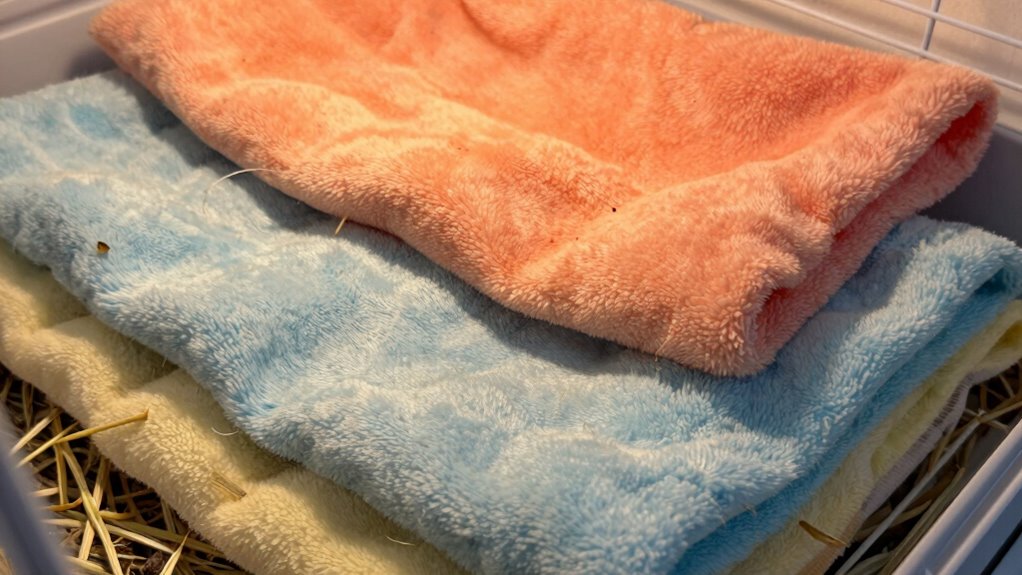
Your guinea pig’s bedding needs attention when it starts to emit a persistent odor or looks visibly soiled. If you notice a strong smell despite regular spot cleaning, it’s time to refresh the bedding materials to maintain good odor control. Look for signs of dampness, clumping, or uneven soiling, which indicate it’s no longer effectively managing moisture and odor. Even if the bedding appears clean but smells musty, it’s a good idea to replace it. Regularly checking your guinea pig’s bedding ensures a healthy environment and prevents potential health issues. When you refresh, thoroughly clean the enclosure and replace with fresh fleece liners or bedding materials that support continued odor control and comfort. This routine helps keep your pet happy and your space odor-free.
Using Deep Litter and Additional Substrates Safely With Fleece Liners
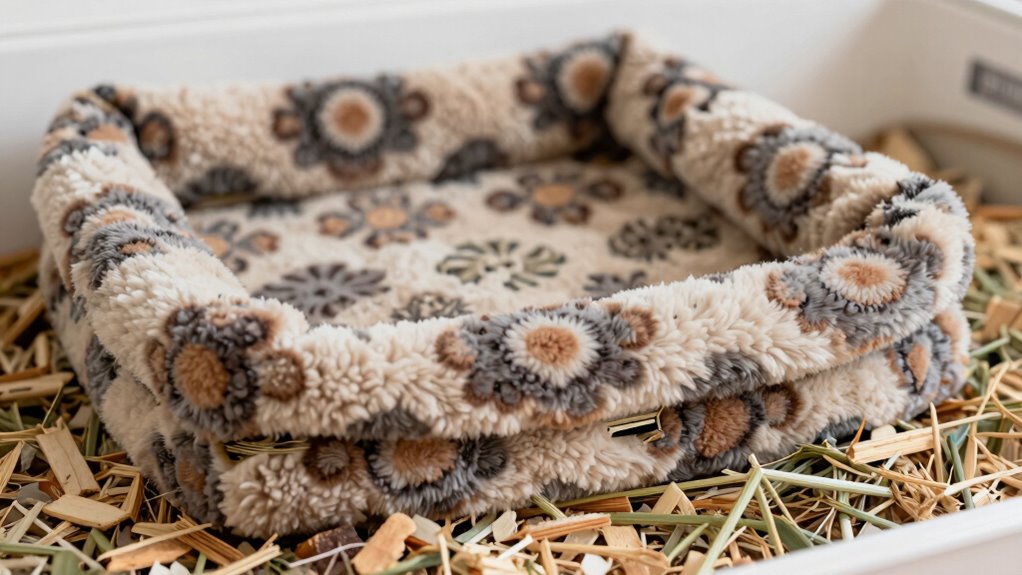
Using deep litter and additional substrates alongside fleece liners can enhance your guinea pig’s comfort and odor control, but it’s important to do so safely. Excessive bedding can encourage dust mites and reduce bedding ventilation, leading to respiratory issues. To minimize risks:
- Use dust-free, kiln-dried bedding to limit dust mite growth
- Add a layer of paper-based substrate for better moisture absorption
- Avoid overly thick layers that trap humidity and hinder airflow
- Regularly stir and replace bedding to prevent mold and odors
- Monitor for signs of dust buildup, especially if your guinea pig shows respiratory distress
Easy Tips to Keep Your Guinea Pig Habitat Fresh Without Harsh Cleaners

Keeping your guinea pig’s habitat fresh doesn’t have to involve harsh cleaners. Regular spot cleaning and using baking soda can help control odors naturally. Proper bedding maintenance also guarantees a healthier, more comfortable environment for your pet.
Regular Spot Cleaning
Regular spot cleaning is essential for maintaining a fresh and healthy guinea pig habitat without relying on harsh chemicals. It helps prevent the buildup of waste and reduces odors caused by bacteria, all while avoiding toxic chemicals and bedding fragrance that can harm your pet. To keep things tidy, you should:
- Remove soiled fleece liners daily
- Scoop out any visible droppings
- Wipe down high-traffic areas with a damp cloth
- Check for damp spots and replace affected fleece promptly
- Ventilate the habitat regularly to disperse odors
This routine minimizes odor without the need for sprays or harsh cleaners, ensuring your guinea pig remains comfortable and safe. Consistent spot cleaning also helps you catch potential health issues early, keeping your pet happy and the environment fresh.
Use Baking Soda
Baking soda offers a simple, natural way to keep your guinea pig’s habitat smelling fresh without relying on harsh chemicals or artificial fragrances. Sprinkle a thin layer of baking soda on your fleece liners before adding bedding or cage accessories. This helps absorb odors from your guinea pig’s diet and waste, maintaining a more pleasant environment. When you clean the cage, gently shake or vacuum the baking soda to remove residues. Avoid overusing it to prevent buildup. Remember, a healthy guinea pig diet with fresh vegetables reduces strong odors naturally, complementing your odor-control efforts. Keep in mind, baking soda is a safe, effective odor absorber when used properly, making it a great addition to your regular cage maintenance routine.
Proper Bedding Maintenance
Maintaining a clean and fresh guinea pig habitat doesn’t require harsh chemicals or complicated routines. Regular bedding maintenance is key to odor control and a healthy environment. Keep your guinea pig’s cage inviting by:
- Changing fleece liners at least once a week to prevent buildup
- Spot cleaning daily to remove soiled bedding and waste
- Ensuring proper cage decoration that promotes airflow and reduces moisture
- Monitoring guinea pig nutrition to prevent digestive issues that cause odors
- Using natural odor absorbents like hay or fresh herbs in the cage
These simple steps help you manage odors naturally, keeping your guinea pig happy and healthy. Consistent cleaning not only improves cage hygiene but also promotes better cage decoration, making it a cozy home your pet will love.
Troubleshooting Persistent Odor Problems and When to Seek Expert Advice
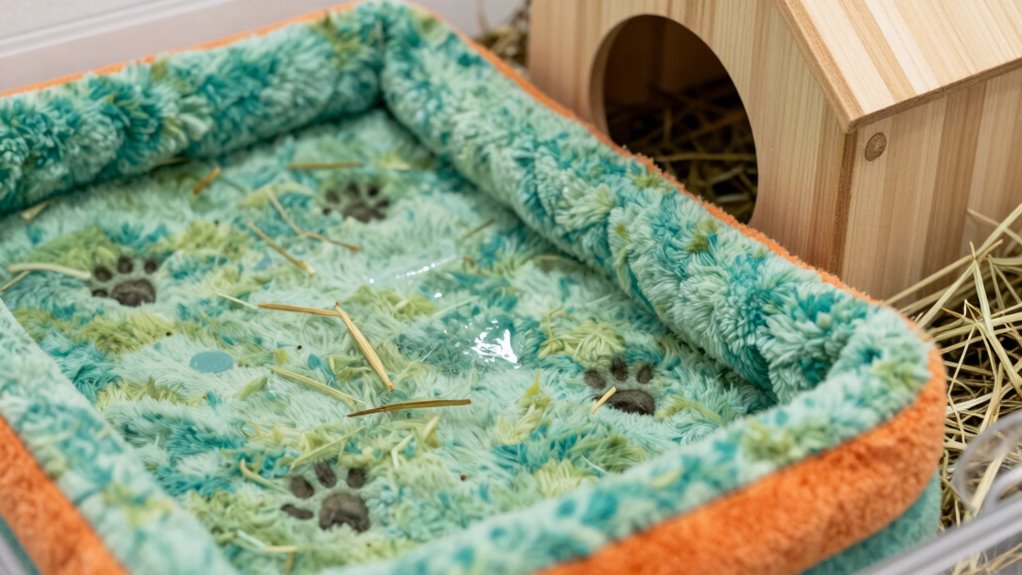
Persistent odors in guinea pig bedding can be frustrating, especially when fleece liners aren’t doing their job. If you’ve tried cleaning and changing liners regularly but still face smell issues, it might be time to evaluate your cage accessories and habitat decoration. Poor ventilation or overcrowding can trap odors, making the smell worse. Sometimes, adding more hiding spots or adjusting bedding layers helps distribute moisture better. If odors persist despite these changes, consider consulting a veterinarian or small animal expert. They can assess your setup and recommend specific solutions, such as specialized bedding or habitat modifications. Recognizing when issues go beyond routine maintenance ensures your guinea pigs stay healthy and comfortable without relying on harsh cleaners.
Frequently Asked Questions
Can Fleece Liners Be Reused After Washing?
Yes, you can reuse fleece liners after washing. To do so, follow DIY cleaning methods by thoroughly rinsing and sanitizing them. Recycling options include washing with gentle, pet-safe detergents and air-drying completely to prevent odors. Regular cleaning extends their lifespan, saving you money and reducing waste. Just make certain the liners are free of any lingering smells or stains before reusing, and replace them when they show signs of wear.
How Often Should Fleece Bedding Be Changed?
You should change your guinea pig’s fleece bedding at least once a week for ideal bedding maintenance and odor control. If you notice a strong smell or soiled spots sooner, don’t hesitate to change it earlier. Regular spot cleaning between full changes can also help. Using odor control techniques like baking soda sprinkling or adding natural deodorizers keeps the environment fresh, ensuring your guinea pig stays comfortable and your cage stays clean.
Are There Specific Natural Odor Absorbers for Fleece?
Think of natural odor absorbers as your guinea pig’s personal air purifiers. To boost fleece deodorization, try adding baking soda or activated charcoal beneath the fleece liners. These natural odor absorbers quickly trap and neutralize smells, keeping your pet’s space fresh without harsh chemicals. Regularly replacing and shaking out the fleece also helps maintain a clean, odor-free environment. With these simple tips, your guinea pig’s home stays fresh and inviting.
Is It Safe to Add Herbs or Essential Oils to Bedding?
Adding herbs or essential oils to your guinea pig’s bedding isn’t recommended, as they can be harmful. Herb infusions or essential oils might cause skin irritation or respiratory issues. Instead, focus on natural odor absorbers like baking soda or herbal sachets made specifically for small pets. Always prioritize your guinea pig’s safety, and consult your vet before introducing any new scents or additives to their bedding.
How Do I Prevent Fleece From Developing Mold or Mildew?
Picture your fleece liner turning into a moldy swamp, not exactly a spa day for your piggies. To prevent mold and mildew, guarantee thorough drying after cleaning, and avoid excess moisture. Use good ventilation in your cage, and consider sprinkle baking soda or vinegar during washings for mildew control. Regularly check for damp spots, and replace fleece liners promptly to keep your guinea pig’s habitat fresh and healthy.
Conclusion
By following these simple tips, you can keep your guinea pig’s fleece bedding fresh and odor-free without harsh cleaners. But what happens if odors still linger? Stay alert to signs your setup needs a closer look—you might discover unexpected issues. With the right approach and a little vigilance, you’ll create a clean, comfortable home for your furry friend. Ready to uncover the secret to truly fresh bedding? The answer might surprise you.
Fall Picks
fall essentials
As an affiliate, we earn on qualifying purchases.