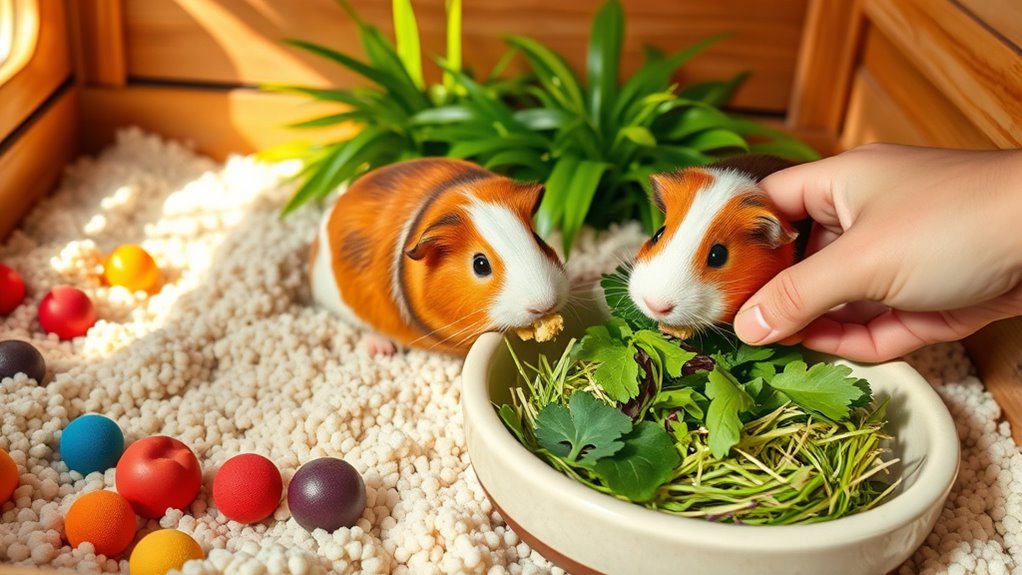
To care for your guinea pig, focus on a balanced diet with fresh veggies and high-quality hay, like Timothy hay. Provide a spacious cage with soft bedding and hiding spots. Make sure they have companionship, as they thrive with a buddy. Regular grooming and health check-ups are essential for their well-being. By understanding these key areas—diet, housing, and companionship—you’ll create a happy home for your pet. There’s so much more to explore for their happiness!

Get pet supplies delivered free with Prime
- Fast, free delivery on millions of items
- Prime Video, Amazon Music and more included
- Member-only deals all year
Key Takeaways
- Provide a balanced diet with fresh vegetables, high-quality hay like Timothy, and limited fruits to ensure optimal nutrition for your guinea pig.
- Ensure housing includes at least 7.5 square feet of space, soft bedding, hiding spots, and toys for mental stimulation.
- Regularly groom your guinea pig by brushing their fur and trimming nails every few weeks to prevent discomfort and matting.
- Consider adopting a pair of guinea pigs to meet their social needs, as they thrive on companionship and interaction.
- Conduct regular health checks and maintain a clean habitat to promote overall well-being and early detection of potential health issues.
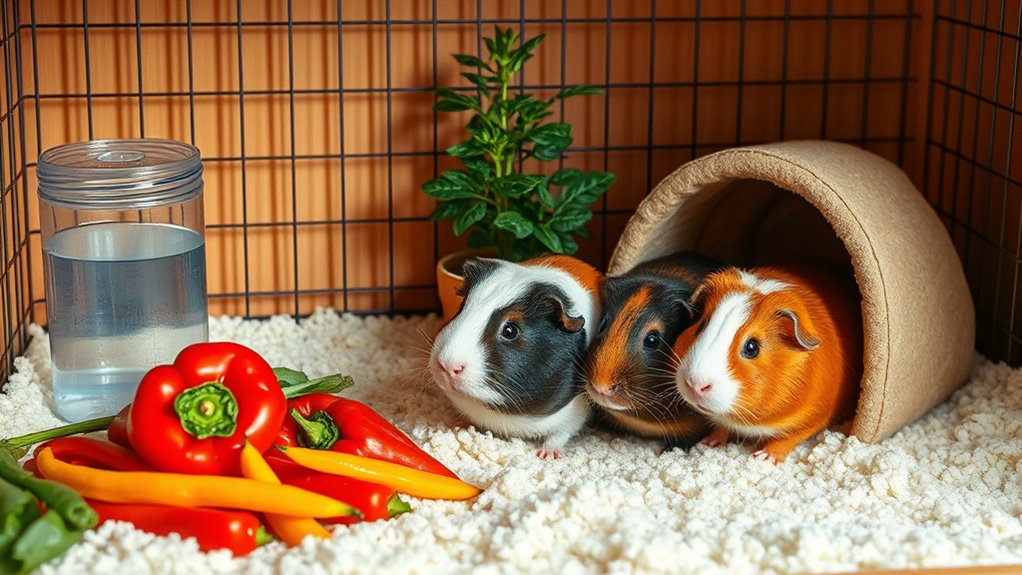
Have you ever wondered what it takes to keep a guinea pig happy and healthy? Caring for these little furballs involves more than just feeding and providing a cozy home. You’ll need to pay attention to their diet, housing, and companionship to guarantee they thrive. Let’s dive into what your guinea pig needs to live a fulfilled life.
First, their diet is crucial. Guinea pigs are herbivores, so you’ll want to offer them a variety of fresh vegetables and high-quality hay, like timothy hay, which is essential for their digestive health. Fresh greens, such as kale, romaine, and bell peppers, should be part of their daily meal plan. Avoid feeding them iceberg lettuce, as it doesn’t provide the nutrients they need. On the other hand, fruits can be a tasty treat but should be given in moderation due to their high sugar content. Always ensure fresh water is available, too. Hydration is vital for their overall well-being. Additionally, providing a variety of fresh vegetables is key to ensuring they receive all necessary nutrients.
Next up is housing. Your guinea pig needs a spacious cage where they can roam and play. A good rule of thumb is to provide at least 7.5 square feet of space for one or two guinea pigs. Make sure to line the bottom with soft bedding, like aspen shavings or fleece, which is easy to clean and comfortable for them. It’s also a good idea to add hiding spots and toys to keep them mentally stimulated. Regular cleaning will help prevent odors and keep your pet healthy.
Don’t forget about grooming! Regular brushing is important, especially for long-haired breeds. You’ll want to incorporate grooming tips, such as using a soft brush to prevent their fur from matting. Take a close look at their nails, too, as they can grow long and uncomfortable. Trimming their nails every few weeks will help keep them in check. If you’re unsure about grooming or notice any unusual signs, don’t hesitate to schedule vet visits. A professional can provide valuable advice and check for any underlying health issues.
Lastly, guinea pigs are social creatures, so companionship is essential. Whether you choose to adopt a pair or spend plenty of time interacting with them, they thrive on social engagement. By understanding their needs and providing proper care, you’ll create a loving environment where your guinea pig can flourish. So, gear up for a rewarding journey and enjoy your time with these delightful pets!
As an affiliate, we earn on qualifying purchases.
Frequently Asked Questions
How Often Should I Clean My Guinea Pig’s Cage?
You should clean your guinea pig’s cage at least once a week to maintain a healthy environment. Spot clean daily by removing soiled bedding and uneaten food. As for bedding replacement, aim for a full change every 7 to 10 days, depending on how messy your guinea pig is. Regular cage cleaning frequency and a consistent bedding replacement schedule will help keep your pet happy and healthy!
Can Guinea Pigs Eat Fruits and Vegetables Daily?
Sure, your guinea pigs can munch on fruits and veggies daily, but let’s not turn them into gourmet chefs! A delightful fruit variety, like apples and strawberries, adds excitement, but remember, moderation is key! For veggie preparation, chop those greens into bite-sized pieces so they don’t stage a food protest. Too much of a good thing can lead to tummy troubles, so balance is essential for happy, healthy piggies!
What Is the Average Lifespan of a Guinea Pig?
The average lifespan of a guinea pig is around 4 to 6 years, but some can live up to 8 years with proper care. Guinea pig genetics play a significant role in determining their lifespan, as certain breeds may be more prone to health issues. Factors like diet, environment, and veterinary care also influence how long your guinea pig will thrive. By focusing on these aspects, you can help guarantee a longer, healthier life for your pet.
Do Guinea Pigs Require Special Grooming?
Yes, guinea pigs do require special grooming. You’ll need some grooming tools like a soft brush and nail clippers. Regular brushing helps prevent matting, especially if your pig has long hair. Hair trimming is also essential to keep their fur neat and manageable. Additionally, check their nails regularly and trim them to avoid overgrowth. By staying on top of their grooming, you’ll keep your guinea pig happy and healthy!
How Can I Tell if My Guinea Pig Is Sick?
To tell if your guinea pig is sick, watch for signs of illness like lethargy, loss of appetite, or abnormal feces. You should also keep an eye out for emergency symptoms, such as difficulty breathing, bleeding, or excessive vocalization. If you notice any of these issues, act quickly and consult a veterinarian. Early detection can make a big difference in your guinea pig’s recovery, so trust your instincts and get help if you’re concerned.
Conclusion
In summary, caring for your guinea pig is like nurturing a small, furry friend who relies on you for happiness and health. By providing a balanced diet, a cozy home, and companionship, you’ll create a vibrant environment where your pet can thrive. Remember, your attention and love are the seeds that help your guinea pig flourish. So embrace the joy of this delightful journey, and watch your little buddy blossom into a loving companion.
Fall Picks
fall essentials
As an affiliate, we earn on qualifying purchases.