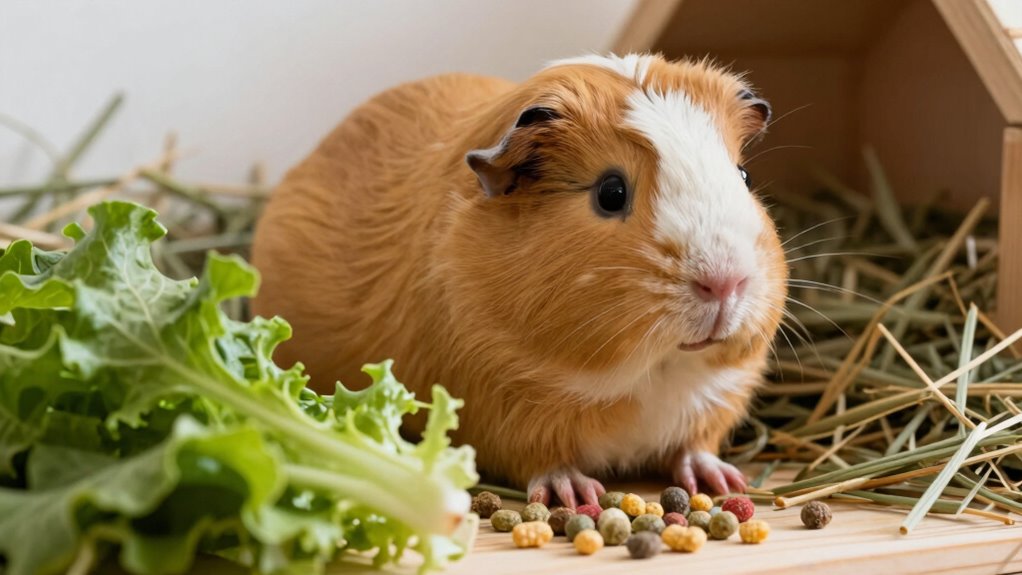

To feed your guinea pig correctly, focus on giving plenty of hay like timothy, orchard grass, or meadow hay, which supports digestion and dental health. supplement with fresh vegetables daily, especially leafy greens rich in vitamin C, since they can’t produce it themselves. Offer treats sparingly and keep fresh water always available. Consistent feeding routines and regular health checks help guarantee your guinea pig stays happy and healthy. Keep exploring for more tips on caring for your little friend.

Get pet supplies delivered free with Prime
- Fast, free delivery on millions of items
- Prime Video, Amazon Music and more included
- Member-only deals all year
Key Takeaways
- Provide unlimited fresh hay daily as the main fiber source for digestion and dental health.
- Offer a variety of fresh leafy greens rich in vitamin C every day.
- Limit treats and prioritize core foods to prevent stomach upset and weight gain.
- Maintain a consistent feeding schedule and monitor eating habits and weight regularly.
- Ensure constant access to clean water and practice routine health monitoring.
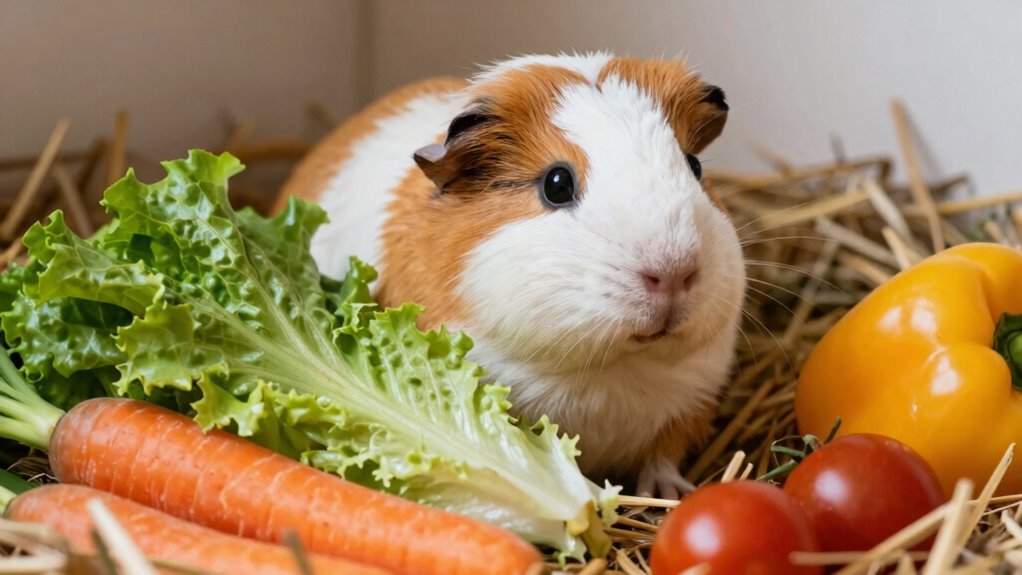
Hay should be the foundation of their diet because it supplies the necessary fiber for healthy digestion and dental health. Timothy hay is a popular choice, but you can also offer orchard grass or meadow hay, ensuring it’s fresh and free of mold or dust. Alongside hay, provide a variety of fresh vegetables daily, focusing on leafy greens like romaine lettuce, kale, and parsley. These vegetables contribute essential vitamin C, which guinea pigs can’t produce on their own. Since vitamin C deficiency can cause scurvy, adding a small amount of bell peppers or citrus fruits occasionally can give them an extra boost, but these should be given in moderation. While treats are tempting, they should only make up a tiny fraction of your guinea pig’s diet to avoid upset stomachs and weight gain. Proper dietary balance is crucial for their overall health and longevity. Ensuring a nutritionally complete diet helps prevent deficiencies and health issues over time. Providing a consistent feeding routine also helps maintain their digestive health, which is vital for their well-being. Regularly monitoring their weight and eating habits can help catch any health issues early, emphasizing the importance of preventive care. Fresh water should always be available, preferably in a sturdy bottle or bowl that’s cleaned regularly.
Consistency is essential when it comes to your guinea pig’s feeding schedule. Regularly providing fresh food and water at set times helps their digestive system stay healthy and minimizes stress. Keep an eye on their weight and eating habits, adjusting portions if you notice changes. Remember, a well-planned feeding routine tailored to their nutritional needs not only keeps your guinea pig healthy but also encourages contented, happy behavior. By sticking to these guidelines, you’ll foster a safe and nourishing environment for your furry friend to thrive.
As an affiliate, we earn on qualifying purchases.
Frequently Asked Questions
Can Guinea Pigs Eat Human Snacks or Processed Foods?
No, guinea pigs shouldn’t eat human snacks or processed foods. Human snack safety is low because many contain ingredients like sugar, salt, or artificial additives that can harm your guinea pig. Processed food risks include digestive issues, obesity, and even more severe health problems. Stick to fresh hay, vegetables, and specially formulated guinea pig pellets to keep your pet healthy and happy.
How Often Should I Change Their Water?
You should change your guinea pig’s water daily to maintain proper hydration habits and guarantee water quality. Fresh water encourages them to drink enough, keeping them healthy and active. Check their water supply regularly for any debris or discoloration, and replace it immediately if it looks dirty. Consistent daily changes help prevent bacteria buildup and keep your guinea pig well-hydrated and comfortable.
Are There Specific Brands of Guinea Pig Food Recommended?
Choosing the right guinea pig food is like finding a trusted friend—you want quality and consistency. Look for brands that offer commercial pellets with fortified nutrients, and avoid those with added fillers. Some popular options include Oxbow and Kaytee. You can also give guinea pig treats occasionally, but prioritize their main diet. Always read labels carefully to guarantee they meet your pet’s dietary needs and promote healthy growth.
Can Guinea Pigs Eat Vegetables They Are Not Familiar With?
Yes, guinea pigs can eat unfamiliar vegetables, but you should introduce new foods gradually to guarantee they’re safe. Start with small amounts and observe for any adverse reactions like diarrhea or changes in behavior. Always verify that unfamiliar vegetables are safe food choices for guinea pigs, as not all greens are suitable. When in doubt, consult a vet or reliable resource before offering new vegetables to keep your guinea pig healthy.
What Signs Indicate My Guinea Pig Is Not Eating Properly?
You’ll notice your guinea pig isn’t eating properly if they stop nibbling, lose weight, or seem lethargic—clearly signs they’re auditioning for “The Silent Squeak.” These symptoms hint at dietary deficiencies or digestive issues, making you the detective in their health mystery. Watch for droppings that are irregular or scant, which signals trouble. Prompt vet visits guarantee your furry friend gets back to snacking happily, not suffering silently.
Conclusion
Now that you know the essentials of feeding your guinea pig, you’re ready to give them the best care possible. But beware—there’s more to uncover about their diet and health that could surprise you. Are you prepared to take the next step and guarantee your little friend stays happy and healthy for years to come? The journey of keeping a thriving guinea pig is just beginning, and your adventure in pet care is about to get even more exciting.
Halloween Picks
halloween
As an affiliate, we earn on qualifying purchases.