A spacious guinea pig cage is essential for your pet’s health and happiness. Aim for at least 7.5 square feet, with more space being better. Include zones for food, water, and play, and use cage designs with good ventilation, secure sides, and enrichment options like tunnels and hideouts. Larger cages help prevent stress, promote natural behaviors, and make cleaning easier. To discover how to create the perfect habitat, keep exploring this guide.
Key Takeaways
- Provide a minimum of 7.5 sq ft with at least 30″ length and 18″ width for guinea pig health and natural behaviors.
- Use well-ventilated materials like coated wire mesh or plastic enclosures to ensure airflow and respiratory safety.
- Organize the habitat with zones for food, water, hay, resting, and play to prevent overcrowding and promote exploration.
- Maximize limited space through vertical setups, multi-level cages, hiding spots, and space-efficient accessories.
- Regular cleaning, grooming, and thoughtful enrichment support hygiene, mental stimulation, and overall well-being.
Why a Spacious Cage Is Vital for Your Guinea Pigs’ Health
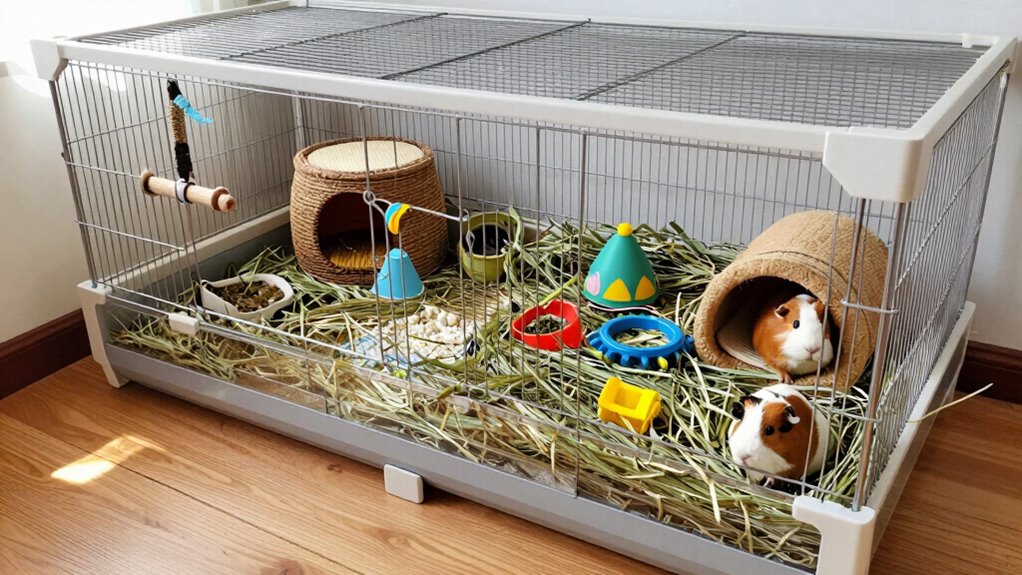
A spacious cage is essential for your guinea pigs’ overall health because it provides enough room for them to move freely and exercise. Proper diet considerations, like ample space for foraging and exploring, help promote healthy digestion and prevent obesity. When your guinea pigs have room to roam, they naturally stay active, which benefits their cardiovascular health and supports their grooming routines. A larger cage reduces stress and minimizes territorial disputes, leading to cleaner, happier pets. Additionally, it makes routine grooming easier since they’re less confined and more comfortable. By ensuring your guinea pigs have enough space, you encourage better habits, healthier eating, and easier grooming, all of which contribute to their overall well-being. adequate space for exercise helps prevent common health issues related to inactivity and obesity. Providing a sufficiently large habitat also supports natural behaviors, which is crucial for their mental stimulation and happiness. Ensuring proper cage size encourages more natural movement patterns, reducing the risk of health problems associated with confinement.
What Are the Ideal Dimensions for a Guinea Pig Cage?
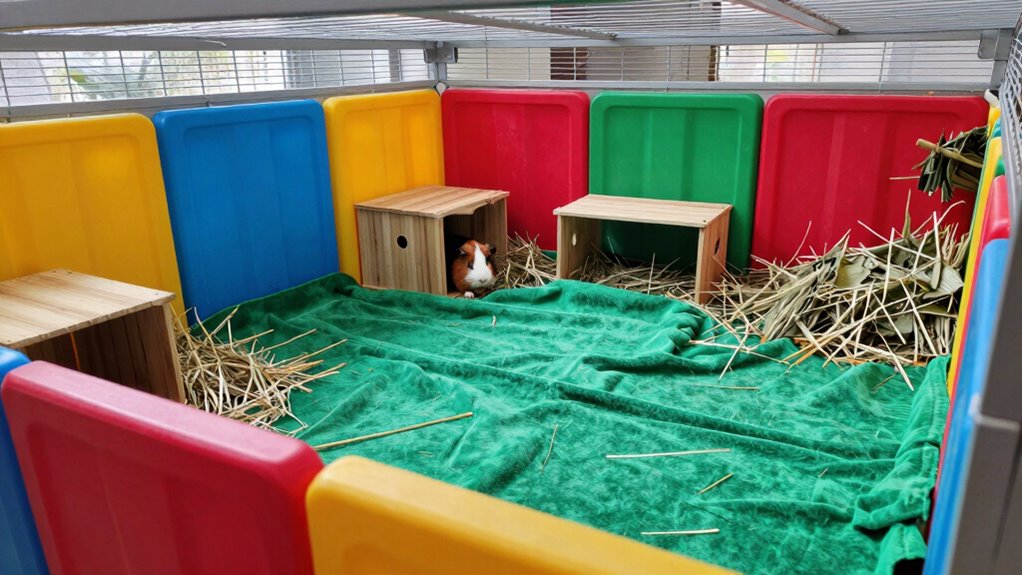
To give your guinea pigs enough space to thrive, you’ll want to contemplate their minimum area requirements. The ideal cage size should comfortably accommodate their activity and provide room for enrichment. Ensuring proper dimensions helps keep your pets healthy and happy. Incorporating energy-efficient design principles can also help create a sustainable environment for your pets. Additionally, selecting appropriate materials that promote ventilation and easy cleaning supports both health and habitat longevity. Considering habitat safety features can further enhance your guinea pigs’ well-being by minimizing hazards and ensuring a secure living space. Proper habitat design not only benefits your guinea pigs but also makes maintenance more manageable for you. Understanding the fundamentals of ergonomics can guide you in creating a space that is both comfortable for your pets and easier for you to care for.
Minimum Space Requirements
Ensuring your guinea pig has enough space is essential for their health and happiness. A proper cage size prevents stress and promotes natural behaviors. The minimum space requirement for a guinea pig is about 7.5 square feet, but bigger is always better. This allows for more room to move, explore, and socialize. When considering cage cleaning, a larger space makes it easier to keep bedding choices clean and odor-free. Remember, overcrowding can lead to health issues and territorial disputes. To provide a comfortable environment:
- Choose a cage with ample floor space
- Regularly clean to reduce waste buildup
- Use bedding that absorbs moisture and controls odor
- Incorporate designer elements to create a visually appealing habitat that promotes well-being.
Additionally, providing adequate ventilation is vital to maintaining a healthy environment and preventing respiratory problems. Proper ventilation systems help circulate fresh air and reduce humidity, further supporting your guinea pig’s health. Ensuring proper cage placement away from drafts and direct sunlight can also enhance overall comfort and air quality. Incorporating appropriate accessories can further enhance their environment by encouraging activity and enrichment.
Optimal Cage Dimensions
Choosing the right cage dimensions directly impacts your guinea pig’s comfort and well-being. Ideally, the cage should be at least 7.5 square feet for one guinea pig, with larger sizes for multiple pets. Aim for a minimum of 30 inches long, 18 inches wide, and 12 inches high to allow ample space for movement. Proper lighting considerations are essential; place the cage where natural light is available but avoid direct sunlight, which can cause overheating. Keep cage cleaning manageable by selecting a size that’s easy to access and maintain, preventing waste buildup and odors. Larger cages simplify cleaning routines and promote healthier living conditions. Remember, more space not only benefits your guinea pig’s health but also makes cage maintenance easier and more efficient. Additionally, digital asset management principles can help owners organize and track cage accessories and supplies effectively. Providing adequate ventilation is also crucial to prevent dampness and ensure fresh air circulation within the habitat.
Room for Enrichment
Providing enough space for enrichment is essential to keep your guinea pig mentally stimulated and physically healthy. A larger cage allows you to include hiding spots, which help your guinea pig feel secure and reduce stress. It also gives you flexibility in choosing bedding options that suit their comfort and cleanliness needs. When planning your cage, make certain there’s ample room for activities like exploring and foraging. This prevents boredom and promotes natural behaviors. Remember, a cramped environment can lead to frustration and health issues. Your goal is to create a space that balances size with enriching features. Incorporating vetted cages designed for spaciousness can further enhance their well-being. Additionally, providing appropriate space encourages exercise and social interaction, both vital for their overall health. To optimize their environment, consider spacious cage designs that meet or exceed recommended dimensions. Ensuring the cage allows enough room for natural behaviors supports your guinea pig’s mental and physical health.
How to Choose the Best Cage Type for Your Guinea Pigs
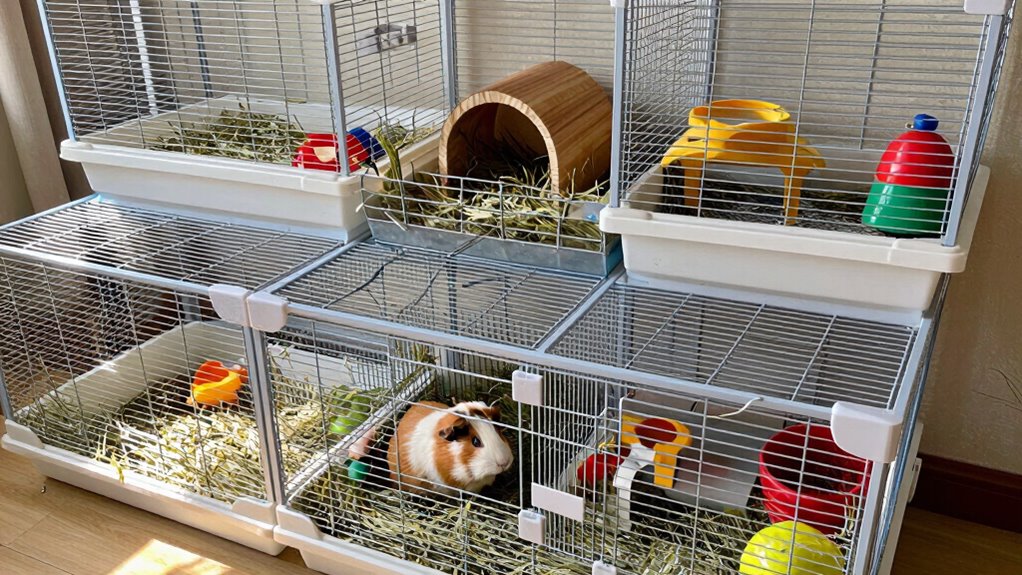
When choosing a cage, consider the material to guarantee it’s safe and easy to clean. The size and layout should provide plenty of space for your guinea pigs to move and play comfortably. By weighing these factors, you’ll find the best cage type to keep your pets happy and healthy. Additionally, selecting a cage with easy-to-clean surfaces can make maintenance much simpler and less time-consuming. Ensuring the cage is made from safe, non-toxic materials is crucial for your guinea pigs’ well-being and long-term health. Paying attention to air circulation can also improve your pets’ comfort and reduce the buildup of odors, which is especially important for preventing respiratory issues related to infection risks and prevention. Proper ventilation can also support air quality, contributing to a healthier environment for your guinea pigs.
Cage Material Options
Selecting the right cage material is crucial for your guinea pigs’ health and comfort. Your choice impacts safety, cleanliness, and durability. Wire mesh cages offer excellent ventilation and visibility, helping prevent respiratory issues. However, confirm the wire is coated to avoid injuries. Plastic enclosures are lightweight and easy to clean, but they might trap heat or retain odors if not well-ventilated. When choosing, consider the following:
- Durability and safety of the material
- Ease of cleaning and maintenance
- Ventilation and airflow for comfort
Both wire mesh and plastic enclosures have pros and cons; your decision depends on your guinea pigs’ needs and your ability to maintain the cage properly. Prioritize safe, breathable, and sturdy options to keep your pets healthy and happy. Proper cage setup and regular maintenance are essential for a healthy environment.
Size and Layout
Choosing the right cage size and layout directly affects your guinea pigs’ comfort and well-being. A spacious cage allows you to meet their dietary needs by providing enough room for separate areas for food, water, and hay. It also encourages healthy social interactions, preventing loneliness and aggression. Aim for a cage that’s at least 7.5 square feet for one guinea pig, with additional space for companions. Layout matters too: create designated zones for eating, resting, and playing to keep your pets active and engaged. Avoid cramped spaces that restrict movement or limit social contact. A well-designed cage supports their physical health and emotional happiness, making it easier for you to care for them properly. Remember, bigger is better when it comes to guinea pig habitats.
How to Set Up a Comfortable and Stimulating Guinea Pig Habitat
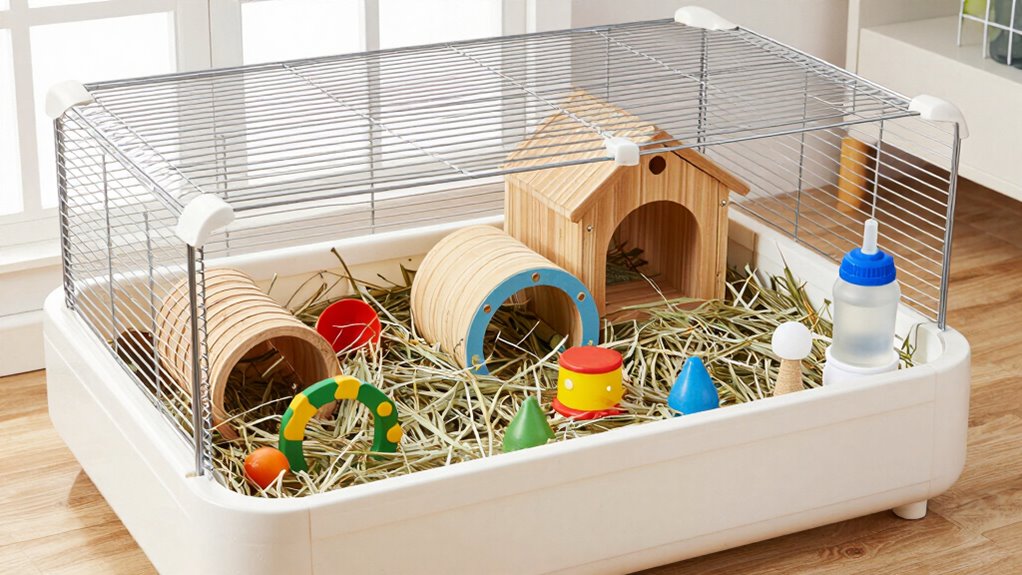
Creating a comfortable and stimulating guinea pig habitat starts with choosing the right space and layout. To keep your guinea pig happy and healthy, guarantee the cage is spacious and well-organized. Use bedding that’s soft and absorbent, and include hiding spots and toys for mental stimulation. Proper guinea pig nutrition is essential, so offer a variety of fresh vegetables and hay. Regular cage cleaning tips, like spot cleaning daily and full cleans weekly, help maintain a hygienic environment. Remember, a clean habitat prevents illness and keeps your guinea pig engaged. Key points to focus on include:
- Providing ample room for movement and exploration
- Including chew toys and tunnels for stimulation
- Maintaining a regular cleaning routine to promote health
Tips for Making the Most of Small or Limited Spaces
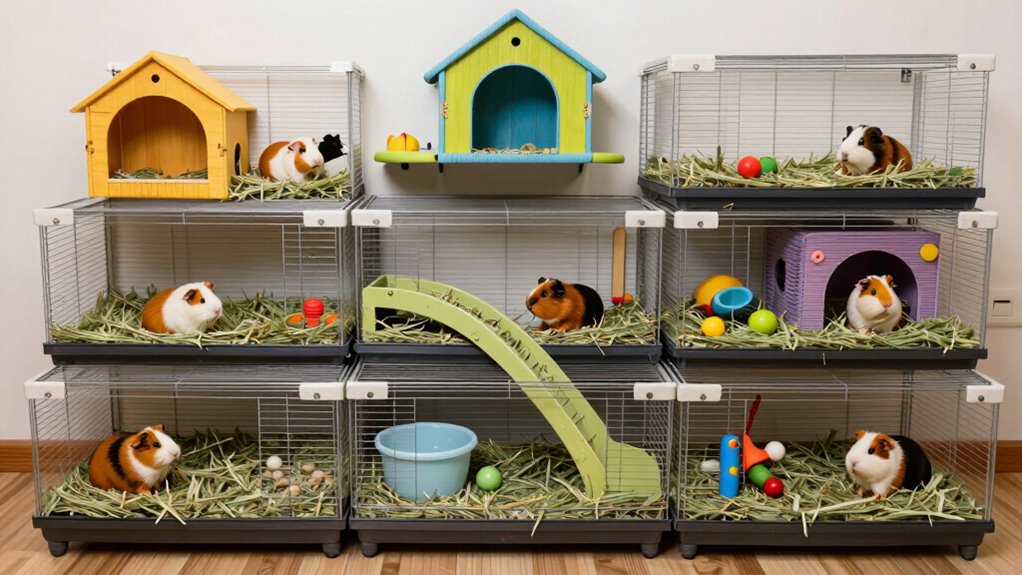
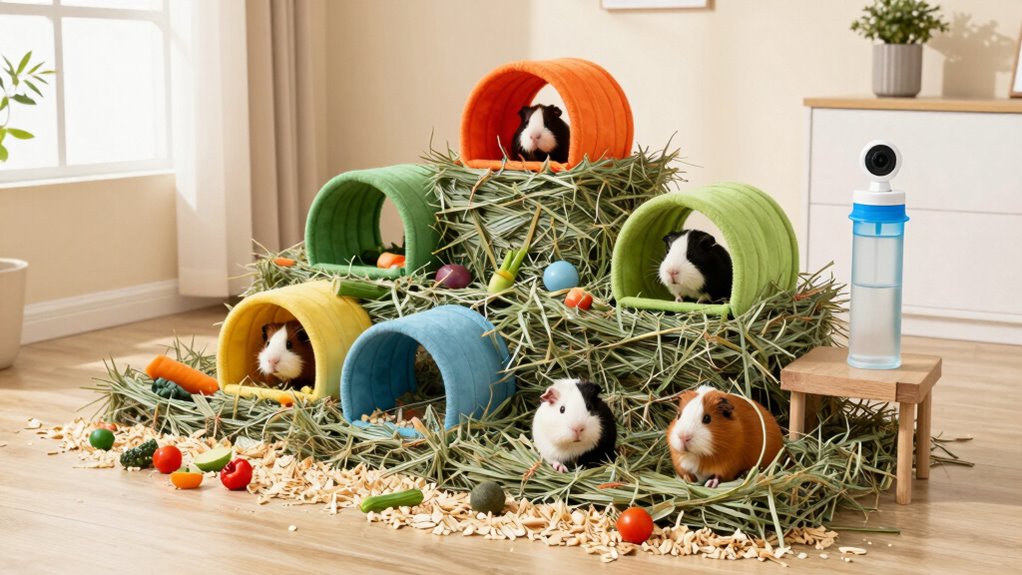
Even in small or limited spaces, you can maximize your guinea pig’s comfort by optimizing the habitat layout. Use vertical space with multi-level cages or platforms to add room without expanding the footprint. Incorporate cage decor like hideouts and tunnels to create cozy, stimulating areas that make the space feel larger. Keep the environment tidy with regular cleaning tips, such as spot cleaning daily and deep cleaning weekly, to prevent odors and maintain health. Choose compact yet functional accessories to avoid clutter. Arrange items thoughtfully so there’s enough open space for your guinea pig to move comfortably. By carefully planning your cage decor and sticking to consistent cleaning routines, you ensure your guinea pig thrives even in tighter quarters.
Common Mistakes That Can Harm Your Guinea Pigs’ Well-Being
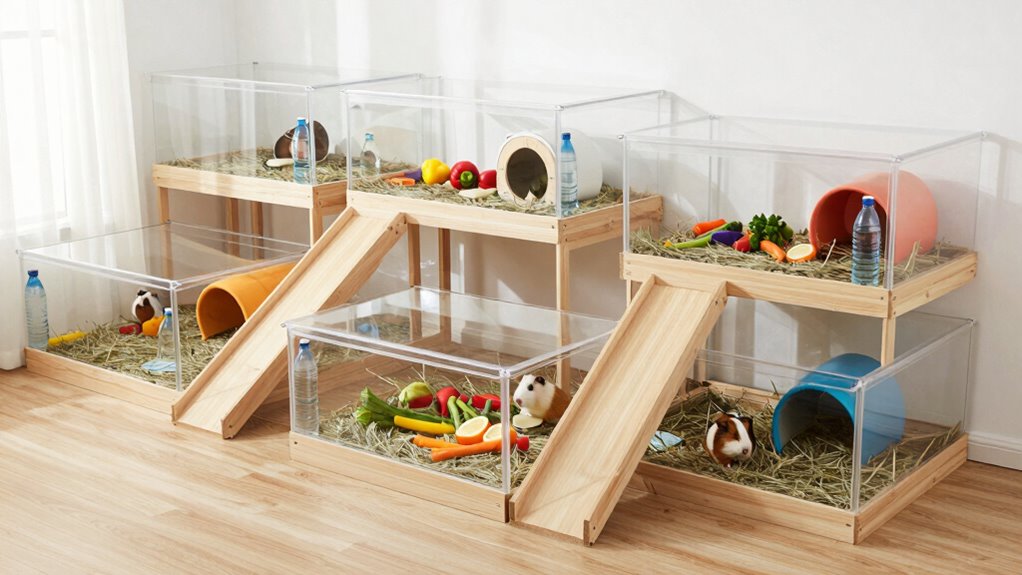
While optimizing your guinea pig’s habitat is important, certain common mistakes can undermine their health and happiness. One major mistake is neglecting their guinea pig diet, which can lead to nutritional deficiencies. Avoid feeding them only processed or sugary treats; instead, provide fresh hay, vegetables, and pellets. Failing to groom your guinea pigs regularly can also cause health issues like matting or skin infections. Additionally, overcrowding their cage limits movement, increases stress, and fosters disease. Remember, a clean and spacious environment promotes well-being. Keep in mind these key points:
Neglecting diet, grooming, or overcrowding can harm your guinea pig’s health and happiness.
- Don’t ignore proper guinea pig diet essentials
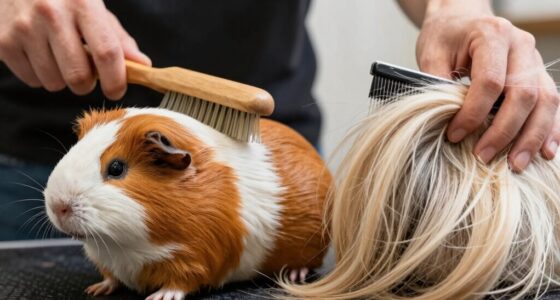
- Regular guinea pig grooming is vital
- Avoid overcrowding in their habitat
Addressing these mistakes helps ensure your guinea pigs thrive and stay happy in their habitat.
How to Transition Your Guinea Pigs to a Larger, Better Cage Safely
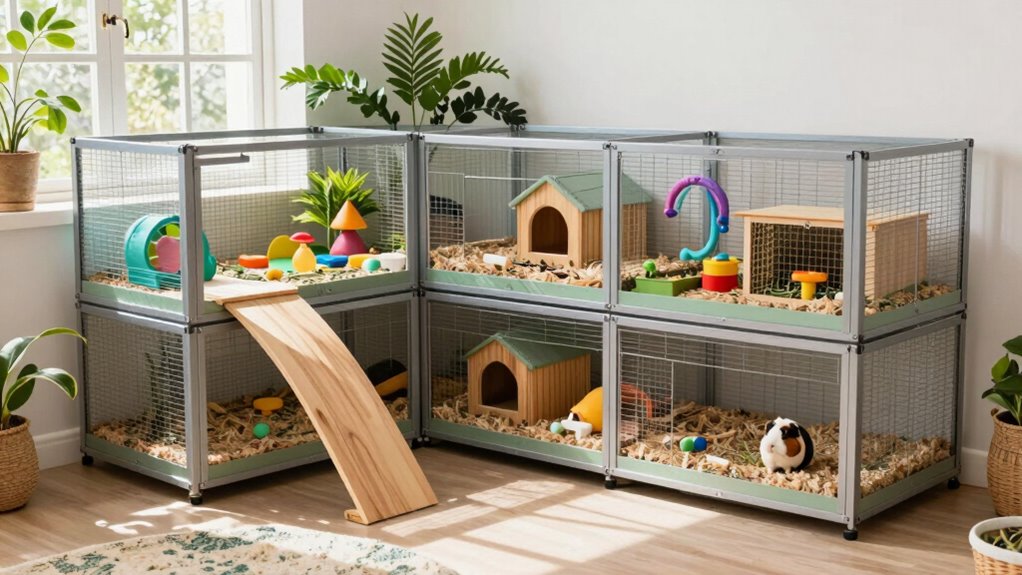
Switching your guinea pigs to a larger, better cage requires careful planning to guarantee their safety and comfort. First, choose a spacious cage with proper ventilation and secure sides. Before moving them, clean the new cage thoroughly to prevent any bacteria transfer. When setting up, prioritize bedding choices that are absorbent and dust-free to keep the environment healthy. Shift gradually by placing their current cage inside the new one, allowing your guinea pigs to explore at their own pace. Keep their routine consistent, and monitor their behavior closely during the move. Avoid sudden changes in cage cleaning schedules or bedding types, which can cause stress. With patience and attention to detail, you’ll help your guinea pigs settle into their new habitat safely and comfortably.
Benefits of Investing in a Spacious Guinea Pig Home for the Long Term
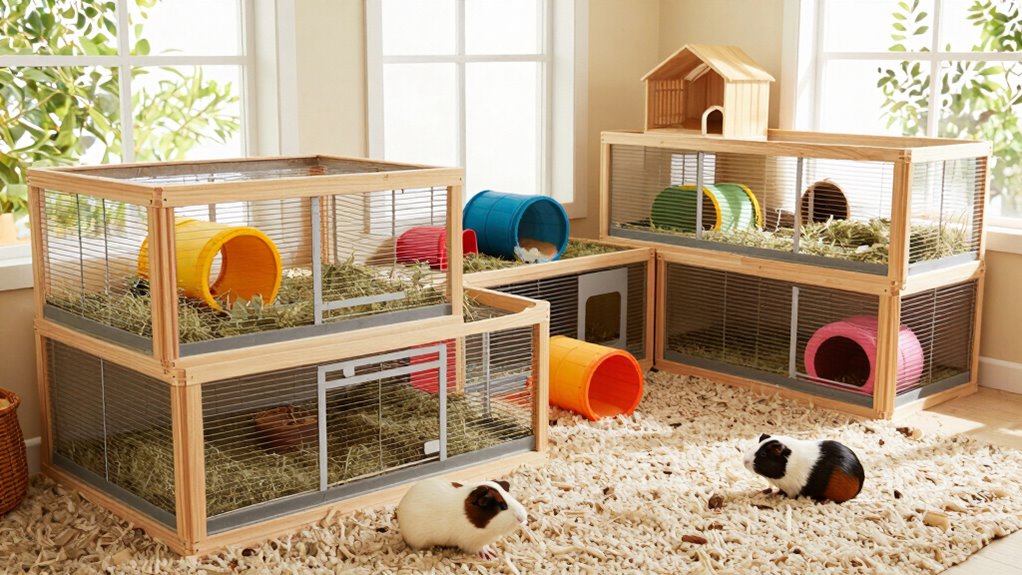
Investing in a spacious guinea pig home pays off in the long run by providing a healthier, more comfortable environment. Larger cages allow your guinea pigs to move freely, reducing stress and promoting natural behaviors like chewing habits. With more space, cage cleaning becomes easier and less frequent, helping maintain a hygienic environment. A bigger habitat also minimizes territorial disputes, leading to fewer injuries and better overall health. Plus, your guinea pigs will appreciate having room to explore and play, which encourages mental stimulation.
A spacious guinea pig home promotes natural behaviors, reduces stress, and keeps your pets healthier and happier.
- Less stress and better health from natural behaviors
- Easier cage cleaning and maintenance
- Reduced territorial disputes and injuries
Frequently Asked Questions
How Often Should I Clean My Guinea Pig’s Cage?
You should clean your guinea pig’s cage at least once a week to maintain a good cleaning schedule and guarantee proper cage hygiene. Spot-clean daily by removing soiled bedding and waste to keep it fresh. Regular cleaning prevents odors, reduces bacteria, and keeps your pet healthy. If your guinea pig’s cage is larger or gets dirty faster, consider cleaning it more often to provide a clean, comfortable environment.
Can Multiple Guinea Pigs Share a Single Large Cage?
You can definitely keep multiple guinea pigs in one large cage, but it’s vital to consider guinea pig compatibility. Some may get along, while others might not. To prevent fights, use cage partitioning to give each pig its own space while still sharing a common area. This setup allows social interaction without risking stress or injury, ensuring a happy, healthy environment for your guinea pigs.
What Accessories Are Essential for a Spacious Guinea Pig Habitat?
You need essential guinea pig accessories like hideouts, tunnels, and chew toys for cage enrichment, which keep your pets mentally and physically active. Include a spacious food dish, water bottle, and soft bedding to guarantee comfort. These accessories promote healthy behavior and prevent boredom, making your guinea pigs happier and healthier. Remember, a well-equipped, enriched cage supports their well-being and creates a more stimulating environment.
How Do I Safely Introduce a New Guinea Pig to the Cage?
You might think introducing a new guinea pig is risky, but with proper guinea pig bonding and cage introduction tips, it’s safe. Start by swapping bedding to familiarize scents, then introduce them in a neutral space. Monitor their behavior closely, ensuring neither shows aggression. Once they’re comfortable, gradually move them into the shared cage. Patience and gentle observation make the process smooth and safe for your new furry friend.
Are There Specific Flooring Options Best for Large Guinea Pig Cages?
For large guinea pig cages, you should choose safe, comfortable flooring options like soft, washable bedding or decorative flooring designed for small animals. Avoid wireless heating, as it can be unsafe and cause overheating. Instead, guarantee the flooring offers insulation and comfort. Look for options that are easy to clean and provide good traction, helping your guinea pigs stay healthy and happy in their spacious habitat.
Conclusion
Remember, providing your guinea pigs with a spacious, well-designed habitat isn’t just about comfort—it’s about their health and happiness. Think of it as your own humble abigail, offering a sanctuary that nurtures and stimulates. By avoiding common mistakes and investing in a bigger cage, you’re ensuring they thrive. Don’t wait for a sign from the stars; your guinea pigs deserve a palace fit for their lively spirits. A more spacious home truly makes all the difference.