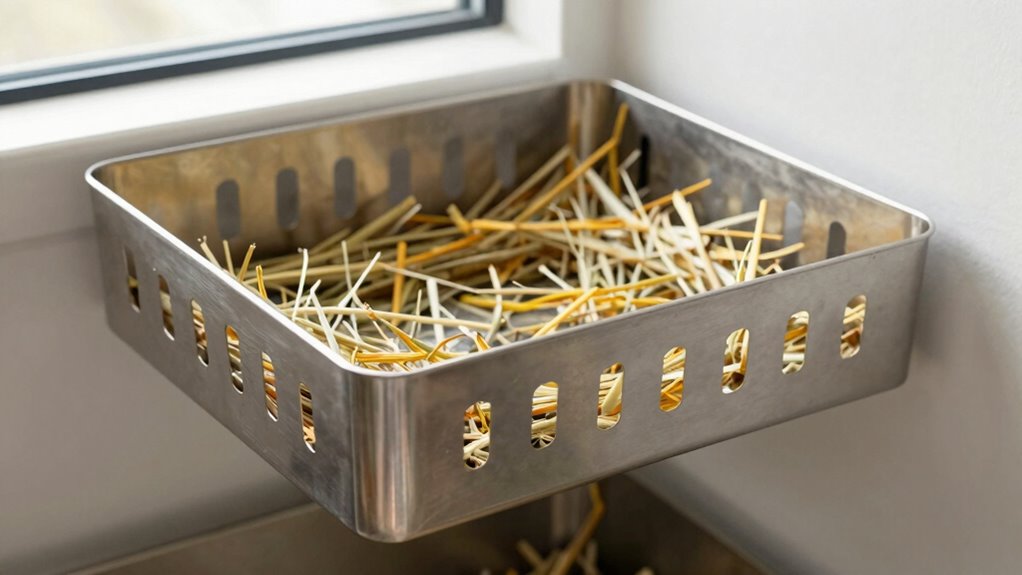
To keep hay clean and minimize waste, choose a sturdy hay rack that suits your cage size and allows your guinea pigs easy access. Hanging baskets or bedding-integrated racks work well to prevent scattering. Regularly clean the rack with warm water and mild soap to remove debris and mold. Avoid porous or chewed materials like untreated wood. If you want simple tips for maintaining a tidy, healthy cage, keep going for more helpful advice.
Key Takeaways
- Use hanging baskets or stand-up racks to prevent hay from scattering and keep it off bedding.
- Choose chew-proof, durable materials like metal or treated plastic to avoid damage and contamination.
- Adjust rack height to ensure hay stays clean and easily accessible without dragging through bedding.
- Regularly clean and inspect the rack to prevent mold, bacteria, and debris buildup.
- Incorporate natural foraging designs to encourage proper hay consumption and reduce waste.
The Different Types of Guinea Pig Hay Racks and Which Is Best
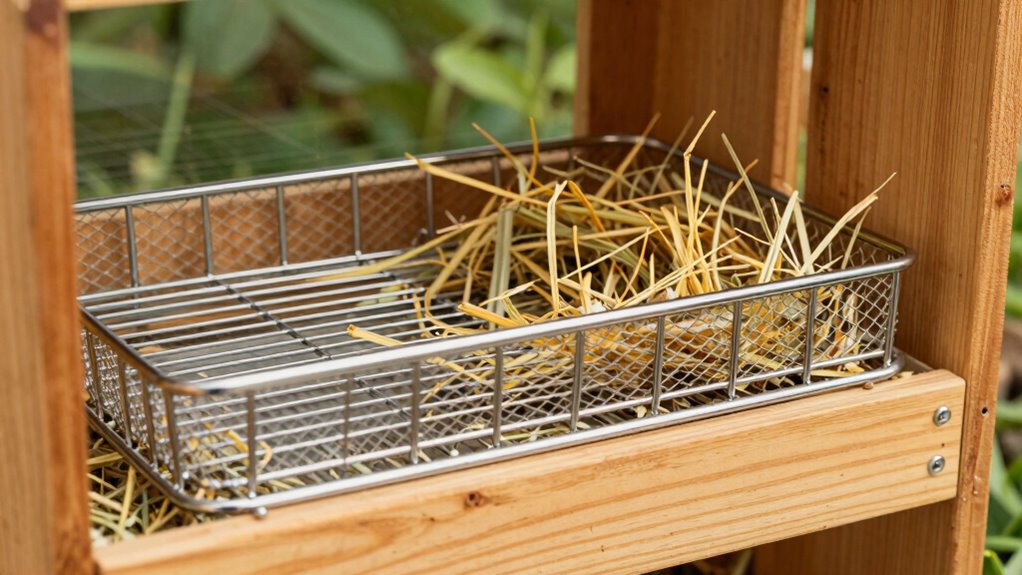
When choosing a guinea pig hay rack, understanding the different types available can help you pick the best one for your pet. Some racks are designed as chew toy options, encouraging healthy gnawing while keeping hay clean. Others serve as bedding alternatives, integrating hay into their structure to make cleaning easier. For example, hanging baskets prevent hay from scattering and help reduce waste, while stand-up models keep hay accessible without cluttering the cage floor. Consider your guinea pig’s habits—if they like to chew, opt for a durable, chew-friendly rack. If you prefer less bedding mess, a rack that doubles as bedding can be ideal. Additionally, high-quality materials used in rack construction can ensure durability and safety for your pet. Using a non-toxic material is essential for your guinea pig’s health and safety. Selecting a well-designed hay rack can also help promote natural foraging behaviors, enriching your guinea pig’s environment. Incorporating easy-to-clean features in the design can further simplify maintenance. Selecting the right type guarantees your pet stays healthy, entertained, and comfortable, while also minimizing hay waste.
How to Choose the Right Hay Rack for Your Guinea Pigs
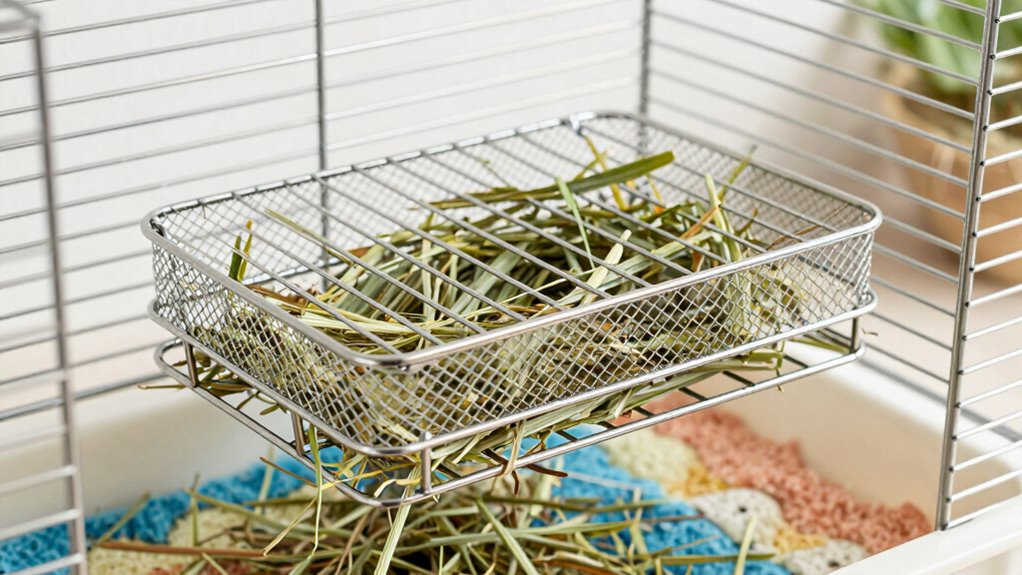
Choosing the right hay rack for your guinea pigs involves considering their habits and your cage setup. Start by thinking about hay rack material; plastic racks are lightweight but may be less durable, while metal racks are sturdy and long-lasting. Make certain the hay rack size fits comfortably within your cage without overcrowding, allowing your guinea pigs to access hay easily without wasting it. A size that holds enough hay but doesn’t take up too much space helps promote natural foraging behavior and reduces mess. Also, consider how your guinea pigs interact with their environment—if they tend to dig or chew, opt for chew-proof materials. The right combination of material and size makes it easier to keep hay clean, accessible, and safe for your furry friends. Additionally, understanding digital asset management can help you organize and maintain your supplies more effectively. Incorporating boho-inspired design elements into your cage setup can create a more calming and inviting space for your guinea pigs. Ensuring proper hygiene practices in your cage maintenance can further prolong the cleanliness and health of your guinea pigs’ environment.
Why a Hay Rack Helps Keep Your Guinea Pig Cage Cleaner and Safer
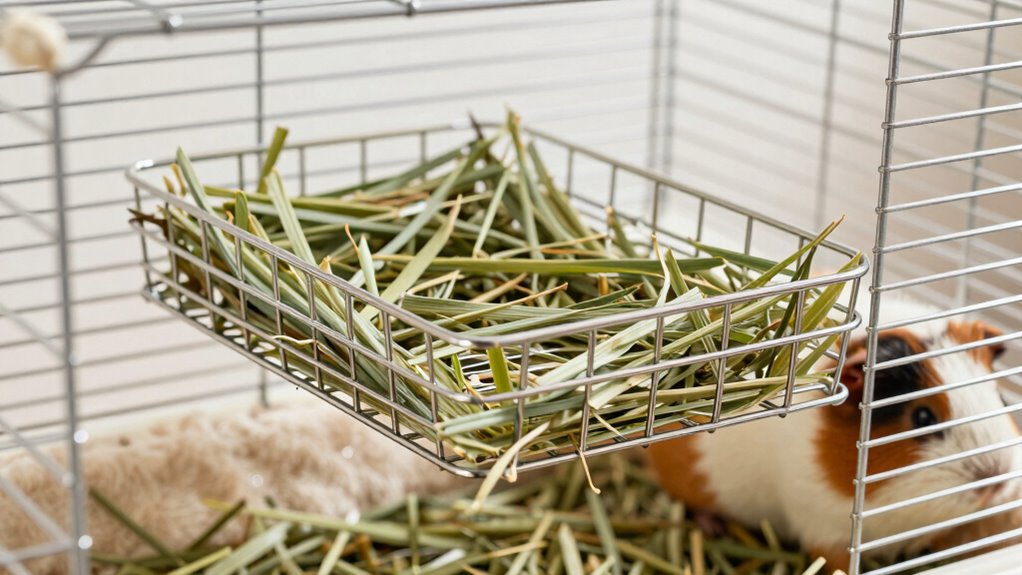
Using a hay rack substantially helps keep your guinea pig’s cage cleaner and safer by preventing hay from scattering all over the bedding. This containment reduces mess, making cage cleaning easier and promoting a healthier environment. A well-placed hay rack supports proper nutrition tips by encouraging your guinea pig to eat more hay, which aids digestion and dental health. Additionally, it influences your cage layout, providing designated feeding areas that minimize waste and clutter. Proper placement and use of a hay rack can also help prevent dental issues caused by uneven or insufficient hay consumption. Ensuring your guinea pig’s environment is organized and accessible can further support their health and happiness. When used correctly, a hay rack can also help prevent dental overgrowth, a common concern among guinea pig owners. Incorporating appropriate cage accessories can enhance your guinea pig’s overall well-being and enrichment. Here’s a quick comparison:
| Without Hay Rack | With Hay Rack |
|---|---|
| Hay scattered on bedding | Hay contained in rack |
| Increased cleaning frequency | Less cleanup, tidier cage |
| Higher risk of hay ingestion | Safer, controlled feeding |
| Disorganized cage layout | Neat, structured environment |
A hay rack not only maintains cleanliness but also promotes safer, more organized living space. Proper use of aquatic exercise can also contribute to your guinea pig’s overall health by encouraging activity and preventing obesity.
How to Clean and Maintain Your Guinea Pig Hay Rack
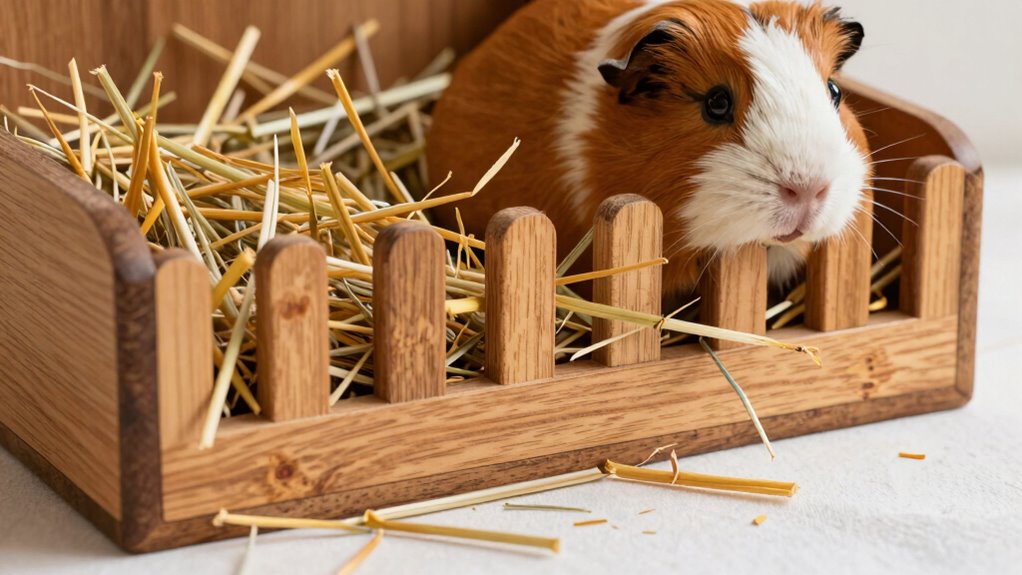
Regularly cleaning your guinea pig’s hay rack is vital to prevent mold, bacteria, and buildup of leftover hay. Start by removing the hay and inspecting the rack’s material—plastic, wood, or metal—to determine the best cleaning method. For plastic and metal racks, wash with warm water and mild soap, then rinse thoroughly. Wooden racks may require spot cleaning or a gentle wipe to avoid damage. Proper hay rack placement is essential; place it in a dry, well-ventilated area away from the cage’s bedding to reduce moisture buildup. Cleaning your equipment regularly also helps maintain a safe environment, especially when using power tools and heavy-duty equipment to build or modify your guinea pig’s enclosure. Regular cleaning helps prevent bacterial growth and keeps your guinea pig healthy. Using appropriate sanitation techniques ensures the longevity of your hay rack and your guinea pig’s health. Consistent cleaning and hygienic practices are crucial for preventing the spread of germs and maintaining a healthy habitat. Incorporating proper maintenance routines can significantly extend the lifespan of your hay rack and ensure a cleaner environment. Clean the rack at least once a week, or more often if you notice hay or debris accumulating. Keeping the rack clean ensures your guinea pig stays healthy and your cage remains fresh.
Common Mistakes to Avoid When Using Hay Racks for Guinea Pigs
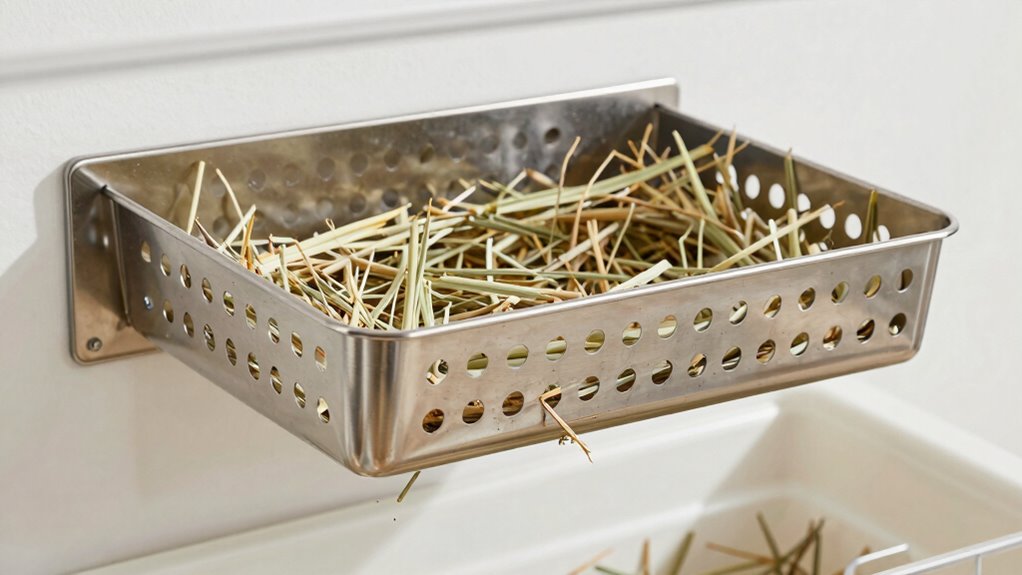
One common mistake to avoid is placing the hay rack in a damp or poorly ventilated area, which can cause mold growth and spoilage. Proper hay rack placement guarantees good airflow and keeps hay dry, preventing mold and waste. Also, consider material considerations carefully; avoid racks made of porous or easily chewed materials like untreated wood, which can harbor bacteria or be ingested. Instead, choose durable, non-toxic materials such as metal or smooth plastic that are easy to clean. Installing the rack at the right height prevents soiling from bedding or droppings, helping hay stay clean longer. Additionally, airflow optimization should be considered when placing the rack outdoors to ensure hay remains dry and fresh, reducing waste and promoting better health. Proper ventilation around the hay rack is essential for maintaining hay quality and preventing moisture buildup, which is vital for preventing mold. By avoiding these mistakes, you’ll keep your guinea pig’s hay fresh, accessible, and safe, reducing waste and promoting better health.
Frequently Asked Questions
Can Hay Racks Prevent Waste Compared to Loose Hay?
Yes, hay racks help prevent waste compared to loose hay. They offer hay rack benefits like keeping hay off the cage floor, reducing soiled or trampled hay. This waste reduction means your guinea pig gets cleaner, more nutritious hay, and you save money by minimizing waste. With a hay rack, you guarantee your pet always has fresh hay available while avoiding unnecessary mess, making it a smart choice for both you and your guinea pig.
Are There Specific Materials That Are Better for Guinea Pig Hay Racks?
Opt for stainless steel or untreated wood for guinea pig hay racks. These materials are safe, avoiding harmful chemicals, and withstand frequent cleaning. Unlike plastic, which can harbor bacteria and be harder to sanitize, stainless steel offers durability and ease of cleaning. Wooden racks, if untreated and smooth, can also be safe, providing a natural look. Prioritize these materials to keep hay fresh, clean, and your guinea pig healthy.
How Often Should I Replace or Upgrade My Guinea Pig’s Hay Rack?
You should replace or upgrade your guinea pig’s hay rack every 6 to 12 months, depending on its durability and wear. Regularly check for loose or broken parts, which can harm your pet or make cleaning difficult. If the hay rack becomes rusty, cracked, or difficult to clean, it’s time for a new one. Keeping an eye on its condition guarantees your guinea pig always has access to fresh, clean hay.
Do Hay Racks Encourage Better Eating Habits in Guinea Pigs?
Yes, hay racks encourage better eating habits in guinea pigs by making hay easily accessible and reducing waste. When you use a hay rack, your pet can graze naturally, which boosts their nutritional benefits and keeps their teeth healthy. Plus, it minimizes mess, reducing environmental impact. This simple setup promotes consistent eating, helps maintain a balanced diet, and supports your guinea pig’s overall well-being while being eco-friendly.
Can Hay Racks Be Used for Other Small Pets Besides Guinea Pigs?
You can definitely use hay racks for other small pets like rabbits or chinchillas; in fact, 60% of multi-pet households customize hay racks to suit different animals. Hay racks promote clean eating habits and reduce waste. By choosing adjustable or multi-compartment hay racks, you can guarantee proper hay access for various pets, making them versatile and space-efficient. Customization helps meet each pet’s dietary needs while keeping their habitat tidy.
Conclusion
Choosing the right hay rack is like planting a sturdy tree in your guinea pig’s home— it provides stability and protection. When you pick wisely, clean regularly, and avoid common mistakes, you create a safe haven where hay stays fresh and your pig stays happy. Remember, a well-maintained hay rack is the anchor in your guinea pig’s comfort, ensuring their environment remains as clean and inviting as a sunlit garden.