To pick the right hamster wheel size, measure your hamster from nose to tail base to find its body length. Choose a wheel that’s at least 1-2 inches larger than your hamster’s length to avoid stress and spinal problems. For dwarf hamsters, aim for 6-8 inches, and for Syrians, 8-12 inches. Prioritize size over design, and make sure the wheel is smooth and stable. More tips will help you choose the best fit for your pet’s health.
Key Takeaways
- Measure your hamster from nose to tail to determine the appropriate wheel diameter; it should exceed their length by 1-2 inches.
- Choose wheels with at least 6-8 inches for dwarfs and 8-12 inches for Syrians to support natural spine alignment.
- Ensure the wheel allows the hamster to run with a straight back, avoiding arching or overextending.
- Opt for solid, smooth-surfaced wheels made of safe, durable materials to prevent injuries and reduce noise.
- Regularly inspect and replace wheels that cause discomfort, noise, or show signs of damage to protect your hamster’s spine and health.
Why Proper Hamster Wheel Size Matters for Your Pet’s Health

Choosing the right size hamster wheel is essential because an ill-fitting wheel can cause health issues for your pet. A wheel that’s too small forces your hamster to overextend its spine, impacting its overall hamster agility and risking injuries. Conversely, a wheel that’s too large can be difficult for your hamster to run comfortably and may discourage exercise. Properly sized wheels promote healthy, natural movement and help maintain your hamster’s agility. Additionally, wheel aesthetics matter—they should fit seamlessly into your hamster’s habitat without cluttering the space or causing stress. Well-chosen, correctly sized wheels encourage regular exercise, supporting your pet’s physical health and happiness. Furthermore, selecting energy-efficient wheels can reduce noise and improve durability, making them a practical choice for long-term use. Ensuring the wheel has the appropriate size and design can significantly enhance your hamster’s overall well-being, especially since spinal health is crucial for their mobility and comfort. A well-designed wheel can also prevent common issues like injuries and promote a more active lifestyle. Selecting the right wheel can also contribute to reducing stress in your hamster, leading to a happier and healthier pet.
How to Measure Your Hamster to Find the Right Wheel Diameter

Measuring your hamster accurately is the best way to determine the right wheel size for their comfort and health. To find the correct hamster wheel diameter, start by measuring your hamster’s body length from nose to the base of the tail. Use a flexible ruler or tape measure for precision. When measuring hamster size, keep in mind that the wheel should allow your pet to run with a straight back, avoiding arching or hunching. The ideal hamster wheel diameter typically exceeds the length of your hamster by at least 1-2 inches. This ensures they can run naturally without straining their spine. Remember, a properly measured hamster wheel diameter supports healthy movement and prevents potential injuries. Additionally, selecting a wheel with appropriate sizing standards can ensure safety and comfort for your pet. Choosing a wheel with an adequate surface material also helps to prevent foot injuries and promotes safe exercise. Ensuring the wheel is made from safe, non-toxic materials is also important to prevent health issues. Using proper cleaning practices will help maintain a hygienic environment and prolong the lifespan of the wheel. Regularly inspecting the wheel for wear and tear is essential to keep your hamster safe during exercise.
Choosing the Best Hamster Wheel: Solid vs. Spoked

When choosing between a solid or spoked hamster wheel, safety and comfort should be your top priorities. You’ll also want to contemplate how noisy the wheel is and how much maintenance it requires. Let’s explore how these factors can help you pick the best wheel for your hamster. Considering architectural needs can guide you in selecting the most suitable design to ensure durability and stability.
Safety and Comfort
Selecting the right hamster wheel is essential for your pet’s safety and comfort, and the design plays a vital role. Solid wheels often feature a smooth surface, reducing the risk of pinched toes or injuries, while spoked wheels can sometimes cause discomfort or entrapment. When choosing, consider color options that can match your habitat, making it visually appealing and encouraging your hamster to use it. Material durability is also crucial; a sturdy wheel made of high-quality plastic or metal ensures long-lasting safety. Avoid wheels that feel flimsy or have rough edges, as these can harm your hamster’s spine or cause injuries. Prioritizing a well-designed wheel with safe, durable materials guarantees your pet’s comfort and reduces safety concerns during exercise. Additionally, selecting a wheel size that accommodates your hamster’s size and movement can prevent spinal issues and promote healthy activity. Ensuring proper airflow around the wheel can also help in maintaining a clean and odor-free environment for your pet. Choosing a wheel with good ventilation features can further improve airflow and overall hygiene.
Noise and Maintenance
Choosing the right hamster wheel involves considering noise levels and ease of maintenance, as these factors directly impact both your pet’s environment and your daily life. Wheel material plays a key role here; solid wheels made of plastic tend to be quieter and easier to clean, while spoked wheels may produce more noise due to moving parts. Noise levels matter because loud wheels can disturb your sleep or household peace, so opt for quieter options if needed. Maintenance is also essential—smooth surfaces like plastic are simpler to wipe down and keep hygienic. Additionally, selecting a wheel with low noise levels can significantly enhance your pet’s comfort and your peace of mind. When choosing a hamster wheel, consider the design and material to ensure minimal debris accumulation and ease of cleaning. Selecting a wheel with easy-to-clean features can save time and keep your hamster healthier. Moreover, choosing a wheel with durable construction ensures it remains functional and quiet over time, reducing the need for frequent replacements. To further improve your hamster’s environment, look for wheels with noise-reducing technology, which can help create a more peaceful home. Ultimately, selecting a wheel with low noise levels and minimal maintenance makes for a happier hamster and a more peaceful home.
Signs Your Hamster’s Wheel Is Causing Stress or Injuries
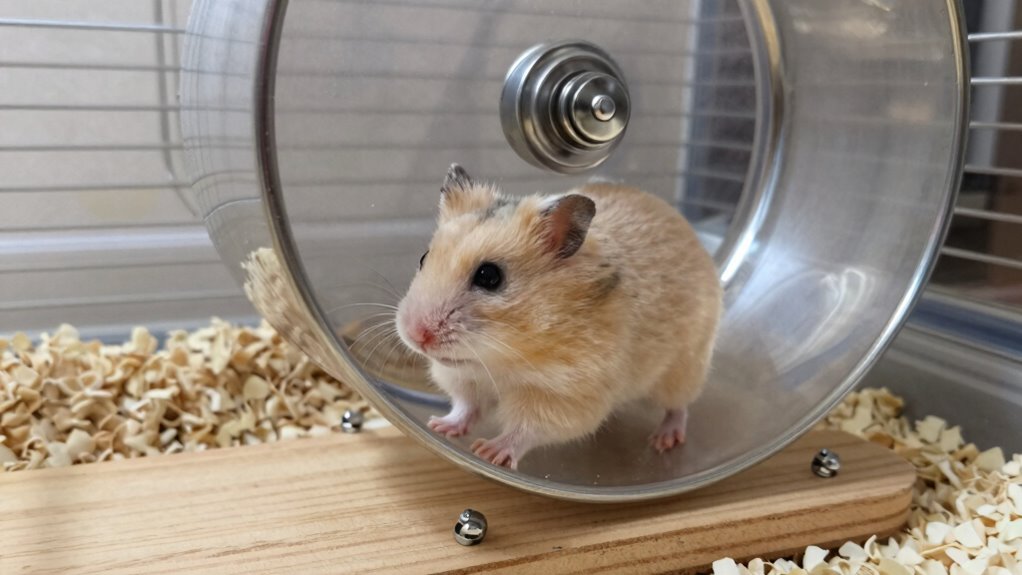
If your hamster’s wheel is causing stress or injuries, you’ll notice certain warning signs. Watch for signs of discomfort, like excessive scratching or biting the wheel. Poor wheel material, such as rough or splintering surfaces, can irritate their paws or cause injuries. Additionally, an overly noisy wheel might indicate friction or instability, leading to stress. Pay attention to the wheel decoration—if it has sharp edges or loose parts, your hamster could hurt themselves or become anxious. If your hamster seems reluctant to run or shows signs of fatigue, these could also be indicators that the wheel isn’t suitable. Regularly inspecting the air quality around their cage can help ensure a healthy environment and prevent respiratory issues that might make them less active. Choosing a proper size wheel is essential to prevent spinal stress and promote natural running posture. Addressing these issues early helps prevent long-term injuries and ensures your hamster remains active and healthy.
How to Pick the Correct Wheel Size Based on Your Hamster’s Size

To guarantee your hamster remains comfortable and healthy, it’s essential to pick a wheel size that matches their body. Proper hamster wheel sizing ensures they can run naturally without arching their back or straining their spine, which is crucial for exercise safety. Measure your hamster from nose to tail and select a wheel at least 6 to 8 inches for dwarf hamsters and 8 to 12 inches for Syrian hamsters. A wheel that’s too small forces them to curl or bend, risking injury. When choosing, prioritize size over design or aesthetics. Remember, the right size promotes healthy exercise and prevents long-term health issues. Always observe your hamster on the wheel to confirm it allows for smooth, natural movement, ensuring their activity remains safe and beneficial. Additionally, ensuring the appliance maintenance plan includes regular inspections of your hamster’s environment can help prevent hazards that might harm their health. Proper wheel maintenance is also essential to keep it free of debris and ensure smooth operation. Regularly inspecting the wheel can also prevent cryptid myths of hidden dangers or structural issues that could cause injury. Moreover, choosing a wheel with proper ventilation can help prevent overheating during vigorous exercise sessions.
Common Mistakes to Avoid When Choosing a Hamster Wheel

Many hamster owners make the mistake of selecting a wheel based on appearance or price rather than proper size. This can lead to health issues or discomfort for your hamster. Avoid choosing a wheel simply because it looks appealing or matches your color preferences. Instead, focus on the wheel material—plastic, metal, or wood—and how it affects durability and safety.
Be cautious of these common pitfalls:
- Picking a wheel with an uneven or rough surface that could cause injury
- Choosing a wheel that’s too small or too large, risking spine problems
- Selecting a wheel based solely on color, ignoring functionality and safety
What to Do If Your Hamster’s Wheel Isn’t the Right Fit
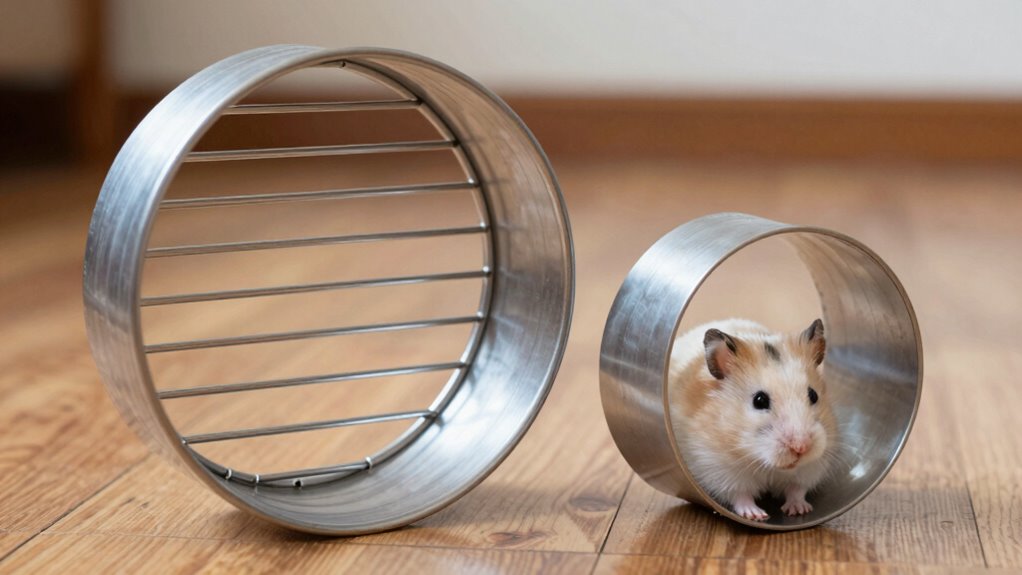
Noticing that your hamster struggles to use its wheel or shows signs of discomfort can be frustrating. If the wheel doesn’t fit properly, it may cause back strain or injury. First, assess your hamster’s habitat to guarantee the wheel size matches its needs. If you find the wheel too small or too large, replace it with one that offers a comfortable running surface. Regular wheel cleaning is essential to keep it safe and hygienic, preventing dirt buildup that could cause irritation or infections. When switching wheels, do it gradually to allow your hamster to adjust comfortably. Always check for smooth spinning and no sharp edges. A well-fitting, clean wheel helps protect your hamster’s spine and encourages healthy exercise.
Features of a Safe and Comfortable Hamster Wheel
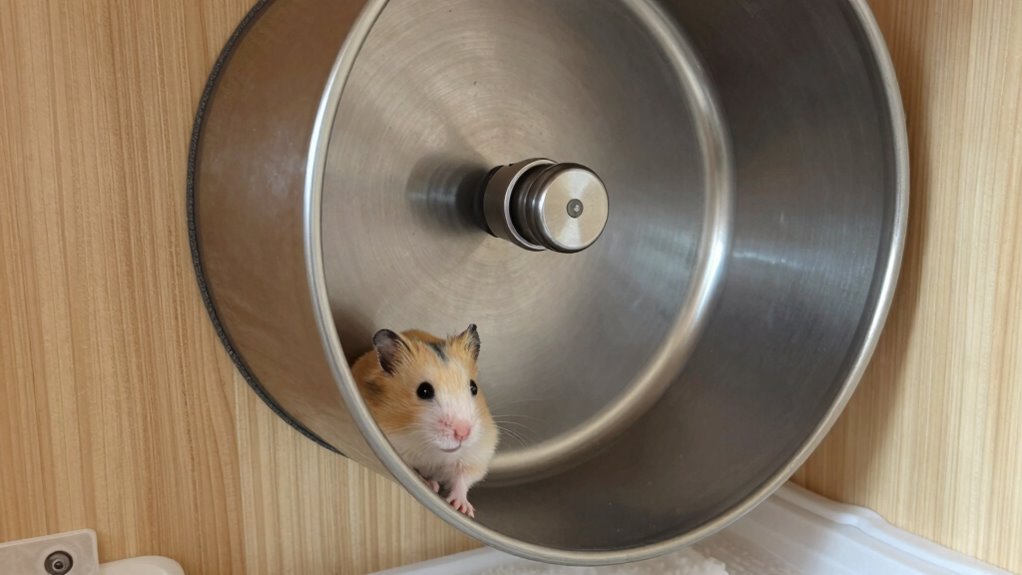
A safe and comfortable hamster wheel starts with a smooth surface to prevent injuries. It also needs the right diameter to match your hamster’s size and movement. Finally, a secure, stable base keeps the wheel steady during active runs.
Smooth Surface Design
A smooth surface on a hamster wheel is essential for ensuring your pet’s safety and comfort during exercise. It minimizes the risk of injuries, such as cuts or abrasions, and allows for a more natural running motion. Look for wheels with a seamless, even surface that offers slip resistance to prevent accidental slips or falls.
Imagine these features:
- A polished, continuous surface without rough edges or gaps
- Textured finish that provides grip without discomfort
- Materials like smooth plastic or coated metal that reduce friction and enhance safety
Choosing a wheel with a smooth surface helps your hamster run comfortably and securely, keeping their tiny feet protected while promoting healthy activity. Remember, a slip-resistant design is key to a safe and enjoyable exercise experience.
Proper Wheel Diameter
Choosing the right wheel diameter is crucial for your hamster’s comfort and well-being. A wheel that’s too small can cause arching of the back, risking spinal issues, while one that’s too large may be difficult for your hamster to run comfortably. Typically, a diameter of at least 8 inches suits dwarf hamsters, and 10-12 inches works better for Syrians. When selecting, consider the wheel material—solid plastic or metal with a smooth surface helps prevent injuries. Additionally, aesthetic options like color and design can complement your cage’s look, but prioritize size and safety above appearance. Proper diameter ensures natural running posture and prevents strain, making your hamster’s exercise both safe and enjoyable. Remember, the right size is key to supporting their health during playtime.
Secure and Stable Base
Ensuring your hamster’s wheel has a secure and stable base is essential for safe and comfortable exercise. A stable base prevents wobbling or tipping, which can compromise exercise safety and cause stress or injury. When you choose a wheel with a sturdy stand, you help your hamster stay balanced during intense runs. Imagine a wheel firmly anchored to the cage floor, with no wobbling or shifting. The base should feature:
- Non-slip rubber feet for grip on smooth surfaces
- A wide, heavy stand that anchors the wheel firmly
- Smooth, rounded edges to prevent injury
These features enhance wheel stability, ensuring your hamster can run confidently without risking falls or discomfort. A secure, stable base makes exercise safer and more enjoyable for your furry friend.
FAQs About Hamster Wheel Sizes: What You Need to Know

Understanding the right size for your hamster’s wheel is essential to their comfort and health. When choosing, consider hamster wheel dimensions to ensure it’s large enough for natural running posture, preventing spinal strain. A wheel that’s too small forces your hamster into an unnatural curve, increasing injury risk. Check cage compatibility before purchasing; measure available space and confirm the wheel fits comfortably without overcrowding. Many cages require specific wheel sizes, so always compare dimensions carefully. Keep in mind that larger wheels, typically 8-12 inches, are better for dwarf and Syrian hamsters. If you’re unsure, opt for a slightly bigger wheel to promote healthy exercise and avoid discomfort. Proper sizing helps your hamster stay active and injury-free, ensuring their well-being.
Frequently Asked Questions
How Often Should I Replace My Hamster’s Wheel for Safety?
You should replace your hamster’s wheel if you notice signs of wear or damage, such as cracks, loose parts, or unusual noise. Regular wheel maintenance helps guarantee safety and promotes hamster health. Check the wheel weekly and replace it as needed, ideally every 6 to 12 months, depending on usage. Keeping the wheel in good condition prevents injuries and keeps your hamster active and healthy.
Can a Wheel Be Too Large for My Hamster?
You might be surprised, but a wheel can be too large for your hamster. The ideal wheel diameter for spine safety is around 6 to 8 inches, depending on your hamster’s size. A wheel that’s too big can cause your hamster to stretch or arch their back, risking spinal issues. Always choose a wheel that fits comfortably, ensuring their spine stays aligned and safe during exercise.
What Materials Are Safest for Hamster Exercise Wheels?
When choosing a hamster exercise wheel, prioritize material safety and wheel durability. Opt for wheels made of non-toxic, BPA-free plastics or metal to prevent health issues. Avoid wheels with sharp edges or flimsy parts that can break easily. Durable materials guarantee the wheel withstands active use without cracking or warping, keeping your hamster safe while providing a long-lasting, reliable exercise option.
How Can I Encourage My Hamster to Use a New Wheel?
To encourage your hamster to use a new wheel, start with hamster wheel training by placing the wheel in a quiet, easily accessible spot. Use wheel placement tips like positioning it at a comfortable height and near familiar areas. Gently encourage your hamster with treats or toys nearby, and be patient—consistency helps them feel safe. Over time, your hamster will become confident and enjoy their new exercise wheel.
Are There Specific Brands Recommended for Proper Wheel Sizing?
Think of choosing a wheel like finding the perfect dance partner; it needs to match your hamster’s size and style. For brand recommendations, go for trusted names like Silent Spinner and Trixie. Always follow size guidelines—your hamster’s body should fit comfortably without stretching or curling. This guarantees they move freely, keeping their spine safe. When you pick the right brand and size, you’re helping your hamster enjoy their exercise safely and happily.
Conclusion
Choosing the right hamster wheel is essential to keep your pet happy and healthy. When you pick a size that fits perfectly, you’re preventing potential injuries and making exercise enjoyable for your furry friend. Remember, a good fit is the foundation for a happy hamster’s well-being. Don’t let a wrong-sized wheel be the straw that breaks the camel’s back—invest the time to find the perfect match and watch your hamster thrive.