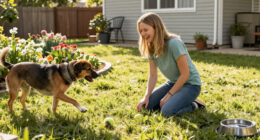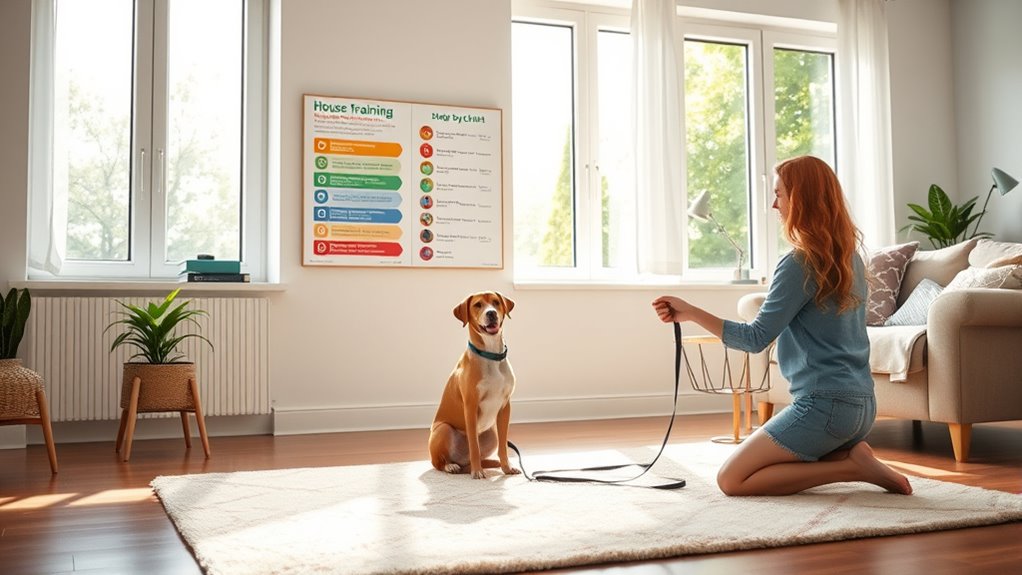

To quickly improve your house training, focus on consistent routines, frequent potty breaks, and positive reinforcement. Use a crate as a safe space to prevent accidents and encourage your puppy to hold it. Socialize your pup gradually to boost confidence and reduce anxiety-related mistakes. Practice commands like “sit” and “stay” to build discipline. The more you stick to these proven strategies, the faster you’ll see progress—and if you keep going, you’ll discover even more helpful tips.

Get pet supplies delivered free with Prime
- Fast, free delivery on millions of items
- Prime Video, Amazon Music and more included
- Member-only deals all year
Key Takeaways
- Use a crate consistently to create a safe, designated space that encourages natural house training habits.
- Reinforce basic commands like “sit” and “come” to establish boundaries and improve obedience.
- Gradually increase socialization with positive, controlled interactions to build confidence and reduce accidents caused by anxiety.
- Reward calm behavior and successful house training moments with treats and praise to reinforce good habits.
- Keep training sessions short and frequent, focusing on consistency and patience for lasting results.
As an affiliate, we earn on qualifying purchases.
Quick and Effective House Training Tips
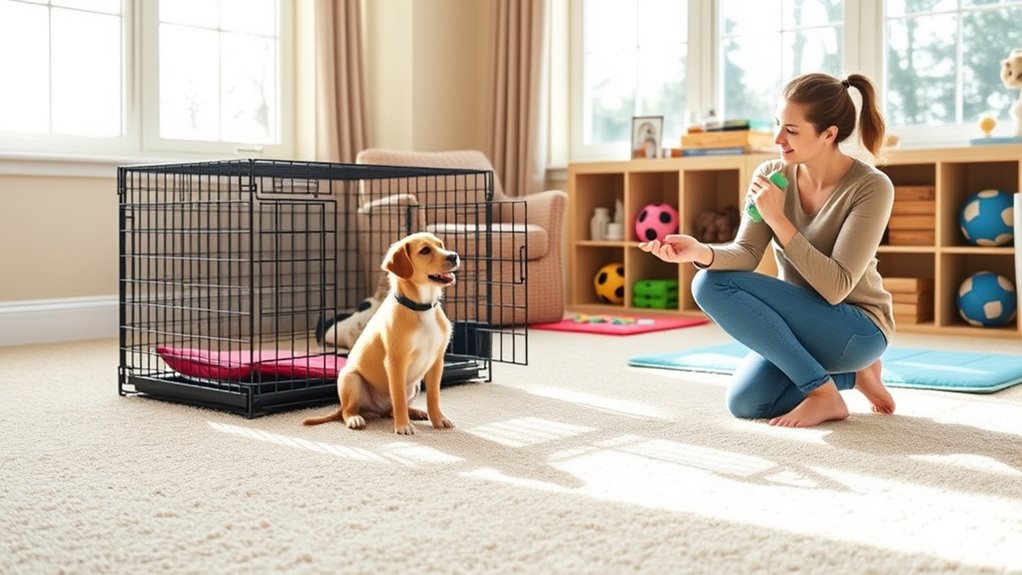
If you’re tired of persistent house training issues, the good news is that quick fixes can make a big difference in just ten minutes. One of the most effective methods is focusing on crate training, which helps your puppy learn boundaries and develop better bladder control. When you introduce a crate, make it a positive space by placing treats, toys, and comfortable bedding inside. Keep the crate door open initially, encouraging your puppy to explore it voluntarily. Gradually, you’ll want to close the door for short periods, always rewarding calm behavior. This process not only reduces accidents around the house but also helps your pup associate the crate with safety and comfort. Consistency is key—use the crate during times when you cannot supervise and always give plenty of praise when your puppy enters or exits calmly. Over time, crate training becomes a reliable tool for managing house training setbacks.
Alongside crate training, puppy socialization plays a essential role in house training success. Socialization involves exposing your puppy to different people, environments, and other animals, which can considerably reduce anxiety and excitement that often lead to accidents. During your ten-minute session, focus on controlled, positive interactions—introduce your pup to new sights, sounds, and gentle play with other vaccinated puppies or friendly dogs. This helps your puppy build confidence and reduces fear-based behaviors that might cause indoor accidents. Proper socialization also teaches your pup appropriate manners around guests and other pets, decreasing the likelihood of territorial marking or disruptive behaviors inside your house. Remember to keep these interactions brief, positive, and gradually increase exposure as your puppy becomes more comfortable. Additionally, understanding that narcissistic traits such as entitlement or manipulation can influence human interactions helps in managing behavioral responses during socialization.
Within those ten minutes, you can also reinforce basic commands like “sit,” “stay,” and “come,” which are essential for house training. Use treats and praise to encourage your puppy to listen and respond promptly. Consistent command training helps your pup understand boundaries and improves overall discipline. When combined with crate training and socialization, these quick exercises create a strong foundation for house training success. The key is to stay calm, patient, and persistent, celebrating small victories along the way. By dedicating just ten minutes to these focused activities, you set your puppy up for better behavior, fewer accidents, and a smoother transition to full house training. Remember, the goal isn’t just quick fixes but building habits that last.
Frequently Asked Questions
How Long Does a Typical House Training Fix Take to Show Results?
Typically, you’ll see progress indicators within a few days to a week, but the full house training timeline varies based on your consistency and your pet’s learning pace. You might notice fewer accidents and better response to commands early on, yet it can take several weeks for your pet to be reliably house trained. Stay patient and persistent, and you’ll see steady improvement as your pet learns the routine.
Can These Tips Work for Puppies of All Breeds?
Think of these tips as a versatile map guiding you through a puppy’s journey, regardless of breed considerations or puppy age. They work well for all breeds, from tiny terriers to large retrievers, because the core principles of consistency and patience are universal. While each puppy’s pace varies, applying these strategies helps you build a solid foundation, ensuring house training success no matter your puppy’s breed or age.
What if My Dog Continues to Have Accidents Indoors?
If your dog continues to have accidents indoors, focus on consistent crate training and managing urine marking. Keep your dog in the crate when you’re not supervising, as it helps prevent accidents and teaches bladder control. Address urine marking by neutering or spaying if needed, and use positive reinforcement when your dog eliminates outside. Patience and consistency are key to stopping indoor accidents altogether.
Are There Specific Training Techniques for Stubborn or Anxious Dogs?
For stubborn or anxious dogs, use positive reinforcement to encourage desired behaviors, rewarding them promptly when they stay calm or follow commands. Incorporate desensitization techniques by gradually exposing your dog to anxiety triggers in controlled settings, helping them build confidence over time. Be patient and consistent, offering praise and treats for progress. With time and gentle guidance, your dog will become more comfortable and easier to train.
How Do I Prevent Setbacks During the House Training Process?
To prevent setbacks during house training, stay consistent with your routines and maintain clear boundaries. Use crate training effectively, making sure your dog sees the crate as a safe space. Reinforce good behavior immediately and patiently correct mistakes. Keep a regular schedule for bathroom breaks, meals, and playtime, which helps your dog understand expectations. Consistency and crate training are key to smooth progress and avoiding setbacks.
Conclusion
With just a quick 10-minute tune-up, you can transform house training from a challenge into a breeze. Think of it like tightening a loose screw—you’ll see immediate improvements and smoother days ahead. Stay consistent, be patient, and trust the process. Before you know it, your home will be filled with happier, well-trained paws. Remember, a little effort now sets the stage for lasting success. You’ve got this—your perfect house-training routine is within reach!
Fall Picks
fall essentials
As an affiliate, we earn on qualifying purchases.