TL;DR

Get pet supplies delivered free with Prime
- Fast, free delivery on millions of items
- Prime Video, Amazon Music and more included
- Member-only deals all year
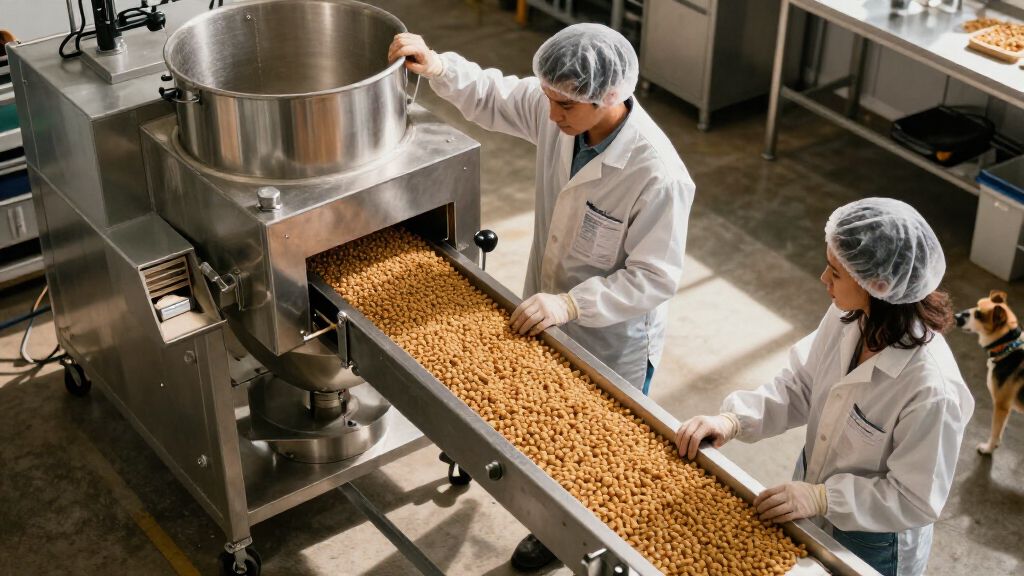
United Petfood agreed to acquire a dry pet food plant in Decatur, Arkansas, from Wellness Pet Company. If completed, it would give the Belgian manufacturer three North American plants, as the company builds regional dry-food capacity while focusing European investments on wet food, treats and localized production.
United Petfood has agreed to acquire a dry pet food plant in Decatur, Arkansas, from Wellness Pet Company, a move that would give the Belgian manufacturer three production sites in North America if the deal closes. In an interview with GlobalPETS, Group Sales Director Koen Van Broeck said the company is building a regional manufacturing network to serve the market locally, while directing European investments toward wet food, treats and localized production.
The Arkansas agreement was described as United Petfood’s fourth investment of the year. It follows the company’s April acquisition of a plant in Drummondville, Quebec. Before the recent North American expansion, the company had one facility in the region, according to the report. The source does not give a purchase price or a timetable for completing the Arkansas transaction.
United Petfood said the deal includes a long-term supply agreement with Wellness Pet Company. Under that arrangement, Wellness sold the physical facility, while its product supply and distribution are intended to continue without interruption. The plant is part of a build-out focused on dry food, rather than a broader expansion into multiple product formats.
Van Broeck told GlobalPETS that a regional network can help reduce logistics costs and complexity and lessen reliance on material coming from Europe. The company also sees local production as a way to strengthen reach, scale and supply reliability. Those benefits are the company’s rationale for the investment; the report does not quantify expected savings or production volumes.
A Local Base for North American Supply
The proposed acquisition would expand United Petfood’s ability to manufacture dry food close to customers in the United States and Canada. That could give the company more options for serving existing clients, developing new products and pursuing additional customers, although the report does not specify which customers will use the Arkansas plant or how much capacity it will add.
The move also reflects different regional priorities within the manufacturer’s investment strategy. United Petfood is building a dry-food footprint in North America, while it is putting European investment into wet food and treats. Van Broeck said wet food and treats have grown as a share of the company’s output and pointed to demand for cat food formats such as pouches and cans. For private-label customers, local production and a wider range of formats may offer greater flexibility, but the company has not published targets for the balance of its product mix.
The interview also describes a market in which customer demand is shifting across price tiers. Van Broeck said the mid-tier is losing some popularity as businesses focus more on either value products or premium and super-premium lines. That shift matters to a contract manufacturer because premium products can bring higher production costs and may require changes to customer assortments.
As an affiliate, we earn on qualifying purchases.
Different Investment Priorities by Region
The Arkansas agreement follows several investments and partnerships reported by United Petfood during the year. In March, it bought a dry-food factory in Turkey in partnership with Turkish manufacturer Lider Pet Food. In April, it acquired the Drummondville facility, and in August it acquired a 50% stake in German producer SmartPetPro, strengthening its premium wet-food offer and customer base, according to GlobalPETS.
Those moves serve distinct purposes. The Turkish facility is intended to serve the domestic market and support exports to Eastern Europe, while the German investment is meant to establish a foothold in Europe’s largest market. Van Broeck called Germany a previous “blind spot” for the company and said local facilities can help open commercial opportunities.
United Petfood’s strategy is also shaped by changes in pet-owner demand. The report cites a Yummypets survey, powered by Loop, of 1,000 North Americans: diets based solely on kibble were preferred by 44% of Canadian respondents and 32% of US respondents, while 63.5% of US pet parents preferred a mix of dry and wet food. These survey findings describe respondents’ preferences; they do not establish the share of all regional purchases.
“It’s very important to be present in this large market. As we started with our first acquisition a couple of years ago, the idea was always to have a network of pet food plants across the region.”
— Koen Van Broeck, United Petfood Group Sales Director, speaking to GlobalPETS
Deal Terms and Capacity Still Unknown
The source reports an agreement to acquire the Arkansas facility, not a completed transaction. It does not state when the acquisition is expected to close, whether regulatory or other conditions apply, the financial terms, the plant’s current output or its future capacity. It is also unclear how many jobs or customers will be affected, and whether production will change after the transfer.
United Petfood’s broader investment plans remain only partly defined in the report. Van Broeck discussed customer demand, product trends and the company’s interest in serving existing and prospective clients, but no specific future acquisition, spending target or North American production goal was disclosed. The source text ends during a discussion of acquisition strategy, so it does not provide a full account of the company’s position on further deals.
Completion and Local Production Plans
The next key milestone is completion of the Arkansas acquisition. United Petfood and Wellness Pet Company have not provided a closing date in the source material. If the deal closes, the long-term supply agreement is intended to maintain Wellness product supply and distribution while ownership of the physical facility changes.
Further details to watch for include when United Petfood begins operating the plant, how it will allocate production, and whether it announces new customer or product programs tied to the added capacity. The company has said its investments are intended to support both current clients and potential new ones, including startups, but it has not named specific partners for the Arkansas site.
Key Questions
What is United Petfood acquiring?
It agreed to acquire a dry pet food production facility in Decatur, Arkansas, from Wellness Pet Company. The source does not disclose the sale price or expected closing date.
How many North American plants would United Petfood have?
If the Arkansas transaction is completed, United Petfood’s regional footprint would rise to three plants. The company acquired a facility in Drummondville, Quebec, in April, after previously having one North American plant.
Will Wellness Pet Company products still be supplied?
The companies signed a long-term supply agreement alongside the facility deal. According to the report, product supply and distribution are intended to continue without interruption.
Why is United Petfood expanding in North America?
Group Sales Director Koen Van Broeck said a regional plant network can reduce logistics costs and complexity, limit reliance on material from Europe and support reach and supply reliability. The company has not provided a quantified estimate of these effects.
What is United Petfood investing in Europe?
The company is focusing European investment on wet food, treats and localized production. Van Broeck cited rising interest in cat food and formats such as pouches and cans, as well as the company’s investment in Germany and its Turkish production partnership.
Source: rss
Halloween Picks
halloween
As an affiliate, we earn on qualifying purchases.