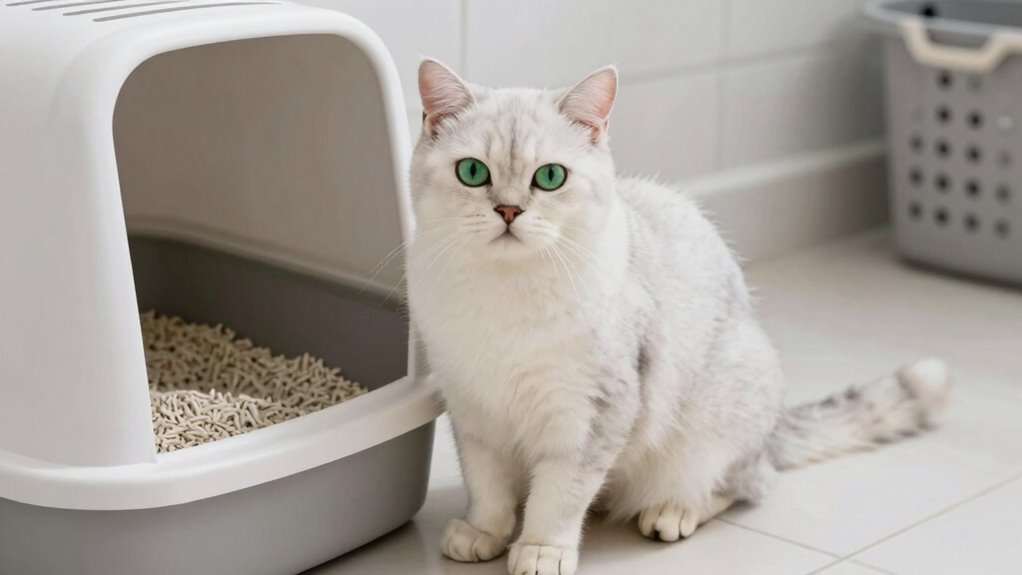

Litter box avoidance in cats often results from medical issues, environmental stressors, or behavioral triggers. You might notice your cat seeks to avoid the box after discomfort or pain, or if the area is noisy, dirty, or hard to access. Changes in the environment, like new pets or loud noises, can also cause anxiety. Adjusting the setup, reducing stress, and monitoring your cat’s health can help. There’s more to uncover if you keep exploring these factors.

Get pet supplies delivered free with Prime
- Fast, free delivery on millions of items
- Prime Video, Amazon Music and more included
- Member-only deals all year
Key Takeaways
- Medical issues like urinary infections or discomfort can cause cats to avoid the litter box.
- Changes in environment or routine may trigger stress, leading to avoidance behavior.
- Unfamiliar or unpleasant litter types can discourage use.
- Inaccessible or poorly located litter boxes can cause cats to seek alternative spots.
- Stressors such as loud noises or household conflicts increase the likelihood of avoidance.
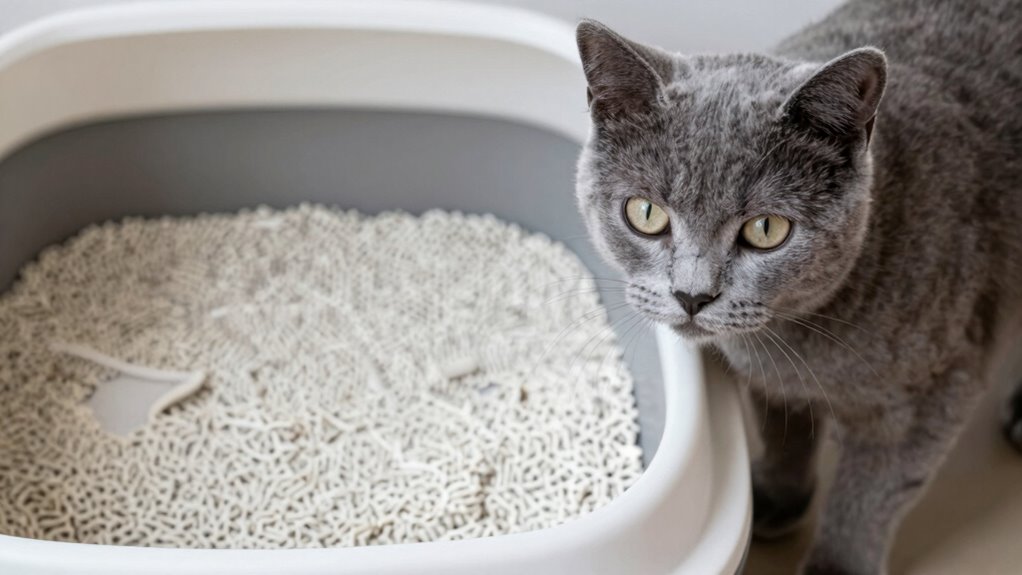
If your cat suddenly starts avoiding the litter box, it can be frustrating and concerning. Cats are usually clean animals, so when they refuse to use their designated spot, it’s a sign something’s off. One common reason is that your cat’s behavior might need some modification to help them feel more comfortable and secure. Behavior modification involves understanding what triggers their avoidance and making adjustments to reduce stress or discomfort. For instance, if your cat is scared of the litter box’s location or the type of litter used, changing these factors can make a difference. You might try placing the box in a quiet, accessible area and experimenting with different litters to find what your cat prefers. Sometimes, a simple change like adding a cover or removing strong smells can encourage them to use it again.
Environmental enrichment also plays an essential role in resolving litter box issues. Cats thrive when they have stimulating environments that reduce anxiety and boredom. Providing vertical spaces like cat trees or shelves allows your feline to observe their surroundings from a safe perch, helping them feel more secure. Interactive toys and regular play sessions can also distract and relax your cat, decreasing the likelihood of stress-induced avoidance. When your cat feels more comfortable and engaged in their environment, they’re less likely to associate the litter box with negative experiences. Additionally, stress reduction techniques can significantly improve your cat’s willingness to use the litter box consistently. Creating a calm environment by avoiding loud noises or sudden changes can help reduce anxiety that may lead to avoidance. Ensuring your cat’s environment is free from stressors that cause anxiety can make a noticeable difference. Addressing medical issues promptly is also crucial, as untreated health problems can contribute to litter box avoidance. Being aware of behavioral signs of discomfort can help you intervene early and prevent ongoing issues.
As an affiliate, we earn on qualifying purchases.
Frequently Asked Questions
Can Litter Box Avoidance Be a Sign of a Serious Health Issue?
Yes, litter box avoidance can indicate serious health issues like urinary infections, which cause pain during urination, or stress-related behavior, signaling underlying anxiety or environmental changes. If your cat suddenly stops using the box, you should consult a veterinarian promptly. Prompt diagnosis and treatment are essential to prevent complications. Keep an eye on other symptoms, such as blood in urine or excessive grooming, to help your vet understand the root cause.
How Does the Type of Litter Influence a Cat’s Bathroom Habits?
You might be surprised, but the type of litter truly influences your cat’s bathroom habits. While you think a fancy, scented litter would please them, many cats prefer unscented, fine-grained options that mimic natural textures. Different types of litter and scent preferences affect their willingness to use the box, so experimenting can prevent avoidance. Remember, what appeals to your nose might not appeal to your cat’s, so choose wisely!
Can Changes in Household Routines Cause Litter Box Avoidance?
Yes, changes in household routines and environmental shifts can lead your cat to avoid the litter box. When your routine alters suddenly or the environment feels unfamiliar, your cat might feel stressed or insecure, prompting elimination outside the box. To prevent this, keep routines consistent and create a stable environment. Gradually introduce changes, and make certain the litter box remains in a quiet, accessible spot to help your cat feel safe.
Are There Specific Breeds More Prone to Litter Box Issues?
Some breeds are more prone to litter box issues due to their breed tendencies and feline temperament. For instance, Siamese cats are known for their sensitive nature, making them more likely to avoid the box when stressed. Similarly, breeds like Maine Coons might be more tolerant, but others like Persians can be more particular. Understanding your cat’s breed-specific traits helps you address their needs and reduce avoidance behaviors effectively.
How Long Should I Wait Before Consulting a Veterinarian?
You should consult a veterinarian promptly if your cat shows signs of litter box avoidance lasting more than 24-48 hours, especially if behavioral triggers or environmental stress seem involved. Persistent issues could indicate health problems or psychological stress. Don’t wait too long, as early intervention can help address underlying causes, whether they’re behavioral or medical, ensuring your cat feels safe and comfortable in its environment.
Conclusion
Understanding what causes litter box avoidance in your cat is like unraveling a mystery—each clue helps you find the root. By paying attention to their behavior and environment, you can turn the situation around and restore harmony. Remember, patience is your best tool, and with a gentle touch, you’ll help your feline friend find comfort where they once felt uneasy. Together, you’ll clear the path for more happy, stress-free moments.
Fall Picks
fall essentials
As an affiliate, we earn on qualifying purchases.