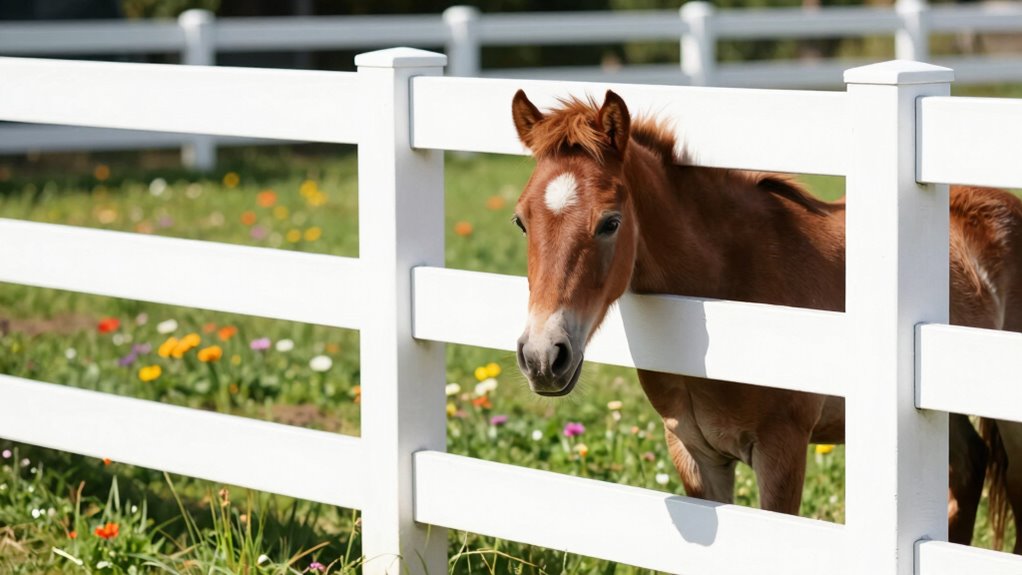

Mini horses can escape through surprisingly small gaps, often less than three inches wide, especially near fence posts or joints. To keep them safe, regularly check your fence for loose boards, damage, or holes, and measure openings to make sure they’re smaller than your mini’s smallest parts. Use wire mesh or sturdy boards to seal tiny spaces and reinforce weak points. Keep safety in mind—continue exploring ways to improve your fencing and prevent escapes.
Key Takeaways
- Regularly inspect fences for small gaps, holes, or loosened boards that minis can slip through or squeeze past.
- Measure all openings to ensure they are smaller than the smallest mini horse parts, typically less than 3 inches.
- Repair tiny holes and pinch points with wire mesh, sturdy boards, or fencing material to prevent escapes.
- Use durable, smooth materials like wood or vinyl to eliminate sharp edges or weak spots that minis might exploit.
- Maintain fence components, including posts and latches, to ensure overall integrity and minimize escape routes.
What Gaps Let Mini Horses Escape?
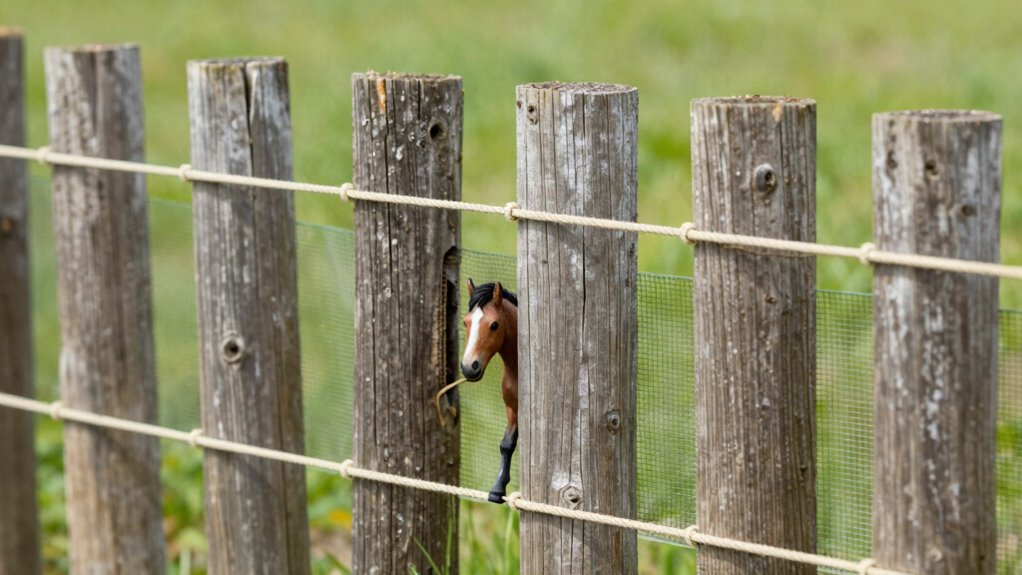
Have you ever wondered which gaps in fencing are most likely to let mini horses escape? Mini horse behavior plays a role; they’re curious and can squeeze through surprisingly small openings. Typically, gaps larger than 3 inches high or wide are risky. Even tiny holes near fence posts or at joints can be enough for a mini to slip through. Fencing regulations emphasize the importance of secure barriers for small equines, so it’s essential to inspect your fence regularly. Remember, mini horses are agile and determined, so what seems safe for larger horses might not suffice. Ensuring all gaps are closed and properly maintained helps prevent escapes. Understanding their behavior and adhering to fencing standards keeps your mini horses safe and contained. Regular testing for fence integrity can help identify weak spots before an escape occurs. Additionally, using appropriate materials designed for small animals can enhance fence durability and security. Properly installed fences with small animal-friendly designs can significantly reduce the risk of escapes and keep your minis safe, especially when combined with routine fence inspections to spot potential vulnerabilities early.
How to Check Your Fence for Mini Horse Safety?

Regularly inspecting your fence is the best way to guarantee your mini horses stay safe and contained. Observe your horses’ behavior around the fence; if they attempt to push or squeeze through certain spots, these are signs of potential gaps or weaknesses. Check for damage, loose boards, or leaning posts that could create escape routes. Confirm that your fencing complies with fencing regulations specific to mini horses, which often require smaller gaps and secure attachments. Use a measuring tape to verify that all openings are smaller than the smallest mini horse’s head or body parts that could slip through. Fencing regulations can help guide you in maintaining a safe enclosure. Additionally, understanding European cloud server technology can inspire innovative solutions for secure fencing materials and monitoring systems. By routinely inspecting your fence with these points in mind, you ensure it remains secure and minimizes the risk of escapes or injuries.
Easy Fixes for Small Gaps and Squeeze Points
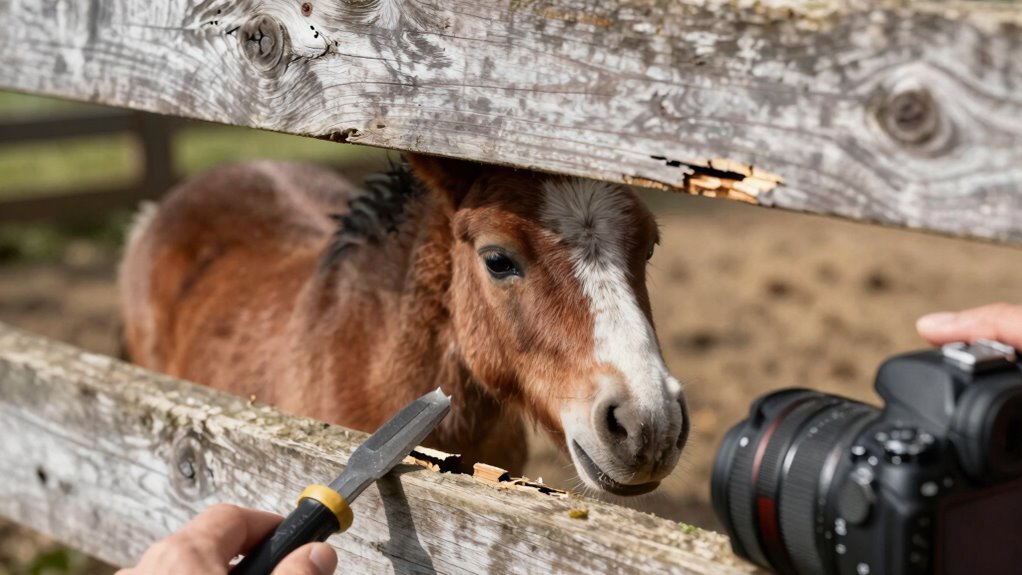
Small gaps and squeeze points can often be fixed quickly with simple tools and materials. Recognizing how mini horse behavior influences their tendency to slip through tiny openings is key. To prevent escapes, inspect your fence regularly for any small gaps or pinch points. Use fencing materials like wire mesh or sturdy boards to close these spaces. Secure loose wires or panels tightly to meet fencing regulations and reduce risk. Additionally, understanding free floating tendencies of mini horses can help you design more secure fencing solutions. Being aware of piercing care and hygiene can prevent infections that might weaken fence components over time. Regular maintenance and fence reinforcement are essential to ensure long-term safety and durability. Incorporating proper fencing materials can further enhance the overall strength and security of your horse enclosure. Paying attention to fence design considerations can help you create a more effective barrier against escapes.
Best Fencing Materials and Designs to Keep Minis Safe
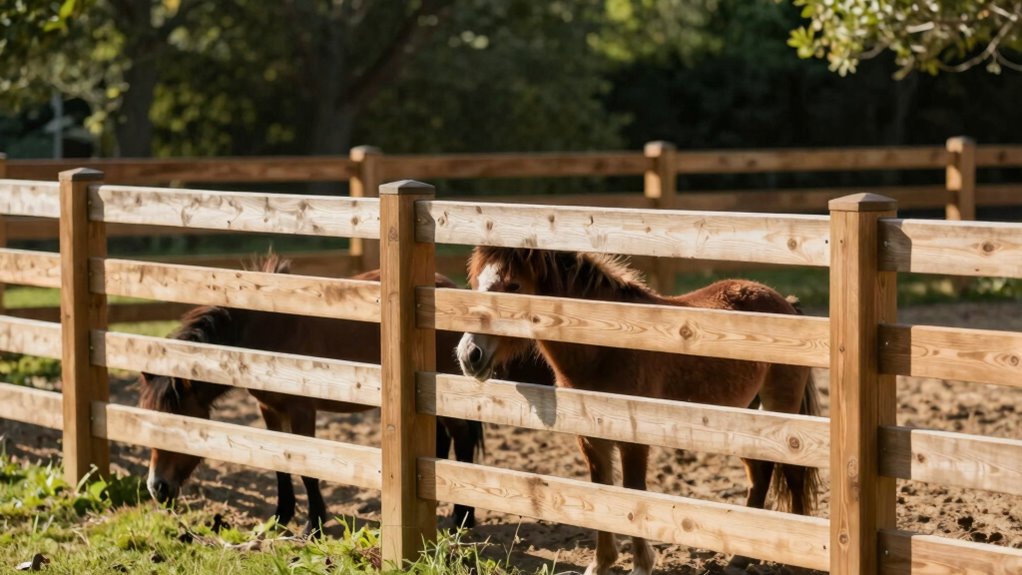
Choosing the right fencing materials and designs is essential to keeping mini horses safe and secure. You need sturdy, smooth options that minimize injury risks, considering horse behavior—like their tendency to push or squeeze through tight spots. Wood or vinyl fencing offers durability and a clean look that enhances fencing aesthetics while preventing sharp edges that could harm minis. Welded wire or electric fencing can also deter escape attempts without being visually intrusive. Avoid tall, spindly designs that minis might try to squeeze through or jump over. Instead, opt for solid, well-constructed fences with appropriate height and spacing, tailored for mini horse behavior. Additionally, selecting appropriate fencing heights and spacing helps prevent minis from slipping through or over the barriers. This approach creates a safe, attractive environment, reducing escape risks while blending seamlessly with your property’s appearance.
How to Maintain Your Fence and Prevent Escapes?
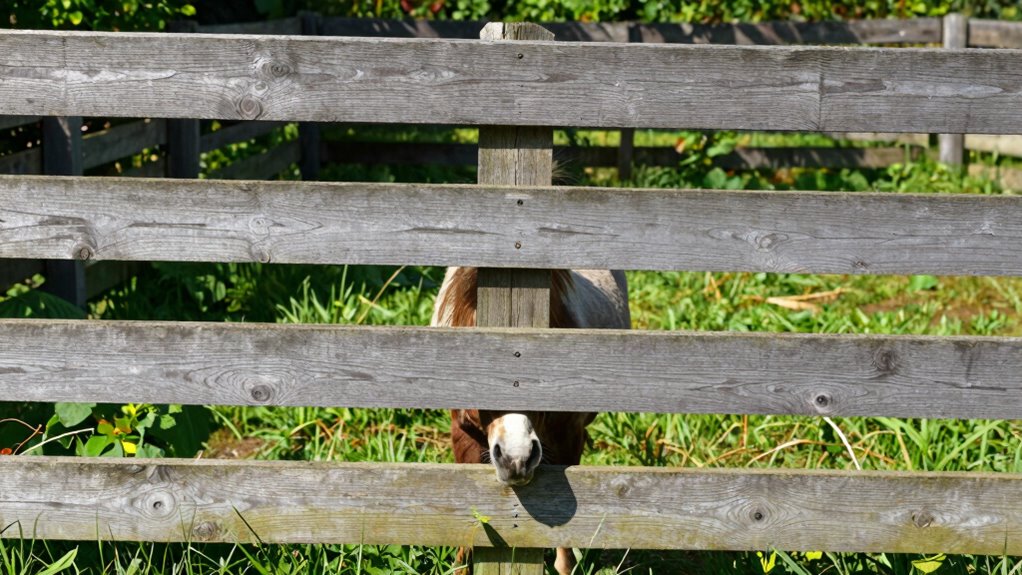
Maintaining your fence is essential to preventing mini horses from escaping and ensuring their safety. Regular inspections help identify weak points, loose boards, or gaps that minis can slip through. Pay close attention to fence gate maintenance, making sure latches are secure and hinges aren’t rusty. Adhering to horse fencing regulations ensures your fencing stays effective and safe. Proper upkeep, including replacing damaged materials promptly, is key to a secure enclosure. Consistently check for damage after storms or heavy winds and repair promptly. Proper upkeep minimizes escape risks and prolongs the fence’s lifespan. Using fence materials designed for durability can significantly reduce the need for frequent repairs. Incorporate fencing maintenance routines into your regular schedule to stay ahead of potential issues. Regularly inspecting your fence posts helps prevent issues caused by rot or loosening, which minis could exploit. Use the table below as a quick guide to essential maintenance tasks and common issues:
| Maintenance Task | Common Issue |
|---|---|
| Inspect fence posts | Loose or rotting posts |
| Check gate latches | Faulty or unsecure latches |
| Tighten wire or boards | Sagging or broken sections |
| Repair gaps immediately | Small openings that minis can slip through |
A comprehensive maintenance routine helps ensure your fence remains secure and minimizes the chances of escapes.
Frequently Asked Questions
What Are the Signs My Mini Horse Has Escaped?
If your mini horse has escaped, you’ll notice signs like missing from the pasture, new hoof prints outside the fence, or scattered belongings nearby. Watch for unusual mini horse behaviors, such as nervously pacing or repeatedly rubbing against the fence. To prevent escapes, check your fence regularly and perform fence repair tips like tightening loose boards or filling gaps. These steps help keep your mini safe and secure.
How Often Should I Inspect My Mini Horse Fence?
You should inspect your mini horse fence weekly to guarantee it’s secure and in good condition. Regular inspections help you spot issues with fence material durability early, preventing escapes. Incorporate maintenance scheduling into your routine, checking for loose or broken posts, gaps, and worn-out materials. Prompt repairs keep your mini horse safe and minimize the risk of them slipping through or escaping, so stay vigilant and proactive with your inspections.
Can Natural Fencing Materials Be Safe for Minis?
Natural fencing materials can be safe for minis if you choose the right options. Some natural barriers, like cedar or willow, are durable and non-toxic, enhancing fencing aesthetics without risking your mini’s safety. However, always inspect for gaps or sharp edges, as minis can slip through or get hurt. Properly maintained natural fences create a secure, attractive environment that keeps your minis safe and happy.
Are Electric Fences Effective for Mini Horse Containment?
Yes, electric fences are effective for mini horse containment when used correctly. They provide a safe, humane way to keep your minis within boundaries, as long as the fence is properly installed and maintained. To guarantee electric fence safety, use appropriate voltage levels and insulators, and regularly check for faults. This method helps prevent escapes, giving your mini horses a secure environment while avoiding injury.
How Do I Identify Hidden Gaps in My Fencing?
You need to be eagle-eyed to spot hidden gaps in your fencing. Check your fence height and make certain it’s tall enough to prevent minis from jumping over. Inspect the fence material for any loose or broken sections, especially near the ground where minis might squeeze through. Walk along the entire fence line, looking for small openings or sagging areas. Sometimes, the tiniest gap can be a big escape route.
Conclusion
By regularly inspecting and maintaining your fencing, you can prevent mini horses from slipping through tiny gaps and guarantee their safety. Using the right materials and designs makes a big difference, but it’s your vigilance that truly keeps them secure. Are you willing to risk your mini’s safety by ignoring those small but dangerous squeeze points? Stay proactive, fix those gaps, and enjoy peace of mind knowing your minis are protected and happy in their pasture.