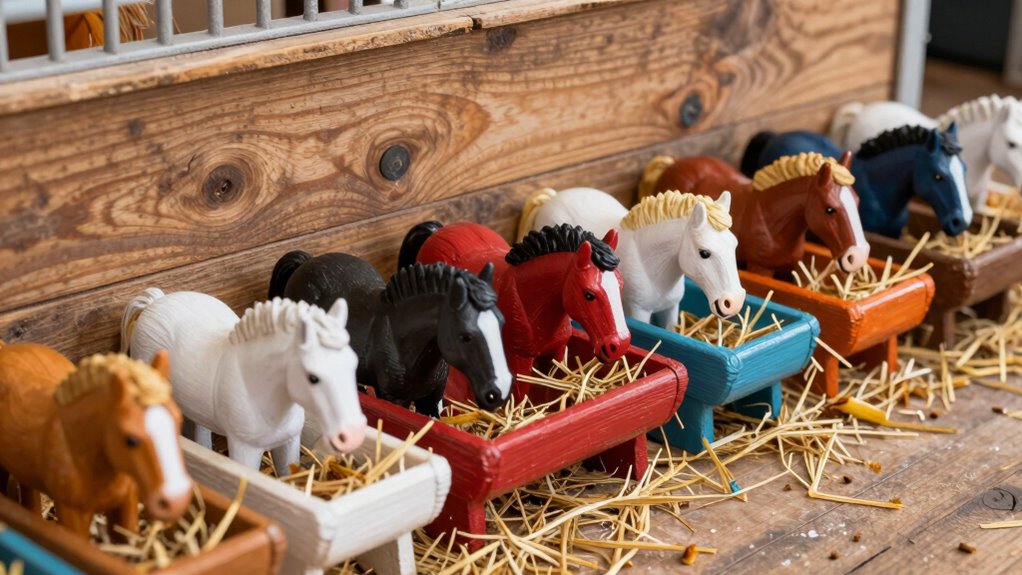
Using a well-chosen miniature horse feeding trough is an easy way to minimize hay waste, keep your horse healthy, and save money. By selecting a durable, easy-to-clean design with features like low sides and proper sizing, you can prevent hay from falling and spilling. Proper placement and gradual training encourage your horse to eat calmly and consistently. Keep an eye on maintenance and safety tips, and you’ll soon see the benefits unfold—more details await you.
Key Takeaways
- Use appropriately sized, durable troughs to minimize hay spillage and wastage during feeding.
- Place troughs in shaded, stable areas for easy access and to prevent hay spoilage.
- Regularly clean and inspect troughs to prevent mold, bacteria, and damage that can increase waste.
- Incorporate barriers or open-front designs to reduce hay pulling and scattering while encouraging calm eating.
- Rotate feeding locations and use multiple troughs to prevent boredom and promote efficient hay utilization.
Why Feeding Troughs Help Reduce Hay Waste and Simplify Mealtime
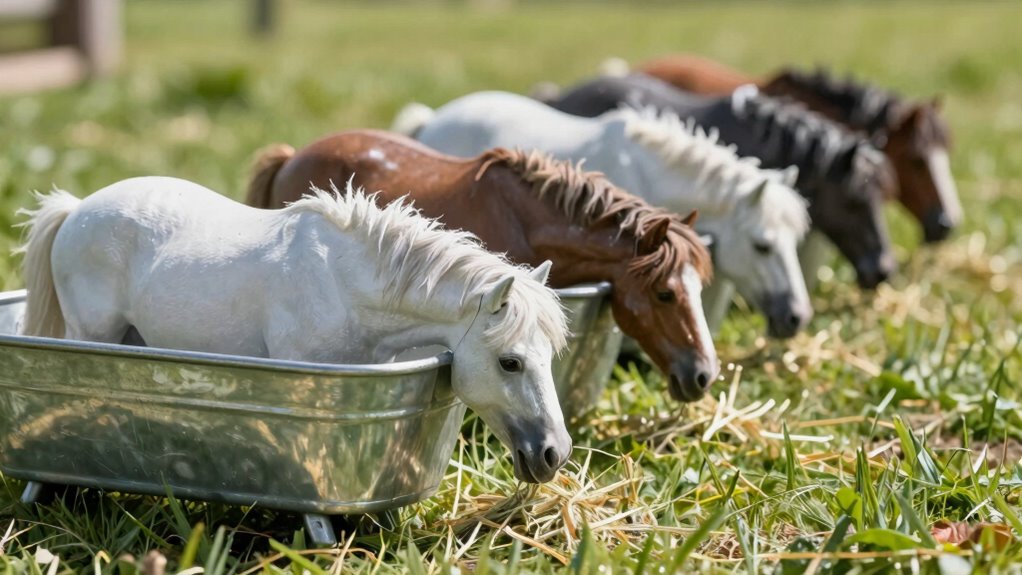
Using feeding troughs for miniature horses can considerably cut down on hay waste and make mealtime more manageable. When you use a trough, you control how much hay your horse eats at each feeding, reducing excess that falls to the ground. This helps improve hay storage since less hay gets trampled or spoiled, saving you money and effort. Additionally, troughs encourage a consistent feeding frequency, making it easier to monitor your horse’s intake and health. By minimizing scattered hay, you keep the area cleaner and reduce waste from pests or spoilage. Overall, feeding troughs streamline mealtime, help manage hay more efficiently, and ensure your miniature horse gets the right amount without unnecessary waste.
What Features Make a Good Miniature Horse Feeding Trough?

A good miniature horse feeding trough should be made from durable materials that withstand chewing and weather conditions. It also needs an easy access design so your horse can eat comfortably without spillage. Focusing on these features guarantees a long-lasting and practical feeding solution. Additionally, considering material choice is important, as it influences the overall durability and suitability for outdoor use. Selecting appropriate materials can prevent rusting, cracking, or damage over time, ensuring the trough remains functional and safe for your miniature horse. Incorporating non-toxic, safe materials further ensures your horse’s health and safety during feeding. Using weather-resistant materials can also help extend the lifespan of the trough in various environmental conditions. Choosing materials that are easy to clean and maintain can also contribute to the longevity and hygiene of the feeding trough.
Durable Material Selection
Choosing the right materials for a miniature horse feeding trough is essential to guarantee durability and safety. You want a material with high material resilience that can withstand constant use, biting, and weather conditions without cracking or rusting. Look for options like heavy-duty plastic, galvanized steel, or rubber, which resist corrosion and impact. The material’s toughness ensures the trough stays intact over time, reducing replacement costs. Additionally, consider trough aesthetics—materials that look good and blend with your stable’s environment can enhance the overall setup. A well-chosen material not only prolongs the lifespan of your trough but also maintains a clean, attractive appearance. Investing in durable, aesthetically pleasing materials helps you avoid frequent repairs and keeps your miniature horse’s feeding area safe and inviting. Incorporating sound therapy techniques into your maintenance routine can also promote a calmer environment for your animals, reducing stress-related damage. Moreover, selecting weather-resistant materials can prevent deterioration caused by exposure to the elements, ensuring the trough remains functional regardless of weather conditions. Using impact-resistant materials further enhances the trough’s ability to withstand accidental bumps or knocks, prolonging its usability. Additionally, choosing materials that are non-toxic and safe guarantees the health and safety of your miniature horses. Ensuring the materials are easy to clean contributes to maintaining a hygienic feeding environment, reducing the risk of disease transmission.
Easy Access Design
An effective miniature horse feeding trough is designed to allow easy access for your horse while minimizing waste and frustration. Features like low sides or open-front designs help your horse reach the hay comfortably, supporting proper horse nutrition. An accessible trough encourages consistent feeding schedules, reducing the risk of overeating or missed meals. Look for designs with smooth edges to prevent injury and ensure your horse can eat safely. A well-thought-out easy access feature also helps prevent hay from spilling or being trampled, saving you money and effort. Incorporating premium wood options can enhance durability and aesthetics in your feeding setup. Additionally, considering ergonomic design principles can improve your horse’s comfort during feeding. Implementing waste reduction methods in your design can further decrease hay waste and improve feeding efficiency. Choosing a simple, effective design can make daily feeding more efficient and keeps your miniature horse well-nourished. Using modern materials can also help extend the lifespan of your trough and make cleaning easier.
How to Choose the Best Trough Material and Design for Your Horse
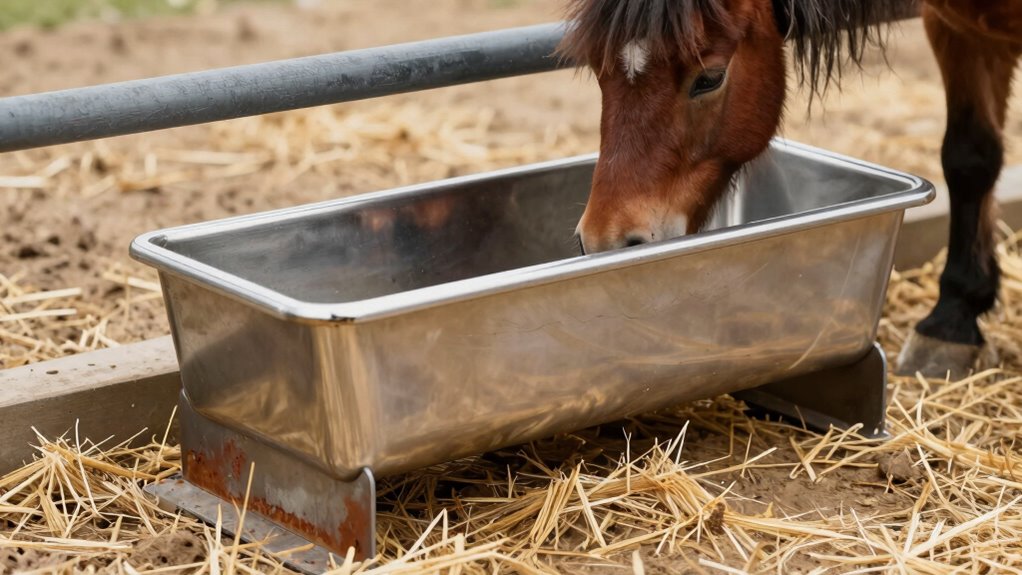
Selecting the right material and design for your miniature horse’s feeding trough is essential to guarantee durability, safety, and ease of use. Consider the decorative finishes that match your barn’s aesthetic while ensuring they’re non-toxic and safe for your horse. When choosing materials, explore alternative options like heavy-duty plastics, rubber, or stainless steel, which resist rust, cracks, and chewing. These materials also require less maintenance and are easier to clean. The design should be sturdy, with smooth edges to prevent injuries, and tall enough to discourage hay spillage. Look for troughs with non-slip bases to prevent tipping. Additionally, material durability is crucial to withstand frequent use and harsh weather conditions. Proper material selection ensures your trough remains functional and safe over time. Choosing a safe and durable material can significantly extend the lifespan of your trough while keeping your miniature horse healthy and reducing waste effectively. Furthermore, selecting a design that minimizes waste can enhance your feeding routine and reduce clean-up efforts. Ultimately, selecting a well-designed trough made from durable, safe materials will keep your miniature horse healthy and reduce waste effectively. A thoughtful design can also improve your horse’s feeding experience and minimize clean-up efforts.
How to Properly Set Up and Position Your Trough for Maximum Effectiveness
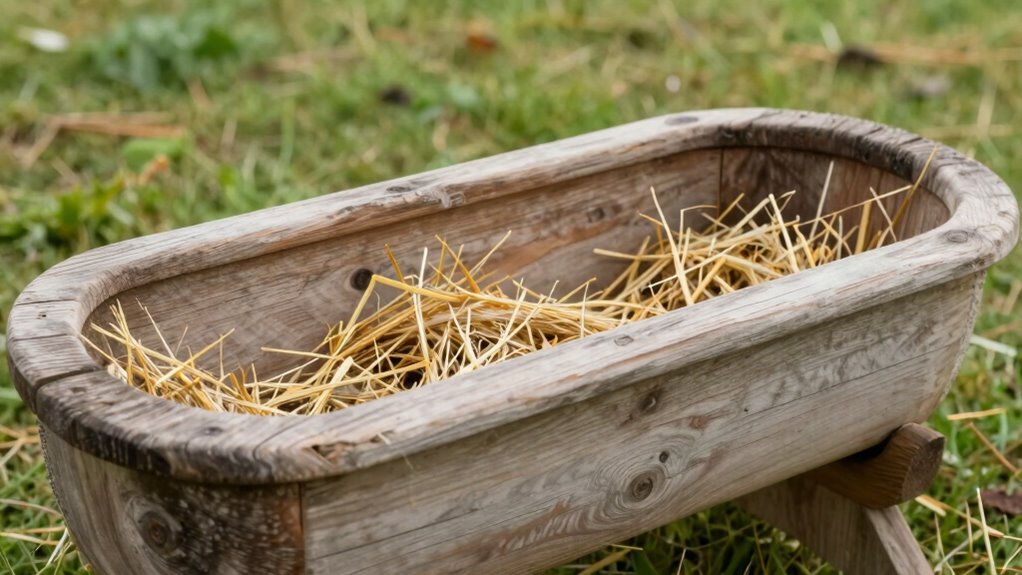
Proper setup and positioning of your miniature horse’s trough are essential for maximizing its effectiveness and minimizing waste. First, place the trough in a shaded area to prevent hay spoilage and keep water cool. Second, keep it on a stable, level surface to prevent tipping and spillage. Third, position the trough near your watering system to ensure easy access and consistent hydration. Fourth, consider pasture rotation to avoid overgrazing and manure buildup around the trough, which can lead to waste and health issues. Proper placement encourages your horse to eat efficiently, reduces hay waste, and promotes a cleaner environment. Regularly check the trough’s position to adapt to pasture changes and ensure your miniature horse consistently benefits from a well-placed feeding station. Incorporating at-home technology such as automatic watering systems can further improve hydration convenience and reduce manual labor. Additionally, paying attention to hydration needs helps prevent dehydration and ensures your miniature horse stays healthy and comfortable. Being aware of waste reduction techniques can also contribute to a more sustainable feeding setup, especially when combined with proper maintenance practices to keep the trough clean and functional.
Tips for Introducing the Trough to Your Miniature Horse and Gaining Acceptance
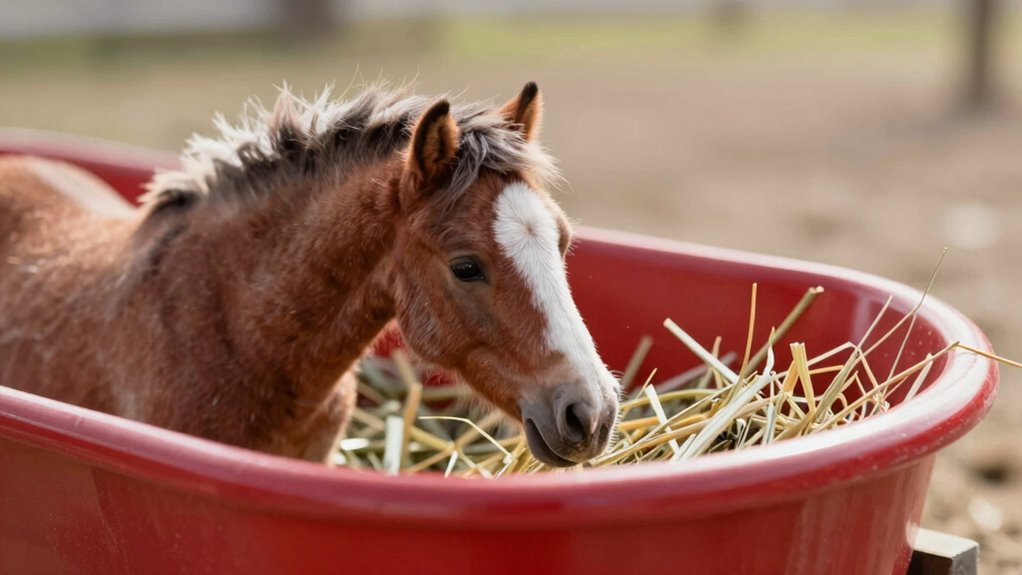
To help your miniature horse accept the new trough, start with gradual training by placing it in familiar areas. Use positive reinforcement, like treats or praise, whenever your horse approaches or interacts with the trough. Consistent, patient efforts will encourage your horse to view the trough as a welcome part of their routine. Incorporating simple systems can make the transition smoother and more effective.
Gradual Trough Training
Introducing your miniature horse gradually to a new feeding trough helps facilitate a smooth progression and encourages acceptance. Proper trough training is essential for effective hay management and reducing waste. To begin, start by placing the trough in a familiar area where your horse already eats. Next, gradually introduce small amounts of hay into the trough, allowing your horse to explore it at their own pace. Third, observe their response; if they show reluctance, don’t force them—give them time to adjust. Finally, consistently reinforce positive experiences around the trough. By following these steps, you help your miniature horse associate the trough with comfortable feeding, making hay management easier and minimizing wasted hay. Patience and consistency are key for successful trough training.
Positive Reinforcement Techniques
Using positive reinforcement techniques can substantially improve your miniature horse’s acceptance of a new feeding trough. Start by offering tasty treats, like small pieces of hay or carrots, near the trough to encourage curiosity. When your horse approaches or interacts with the trough, praise them and give these treats immediately. This builds a positive association with the new hay storage method. Consistently reward calm behavior around the trough, reinforcing that it’s safe and beneficial. Over time, your horse will become more comfortable, reducing stress and waste. Remember, horse nutrition depends on consistent access to hay, and a well-accepted trough minimizes wasted hay, saving money. Patience and positive reinforcement are key to successful introduction and long-term acceptance of the new feeding setup.
Regular Maintenance Tips to Keep Your Trough Clean and Durable
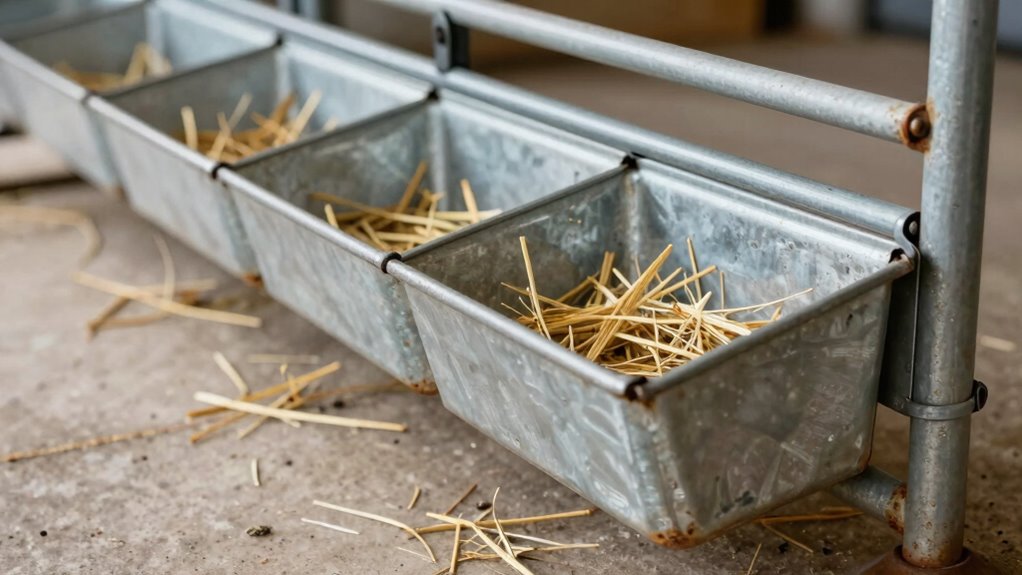
Regular maintenance is essential to keep your miniature horse feeding trough clean and durable. Establishing a consistent cleaning schedule ensures hygiene practices are followed, preventing mold and bacteria buildup. To maintain ideal condition, consider these tips:
- Clean the trough daily with mild soap and water to remove leftover hay and debris.
- Disinfect weekly using a safe, horse-friendly cleaner to kill germs.
- Inspect for cracks or damage during cleaning and repair promptly to prevent further deterioration.
- Empty and rinse the trough thoroughly before refilling to avoid mold growth.
Common Problems With Feeding Troughs and How to Fix Them
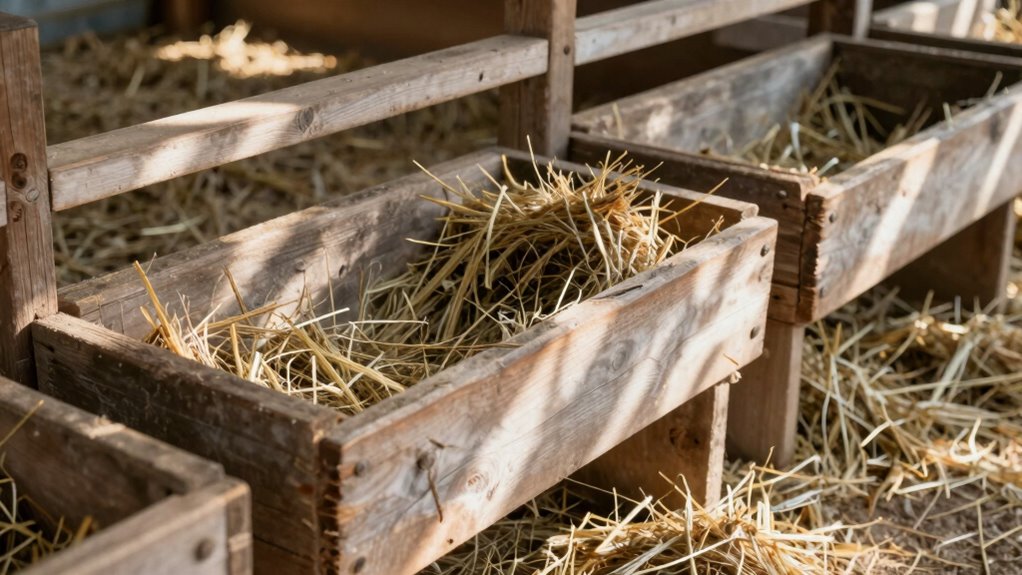
Even with a consistent cleaning routine, feeding troughs can still develop common issues that affect your miniature horse’s health and safety. Overfeeding issues often occur when troughs are too deep or wide, leading to overeating or wasted hay. To prevent this, choose a trough size that limits portion sizes and encourages controlled feeding. Regular trough cleaning is essential to remove mold, old hay, and bacteria that can cause illness. Neglecting trough cleaning can also lead to clogging or buildup, making it harder for your horse to access food and increasing waste. Inspect the trough frequently for signs of overfeeding or debris. Fix these problems promptly by adjusting the trough size, maintaining strict cleaning routines, and monitoring your horse’s eating habits to keep them healthy and minimize waste.
How Using a Trough Saves Money on Hay and Reduces Waste
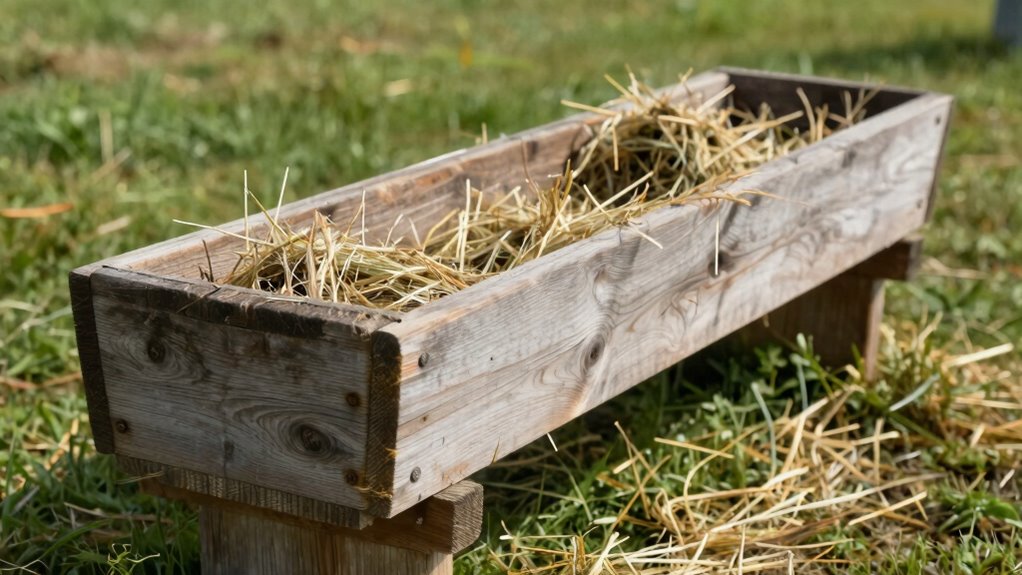
A properly sized feeding trough helps you save money on hay by preventing overeating and waste. When your miniature horse eats from a trough designed for their size, they’re less likely to pick out only the tastiest bits or trample hay, reducing waste. Additionally, using a trough supports consistent feeding schedules, which benefits horse health by maintaining a stable digestion routine. Here are some benefits:
- Less leftover hay, meaning fewer purchases needed.
- Reduced spoilage from hay getting trampled or soiled.
- Better control over portion sizes, preventing overfeeding.
- Improved horse health through cleaner, more manageable feeding habits.
Key Safety and Comfort Tips for Your Horse During Mealtime
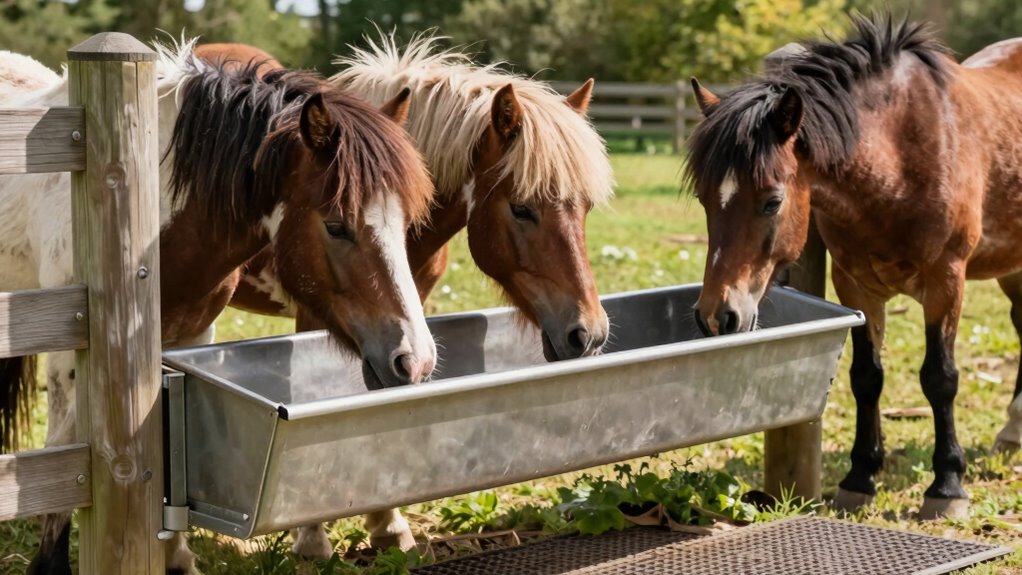
Creating a safe feeding environment helps prevent injuries and guarantees your horse feels secure during mealtime. Make sure the trough is stable and positioned at a comfortable height so your horse can eat without strain. Pay attention to your horse’s posture to keep mealtime comfortable and reduce the risk of discomfort or colic.
Safe Feeding Environment
Are you ensuring your miniature horse’s feeding area is both safe and comfortable? A secure environment promotes better horse nutrition and effective feed management. To achieve this, consider these tips:
- Keep the area clean and dry to prevent slips and injuries.
- Use sturdy, stable troughs that won’t tip over easily.
- Place feeding stations on level ground, avoiding uneven or muddy spots.
- Monitor feed amounts to prevent overfeeding and reduce waste.
Comfortable Mealtime Posture
Ensuring your miniature horse maintains a comfortable mealtime posture is essential for their safety and digestion. Proper posture prevents strain on their neck and back, making it easier to eat without discomfort. Regular horse grooming helps keep their coat and muscles in good condition, supporting healthy mealtime positioning. Consider your pasture management to guarantee the grazing area isn’t overly muddy or uneven, which can force your horse into awkward positions. Adjust feeding trough height and placement to encourage a natural, relaxed stance, avoiding the need for your horse to stretch or hunch. A comfortable posture reduces stress and the risk of injury, promoting better digestion and overall health. Taking these steps ensures mealtime remains safe, comfortable, and beneficial for your miniature horse.
Final Tips: Ensuring Your Miniature Horse Uses the Trough and Enjoys Mealtime
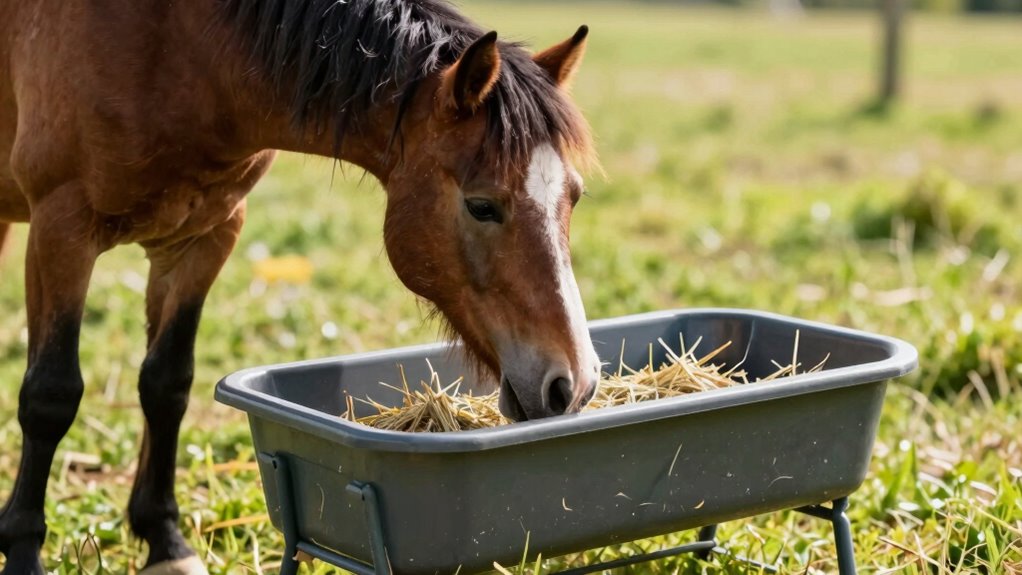
To make sure your miniature horse uses the trough and enjoys mealtime, start by placing it in a quiet, easily accessible area where your horse feels comfortable. Consistent routines help build familiarity and encourage use. Here are some final tips:
Placing the trough in a quiet, accessible spot encourages your miniature horse to use it comfortably.
- Keep the area clean and free of debris to promote horse grooming and health.
- Rotate pasture grazing to prevent overgrazing and ensure fresh forage, making mealtime more appealing.
- Regularly check the trough for cleanliness and stability to prevent spills and discourage waste.
- Observe your horse’s behavior; if they seem hesitant, try repositioning the trough or adding treats to promote positive associations.
These steps help your miniature horse develop good habits and enjoy mealtime without unnecessary waste.
Frequently Asked Questions
What Size of Trough Is Suitable for Different Miniature Horse Ages?
For different miniature horse ages, choose suitable trough sizes to prevent waste and guarantee proper feeding. Younger foals need smaller troughs, around 6-8 inches wide, to encourage safe eating without spillage. Mature miniature horses require larger troughs, about 10-12 inches wide, for comfortable access. Always consider horse age and size when selecting miniature horse feeding troughs, as this helps reduce wasted hay and promotes healthy feeding habits.
Can Feeding Troughs Prevent the Development of Hoof Issues?
Feeding troughs can markedly improve hoof health by encouraging proper grazing behavior. Studies show that horses with restricted access to forage develop fewer hoof issues, such as laminitis. By using troughs, you control hay intake, reducing overgrazing and promoting natural movement, which supports hoof strength. Properly designed troughs help maintain balanced nutrition and prevent the development of hoof problems caused by overconsumption or improper diet.
Are There Eco-Friendly Materials Available for Trough Manufacturing?
Yes, eco-friendly materials like biodegradable plastics and recycled wood are available for trough manufacturing. You can choose biodegradable plastics that break down naturally, reducing landfill waste, or opt for recycled wood, which repurposes old materials and minimizes deforestation. These options help you create sustainable feeding solutions for your miniature horse, reducing environmental impact while providing durable, safe, and effective troughs.
How Often Should I Replace or Upgrade My Horse’s Feeding Trough?
You should replace or upgrade your horse’s feeding trough when you notice signs of wear, such as cracks or rust, which can hinder trough cleaning and compromise material durability. Regularly inspect the trough to guarantee it’s sturdy and easy to clean, ideally every 1-2 years. Upgrading to a more durable, eco-friendly material can extend its lifespan and make trough cleaning more efficient, ensuring your horse always has a safe, clean feeding environment.
Do Troughs Help Reduce Aggression During Feeding Times?
Feeding troughs can be your secret weapon to calm horse socialization and reduce aggression during feeding. Think of them as peacekeeping islands where each horse has its own space, preventing competition. When horses eat calmly, their feeding behavior becomes more relaxed, and aggressive tendencies fade. Using troughs fosters harmony, helping your horses enjoy their meal without turning feeding time into a showdown.
Conclusion
So, embrace those feeding troughs and watch your hay magically transform from mountains to minimal mess. Say goodbye to endless cleanups and wasted feed, and hello to happy, well-fed horses. Just remember, a well-placed, safe trough isn’t just smart—it’s practically a miracle worker. Now, go on, give your miniature horse the “dining experience” they deserve, and watch them munch in style while you revel in your newfound hay-saving genius.