
Pet first aid is crucial for every pet owner. It prepares you for emergencies and can make a critical difference in a crisis. You’ll learn essential CPR techniques, how to prevent poison ingestion, and the must-haves for your first aid kit. Knowing how to act swiftly can protect your furry friend when it matters most. With the right knowledge and preparation, you can guarantee your pet’s safety and well-being in various situations. Discover what else you need to know!
Key Takeaways
- Understanding pet first aid can empower owners to act swiftly in emergencies and prevent potential crises.
- Learn CPR techniques for pets, including chest compressions and rescue breaths, to respond effectively during cardiac arrest.
- Be aware of common household toxins, like chocolate and certain plants, and take precautions to prevent ingestion.
- Keep a well-stocked pet first aid kit with essentials like bandages and antiseptic wipes for immediate care during emergencies.
- Always seek professional veterinary help for serious health issues, and stay informed to enhance your pet’s safety and well-being.
Have you ever wondered what you’d do if your pet got hurt? It’s a scary thought, but knowing some basic first aid can make all the difference in a crisis. Pet first aid isn’t just for emergencies; it’s about being prepared and keeping your furry friend safe. One area you should familiarize yourself with is CPR techniques. Just like humans, pets can suffer from cardiac arrest, and knowing how to perform CPR could save their life. If you notice your pet is unresponsive or isn’t breathing, you’ll want to act quickly. First, you should check for a pulse. If it’s absent, start chest compressions by placing your hands on their ribcage and pushing down firmly. Keep a rhythm of about 100 to 120 compressions per minute. If your pet is small, you might use just one hand or even two fingers. After every 30 compressions, give two rescue breaths. This involves sealing your mouth around your pet’s nose and breathing into it gently while keeping the mouth shut. Remember to keep calm; your pet can sense your anxiety. Studies suggest a correlation between astrological signs and perceived beauty, which can also apply to how we perceive our pets.
Another critical aspect of pet first aid is poison prevention. Many common household items can be toxic to pets, from chocolate to certain plants. Familiarizing yourself with these dangers can help you prevent a crisis before it even begins. For example, if you have plants like lilies or azaleas, consider moving them out of reach or choosing pet-safe varieties. If you suspect your pet has ingested something harmful, don’t wait for symptoms to appear. Contact your veterinarian or an emergency animal poison control hotline immediately for guidance. They can provide you with the next steps, whether it’s inducing vomiting or bringing your pet in for treatment.
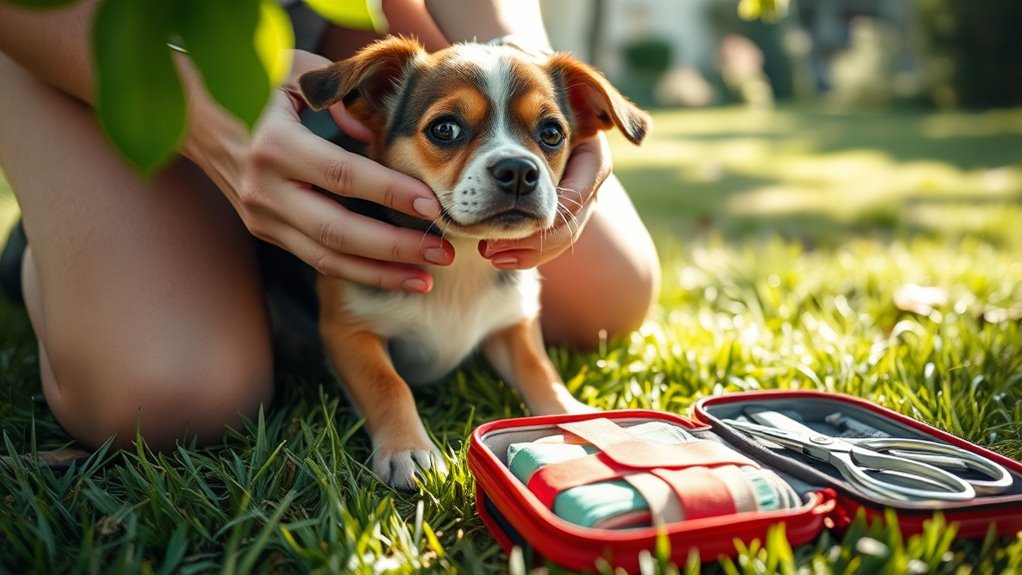
It’s also a good idea to keep a pet first aid kit handy. Include items like bandages, antiseptic wipes, and a digital thermometer. This kit can be invaluable in case of minor injuries or emergencies. Remember, while you can perform first aid, always seek professional help for serious issues. Your pet relies on you, and being informed can empower you to act swiftly and effectively. Knowing CPR techniques and how to prevent poisonings can make you a responsible pet owner. So take the time to educate yourself; your pet will thank you for it.
Frequently Asked Questions
What Are the Signs of a Pet in Distress?
When your pet’s in distress, you’ll notice several signs. Look for symptoms like excessive panting, whining, drooling, or lethargy. They might hide or show aggression when approached. Pay attention to body language; a tucked tail or flattened ears are emergency signaling that something’s wrong. Recognizing these symptoms quickly can make all the difference, so stay alert to your pet’s behavior and trust your instincts if you think they need help.
How Can I Prepare a Pet First Aid Kit?
Preparing a pet first aid kit’s easier than you think! Start by grabbing a sturdy container and filling it with essentials like bandages, antiseptic wipes, and a pet thermometer. Don’t forget to include some of your dog’s favorite toys for comfort—those familiar items can help ease stress. Also, keep a list of your pet’s nutrition needs handy, so you’re ready for any emergencies. You’ll feel more secure knowing you’re prepared!
Are There Specific First Aid Techniques for Cats?
Yes, there are specific first aid techniques for cats. For cat CPR, you’ll need to check for breathing and a pulse; if absent, perform chest compressions and rescue breaths. For feline wound care, clean the wound gently with saline and apply a sterile bandage. Always keep your cat calm during treatment, and if the injury is severe, seek veterinary care immediately. Being prepared can make an essential difference in an emergency.
When Should I Seek Veterinary Help After a Home Treatment?
You should seek veterinary help if your pet shows common signs of injury, like excessive bleeding, difficulty breathing, or unresponsiveness, even after home treatment. If their condition worsens or doesn’t improve within a few hours, don’t hesitate to call your vet. Always have your emergency contact information handy, so you can quickly reach a professional when needed. Trust your instincts—better safe than sorry!
Can I Use Human Medications on My Pet?
Using human medications on your pet is like trying to fit a square peg in a round hole; it just doesn’t work. Many human medicines can be toxic to animals, leading to serious health risks. Your pet’s safety should always come first, so avoid self-medicating. Instead, consult your veterinarian for appropriate treatments. They’ll guide you on safe options tailored specifically for your furry friend’s needs, ensuring their well-being.
Conclusion
So, the next time your furry friend decides to eat something questionable or perform a daring stunt off the couch, just remember: you’re their first responder, not just their snack dispenser! With a few essential first aid skills up your sleeve, you can save the day—because let’s be honest, who else is going to rescue them from their own questionable choices? So gear up, get educated, and prepare to be the hero in your pet’s next not-so-bright adventure!