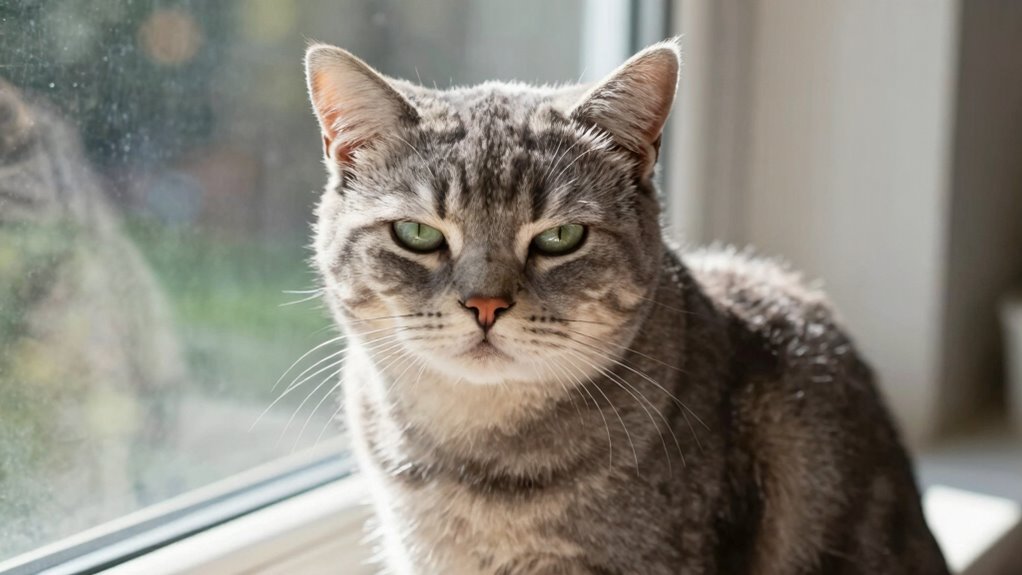

Before petting, observe your cat’s body language to gauge its mood. A relaxed posture, loosely flicking tail, and soft blinking suggest it’s comfortable and receptive. Forward ears and calm eyes also signal trust. However, if your cat crouches, flattens ears, or shows dilated pupils, it might be stressed or annoyed. Pay attention to vocal cues like purring or growling. Watching these signals helps you understand their mood, and if you keep exploring, you’ll discover even more ways to connect.

Get pet supplies delivered free with Prime
- Fast, free delivery on millions of items
- Prime Video, Amazon Music and more included
- Member-only deals all year
Key Takeaways
- Observe the cat’s overall posture; relaxed and open signals are best for petting.
- Check ear and eye cues; forward ears and slow blinking indicate receptiveness.
- Look for calm tail movements; loosely hanging or gently flicking tails show comfort.
- Listen for soft purring and gentle vocalizations as signs of contentment.
- Avoid petting if the cat shows signs of tension, such as flattened ears or a puffed tail.
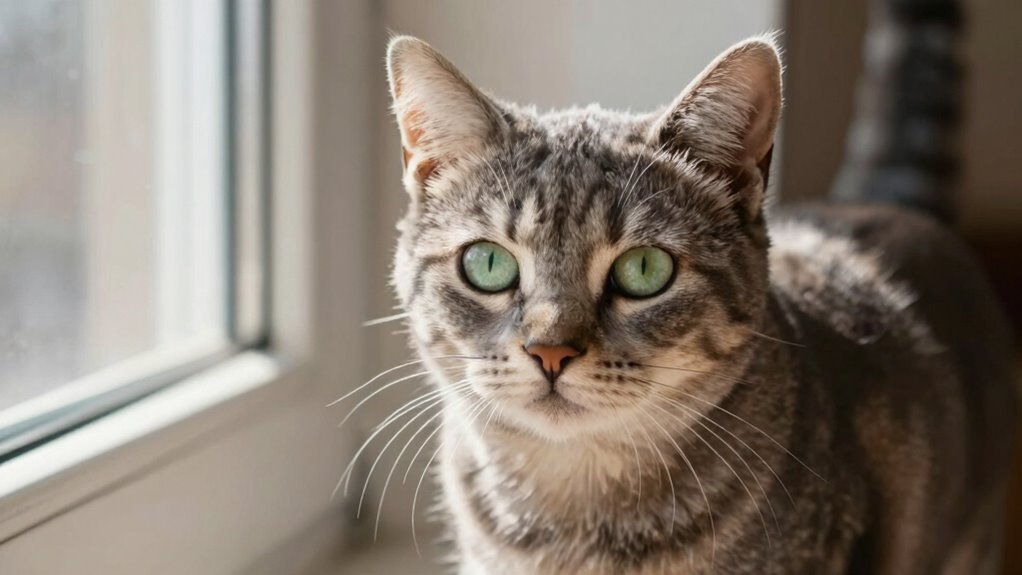
Understanding a cat’s mood can seem tricky, but paying attention to their body language and behavior makes it easier. Before you reach out to pet a cat, observe how they’re expressing themselves through cat body language and vocalization cues. These signals tell you whether they’re feeling relaxed, playful, annoyed, or scared. Recognizing these signs helps you avoid unwanted scratches or bites and ensures a positive interaction.
Start by looking at the cat’s overall posture. If they’re sitting or lying down with a loose, relaxed stance, they’re likely comfortable and open to interaction. A cat that’s arching their back slightly, with their tail flicking gently, might be in a playful mood. However, if they’re hunched or crouched low to the ground, they could be feeling defensive or tense. Keep an eye on their tail—if it’s puffed up, flicking rapidly, or lashing side to side, it’s a sign of agitation or irritation. A relaxed tail hanging loosely indicates calmness, while a tail tucked close to the body suggests fear or discomfort.
A relaxed posture and gently flicking tail indicate a happy, playful cat ready for interaction.
Cat body language extends to their ears and eyes as well. Ears pointed forward generally mean curiosity or interest, while flattened ears suggest annoyance or fear. If the cat’s eyes are wide with dilated pupils, they might be startled or overstimulated. Conversely, slow blinking often indicates trust and contentment. When you see a cat slowly blinking at you, it’s a good sign they’re comfortable enough for gentle petting. Paying attention to body language cues can provide important insights into how your cat is feeling. Additionally, observing their overall demeanor can help you gauge if they’re truly receptive or just tolerating your presence.
Vocalization cues add another layer to understanding your feline friend. A soft purring sound usually signals contentment, but it can also occur when a cat is nervous, so context matters. Chirping or chattering might mean they’re excited or focused on prey. On the other hand, hissing, growling, or yowling are clear signs of distress or anger. If your cat vocalizes loudly or abruptly, it’s best to give them space rather than push for affection.
Before you pet, observe these cues carefully. If the cat’s body appears relaxed, their tail is still, ears are forward, and they’re purring softly, they’re most likely in a good mood. If they show signs of tension—such as flattened ears, puffed tail, dilated pupils, or growling—it’s better to hold back and approach later. Recognizing these signs allows you to respond appropriately and respect your cat’s boundaries. By paying close attention to their body language and vocalization cues, you can tell when your cat is receptive and when they need their personal space, making your interactions safer and more enjoyable.
As an affiliate, we earn on qualifying purchases.
Frequently Asked Questions
Can a Cat’s Mood Change Suddenly?
Yes, a cat’s mood can change suddenly. You need to observe their behavior and mood indicators closely because cats are sensitive and may react unexpectedly. Factors like environment, health, or previous interactions influence their behavior. When you notice subtle signs like a flicking tail, flattened ears, or dilated pupils, it’s a good idea to pause. Being attentive helps you interpret their mood accurately and avoid unwanted scratches or bites.
How Do I Tell if a Cat Wants to Be Alone?
You can tell a cat wants to be alone by paying attention to its body signals and feline social cues. If your cat’s ears are back, tail flicking, or if it’s avoiding eye contact, it’s signaling discomfort or a desire for space. When it’s arching its back, puffed-up fur, or hiding, these are clear signs it prefers solitude. Respect these cues, and give your cat some quiet time.
Are Certain Colors of Cats More Expressive?
Yes, certain colors of cats tend to be more expressive due to their color symbolism and typical behavioral traits. For example, orange cats often display lively, affectionate, and outgoing behaviors, making their emotions easy to read. Black cats might be more reserved, but their expressive behaviors reveal curiosity or playfulness. Ultimately, individual personalities vary, but color can give you clues about how a cat might express its mood.
How Does a Cat’s Body Language Differ From Dogs?
Like a vintage radio, a cat’s body language broadcasts subtle signals. You’ll notice their fur posture—arched back or puffed-up fur—indicating comfort or defensiveness. Unlike dogs, who often use wagging tails and direct eye contact, cats rely more on vocalizations and nuanced body language. They may flick their tail or flatten their ears to communicate, so paying attention helps you understand their mood before approaching or petting.
What Should I Avoid Doing if a Cat Is in a Bad Mood?
When a cat is in a bad mood, avoid handling aggression or pushing boundaries. Don’t try to pet or pick up the cat if it shows signs of discomfort, like hissing, swatting, or flattened ears. Reading subtle signals is essential; respect their space and give them time to calm down. Forcing interaction can escalate their stress, so patience and gentle observation are key to preventing negative reactions.
Conclusion
By paying close attention to your cat’s body language, you’ll learn to read their mood and know when they’re open to petting. Some might worry they’ll misjudge and get scratched, but practice makes perfect. Remember, every cat is unique—what works for one might not for another. Trust your observations and respect their signals. With time, you’ll build a stronger bond and enjoy more positive interactions. Patience and attentiveness truly make all the difference.
Halloween Picks
halloween
As an affiliate, we earn on qualifying purchases.